Note: This article is written for web publication and synthesizes practical design, lighting, sleep-environment, and product-selection guidance from reputable U.S.-based home, health, and energy references without embedding source links.
The Tiny Red Lamp That Quietly Steals the Room
A simple red reading light sounds almost too modest to deserve detective work. It is not a chandelier wearing a tuxedo. It does not arrive with a crystal entourage or demand its own electrician fan club. Yet the right red reading light can transform a corner, a bedside nook, or a small desk into a space that feels intentional, warm, slightly playful, and just mysterious enough to make guests say, “Wait, where did you get that?”
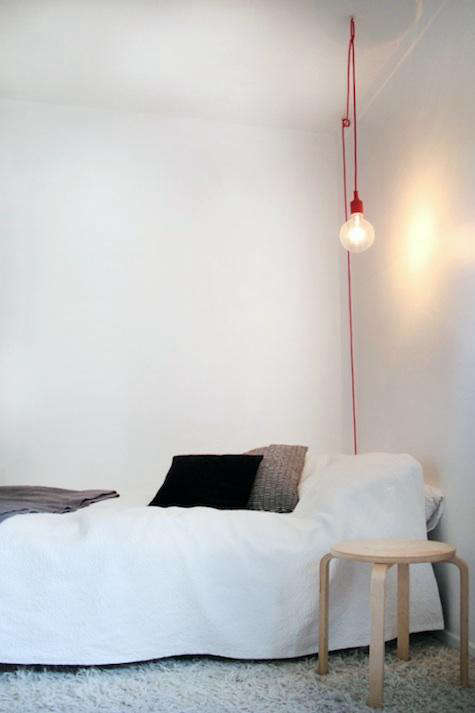
The idea behind Design Sleuth: Simple Red Reading Light is beautifully straightforward: take a small hanging light, preferably with a bold red cord, socket, or shade, and use it as a focused reading lamp. The inspiration comes from minimalist pendant lightingespecially simple cord-and-bulb designs that look effortless but somehow make a room feel edited. Red adds the wink. It brings warmth, energy, and a little design mischief, like a punctuation mark dangling from the ceiling.
Unlike a bulky floor lamp, a ceiling-hung red reading light saves space. Unlike a standard bedside lamp, it can feel custom without requiring a dramatic renovation. And unlike many “statement pieces,” it does not need to shout. It just glows. Quietly. Confidently. Like it knows it has better taste than your old plastic clip-on lamp from college.
Why a Red Reading Light Works So Well
Red is one of those colors that behaves differently depending on the room. In a white bedroom, it feels crisp and graphic. In a wood-paneled library, it feels cozy and vintage. In a modern apartment, it reads as Scandinavian, industrial, or even gallery-like. That flexibility makes a red reading light surprisingly useful for interior design.
From a lighting perspective, the color red can also support a calmer evening atmosphere when used softly. Red or warm-toned light is often associated with nighttime environments because it tends to feel less alerting than cool, blue-rich light. That does not mean a red lamp magically guarantees perfect sleepsadly, your late-night email habit is still out here causing dramabut it can help create a more relaxed mood than bright white overhead lighting.
It Adds Color Without Repainting Anything
If you want to experiment with color but do not want to commit to a red wall, a red reading light is the easy way in. It is small enough to feel safe, bold enough to be noticed, and removable enough to keep your security deposit from developing trust issues.
A red pendant cord, silicone socket, metal shade, or fabric-covered wire can become a tiny accent that connects with other details in the room: a book spine, a throw pillow, a striped blanket, a piece of art, or even a red mug abandoned on the nightstand. Interior design often feels expensive because people think everything has to match. In reality, rooms often look better when a few small elements simply “talk” to each other.
It Creates a Dedicated Reading Zone
Good lighting tells your brain what a space is for. A pendant over a dining table says, “Eat here.” A lamp beside a chair says, “Sit here.” A small red reading light above a bed or lounge chair says, “Open the book, ignore the laundry, become a more interesting person for thirty minutes.”
A focused reading lamp is a form of task lighting. Its job is not to flood the room with brightness. Its job is to place enough light on the page without throwing glare into your eyes or turning the bedroom into a dentist’s office. This is why placement matters. A red reading light should be close enough to illuminate your book, angled or positioned to avoid direct glare, and preferably paired with a dimmable bulb or low-lumen lamp.
The Design Sleuth Look: Minimal, Useful, and a Little Festive
The most iconic version of the simple red reading light is a stripped-down pendant: cord, socket, bulb, and maybe a ceiling hook. That is it. No decorative acrobatics. No shade shaped like a spaceship. No unnecessary drama. The charm comes from the confidence of the design.
Minimal pendant lights such as the Muuto E27-style concept popularized this “naked bulb plus colorful cord” approach. The E27 design is known for reducing the pendant lamp to its essentials: a socket, a cord, and a bulb. In red, the look becomes warmer and more playful. It feels designed, but not over-designed. That is the sweet spot.
There are also more affordable versions of the idea: plug-in pendant kits, red cord sets, compact metal pendants, clip lights with red shades, and wall-mounted reading lamps with red finishes. The key is simplicity. If the lamp looks like it is trying too hard, it loses the sleuthy charm. The best simple red reading light looks like someone smart solved a design problem with one elegant move.
Where to Use a Simple Red Reading Light
A red reading light works best when it has a clear job. Do not hang it randomly in the middle of the room and hope for applause. Give it a purpose, and it will repay you with style.
Beside the Bed
This is the classic spot. A plug-in pendant or small hanging lamp above a bedside table frees up surface space and gives the bed area a boutique-hotel feeling. Hang it slightly to the side of where you read, not directly in front of your face. Your book deserves illumination; your eyeballs do not need interrogation.
For bedrooms, choose a bulb that is soft, warm, and not too bright. A dimmable LED is ideal because it lets the lamp shift from practical reading light to low evening glow. If the bulb is exposed, consider a frosted bulb to reduce glare.
Above a Reading Chair
A red pendant over a cozy chair instantly creates a reading corner. Add a small side table, a soft throw, and a stack of books that makes you look charmingly intellectual. This setup is especially useful in apartments where floor space is limited. Instead of adding a lamp base, you use the vertical space above the chair.
In a Child’s Reading Nook
A simple red reading light can work beautifully in a kid’s room, especially when paired with safe installation, a low-heat LED bulb, and a cord placed out of tugging range. Red feels cheerful without being babyish. It can support a cozy bedtime reading habit while adding a fun design detail.
For children’s spaces, safety comes first. Use certified fixtures, secure cords properly, avoid hot bulbs, and make sure the lamp is not positioned where it can be pulled, bumped, or covered with fabric.
At a Small Desk
A red reading light can also work as a desk accent, especially in a creative workspace. If you use it for detailed work, make sure it provides enough brightness and color accuracy. Red itself is not the best light color for tasks like drawing, editing photos, or matching colors. But as an ambient or secondary reading light, it can make a desk feel less sterile and more personal.
How to Choose the Right Red Reading Light
The best simple red reading light is not necessarily the most expensive one. It is the one that fits your space, gives useful light, and does not look like it escaped from a clearance bin during a power outage.
1. Choose the Right Type
For the clean Design Sleuth look, consider a plug-in pendant, ceiling pendant, wall-mounted sconce, or compact clamp lamp. Plug-in pendants are especially beginner-friendly because they can often be hung from a ceiling hook and plugged into a nearby outlet. They give a custom look without hardwiring.
Hardwired fixtures look more polished but usually require professional installation. If you rent, a plug-in option is often the better choice. Your future self, your landlord, and your drywall will all appreciate the diplomacy.
2. Pay Attention to Lumens
Lumens measure brightness. For reading, you want enough light to see comfortably, but not so much that the room feels harsh. A small bedside or reading lamp often works well with a lower-lumen LED bulb, especially if the light hangs close to the page. Dimming capability is a major bonus.
Do not shop by watts alone. With LED lighting, watts tell you energy use, not brightness. A modern LED can produce useful light with far less energy than an old incandescent bulb. Look at lumens, color temperature, dimmability, and whether the bulb is compatible with your fixture.
3. Pick a Warm or Red-Toned Glow
If the goal is evening reading, warm light usually feels better than cool white light. Color temperature is measured in Kelvin. Lower numbers look warmer and more golden; higher numbers look cooler and bluer. Many relaxing bedroom lamps sit in the warm white range, while bright daylight bulbs are better suited for high-focus daytime tasks.
A red shade, red bulb, or red cord can all contribute to the look, but they are not the same thing. A red cord or socket gives you the design accent while still allowing a warm white reading bulb. A red bulb creates a stronger mood but may make reading less crisp. The most practical option is often a red fixture with a soft warm bulb.
4. Avoid Glare
Glare is the villain of reading lights. It sneaks in, ruins the vibe, and makes you squint like you are trying to decode a secret government file. To avoid it, use a frosted bulb, a shade, or a fixture that directs light downward. Position the lamp so the bulb is not directly in your line of sight when you sit or lie down.
5. Consider Cord Style
With a simple red reading light, the cord is not something to hide. It is part of the design. A red cord can run from the ceiling hook to the wall like a confident graphic line. Use cord clips, cable channels, or neat routing to make it look intentional. Random dangling cords say “temporary.” A neatly placed cord says “I meant to do this.”
Red Light, Sleep, and Eye Comfort: What to Know
Red light is often discussed in relation to night vision and sleep because dim red light tends to be less disruptive in dark environments than bright white or blue-rich light. Astronomers, campers, and nighttime photographers often use red lights because they can help preserve dark adaptation better than brighter white light.
For home use, the important word is dim. A very bright red light can still be disruptive and uncomfortable. If you want a red reading light for nighttime, choose a gentle output, use a dimmer, and avoid staring into the bulb. The goal is cozy visibility, not a miniature emergency exit sign hovering above your novel.
Eye comfort also depends on habits. If your eyes feel tired, the culprit may not be the color of the lamp alone. Poor contrast, dry eyes, reading too long without breaks, glare, small text, and too much screen time can all contribute. A good reading light helps, but it is not a medical device. If you regularly experience eye pain, headaches, blurred vision, or unusual sensitivity to light, an eye-care professional is the right person to ask.
Styling Ideas for a Simple Red Reading Light
A red reading light can lean in several design directions. The trick is to choose the personality you want and keep the rest of the area edited.
Scandinavian Minimal
Pair a red cord pendant with white walls, pale wood, linen bedding, and black accents. The red becomes the one cheerful note in a calm room. This style works especially well with a naked-bulb pendant or a silicone socket design.
Vintage Library
Use a red metal shade near dark wood shelves, brass hardware, and a leather chair. The result feels like an old reading room with better lighting and fewer stern portraits judging your snack choices.
Modern Apartment
Hang a red plug-in pendant beside a low platform bed or over a compact lounge chair. Add a black-and-white print, a small side table, and a textured rug. The red light becomes the design anchor in a small space.
Holiday Without the Tinsel Explosion
Because red has a naturally festive quality, a simple red reading light can add holiday warmth without turning your bedroom into a seasonal aisle. Pair it with evergreen branches, cream bedding, or a plaid throw in winter, then let it stand alone the rest of the year.
Common Mistakes to Avoid
The first mistake is choosing a lamp that is too bright. A reading light should support the page, not attack the room. The second mistake is hanging it too low, especially beside a bed. You want easy reach and good light, but you do not want to bonk your forehead every time you fluff a pillow.
The third mistake is ignoring the switch. A beautiful lamp with an inconvenient switch will annoy you forever. Look for a cord switch, wall switch, smart plug, dimmer, or reachable control. Design is only successful when it behaves in real life.
The fourth mistake is using a visible cord carelessly. A plug-in pendant can look fantastic, but only when the cord path is tidy. Use a ceiling hook, wall clips, or cord cover to create a clean line. The difference between “effortlessly cool” and “unfinished basement” is sometimes three cable clips and five minutes of patience.
Experience Notes: Living With a Simple Red Reading Light
After spending time with the idea of a simple red reading light, the biggest surprise is how much atmosphere such a small fixture can create. It changes the room before it even turns on. During the day, the red cord or shade works like a small design object. It is a visual bookmark, pointing to the reading spot and giving the space a sense of purpose.
At night, the effect becomes more emotional. A warm red reading light does not feel like standard household lighting. It feels quieter, more deliberate, and more personal. Over a bedside table, it creates a pool of light that makes the rest of the room fall away. That can make reading feel like a ritual instead of just something you do while half-watching your phone glow accusingly from the blanket.
One practical experience is that placement matters more than people expect. A lamp that looks perfect in a photo may be too high, too low, too far from the page, or too close to your face. Before committing to a final hook position, test it. Sit in the chair or lie in bed with a book. Check whether the light lands on the page. Check whether the bulb shines into your eyes. Check whether you can reach the switch without performing a dramatic yoga pose. The best location is usually discovered, not guessed.
Another lesson is that the bulb can make or break the entire setup. A clear exposed bulb may look stylish, but it can create glare. A frosted warm LED often feels better for real reading. Dimmable bulbs are especially helpful because the same fixture can provide practical brightness early in the evening and a softer glow later. If the lamp uses a red shade or red bulb, test readability. Red-tinted light can be atmospheric, but some readers may find it less crisp than warm white light.
In small spaces, the red reading light is a genuine problem-solver. A floor lamp takes up precious square footage. A table lamp steals nightstand space. A pendant or wall-mounted red light gives you function without clutter. This is especially useful in apartments, dorm-style rooms, guest rooms, and compact bedrooms where every surface is already negotiating for survival.
The design also encourages better evening habits. A cozy reading light makes it easier to choose a book over a screen. It gives the room a visual cue: this is wind-down time. That may sound small, but interiors work through cues. A chair with no lamp becomes a laundry station. A chair with a beautiful red reading light becomes a reading corner. The furniture did not change. The invitation did.
There is also something charmingly low-pressure about this design move. You do not need a full renovation, a custom millwork budget, or a designer who uses the phrase “spatial narrative” before coffee. You need a good fixture, the right bulb, a smart location, and a little nerve to use red. The result feels fresh because it is both useful and unexpected.
The only caution is to keep the installation safe and neat. Use proper hooks, follow fixture ratings, keep cords away from heat and tugging, and hire a licensed electrician for hardwired work. A simple red reading light should look effortless, not risky. Design drama is welcome; electrical drama is not.
Ultimately, the simple red reading light proves that small design choices can have oversized impact. It adds color, defines a purpose, improves a reading spot, and gives a room personality without overwhelming it. It is the kind of detail that makes a space feel found, edited, and lived inlike a clever little secret hanging in plain sight.
Conclusion: Small Lamp, Big Design Payoff
A simple red reading light is one of those rare home upgrades that checks several boxes at once. It is practical, stylish, affordable in many versions, and easy to adapt to different rooms. It can look Scandinavian, vintage, modern, playful, or quietly festive depending on how you style it. Most importantly, it turns an ordinary reading spot into a place with atmosphere.
Whether you choose a red plug-in pendant, a minimalist socket-and-cord lamp, a compact sconce, or a red-shaded bedside light, focus on three things: comfortable brightness, smart placement, and clean installation. Do that, and your reading corner will feel less like an afterthought and more like a tiny design victory. And honestly, if a lamp can make you read more and make your room look better, it deserves a little applause. Quiet applause, of course. Someone nearby is probably reading.