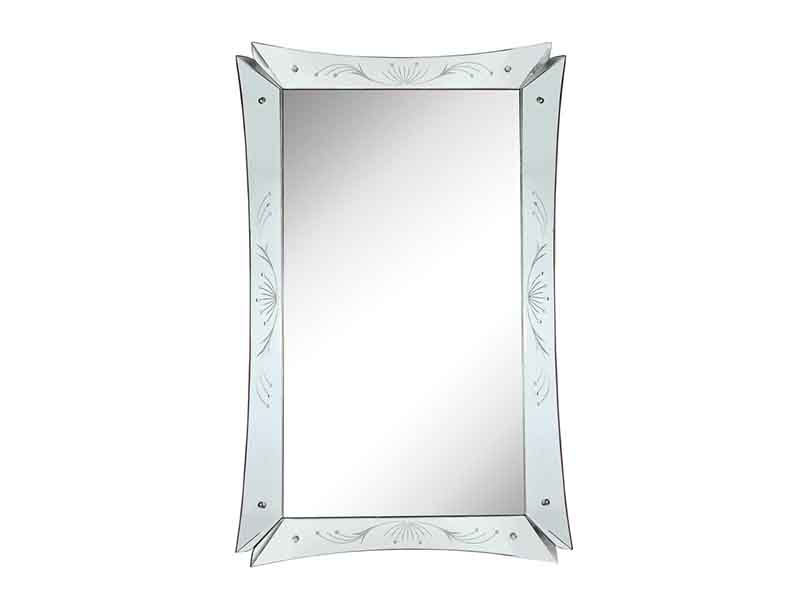
An etched and beveled Venetian mirror with dovetailed corners is not the kind of mirror that quietly checks your hair and minds its own business. It enters a room like a well-dressed guest, catches the light, flatters the furniture, and somehow makes the wall look more expensive than it has any legal right to look. Part decorative art, part functional mirror, and part architectural sparkle, this style brings together old-world Venetian inspiration, mid-century polish, and the kind of detail that rewards a second look.
The phrase may sound specific because it is. “Etched” refers to decorative patterns worked into the mirror glass, often floral, scroll-like, geometric, or neoclassical. “Beveled” means the glass edges are cut and polished at an angle, giving the surface depth and a prism-like shimmer. “Venetian” points to a long design tradition associated with ornate mirrored frames and glass artistry. And “dovetailed corners” describes the clever corner treatment where mirrored frame sections appear to interlock, overlap, or meet with a tailored precision similar to fine joinery. In short: this mirror is not just a rectangle with self-esteem. It is a crafted focal point.
What Is an Etched and Beveled Venetian Mirror?
A Venetian mirror is typically recognized by its mirrored frame, decorative glass borders, engraved or etched motifs, and layered reflective surfaces. Unlike a standard framed mirror, where wood, metal, or resin surrounds the central glass, a Venetian-style mirror often uses glass as both the reflective center and the ornament. This gives the piece a luminous, almost floating quality.
Etched details add artistry. On many vintage Venetian mirrors, the border may feature vines, flowers, ribbons, leaves, shell shapes, or subtle geometric lines. These patterns soften the reflectivity and create visual texture. Beveling, meanwhile, gives the mirror its elegant edge. When light hits the angled glass, the surface creates highlights that shift as you move through the room. It is jewelry for the wall, but thankfully it does not require a tiny velvet box.
Dovetailed corners make the design feel especially refined. Rather than plain mitered corners, the mirrored sections at the corners may appear stepped, layered, or interlocked. This creates a stronger sense of craftsmanship and makes the frame look intentionally assembled rather than simply bordered. The effect is subtle from across the room and impressive up close.
A Short History: From Venetian Glamour to Mid-Century Style
Venetian mirrors draw inspiration from the glassmaking traditions of Venice and Murano, where glass artisans became famous for technical skill, clarity, ornament, and luxury decorative objects. Over time, Venetian-style mirrors became associated with elegance, romance, and light. Their appeal spread far beyond Italy, eventually influencing French, Hollywood Regency, Art Deco, and mid-century interiors.
By the mid-20th century, the style had evolved. Designers and decorators embraced Venetian mirrors not only for grand palaces and formal salons, but also for apartments, dressing rooms, powder rooms, and stylish entryways. A mid-century etched and beveled Venetian mirror may feel less heavily baroque than earlier examples, often balancing ornament with clean geometry. That combination is exactly why the style still works today. It can nod to history without turning your living room into a museum where everyone whispers.
Why the Dovetailed Corners Matter
The corners are easy to overlook, but they are one of the most interesting features. In furniture, dovetailing is a mark of careful joinery. In a mirror, “dovetailed corners” describes a visual effect rather than a wood drawer joint: mirrored border pieces meet in a way that suggests interlocking construction. This makes the frame look tailored, dimensional, and more deliberate.
Plain corners can be lovely, but dovetailed corners add rhythm. They break up the perimeter, guide the eye around the frame, and create a sense of movement. On a large wall mirror, that matters. The viewer does not just see a reflective rectangle; the viewer sees craftsmanship, pattern, and structure. It is the difference between wearing a black suit and wearing a black suit that actually fits.
Design Anatomy: The Four Elements That Create the Look
1. The Central Mirror Plate
The center mirror is the practical heart of the piece. It should offer a clear reflection while complementing the decorative border. In many vintage examples, the central plate is large enough for real use, making the mirror suitable for dressing areas, bedrooms, and entryways.
2. The Beveled Glass Border
The bevel is where the mirror starts to glow. Angled edges catch light from windows, lamps, sconces, and candles. A beveled Venetian mirror can brighten a room without shouting for attention. It simply waits for light to arrive and then behaves beautifully.
3. The Etched Decoration
Etching gives the mirror personality. Floral etching feels romantic and traditional. Geometric etching feels more Art Deco or mid-century. Scrollwork leans classic and European. The best designs use enough detail to create character, but not so much that the mirror looks like it is wearing every accessory it owns at once.
4. The Dovetailed Corners
Dovetailed corners create a polished, architectural finish. They make the border feel assembled from individual decorative elements, not stamped out as one flat frame. This is especially attractive in larger mirrors, where corner detail can prevent the design from feeling heavy or repetitive.
Where to Use an Etched and Beveled Venetian Mirror
Entryway
An entryway is one of the best places for this mirror. It gives guests an immediate sense of style and gives you one last chance to discover spinach in your teeth before leaving the house. Hang it above a console table with a lamp, tray, vase, or small sculpture. The mirror will reflect the vignette and make the area feel layered.
Living Room
In a living room, place the mirror above a fireplace, console, credenza, or sofa table. It works especially well when it reflects something attractive: artwork, a window, greenery, or a chandelier. Avoid placing it where it reflects clutter, a blank television screen, or the laundry basket you keep pretending is “temporary.”
Bedroom or Dressing Area
A tall Venetian mirror can add glamour to a bedroom without feeling cold. The etched glass softens the reflection, while the beveled frame brings sparkle. In a dressing area, it feels practical and luxurious at the same time. Pair it with warm lighting and soft textiles to keep the look inviting.
Dining Room
A dining room is a natural home for mirrored decoration. A Venetian mirror can reflect candlelight, glassware, and table settings, giving dinners a more atmospheric feeling. It also helps smaller dining rooms feel brighter and more open.
Powder Room
Powder rooms are small spaces where bold decorative choices shine. An etched and beveled Venetian mirror can turn a basic sink wall into a boutique-hotel moment. Just make sure the mirror is properly mounted and protected from constant moisture.
How to Style It Without Overdoing It
The secret to styling a Venetian mirror is balance. Because the mirror already has detail, the surrounding decor should support it rather than compete with it. A simple console, a pair of sconces, or a clean-lined dresser can make the mirror feel even more special. Too many ornate pieces nearby may push the room into “antique shop after espresso” territory.
For a modern look, pair the mirror with matte walls, simple furniture, and sculptural lighting. The contrast between clean surfaces and decorative glass feels fresh. For a traditional look, combine it with marble, brass, wood, velvet, or framed artwork. For a romantic look, add soft curtains, fresh flowers, and warm bulbs. The mirror will do the flirting; you just need to provide the setting.
Buying Tips: What to Check Before You Purchase
When shopping for an etched and beveled Venetian mirror with dovetailed corners, look closely at scale first. Many vintage examples are large and visually substantial. Measure the wall, furniture beneath it, ceiling height, and the viewing distance. A mirror that looks perfect online can dominate a small wall if the proportions are wrong.
Next, inspect condition. Vintage mirrors may show foxing, light spotting, minor silvering loss, or age-related patina. Some buyers love this because it adds character. Others prefer a cleaner reflective surface. Neither preference is wrong, but surprises are less charming when they arrive in a crate.
Check the corners, seams, and decorative panels. Missing rosettes, cracked border pieces, loose backing, or chipped bevels can affect value and safety. Ask for close-up photos of the etched areas and corners. If the mirror is large, confirm how it is backed and what hanging hardware is included. A heavy mirror should be mounted securely into studs, blocking, or appropriate wall anchors. Adhesive hooks are not a plan; they are a suspense movie.
How to Tell Quality from Quick Imitation
Quality shows up in the details. The bevels should look polished and consistent. The etching should feel intentional, not blurry or cheaply printed. The frame sections should align neatly, especially at the dovetailed corners. The central mirror should sit securely, and the backing should feel stable.
On older pieces, a little aging can be beautiful. Light foxing or mellowed glass may enhance the antique feeling. However, major cracks, loose panels, failing adhesive, or unstable backing should be taken seriously. If you are buying an expensive mirror, request detailed measurements, condition notes, and shipping information. Glass furniture is glamorous until it is poorly packed.
Care and Cleaning
Venetian mirrors deserve gentle care. Dust the surface regularly with a soft microfiber cloth. When cleaning is needed, use an ammonia-free glass cleaner applied to the cloth, not sprayed directly onto the mirror. Direct spraying can allow moisture to seep behind glass panels, into seams, or around the backing. That moisture may damage silvering over time.
Avoid abrasive pads, harsh chemicals, and aggressive scrubbing. Etched areas and beveled edges can collect dust, so use a light touch and patience. If the mirror is antique or especially valuable, consult a professional before attempting repairs, resilvering, or reattaching decorative pieces. The goal is to preserve the mirror’s character, not erase its history with enthusiasm and the wrong bottle from under the sink.
Common Decorating Mistakes to Avoid
The first mistake is hanging the mirror too high. A mirror should relate to the furniture and people around it. Above a console, leave enough breathing room, but keep the mirror connected to the piece below. The second mistake is ignoring the reflection. A mirror doubles whatever it sees. If it reflects a window, art, or a beautiful lamp, wonderful. If it reflects a pile of shoes, congratulations: you now own twice as many shoes visually.
The third mistake is using too many shiny objects nearby. A Venetian mirror already brings sparkle. Pair it with texture: linen, wood, stone, ceramic, wool, or matte paint. The fourth mistake is choosing the wrong size. A small ornate mirror on a huge wall may look lost, while an oversized mirror in a narrow hallway may feel overwhelming. Proportion is the quiet hero of good design.
Specific Example: A Mid-Century Venetian Mirror
A mid-century modern etched and beveled Venetian mirror with dovetailed corners often combines generous scale with restrained glamour. A tall rectangular format, for example, can work beautifully above a console, in a bedroom, or as a statement wall piece. The etched decoration brings softness, while the beveling adds dimension. The dovetailed corners prevent the frame from feeling flat and give the piece a more architectural outline.
This type of mirror is especially appealing because it crosses style boundaries. It can live with mid-century furniture, Hollywood Regency accents, traditional antiques, or contemporary interiors. Place it above a walnut credenza, and it becomes refined and vintage. Hang it in a white bathroom with polished nickel fixtures, and it feels crisp and luxurious. Set it in a moody hallway with dark paint, and suddenly the hallway has a personality and possibly a secret.
Experience Notes: Living With an Etched and Beveled Venetian Mirror
Owning or styling an etched and beveled Venetian mirror with dovetailed corners is a little different from hanging an ordinary mirror. The first thing you notice is that it changes throughout the day. In morning light, the bevels look bright and clean. By afternoon, the etched details become more visible as the sun shifts. At night, with lamps on, the mirror becomes warmer and more atmospheric. It does not just reflect the room; it participates in it.
In real homes, this kind of mirror works best when it has room to breathe. I have seen Venetian-style mirrors placed above crowded furniture, surrounded by busy wallpaper, tall lamps, framed photos, and decorative objects fighting for attention. The mirror still looked beautiful, but the room felt noisy. When the same type of mirror is placed above a simpler console with one lamp and a low bowl or vase, the whole wall suddenly looks intentional. The mirror becomes the star, and everything else becomes the supporting cast.
Another practical experience: installation matters more than people expect. These mirrors can be heavy, fragile, and awkward to hold because the decorative edges may not be designed for rough handling. Two people are better than one. Professional installation is often worth it, especially for large vintage mirrors. A secure French cleat or properly anchored hardware gives peace of mind. Nobody wants to hear a mysterious crash at 2 a.m. and then remember they trusted a discount hook with a piece of glass art.
Lighting is also a major factor. A Venetian mirror near a window can make a small room feel brighter, but it should reflect something pleasant. If the mirror faces a window with greenery, sky, or architecture, the effect is lovely. If it faces harsh direct sun all day, glare may become annoying. In rooms with artificial light, sconces on either side can look elegant, but avoid bulbs that are too cool or too bright. Warm light usually flatters etched glass and makes bevels glow.
Maintenance is manageable if you are gentle. The trick is to clean less aggressively and more thoughtfully. Dust first. Use a microfiber cloth. Apply cleaner to the cloth, not the mirror. Work slowly around seams, corners, and etched areas. If the mirror has age spots, do not panic. A little patina can be part of the charm. In fact, perfectly flawless glass is not always the goal with vintage-style decor. Character is allowed. The mirror has lived a life; let it keep a few stories.
Most importantly, this mirror style rewards restraint. You do not need a room full of antiques to make it work. You need proportion, good placement, and a little respect for light. Whether used in an entryway, bedroom, dining room, or powder room, an etched and beveled Venetian mirror with dovetailed corners can make a space feel collected, graceful, and quietly dramatic. It is functional decor with a wink: useful enough for everyday life, beautiful enough to make guests ask where you found it.
Conclusion
An etched and beveled Venetian mirror with dovetailed corners is more than a reflective surface. It is a design feature with history, craftsmanship, texture, and personality. The etched glass brings artistry, the beveled edges bring light, and the dovetailed corners bring structure and sophistication. Whether vintage, antique, or Venetian-inspired, this mirror style can elevate a room without requiring a full renovation or a dramatic speech from an interior designer.
Choose the right scale, inspect the details, hang it securely, and let it reflect something beautiful. Do that, and the mirror will not just decorate your wall. It will make the whole room feel brighter, richer, and more thoughtfully finished.