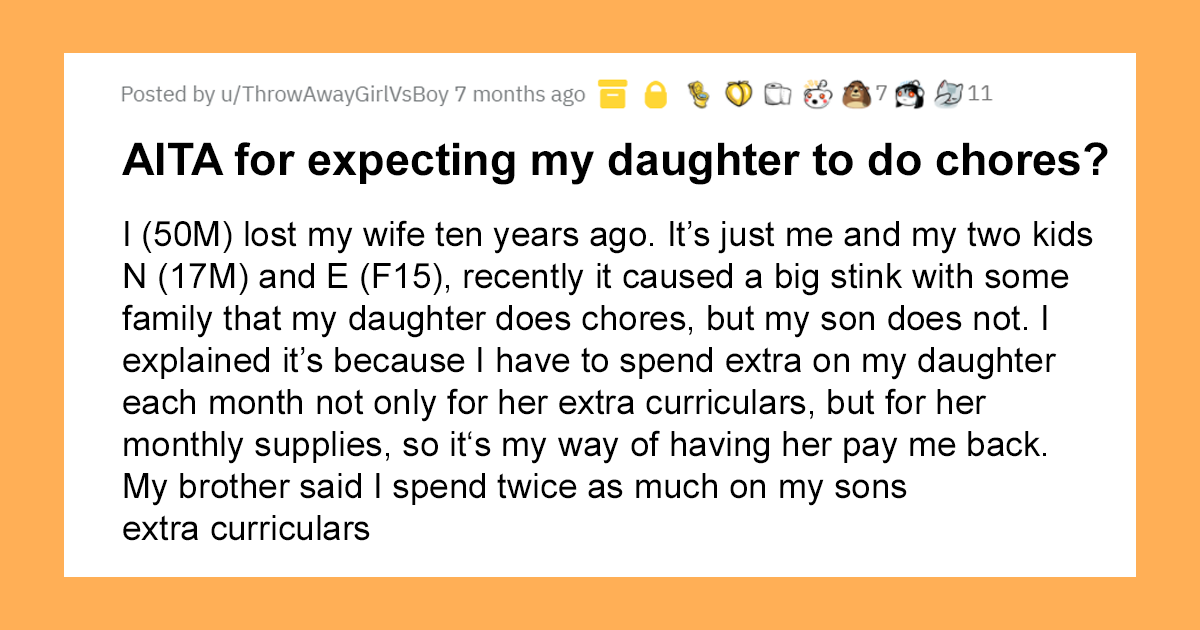
Every now and then, the internet receives a parenting story so baffling that people collectively drop their coffee, adjust their glasses, and ask, “Wait… he did what?” This time, the outrage centered on a dad who reportedly made his teenage daughter do house chores in exchange for menstrual pads. Not a new phone. Not concert tickets. Not a glittery prom dress with enough fabric to bankrupt a small nation. Menstrual pads.
The story spread because it touched a nerve far bigger than one family argument. At the heart of it was a basic question: should a child have to “earn” access to hygiene products required for a normal biological process? For many readers, the answer was a loud, immediate, and keyboard-smashing “absolutely not.”
Chores are normal. Teaching responsibility is normal. Expecting teenagers to contribute at home is normal. But turning menstrual pads into a reward system? That is where the internet pulled the emergency brake.
The Viral Story That Made Everyone Pause
According to the widely discussed post, the father believed his daughter should help around the house if she wanted him to buy menstrual products. In his mind, this may have sounded like a lesson about responsibility, budgeting, or not taking things for granted. In everyone else’s mind, it sounded like charging admission to basic bodily dignity.
The backlash was fierce because menstrual pads are not a luxury item. They are not a fun extra tossed into the cart beside sour candy and novelty socks. They are personal care products used to manage menstruation safely and hygienically. For a teenager, especially one still learning how to understand her cycle, access to pads is not optional. It is part of health, comfort, school attendance, confidence, and basic care.
That is why so many commenters saw the dad’s approach as not just strict, but misguided. The issue was not whether a teen should do dishes or take out the trash. The issue was whether a parent should attach conditions to something a child needs.
Why Menstrual Pads Are A Need, Not A Negotiation
Menstruation is a routine part of adolescent health. Many girls start their first period around the early teen years, though timing varies widely. Health experts often describe the menstrual cycle as an important sign of overall health, and typical adolescent periods may involve several days of bleeding each month.
That means menstrual products are not occasional “nice-to-haves.” A teen may need pads, liners, tampons, period underwear, or another suitable product every cycle. Without them, she may have to improvise with toilet paper, stay home from school, avoid activities, or deal with leaks and embarrassment. None of that builds character. It builds anxiety.
Parents buy toilet paper without issuing invoices. They buy soap without demanding a motivational speech. They keep toothpaste in the house without creating a family rewards program called “Molar Merit Points.” Menstrual products belong in that same category of basic household care.
The Internet’s Reaction: Berserk, But Not Random
The internet can be dramatic, yes. It once argued for three weeks about the color of a dress. But in this case, the anger had a clear reason. Readers felt the father was treating his daughter’s period like a personal inconvenience rather than a normal health need.
Many people pointed out that the daughter did not choose to menstruate. She did not wake up one morning and say, “You know what would really spice up eighth grade? Cramps and monthly supply costs.” Puberty happens. Periods arrive. Parents are responsible for helping their children navigate that reality without shame.
Other commenters focused on the emotional message. A teenager who has to bargain for pads may begin to feel that her body is a burden. She may become embarrassed to ask for help. She may hide discomfort, avoid conversations, or internalize the idea that menstruation is something shameful. That is a heavy price for a box of pads.
Chores Are Fine. Conditional Hygiene Is Not.
One reason this story became so heated is that chores themselves are not the villain. Children and teenagers should learn how to clean, organize, cook simple meals, do laundry, and contribute to the household. A home is not a hotel, and parents are not underpaid room service with car keys.
But healthy chores are framed as part of family teamwork. They are not used as ransom for necessities. A parent can say, “Everyone in this house helps.” A parent can create a chore chart. A parent can teach money management by giving an allowance for extra tasks. What a parent should not do is say, “You can access basic hygiene after you scrub the bathroom.”
That approach confuses two very different lessons. Responsibility is good. Withholding needed care is not. The difference matters.
The Bigger Issue: Period Poverty In The United States
The story also sparked conversation because period poverty is a real problem in the United States. Many students and adults struggle to afford menstrual products. Studies and advocacy groups have reported that a significant share of teens have had difficulty accessing pads or tampons, and lack of access can lead to stress, embarrassment, and missed school.
This is why the dad’s choice felt especially tone-deaf to many readers. When families can afford products but still make a child work for them, it mirrors a larger social problem: treating period care as optional instead of essential.
Period poverty is not only about money. It also includes lack of education, lack of safe bathrooms, stigma, and the pressure to keep menstruation hidden. A student who cannot find a pad at school may miss class. An employee who cannot afford products may have to stretch supplies unsafely. A teen who is shamed at home may avoid asking questions that matter for her health.
Why Parents Should Talk About Periods Without Acting Weird
For many families, period conversations still come with awkward silence, nervous laughter, and someone suddenly pretending to be fascinated by the refrigerator. But teens need calm, practical information. They need to know what products are available, how often to change them, what symptoms are normal, and when pain or heavy bleeding should be discussed with a healthcare professional.
Parents do not need to deliver a TED Talk called “The Uterus And You.” They simply need to be matter-of-fact. A daughter should be able to say, “I need pads,” the same way she says, “We’re out of shampoo.” The response should be equally normal: “Okay, I’ll get them.” No lecture. No shame. No household labor contract.
Fathers, especially, should not opt out of period conversations just because they do not menstruate. Parenting includes learning about things you do not personally experience. Nobody asks dads to grow a uterus before buying pads. They just need to be supportive, informed, and mature enough not to act as if the feminine hygiene aisle is a haunted forest.
What The Dad Could Have Done Instead
If the father wanted to teach responsibility, he had better options. He could have created regular household chores unrelated to menstrual products. He could have given his daughter a small allowance and taught budgeting for nonessential items. He could have involved her in making a shopping list so she learned how to track household needs.
He also could have used the moment to build trust. For example, he might say, “Let’s keep a supply in the bathroom so you don’t have to ask every time.” That simple change would communicate safety and respect. It would also prevent emergency store runs, which every parent knows happen at the exact moment you are wearing slippers and the car has no gas.
A good rule is simple: necessities should be guaranteed; privileges can be earned. Pads, food, clean clothes, medical care, and safe shelter are not privileges. Extra screen time, rides to the mall, upgraded headphones, and dessert nachos are negotiable. The distinction is not complicated, though teenagers may try to classify dessert nachos as a human right.
How This Story Reflects Menstrual Stigma
Menstrual stigma is the quiet engine behind many bad decisions. It is the reason people whisper the word “period” like they are revealing nuclear launch codes. It is why some teens hide pads in sleeves, pockets, and backpack compartments as if transporting classified documents.
When a parent makes menstrual products difficult to access, that stigma gets stronger. It tells a child that periods are embarrassing, costly, inconvenient, or morally connected to effort. None of that is true. Menstruation is a health function, not a character flaw.
Families can fight stigma in small, ordinary ways. Keep products visible and available. Use accurate words. Let all children understand basic puberty facts, not just the ones who menstruate. Do not make jokes that turn periods into gross-out comedy. And when a teen asks for supplies, treat it like the normal household request it is.
The Role Of Schools And Communities
Across the United States, more schools and public institutions have begun recognizing that menstrual products should be available just like toilet paper and soap. Several states and districts have passed policies requiring free period products in school bathrooms. These efforts matter because students cannot learn comfortably if they are worried about bleeding through their clothes.
Community organizations, food banks, diaper banks, and period supply programs also help fill the gap for families who cannot consistently afford products. But charity should not be the only safety net. Menstrual care is a recurring need, and public policy is slowly catching up to what many households already know: periods do not wait for payday.
The viral dad story became a flashpoint because it seemed to move in the opposite direction. While schools and advocates are trying to make period products easier to access, he allegedly made them harder to access inside his own home.
What Healthy Support Looks Like At Home
Healthy support is not complicated. A parent can keep a variety of products available, ask which type is most comfortable, and check in without hovering. Some teens prefer pads. Others may eventually choose tampons, cups, or period underwear. The right choice depends on comfort, age, flow, activities, and personal preference.
Parents should also recognize when a period is causing significant pain, heavy bleeding, dizziness, or major disruption. Those symptoms should not be dismissed as drama. Many teens are told to “tough it out,” but pain that interferes with daily life deserves attention.
Support also means privacy. A teen should not have her period announced to siblings, teased at the dinner table, or turned into family gossip. She needs supplies, information, and dignity. That is the whole recipe. No secret ingredient. No chore-based coupon system.
Related Experiences: What This Situation Teaches Families
Many people who reacted strongly to the story did so because it reminded them of their own experiences growing up. Some remembered being too embarrassed to ask a parent for pads. Others recalled using toilet paper at school because the bathroom dispenser was empty. Some shared stories of parents who treated periods like a shameful secret, while others praised dads who kept pads in the house, carried emergency supplies, or calmly picked up the exact brand requested without turning into a Victorian ghost.
These experiences show how much a parent’s reaction can shape a child’s confidence. A supportive response can become a memory of safety. A dismissive response can become a memory of humiliation. The product itself may cost a few dollars, but the emotional message can last for years.
For daughters, especially young teens, menstruation often arrives with uncertainty. They may wonder if their flow is normal, if classmates can tell, if cramps mean something is wrong, or if they are supposed to handle everything silently. When a parent responds with patience, the teen learns that her body is not a problem to hide. When a parent responds with conditions, anger, or jokes, the teen may learn to stay quiet.
There are also lessons here for fathers. Many men grew up in households where menstruation was treated as “women’s business.” That old script is overdue for retirement. A dad does not need personal experience with periods to be helpful. He can ask what products are needed, learn the difference between pads and liners, keep supplies stocked, and avoid acting like buying tampons requires a military briefing.
One practical experience many families recommend is building a small period kit. It can include pads, spare underwear, wipes, pain relief approved by a parent or doctor, and a discreet pouch for school or travel. This gives teens independence without making them feel abandoned. Another useful habit is keeping products in more than one bathroom if possible, so no one has to perform a hallway sprint during an emergency.
Parents can also use grocery shopping as a teaching moment without making it weird. Instead of saying, “These are expensive, so you owe me,” a parent might say, “Let’s make sure we buy enough before you run out.” That teaches planning, not shame. Over time, a teen can learn to track her cycle, recognize her needs, and communicate clearly.
The biggest experience-based lesson is this: children remember whether adults made normal body changes feel safe or embarrassing. A parent may forget a rushed comment in the hygiene aisle, but a teenager may carry it for years. That is why kindness matters in small moments. Menstrual pads are not just products on a shelf. For a young person, they can represent whether home feels like a place where needs are met without judgment.
So yes, chores matter. Responsibility matters. Gratitude matters. But none of those lessons require turning period care into a transaction. A better household lesson is simple: everyone helps with chores because they are part of the family, and everyone receives basic care because they are part of the family.
Conclusion: The Real Reason The Internet Got So Angry
The internet went berserk because the story was not really about chores. It was about dignity. It was about whether a teenage girl should have to negotiate for products that help her manage a normal bodily function. It was about the difference between teaching responsibility and creating shame.
A parent’s job is not to make periods more difficult. The world already handles that with cramps, surprise timing, awkward school bathrooms, and the occasional white-pants disaster. A parent’s job is to make sure their child has what she needs, knows she can ask for help, and never feels that basic hygiene is something she must earn.
In the end, the dad’s mistake offers a useful lesson for every family: chores can build responsibility, but access to menstrual products should build trust. Pads are not prizes. They are basic care. And basic care should never come with a chore invoice.
SEO Tags
Note: This article is written in original American English for web publishing, using synthesized real-world information about menstrual health, period poverty, teen hygiene needs, school access, and parenting best practices.