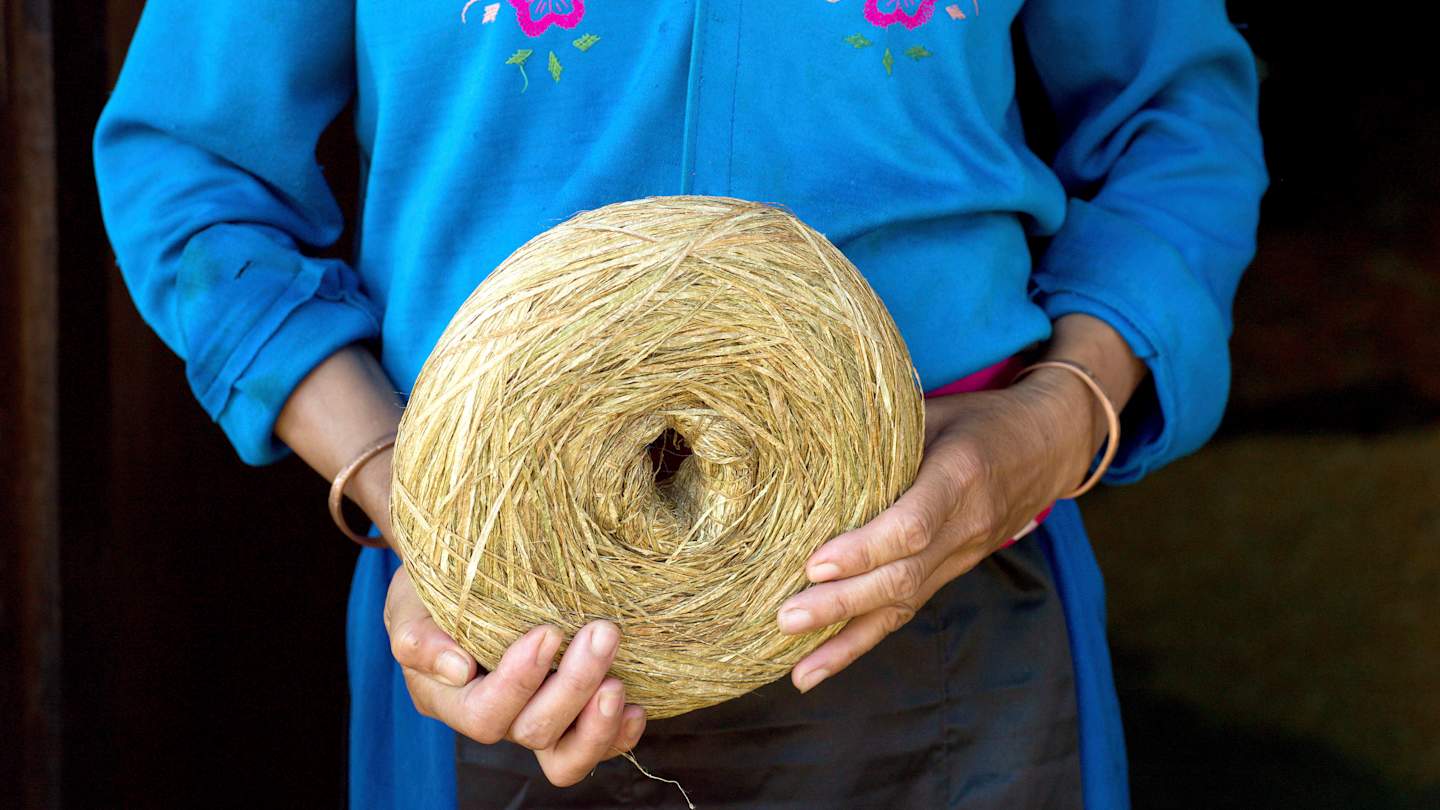
America has always had a soft spot for big things that have absolutely no reason to be big. Giant Paul Bunyan statues? Naturally. A massive roadside peach? Of course. A house shaped like a shoe? Why not park there and take a picture? But few attractions capture the wonderfully odd spirit of American road trips like the World’s Largest Ball of Twine.
At first glance, a giant ball of twine sounds like the punchline to a joke your uncle tells at a gas station while holding beef jerky. Yet the story behind America’s twine-ball obsession is surprisingly rich. It involves farmers, thrift, small-town pride, Guinness World Records, friendly rivalries, tourism, folk art, and one very important question: how much string is too much string?
The answer, apparently, is that there is no such thing as too much.
How a Practical Farm Chore Became Roadside Legend
The origins of America’s giant twine-ball craze are rooted in farm life. Before twine became a roadside celebrity, it was an everyday agricultural tool. Farmers used baling twine to tie hay, organize supplies, and keep rural operations running smoothly. When the twine was used up, scraps often collected in barns, sheds, and corners of farmyards.
For many farmers, throwing things away felt wasteful. Rural America has long had a practical, “use it again if it still has a pulse” approach to materials. Old jars became storage containers. Feed sacks became fabric. Scrap metal waited patiently for its next job. Twine, too, could be saved, tied together, and rolled into a ball.
That humble habit is where the magic began. What started as tidying up became a form of accidental sculpture. A ball of twine was practical at first: it kept loose string in one place. But once a twine ball grew large enough to become inconvenient, it crossed into a new category. It was no longer storage. It was a statement.
Francis Johnson and the Minnesota Ball That Started a Movement
One of the most famous chapters in the story belongs to Francis A. Johnson of Darwin, Minnesota. Johnson began rolling twine in 1950, and what began as a modest farm project turned into a decades-long commitment. He reportedly worked on the ball for hours a day over many years, transforming ordinary baling twine into a massive landmark.
The Darwin twine ball became known as the largest ball of twine rolled by one man. It measures roughly 12 to 13 feet across, weighs about 17,400 pounds, and remains one of Minnesota’s most beloved oddities. The town eventually housed it in a protective structure, giving the ball the kind of respect usually reserved for historic documents, championship trophies, or a casserole recipe that has won three county fairs in a row.
Darwin did not simply display the ball and call it a day. The community built an identity around it. Visitors came. Souvenirs followed. A museum helped tell the story. Twine Ball Day became a local celebration. What Johnson created with patience and stubbornness became something larger than itself: a small-town symbol with national reach.
Cawker City, Kansas: The Community Ball That Keeps Growing
If Darwin represents individual dedication, Cawker City, Kansas represents community teamwork. In 1953, Kansas farmer Frank Stoeber began winding twine on his farm. According to local accounts, the project started as a way to manage old twine that had accumulated in the barn. But Stoeber kept rolling, and the ball kept growing.
By the late 1950s, Stoeber’s ball had become enormous. In 1961, it was moved into town, where it became a public attraction. Cawker City embraced it fully. Businesses leaned into the theme, visitors stopped for photos, and the town developed a tradition that made the attraction more than a frozen museum piece.
Every August, Cawker City hosts a Twine-a-thon, during which people add more twine to the ball. This makes the Kansas attraction special: it is not just a thing you look at; it is a thing you can help make bigger. It is a monument with a participation policy.
That ongoing growth gives Cawker City a powerful claim in the “world’s largest” debate. While other twine balls have different record categories, Cawker City’s is often described as the largest community-built ball of sisal twine. It has reached tens of thousands of pounds and millions of feet of twine. In other words, it is not a craft project. It is a civic workout.
Why Are There Multiple “World’s Largest” Balls of Twine?
The phrase World’s Largest Ball of Twine sounds simple until you ask the obvious question: which one?
That is where the story becomes delightfully tangled. Several American towns claim a version of the title, and each claim depends on the category. There is the largest ball made by one person. There is the largest community-built ball. There is the heaviest ball. There is a ball made of nylon twine. The title is less like a single trophy and more like a family reunion where everyone insists they brought the best potato salad.
The Darwin, Minnesota Claim
Darwin’s claim rests on Francis Johnson’s solo effort. The ball became legendary because one person rolled it over decades. That individual dedication is part of its charm. Visitors are not just looking at twine; they are looking at a physical record of patience.
The Cawker City, Kansas Claim
Cawker City’s claim is tied to continuous community growth. Since the public can add twine, the attraction is alive in a strange but wonderful way. The ball is a shared project, and that makes it a living symbol of local pride.
The Lake Nebagamon, Wisconsin Claim
In Lake Nebagamon, Wisconsin, James Frank Kotera, known by many as “JFK,” created what is often described as the world’s heaviest ball of twine. He began the project in 1979 and continued for decades. The ball eventually weighed more than 24,000 pounds, making it a heavyweight champion in the most literal sense.
The Branson, Missouri Claim
Another contender is associated with J.C. Payne, a retired Texas brick mason who built a huge nylon twine ball and later sold it to Ripley’s Believe It or Not! in Branson, Missouri. Payne’s ball was certified by Guinness in the 1990s, adding another layer to the already twisty record-book drama.
The Guinness Effect: When Twine Became Competitive
The rise of Guinness World Records helped turn large homemade objects into competitive attractions. Before record books and national media attention, a giant twine ball was a local curiosity. After official recognition entered the picture, it became a title fight.
That competition mattered. A record gave towns a marketing hook. It gave travelers a reason to detour. It gave local newspapers something fun to write about besides school board meetings and suspiciously ambitious pumpkin contests. Most importantly, it gave small communities a way to stand out.
For towns that might not have beaches, skyscrapers, or famous theme parks, a giant object could become an economic and cultural asset. The ball of twine was not just twine. It was a sign that said, “Stop here. We have a story.”
Roadside Attractions and the American Love of the Detour
To understand the twine-ball craze, you have to understand the American road trip. In the 20th century, as highways expanded and car ownership became common, families took to the road in search of national parks, relatives, diners, motels, and air conditioning that worked only when the car was moving.
Roadside attractions flourished along highways because they gave drivers a reason to stop. Some were commercial, like reptile farms, mystery houses, and souvenir shops. Others were civic, like giant statues, murals, and record-breaking objects. The weirder the attraction, the better it worked as a memory.
A giant ball of twine checks every box. It is easy to explain. It is funny without trying too hard. It photographs well. It costs little or nothing to view. And it gives travelers the priceless ability to say, “You won’t believe what we saw in Kansas.”
Why Twine? The Beauty of the Ordinary Made Absurd
Part of the appeal is that twine is aggressively ordinary. It is not marble, gold, bronze, or stained glass. It is string. Twine belongs in barns, garages, garden sheds, and junk drawers. When something that ordinary becomes monumental, it changes how people see it.
That transformation is the secret sauce of American folk art. The world’s largest ball of twine is funny because it is useless, but it is touching because it required so much effort. Nobody accidentally makes a 17,000-pound ball of anything. These projects took years of repetition. Every wrap was small. Together, the wraps became enormous.
There is a quiet lesson there, though the attraction is too polite to shout it. Big things are often made one little loop at a time.
Pop Culture Gave the Twine Ball a Second Life
Twine balls moved from roadside maps into pop culture through movies, comedy, music, and travel writing. One of the best-known cultural references is “The Biggest Ball of Twine in Minnesota,” a song by “Weird Al” Yankovic. The song helped turn Darwin’s twine ball into a symbol of cheerful, exaggerated road-trip enthusiasm.
Other references in film, television, comics, and games reinforced the idea that a giant twine ball is the ultimate quirky detour. It became shorthand for a particular kind of American travel experience: wholesome, strange, low-budget, and unforgettable.
That cultural presence matters because it kept the attractions alive for new generations. A traveler might first hear about a twine ball as a joke, then discover that it is real, then plan a stop, then buy a postcard, then tell five friends. That is how roadside folklore survives.
Small-Town Pride Wrapped in Sisal
For small towns, the world’s largest ball of twine is more than a novelty. It is a community anchor. It gives residents a shared symbol and gives visitors a reason to arrive with curiosity instead of simply passing through.
Cawker City’s annual Twine-a-thon is a perfect example. It turns spectators into contributors. A person who adds twine becomes part of the story. That is a clever tourism strategy, but it is also something more sincere: an invitation to belong for a few minutes.
Darwin’s museum and festival do something similar by preserving the memory of Francis Johnson. The attraction honors one man’s unusual dedication while helping the town maintain a place on the map. In Lake Nebagamon, the preservation of Kotera’s heavy twine ball reflects a community effort to protect a local oddity that had become part of regional identity.
The Psychology of Visiting a Giant Ball of Twine
Why do people travel to see a ball of twine? Nobody needs to see one. There is no emergency twine-ball requirement in American life. Yet visitors keep coming because the attraction offers something rare: permission to enjoy something simply because it exists.
Modern travel can feel pressured. People chase perfect views, five-star restaurants, and carefully edited itineraries. A giant ball of twine asks for none of that. It is not elegant. It is not exclusive. It does not care what you are wearing. It just sits there being enormous.
That makes it strangely relaxing. You take a photo. You laugh. You read the sign. You wonder who first looked at a pile of string and thought, “This could be my legacy.” Then you get back in the car feeling oddly refreshed.
Experience: What It Feels Like to Visit America’s Twine-Ball Country
A trip to see one of America’s famous twine balls is not like visiting a major national monument. There are no grand marble steps, no hushed crowds, and no security guard reminding you not to lean on history. Instead, the experience feels charmingly informal. You arrive in a small town, park nearby, and suddenly there it is: a huge ball of string that has somehow become more confident than most buildings.
The first reaction is usually laughter. Not mocking laughter, but the surprised kind. The human brain needs a second to process scale. You know what twine is. You have seen it wrapped around packages, tomato plants, or hay bales. But seeing it stacked into a giant sphere changes the rules. It feels like a household object wandered into a growth serum experiment and decided to run for mayor.
Then comes the slower appreciation. You notice the texture: thousands upon thousands of strands layered over one another. You see how the surface is not perfectly smooth but rugged, fibrous, and weathered. The ball looks both handmade and geological, like a hayfield decided to become a planet. It is funny, yes, but it is also impressive in a stubborn, Midwestern way.
In Cawker City, the experience is especially interactive because the town has turned the ball into a shared ritual. Visitors can add twine during approved times, and that simple act changes everything. You are no longer just looking at the attraction. You are helping it grow. Your contribution may be tiny, but tiny is the whole point. The ball exists because thousands of tiny additions became impossible to ignore.
Darwin, Minnesota offers a different feeling. The ball there is closely tied to Francis Johnson, so the visit feels more biographical. You are looking at one man’s routine transformed into public memory. The museum setting helps frame the attraction as a story of dedication rather than just size. It makes visitors think about hobbies, habits, and the strange ways ordinary people become local legends.
Lake Nebagamon adds another mood entirely. The story of James Frank Kotera’s heavy twine ball has a rugged, solitary quality. It feels less like a planned tourist attraction and more like a lifetime obsession that the community later chose to protect. That gives it an almost folk-hero quality. It is the kind of place where the line between eccentricity and achievement becomes pleasantly blurry.
The best way to enjoy these attractions is to treat them as experiences, not checklist items. Talk to locals if the opportunity appears. Read the signs. Buy a small souvenir if there is a shop nearby. Take the goofy photo. The goofiness is part of the heritage. A serious expression in front of a massive ball of twine is technically allowed, but it may violate the spirit of the journey.
These stops also remind travelers that great road trips are often built from detours. The ball of twine may not be the reason you leave home, but it can become the story you remember most. Years later, beaches and hotel rooms may blur together, but the day you stood beside several tons of string in a small American town? That tends to stick.
Why the Craze Still Matters
The World’s Largest Ball of Twine craze matters because it celebrates a deeply American mix of practicality, humor, competition, and community pride. These attractions began with ordinary materials and ordinary people. They became famous not because they were polished, but because they were sincere.
In an age of digital entertainment and carefully branded experiences, the twine balls remain refreshingly analog. They cannot be streamed. They do not need special effects. Their appeal is physical, local, and wonderfully specific. They are monuments to persistence, thrift, and the universal human desire to point at something weird and say, “Pull over.”
Conclusion
The surprising origins of America’s World’s Largest Ball of Twine craze reveal more than a competition over string. They reveal how small acts can grow into big stories, how rural practicality can become roadside art, and how small towns can transform eccentric local projects into unforgettable landmarks.
Francis Johnson, Frank Stoeber, James Frank Kotera, and J.C. Payne did not simply roll twine. They helped create a category of American folklore. Their creations remind us that not every landmark has to be ancient, expensive, or serious. Sometimes, all it takes is patience, a pile of twine, and the courage to keep going long after everyone else would have said, “Okay, that is probably enough string.”
Note: This article is based on widely documented roadside-attraction history, tourism records, museum descriptions, record-book accounts, and public histories of the major twine-ball sites in Minnesota, Kansas, Wisconsin, and Missouri.