Note: This article is written as an original, publish-ready creative essay based on real art-history, textile-art, tarot, moon-symbolism, and sustainable craft references.
Some artists begin with a clean canvas. I begin with a pile of old fabric that looks like it lost a wrestling match with a sewing basket. Faded curtains, torn dresses, lonely lace, frayed denim, velvet scraps, cotton sleeves, and the occasional mysterious ribbon all find their way onto my table. From there, they become something else: moons, saints, cards, symbols, tiny portals, and strange little miracles stitched into place.
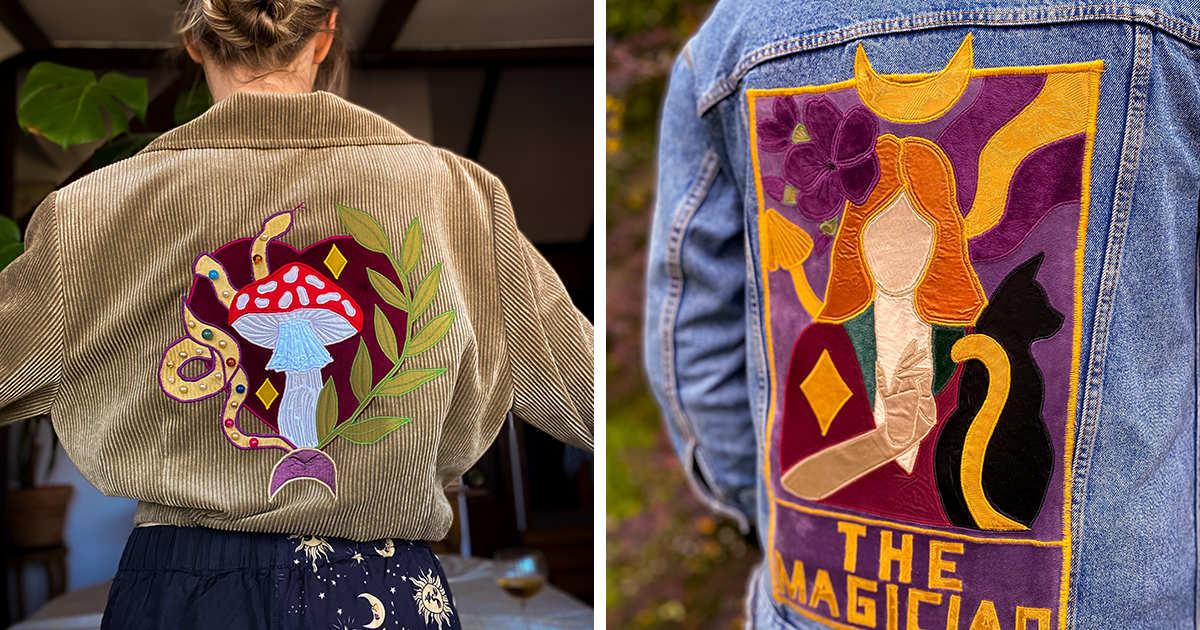
This collection, My 18 Magical Collages From Old Fabrics That Are Inspired By The Divine, The Moon, And Tarot Cards, grew from a simple question: what if discarded fabric still had a soul? Not in a spooky attic wayalthough, frankly, some old lace does look like it knows secretsbut in the sense that cloth holds memory. It touches skin, absorbs sunlight, carries scents, wrinkles with life, and often gets thrown away long before its story is finished.
These 18 magical fabric collages are my attempt to give those stories another chapter. They combine textile collage, mixed media art, upcycled fabric, lunar imagery, sacred symbolism, and tarot-inspired compositions. The result is part art practice, part meditation, part moonlit craft session, and part “why is there thread in my coffee again?”
Why Old Fabric Feels So Magical
Old fabric is not just material. It is evidence. A scrap of floral cotton may once have been a summer dress. A dark piece of velvet might have lived as a jacket worn to family dinners. A torn bedsheet could have witnessed years of dreams, arguments, naps, and dramatic declarations that Monday would finally be the day to start exercising.
In textile art, fabric has a built-in emotional charge. Unlike paint squeezed from a tube, cloth has already belonged somewhere. When used in collage, it creates instant depth because it brings texture, pattern, wear, and memory. A smooth satin moon feels different from a moon made of burlap. A tarot-card figure cut from faded linen feels more human than one drawn on plain paper. The material does half the storytelling before the artist even reaches for glue or thread.
That is why fabric collage is such a powerful medium for spiritual, mystical, and symbolic work. The divine is often imagined as something distant, glowing, and perfect. Fabric brings it back down to earth. It says: holiness can be wrinkled. Mystery can have a hemline. The moon can be made from an old pillowcase and still look like she controls the tides.
The Inspiration: The Divine, The Moon, And Tarot Cards
The three guiding forces behind this collection are the divine, the moon, and tarot cards. Each one gives the artwork a different kind of energy.
The Divine: Sacred Beauty Without Being Too Serious
The divine appears in these collages as halos, hands, eyes, veils, wings, flames, stars, and quiet figures who look like they know exactly where your missing scissors went. I was not trying to copy one religious tradition. Instead, I wanted to explore sacred feeling: protection, intuition, awe, grief, renewal, and the strange comfort of believing that ordinary life has invisible layers.
Many cultures have used textiles in sacred settings, from ceremonial garments to altar cloths and devotional banners. Fabric has always been close to ritual because it moves with the body and transforms space. A plain table becomes an altar with the right cloth. A person becomes a bride, priestess, dancer, mourner, or celebrant through fabric. That power fascinated me.
The Moon: The Original Mood Lighting
The moon is the emotional center of the series. She changes shape, disappears, returns, pulls water, rules night skies, and gives artists everywhere a perfectly valid excuse to use silver thread. In these collages, the moon appears as a crescent crown, a full circular face, a stitched eclipse, a pale witness, and sometimes a tiny button that somehow becomes the most dramatic object in the room.
Lunar imagery works beautifully with fabric because the moon is all about phases. Old textiles also have phases: new, loved, worn, damaged, forgotten, rediscovered, transformed. A fabric scrap becoming a moon is not just decoration. It is a metaphor wearing sequins.
Tarot Cards: Tiny Theaters Of Symbolism
Tarot cards inspire the structure of many pieces in the collection. I love how a tarot card can feel like a miniature stage: one figure, a few symbols, a border, a title, and suddenly your brain is whispering, “This means something.” Tarot imagery is rich with archetypes: The Moon, The High Priestess, The Star, The Tower, The Empress, The Fool, and many others. Each card invites interpretation without forcing a single answer.
For fabric collage, that is perfect. A stitched key can suggest knowledge. A scrap of blue velvet can become night. A gold thread can become fate. A torn edge can become a mountain, a wound, or a doorway. Tarot gives the pieces a visual grammar, while fabric gives them emotional warmth.
The 18 Magical Collages: A Walk Through The Collection
Each collage in the series has its own personality. Some are calm and celestial. Some are dramatic enough to deserve their own theme music. Together, they form a soft, symbolic deck of fabric-based visions.
1. The Moon Keeper
This piece centers on a crescent moon made from cream-colored linen, surrounded by navy fabric scraps and silver thread. The moon looks guarded, almost shy. Small stitched stars circle it like loyal friends who brought snacks.
2. The High Priestess Of Scraps
Inspired by tarot’s High Priestess, this collage uses lace curtains, black cotton, and a strip of blue satin. The figure sits between two fabric columns. Her veil is made from a translucent old scarf, giving her that “I know your secrets but I’m polite about it” energy.
3. Divine Laundry Day
This playful collage imagines sacred robes hanging under moonlight. It combines white cotton, gold trim, and tiny embroidered stars. It asks a very serious spiritual question: who washes the garments of angels?
4. The Velvet Eclipse
A deep burgundy velvet circle overlaps a pale silk moon. The texture does most of the work here. The piece feels quiet, heavy, and dramatic, like the sky decided to wear opera gloves.
5. The Star Card Remembers
Inspired by tarot’s Star card, this collage features a figure pouring silver-thread “water” from two vessels. The background is made from faded denim, giving the celestial scene a grounded, everyday feeling.
6. The Moth And The Oracle
A moth made from patterned cotton hovers near a single embroidered eye. Moths are drawn to light, and this one seems drawn to hidden knowledge. Or maybe it just saw the lamp. Spirituality and bugs are both mysterious.
7. Moon Garden With Golden Weeds
This piece uses green upholstery scraps, gold ribbon, and pale cotton circles to create a lunar garden. The “weeds” are stitched with metallic thread, suggesting that even unwanted things can become luminous.
8. The Empress In An Old Curtain
A floral curtain becomes the robe of a divine feminine figure. The collage celebrates abundance, creativity, and the stubborn beauty of fabric that refuses to retire quietly.
9. The Fool Steps Into Moonlight
This tarot-inspired collage shows a small figure stepping toward a crescent moon. The body is made from mismatched fabric scraps, because every new journey begins with imperfect materials and questionable confidence.
10. Three Hands, One Blessing
Three fabric hands reach toward a glowing central circle. Made with linen, muslin, and lace, the collage explores offering, prayer, and connection. It feels simple but powerful, like a whisper with good posture.
11. The Lunar Seamstress
This piece shows a moon-faced figure stitching stars into a dark sky. The thread is visible on purpose. I wanted the viewer to see the labor behind the magic, because even enchantment has a to-do list.
12. The Tower Softened
Tarot’s Tower is often dramatic, but this collage reimagines it in cloth. Instead of lightning and destruction, torn fabric blocks tumble gently into a new arrangement. It is about change that hurts, but also change that rearranges us into something more honest.
13. The Sacred Pocket
An actual pocket from an old garment becomes the central shrine. Inside it are stitched symbols: a moon, a key, a star, and a tiny eye. The piece suggests that everyday objects can carry private holiness.
14. The Moon Rabbit’s Nap
Inspired by lunar folklore, this collage features a rabbit curled beneath a crescent moon. Soft flannel gives the rabbit a sleepy texture, making the whole piece feel like a bedtime story told by the universe.
15. The Oracle Wears Plaid
This collage started as a joke and became one of my favorites. A mystical figure wears plaid fabric from an old shirt. The contrast between sacred symbolism and casual fabric makes the piece feel approachable. Not every oracle needs silk. Some prefer flannel.
16. The Silver Thread Path
A winding silver line crosses layers of dark fabric, leading to a small moon at the top. It represents intuition: not a loud command, but a quiet thread you follow when logic has gone to make tea.
17. The Divine Eye Opens
This piece uses layered ovals of cotton, satin, and lace to create a large symbolic eye. It is not meant to feel scary. It is meant to feel awake, protective, and slightly unimpressed by excuses.
18. The Last Full Moon
The final collage is the largest. It combines pieces from nearly every fabric used in the series. A full moon rises above a landscape of scraps, as if all the previous works have become one stitched world. It is a closing image, but also a beginning.
How The Collages Were Made
The process began with sorting. I divided fabrics by color, texture, and emotional attitude. Yes, fabric has attitude. Velvet is dramatic. Linen is wise. Lace is suspiciously poetic. Denim is practical and probably owns a toolbox.
After sorting, I sketched loose compositions based on tarot-card layouts: central figure, symbolic objects, border, title space, and background. I did not follow tarot meanings too literally. Instead, I treated them as creative prompts. The Moon became intuition. The Star became hope. The Tower became transformation. The High Priestess became silence, mystery, and the power of not explaining everything.
Next came cutting and layering. Fabric collage requires patience because cloth refuses to behave like paper. It frays, curls, stretches, and sometimes sheds tiny threads everywhere like a nervous cat. But that unpredictability is also what makes it alive. A frayed edge can become a cloud. A wrinkle can become a mountain ridge. A stain can become a shadow.
I used stitching, fabric glue, hand embroidery, and occasional beadwork. Some pieces needed clean edges; others looked better raw. I wanted the collection to feel handmade, not machine-perfect. The visible stitches remind viewers that magic is not always smooth. Sometimes it is knotted on the back.
Why Upcycled Fabric Art Matters
Beyond beauty, upcycled fabric art carries an environmental message. Textile waste is a real problem, and creative reuse offers one small but meaningful response. Turning old fabrics into art does not solve the entire issue, of course. My glue gun is not a global policy strategy. But it does shift the way we see materials.
When we make art from discarded cloth, we challenge the idea that worn things are worthless. A torn shirt can become a sky. A curtain can become a goddess. A sleeve can become a mountain. This kind of transformation encourages slower looking and more thoughtful making.
It also makes art more accessible. You do not need rare pigments or expensive tools to begin. You can start with a needle, scissors, thread, cardboard, fabric scraps, and curiosity. The most important material is attention.
Symbolism In The Series
Every collage uses symbols, but I wanted them to remain open-ended. Symbols are most powerful when they leave room for the viewer. A key might mean knowledge, escape, memory, or the junk drawer. A moon might mean intuition, cycles, femininity, mystery, sleep, change, or the reason everyone suddenly feels dramatic at 11:47 p.m.
The divine imagery is intentionally broad. Halos, eyes, hands, stars, veils, and flames appear across cultures and artistic traditions. In this collection, they are not used to claim one belief system. They are used to express reverence: for time, transformation, intuition, nature, memory, and the handmade.
Tarot-inspired framing also gives the collages a sense of story. A tarot card rarely tells you everything. It gives you a scene and asks you to participate. I wanted the collages to work the same way. They are not answers. They are invitations.
Lessons From Making 18 Magical Fabric Collages
The first lesson is that old materials are not passive. They guide the work. A piece of fabric may be too stiff for a veil but perfect for a tower. A floral scrap may look ordinary until it becomes a robe. A damaged edge may become the most beautiful part of the composition.
The second lesson is that limitations improve creativity. When you cannot buy the exact shade of blue you imagined, you learn to use the blue you have. Sometimes the blue you have is better. Sometimes it is weird. Weird is often where the art starts breathing.
The third lesson is that mystical art does not need to be gloomy. Spiritual symbolism can be elegant, funny, tender, and strange all at once. A moon can be majestic and made from a pajama leg. A divine figure can wear plaid. A sacred pocket can hold the universe and maybe a receipt.
Experiences Behind The Collection
Making these 18 magical collages felt less like producing a neat art series and more like hosting a very small, very dramatic fabric council. Every scrap seemed to arrive with an opinion. The old velvet wanted to be night. The lace wanted to be a veil. The denim wanted to be useful. The gold ribbon wanted applause. I tried to stay in charge, but honestly, the materials negotiated hard.
One of the most memorable experiences came while creating The Sacred Pocket. I had cut a pocket from an old shirt and placed it on the table without much intention. For days, it sat there looking plain. Then I slipped a tiny stitched moon into it, and suddenly the piece made sense. The pocket became a shrine. It reminded me that we all carry hidden symbols: private hopes, memories, fears, and little scraps of courage we forget we own.
Another meaningful moment happened with The Tower Softened. I originally planned to make it bold and chaotic, closer to the traditional sense of collapse and disruption. But the fabric would not cooperate. The torn blocks looked too gentle. Instead of forcing drama, I followed the material. The final collage became less about disaster and more about rebuilding. That taught me something useful outside the studio, too: not every breakdown has to be loud. Some transformations happen quietly, one soft piece at a time.
The moon pieces were the most meditative. Cutting circles from cloth is strangely calming until the circle comes out lopsided, at which point it becomes a test of character. But even imperfect moons looked right to me. The real moon is always changing, so why should a fabric moon be perfectly symmetrical? A slightly crooked crescent often felt more alive than a flawless one.
I also learned that working with old fabric creates an intimate relationship with time. New materials can be beautiful, but old cloth has already lived. When I stitched into faded cotton, I felt like I was adding my own sentence to a story someone else had started. That made the process feel collaborative, even when I was alone at the table surrounded by thread, scraps, and the quiet suspicion that I had glued something to my sleeve.
The funniest experience was realizing how much personality each collage developed. The Oracle Wears Plaid began as a humorous experiment because I liked the idea of a mystical guide dressed like she was about to chop firewood. But viewers responded warmly to it. The piece felt less distant than traditional sacred imagery. It suggested that wisdom does not always arrive in gold robes. Sometimes it shows up in a comfortable shirt and tells you to drink water.
By the time I finished the eighteenth collage, I understood the collection differently. It was not only about the divine, the moon, or tarot cards. It was about rescue. Not just rescuing fabric from the trash, but rescuing attention from hurry. Rescuing mystery from everyday routine. Rescuing the idea that handmade things matter, especially in a world that often wants everything fast, flat, and disposable.
These collages taught me that magic is not always a lightning bolt. Sometimes it is a needle passing through cloth. Sometimes it is a scrap placed in exactly the right corner. Sometimes it is the moment an old fabric, once forgotten, becomes the moon.
Conclusion
My 18 Magical Collages From Old Fabrics That Are Inspired By The Divine, The Moon, And Tarot Cards is a celebration of transformation. It shows how discarded textiles can become symbolic, emotional, and visually rich works of art. Through moons, tarot-inspired figures, divine symbols, and playful handmade details, the collection invites viewers to look again at what they might otherwise throw away.
Old fabric carries memory. Collage gives it structure. Tarot gives it mystery. The moon gives it rhythm. And the divine gives it that shimmering sense that maybe, just maybe, the ordinary world has been glowing quietly all along.