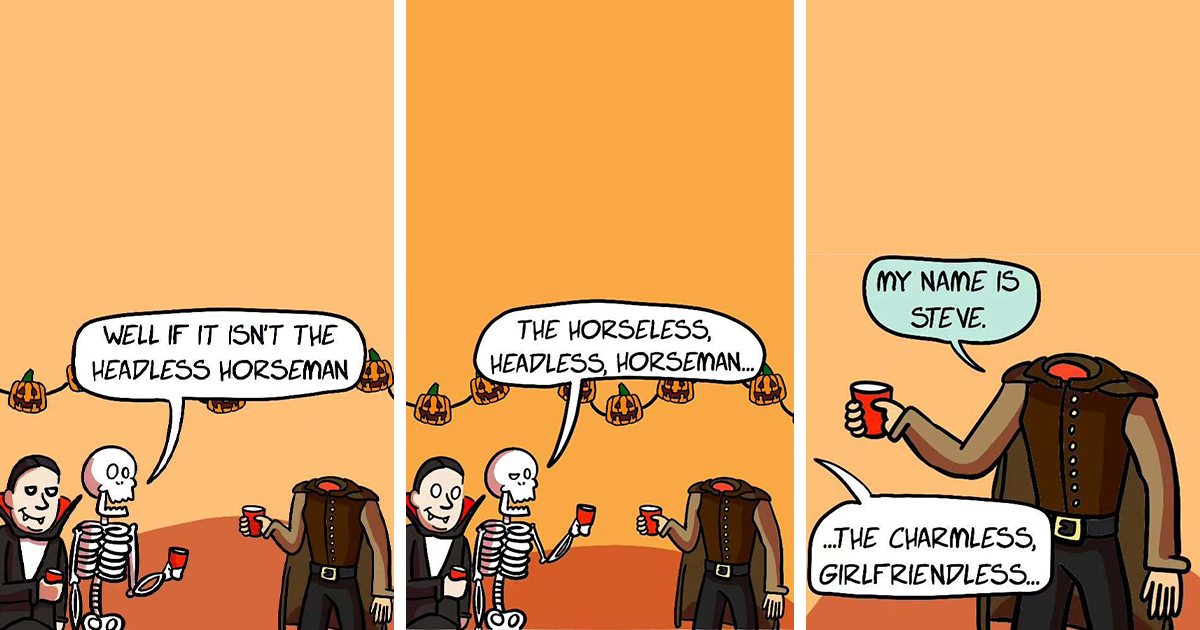
Food is already responsible for breakfast, lunch, dinner, emotionae conversations people have while pretending to study a restaurant menu. In Breakfast Club Comics, artist Brooke Karras gives food another job: making us laugh.
Her illustrated universe is populated by eggs, avocados, cookies, honey jars, fruit, vegetables, and other edible personalities dealing with friendship, romance, family drama, awkward misunderstandings, and aggressively delicious wordplay. These funny food comics are cute enough to make readers smile and clever enough to make them groan, which is exactly what a successful pun should accomplish.
The following look at 30 pun-filled comics explores why Karras’s characters are so memorable, how food jokes become miniature stories, and why a talking avocado can somehow feel more emotionally stable than half the people in your group chat.
Meet Brooke Karras, the Artist Behind Breakfast Club Comics
Brooke Karras began developing her digital drawing practice through a personal challenge to create art every day. What started as a regular creative exercise evolved into Breakfast Club Comics, a series built around expressive food characters, visual jokes, and ongoing relationships.
Karras has explained that she grew up enjoying newspaper comics and animated television shows. Her artistic influences include Bill Watterson, creator of Calvin and Hobbes, and Will Henry, creator of Wallace the Brave. That background shows in her work. The drawings are approachable and colorful, but the characters have enough personality to support continuing stories rather than functioning as disposable setups for one-line jokes.
Her creative process has traditionally combined pencil sketches with digital drawing and coloring. Dialogue is added after the visual idea takes shape, allowing the expressions, poses, and panel composition to support the final punchline. Her online series also introduces recurring personalities such as Sunny, Kelly the avocado, and Shelly, turning breakfast ingredients into a surprisingly dramatic social circle. ection>
Why Food Is the Perfect Cast for a Comedy Comic
Food is instantly recognizable. An artist does not need three paragraphs of backstory to explain an avocado, a fried egg, or a jar of honey. Readers understand the object immediately, leaving the comic free to twist that familiar image into something unexpected.
That twist is the engine behind many food puns. A word or phrase begins with an ordinary meaning, then the picture reveals a second interpretation. A character may be feeling salty, getting roasted, trying to ketchup, or wondering whether a relationship is worth the whisk. The vocabulary of kitchens, recipes, flavors, and ingredients offers a pantry full of double meanings.
This style also benefits from anthropomorphism, the habit of giving human emotions and intentions to nonhuman things. Add two eyes, tiny shoes, and a worried expression to a piece of toast, and the brain begins inventing a personality before the character says a word. Humor theories often emphasize incongruitythe collision of two ideas that do not normally belong together. A nervous vegetable attending a job interview is harmless, recognizable, and absurd all at once. ection>
30 Reasons These Funny Food Comics Are So Easy to Devour
As readers move through the 30-comic collection, several recurring ingredients make the series especially entertaining.
Food Puns With Strong Punchlines
-
The jokes begin with familiar ingredients.
Readers already recognize the food, so the artist can reach the humorous twist quickly without explaining the setup. -
The visual delivers half the pun.
A line of dialogue may sound ordinary until the next panel reveals why it has a second, food-related meaning. -
Some punchlines arrive through family drama.
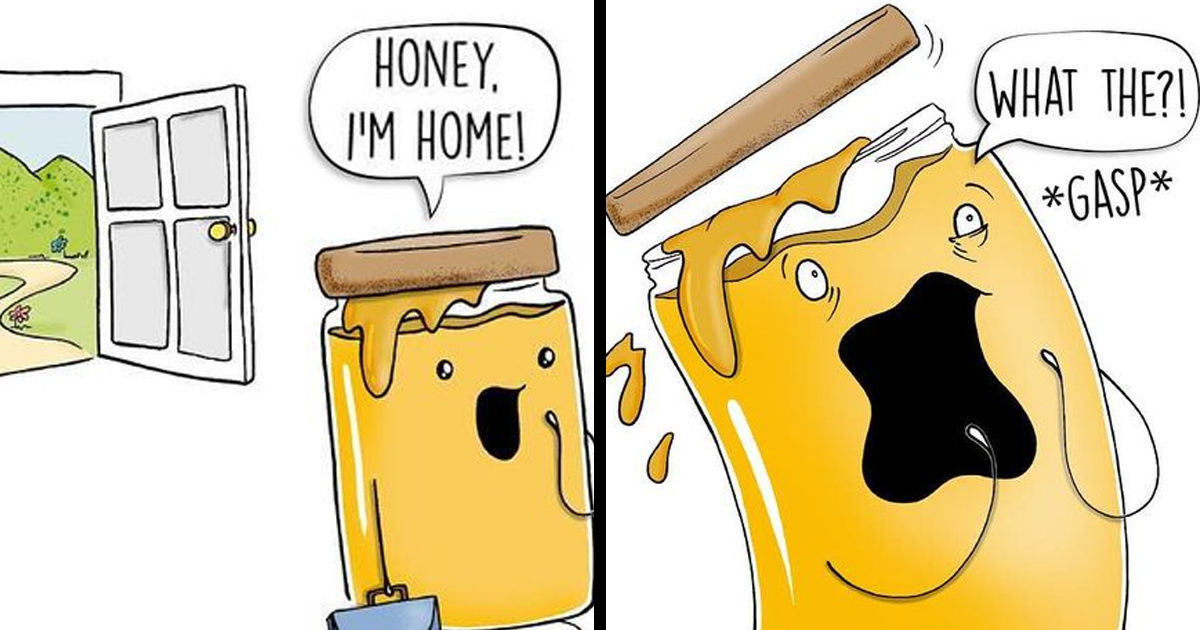
In one memorable honey-themed comic, a jar discovers that the bee embracing its partner is merely her father. The jealous reaction makes the “bee-lieve” wordplay even sweeter. -
The characters take silly situations seriously.
A solemn expression placed inside an absurd kitchen conflict creates a wonderful contrast. -
The puns rarely stand alone.
They usually appear within a conversation, misunderstanding, friendship, or miniature plot. -
Groan-worthy humor becomes part of the charm.
Readers may see a pun coming, but anticipating it can make the payoff more enjoyable. -
Food vocabulary offers endless possibilities.
Words connected to peeling, grilling, mixing, spreading, baking, chilling, and seasoning can all become comic material. -
Expressions strengthen the wordplay.
Wide eyes, tiny tears, suspicious glances, and dramatic gasps make a simple line much funnier. -
Dialogue stays compact.
The jokes do not require a lecture, a glossary, or a five-course explanation. -
The humor rewards a second look.
Small background details often add another joke after the main punchline has landed.
Cute Characters With Relatable Problems
-
The food characters have recognizable personalities.
Some are confident, some anxious, some romantic, and some seem one minor inconvenience away from becoming mashed potatoes. -
Recurring characters create familiarity.
Readers are not simply looking at random ingredients; they are returning to a community with friendships and history. -
Romantic misunderstandings become harmless comedy.
Jealousy feels less threatening when the suspicious boyfriend is a jar wearing tiny shoes. -
Friendship drives many stories.
Characters encourage, tease, disappoint, and support one another much like people do. -
Everyday emotions remain recognizable.
Embarrassment, insecurity, excitement, loneliness, and affection still feel real, even when experienced by breakfast. -
The characters are visually distinctive.
Their shapes, colors, accessories, and facial expressions make them easy to identify. -
Tiny limbs increase the cuteness considerably.
This is not advanced art criticism, but little shoes on an avocado are difficult to argue with. -
The world follows its own playful logic.
Food can go on dates, attend parties, form rivalries, and experience emotional crises without anyone questioning the health department. -
Ordinary objects become supporting characters.
Refrigerators, utensils, containers, and kitchen spaces can all contribute to a joke. -
The cast appeals to different ages.
Children can enjoy the expressive food characters, while adults recognize the relationship humor and linguistic tricks.
Simple Artwork That Supports Strong Storytelling
-
The panels are easy to follow.
Clear compositions guide the eye from setup to reaction to punchline. -
White space keeps the pages readable.
The artwork avoids unnecessary clutter, allowing facial expressions and dialogue to remain central. -
Color helps define the cast.
Bright yellows, greens, browns, and reds make each food character immediately recognizable. -
Body language does real narrative work.
A tilted head or raised arm can communicate confusion before the speech bubble appears. -
The final panel often contains the strongest reaction.
A character’s delayed realization can be funnier than the event that caused it. -
The format suits mobile reading.
Short scenes, clear lettering, and bold expressions work well on social platforms and webcomic apps. -
The drawings feel handmade rather than mechanical.
Their warmth supports the gentle, personal tone of the comedy. -
The artist knows when to stop.
A good punchline can be weakened by extra explanation, so many scenes end at the moment of maximum absurdity. -
The comics balance stand-alone jokes with continuing stories.
New readers can enjoy one strip, while regular followers become invested in the wider cast. -
The collection creates a consistent comic world.
After 30 examples, the characters no longer seem like decorated ingredients. They feel like a tiny society that happens to live dangerously close to a toaster.
How a Food Pun Becomes a Complete Comic Story
A weak pun is simply a phrase with two meanings. A strong comic pun uses those meanings to create conflict, emotion, or surprise.
Imagine a slice of bread complaining that a friend has become distant. The setup is mildly relatable. Add a toaster in the background, and readers begin anticipating danger. If the final panel reveals that the friend is avoiding commitment because the relationship is “getting too heated,” the joke works on several levels. The words fit the emotional conversation, the kitchen setting supports the alternate meaning, and the artwork provides information that dialogue alone cannot deliver.
Karras frequently uses this combination of language and illustration. The image is not merely decoration surrounding a joke. It controls the timing. Readers first understand the literal situation, notice a visual clue, and then reinterpret the dialogue. That tiny moment of mental adjustment produces the laughor, in the case of a particularly shameless pun, the affectionate sigh.
Comics have long combined words and images to create characters, pacing, and narrative worlds. Digital platforms have changed how strips are distributed, but the fundamental craft remains familiar: establish a situation, guide the reader through a sequence, and place the final revelation where it will have the greatest effect. ection>
Why Readers Connect With Punny Food Characters
The series works because it brings together two highly social experiences: sharing food and sharing laughter. Meals are connected with family memories, celebrations, traditions, comfort, and community. A recognizable ingredient can therefore carry emotional associations before the artist gives it a face.
Humor provides another point of connection. Laughing at the same comic creates a small shared experience, whether readers send the strip to a friend or tag someone who has displayed suspiciously avocado-like behavior. Research and clinical guidance suggest that laughter may temporarily ease tension, support social connection, and help people cope with everyday stress, although a funny comic is not a substitute for professional care when it is needed. p>That emotional accessibility explains why these comics can be enjoyed quickly without feeling empty. They offer a joke, but they also offer an affectionate version of daily life. The characters worry, flirt, misunderstand one another, and try again. Their world is ridiculous, yet the feelings inside it are familiar.
What Aspiring Comic Artists Can Learn From Breakfast Club Comics
Begin With a Repeatable Concept
A successful webcomic needs a premise broad enough to generate many ideas. “Food characters making food puns” is simple to describe, but it can produce romance, workplace comedy, family stories, seasonal jokes, and longer narratives.
Create Characters, Not Just Punchlines
A clever joke may attract attention once. A recognizable personality gives readers a reason to return. Character goals, relationships, fears, and habits provide material when the obvious puns have already been served.
Let the Picture Participate
Do not place a complete joke in a speech bubble and ask the artwork to stand nearby looking decorative. Hide part of the information in the setting, pose, expression, or panel transition.
Protect the Timing
Readers should encounter information in the correct order. Revealing the visual twist too early can flatten the punchline. Revealing it too late can create confusion instead of surprise.
Develop Ideas Through Consistent Practice
Karras’s project grew from a regular drawing challenge. That origin is a useful reminder that creative confidence often follows repeated work. Not every sketch must become a masterpiece. Some sketches merely introduce you to the talking muffin that will later ruin everyone’s brunch.
Conclusion: A Comic Collection Worth Savoring
Brooke Karras’s Breakfast Club Comics proves that a familiar subject can feel fresh when it is supported by appealing characters, carefully constructed visuals, and a dependable supply of wordplay.
The 30 funny food comics are not entertaining only because the characters are edible. They succeed because each ingredient is treated like a performer. Expressions establish emotion, panel transitions control timing, and puns emerge naturally from the situation. The result is a bright comic world where friendship can become cheesy, arguments can turn salty, and romance may depend on whether two characters make a pear-fect match.
These strips are quick to read but thoughtfully built. They demonstrate how simple drawings and familiar words can create memorable storytelling. They may also change the way you look at your kitchen. Once you have seen a jar of honey experience romantic jealousy, breakfast becomes less of a meal and more of an unsupervised ensemble cast.
A Personal Reading Experience: When Lunch Starts Looking Suspicious
Reading a large collection of funny food comics creates a peculiar experience. At first, the jokes seem safely contained inside the panels. The egg has a personality because the artist drew a face on it. The avocado has relationship problems because the dialogue says so. Everything is under control.
Then you walk into the kitchen.
The banana on the counter is leaning against the fruit bowl with what can only be described as exhaustion. The two apples beside it appear to be excluding a third apple from an important meeting. A carton of eggs is sitting in the refrigerator, silently aware that one member of the family never came home from breakfast.
This is the lasting pleasure of anthropomorphic food comics: they temporarily change the reader’s imagination. Familiar objects stop being background scenery and begin suggesting stories. A cracked cracker becomes a character who has endured a difficult week. A lonely pea on the floor becomes an adventurer separated from its people. The forgotten leftovers in the back of the refrigerator are no longer expired food. They are survivors of a failed expedition, and they have probably established their own government.
The puns also escape from the page. After reading several strips, ordinary conversations become dangerous. Someone says a project is “toast,” and your brain immediately supplies a worried slice of bread holding a résumé. A friend says they need time to “process” something, and suddenly a food processor appears in your imagination offering emotional counseling.
This kind of humor is especially enjoyable when shared. Sending a food comic to a friend requires almost no explanation. The joke is visual, the ingredient is recognizable, and the emotional situation is usually universal. You can send an anxious avocado to someone before a job interview, a dramatic cookie to a friend navigating a breakup, or a cheerful breakfast character to the person who insists on texting before sunrise.
The collection also demonstrates that light entertainment does not have to be careless entertainment. The drawings may look simple, but each panel reflects decisions about placement, color, lettering, expression, and timing. A character must face the correct direction. A reaction must appear at the right moment. The punchline must be surprising without feeling unrelated to the setup.
As a reader, that craftsmanship becomes easier to appreciate after moving through 30 comics. Patterns emerge. Dialogue is kept short. Faces remain readable. Visual distractions are limited. Even when the joke is deliberately ridiculous, the storytelling is controlled.
Most importantly, the comics offer a pleasant pause. They do not demand that readers memorize a complicated fictional history or prepare emotionally for a devastating plot twist. You can enter the world, laugh at an insecure vegetable, and leave with your afternoon slightly improved.
Of course, leaving may be temporary. The next time you open the refrigerator, the cheese will be standing there looking unusually mature. The milk will appear emotionally drained. And somewhere behind the orange juice, an avocado will be waiting to tell a joke that is absolutely the pits.