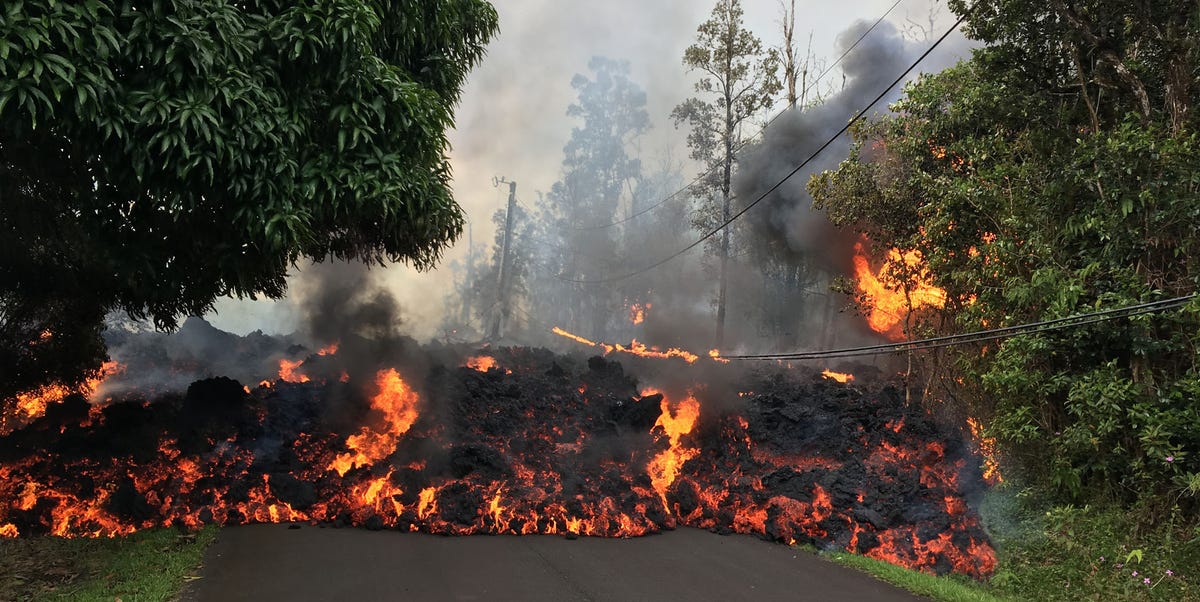
Hawaii is famous for beaches, rainbows, shave ice, and sunsets so dramatic they practically demand applause. It is also home to some of the world’s most active volcanoes. That means a volcanic event can occasionally add a few less relaxing items to the island itinerary: acidic rain, volcanic smog called vog, falling volcanic glass, ash, and even rocks launched through the air like nature’s least welcome fireworks.
When Kīlauea or another Hawaiian volcano becomes more active, the hazard is not limited to glowing lava inside a crater. Volcanic gases can drift downwind, react with moisture and sunlight, create hazy air pollution, affect crops, irritate lungs, and sometimes contribute to acidic deposition. In more explosive scenarios, chunks of rock can be hurled from a vent as ballistic projectiles. That phrase sounds like it belongs in a science-fiction movie, but it is a real volcanic hazard.
The important thing is perspective. A volcano warning does not mean every person in Hawaii is in immediate danger, nor does a hazy sky automatically mean an island-wide crisis. Conditions depend on the location of the eruption, the amount of gas being emitted, wind direction, rainfall, elevation, and distance from the vent. Still, residents and visitors should understand what the risks mean, how they differ, and when it is time to trade the scenic overlook for a closed window and a reliable air-quality update.
What Is Happening at Hawaii’s Volcanoes Right Now?
Kīlauea has experienced episodic summit activity since late 2024, with lava fountains and pauses occurring in cycles. During active fountain episodes, the main visible action is generally contained inside the summit caldera area of Hawaiʻi Volcanoes National Park. However, volcanic hazards do not always respect a neat boundary line on a map. Gas plumes, fine particles, and lightweight volcanic material can travel downwind beyond the eruption zone.
As of late June 2026, the latest eruptive episode had paused, but a pause is not the same thing as a permanent goodbye. Kīlauea can continue to release volcanic gases even when lava fountains are not visible. Scientists monitor seismic activity, deformation, gas emissions, lava behavior, wind conditions, and other signals to assess what may happen next.
For travelers, the key lesson is simple: do not plan a volcano visit as though it were a theme park ride with guaranteed operating hours. Eruptions can stop before you arrive, viewing areas can close without much notice, and air quality can change faster than a beach umbrella in a gusty trade wind.
Why a Hawaii Volcano Can Create Vog and Acid Rain
Vog: Hawaii’s Volcanic Version of Smog
Vog is short for volcanic smog. It forms when sulfur dioxide gas and other volcanic emissions react with oxygen, moisture, sunlight, dust, and other compounds in the atmosphere. The result can be a visible haze containing sulfur dioxide gas, fine particles known as PM2.5, and acidic droplets.
Unlike a lava flow, vog is not always obvious from a distance. The sky may look milky, dull, or unusually hazy. Visibility can drop, sunsets may become intensely colorful, and some people may notice an irritating or sulfur-like smell. Pretty skies are not an air-quality report, however. A dramatic orange sunset may be beautiful, but it is not permission to jog into a haze cloud while taking deep, enthusiastic breaths.
Wind is the great decision-maker. Trade winds can carry volcanic emissions out to sea or toward different parts of the island. Light winds, variable winds, or winds blowing from the south can allow vog to linger or spread into communities that may not normally experience it. In some situations, haze can reach other Hawaiian islands far from the volcanic source.
How Volcanic Gas Turns Into Acid Rain
Sulfur dioxide does not stay sulfur dioxide forever. In the atmosphere, it can react with water and oxygen to form acidic compounds. Those compounds may return to the ground in rainfall, mist, fog, or dry particles. This process is often referred to as acid rain or acidic deposition.
Volcanic acid rain is not Hollywood-style rain that burns through umbrellas in five seconds. It is usually a more gradual environmental problem. Acidic moisture can damage sensitive plant leaves, affect crops, corrode metal surfaces, dull paint, and contribute to wear on outdoor equipment. In places that rely on rooftop rainwater catchment systems, acidic rainfall can also create concerns because it may leach metals from roofing, gutters, pipes, or storage components into household water.
That does not mean every rain shower during an eruption is unsafe to touch. It means people should take official notices seriously, particularly in areas downwind of a major gas plume. Water catchment users may need to follow local public-health guidance about testing, filtration, diversion, and safe use of stored water.
Why Vog Can Be a Health Concern
For many healthy people, mild vog exposure may cause temporary discomfort such as watery eyes, throat irritation, coughing, congestion, or a scratchy feeling in the nose. But volcanic air pollution can be more serious for people with asthma, chronic obstructive pulmonary disease, bronchitis, emphysema, heart disease, or other respiratory conditions.
Children, older adults, pregnant people, outdoor workers, athletes, and infants may also be more sensitive when sulfur dioxide and fine-particle levels rise. Exercise makes the issue more complicated because heavy breathing can increase the amount of polluted air entering the lungs. A hard uphill run during poor vog conditions is a bad time to audition for a sports-drink commercial.
Potential symptoms of significant exposure can include wheezing, chest tightness, shortness of breath, worsening asthma, eye irritation, headaches, nausea, and persistent coughing. Anyone experiencing severe breathing trouble, chest pain, confusion, fainting, or symptoms that do not improve after moving away from the affected air should seek medical help promptly.
Practical Vog Safety Steps
- Check official air-quality conditions before outdoor work, hikes, exercise, or long drives.
- Reduce strenuous activity when vog levels are elevated.
- Stay indoors with doors and windows closed when conditions are poor.
- Set air conditioning to recirculate rather than draw outdoor air inside.
- Keep prescribed medications, especially asthma medications, available and use them as directed.
- Avoid smoking, vaping, and secondhand smoke, which can add more irritation to already stressed airways.
- Contact a healthcare professional if symptoms develop or worsen.
It is also important to understand the limits of masks. A properly fitted N95 respirator can help reduce exposure to ash and particles during cleanup. It does not protect the wearer from volcanic gases such as sulfur dioxide. A mask is useful for the right hazard, but it is not a magical force field against everything a volcano can put in the air.
Ballistic Projectiles: The Volcano’s Uninvited Flying Rocks
The phrase “ballistic projectiles” sounds like something a volcano would say while applying for a role in an action movie. In volcanology, it refers to rocks, blocks, bombs, and other material ejected from a vent on a ballistic trajectory. In plain English: a volcano can throw rocks through the air.
These fragments can be launched during explosive activity, gas-driven bursts, or steam-driven explosions. Near the vent, large blocks may travel outward in arcs much like cannonballs. Smaller fragments can sometimes travel farther, especially when wind helps carry lighter material downwind.
Kīlauea is often associated with relatively fluid lava flows and spectacular fountains, but it has also had explosive eruptions in its history. During past periods of concern, scientists warned that large ballistic blocks could potentially be thrown roughly a kilometer or more from a summit vent, while smaller pieces could travel farther. The exact danger zone depends on the eruption style, vent location, explosion strength, topography, and weather.
This is why closures around active volcanic areas matter. Closed trails, barriers, and warning signs are not there to ruin a vacation photo. They exist because a landscape near an active crater can involve unstable ground, deep cracks, falling tephra, sudden gas changes, sharp volcanic glass, and flying rocks that do not care whether someone has a premium camera lens.
Tephra, Ash, Pele’s Hair, and Other Fallout
Not all volcanic material falls in the same way. Tephra is a broad term for rock fragments blasted into the air during an eruption. It can include ash, cinders, pumice, scoria, and larger rocks. Fine ash may irritate the eyes and lungs, scratch surfaces, reduce visibility, and make roads slippery or abrasive.
Pele’s hair is another well-known Hawaiian volcanic material. Despite the poetic name, it is not hair and should definitely not be brushed, braided, or collected as a souvenir. It is made of thin strands of volcanic glass formed when molten lava is stretched by gas or wind. These delicate-looking strands can irritate skin, eyes, and airways.
If ash, Pele’s hair, or volcanic fragments fall around a home or vehicle, avoid dry sweeping or using leaf blowers. Those methods can launch fine particles back into the air. Instead, follow local cleanup guidance, wear gloves, eye protection, long sleeves, and a particle-filtering respirator such as an N95 when handling ash or glassy debris.
How Acid Rain and Vog Affect Homes, Farms, and Daily Life
Volcanic hazards are not just about dramatic lava footage. Vog and acidic deposition can affect ordinary routines. Farmers may see leaf damage or reduced crop quality. Gardeners may notice sensitive plants looking stressed. Metal fixtures, vehicles, outdoor appliances, and solar equipment can experience faster corrosion in repeatedly affected areas.
For residents using rainwater catchment systems, routine maintenance becomes especially important during volcanic activity. Roofs, gutters, first-flush diverters, tanks, and filters should be maintained according to local health guidance. Testing may be advisable when conditions are prolonged or when officials issue a specific recommendation.
Businesses may also feel the impact. Outdoor tour companies can face cancellations, restaurants may have fewer customers during poor visibility, and schools may need to adjust outdoor activities. Even people far from the vent can experience a lower-quality day because volcanic air pollution is an invisible logistics problem: it changes how people commute, exercise, work, and care for children.
How Visitors Can Enjoy Hawaii Volcanoes Safely
Hawaii’s volcanoes are extraordinary, and viewing an eruption from a designated safe area can be unforgettable. The safest approach is not to avoid volcanoes entirely. It is to respect them enough to stop treating them like a backdrop for social media stunts.
- Check official volcano updates before leaving your hotel or rental.
- Review the local air-quality forecast and wind conditions.
- Use only open, designated viewing areas.
- Never enter a closed trail, crater area, or barricaded overlook.
- Bring water, eye protection, sturdy shoes, and layers for changing weather.
- Keep children close and avoid unstable cliff edges.
- Leave immediately if you feel breathing difficulty, eye irritation, dizziness, or unusual discomfort.
One of the most common mistakes visitors make is assuming lava equals safety as long as it looks far away. But volcanic danger is not only about molten rock. Gas can move with the wind. Ground can crack without sending a calendar invitation. Tephra can fall outside the most obvious danger zone. The smartest visitor is the one who goes home with excellent photos and zero stories beginning with, “So, we ignored the closure sign…”
Myth vs. Reality: What People Often Get Wrong
Myth: If There Is No Visible Lava, There Is No Hazard
Reality: Volcanic gas emissions can continue during pauses. Vog conditions may develop even when a lava fountain is not visible from a viewpoint.
Myth: Vog Is Just Fog With a Fun Name
Reality: Vog can contain sulfur dioxide and fine particles that affect breathing, especially for people with asthma or heart and lung conditions.
Myth: Any Mask Protects Against Volcanic Gas
Reality: N95 masks can help with ash and particle cleanup but do not filter volcanic gases such as sulfur dioxide.
Myth: Ballistic Projectiles Are Only Tiny Pebbles
Reality: Volcanic ballistic material can range from small fragments to large blocks. Near an explosive vent, the hazard can be severe and life-threatening.
Myth: Closures Are Excessively Cautious
Reality: Closures protect people from hazards that can change suddenly, including gas, unstable ground, cracks, tephra, and rockfall.
Experience: What a Vog, Acid Rain, or Tephra Day Can Feel Like
Experiencing a volcanic day in Hawaii is often less like standing in front of a giant lava wall and more like noticing that your normal routine has become slightly strange. The morning may begin with a familiar island view that looks washed in pale gray or yellowish haze. The mountains seem farther away than usual, not because they moved overnight, but because volcanic particles and gas have softened the horizon.
A resident might wake up, open the windows, and quickly decide that today is an indoor-air day. Someone with asthma may feel a little tightness in the chest before breakfast. A parent may check air-quality readings before deciding whether the kids should play outside. A runner may swap a planned beach route for a treadmill session. Nobody is panicking, but everyone is making small adjustments around the same invisible guest: vog.
For visitors, the experience can be confusing because Hawaii is expected to look bright, breezy, and impossibly clear. Instead, the sky may feel muted, the air may smell faintly sulfurous, and the famous distant views may disappear into haze. Some travelers assume it is ordinary humidity or wildfire smoke. Others notice eye irritation or a dry cough and realize that a volcano is influencing the day more than the vacation brochure mentioned.
On a stronger vog day, outdoor exercise can feel noticeably harder. Breathing may seem less comfortable, especially on hills or during intense activity. People with chronic lung conditions may find that their usual medication routine needs closer attention. This is why the best decision is often the least dramatic one: stay inside, close the windows, set the air conditioner to recirculate, drink water, and postpone the ambitious hike. Hawaii will still be beautiful tomorrow. Your lungs would prefer that you give them a chance to enjoy it.
Acidic deposition can be even less obvious. It may arrive with rain, mist, or dry particles rather than a spectacular cloud. A homeowner with a rain catchment system may become more careful about checking filters, gutters, and stored water. A gardener might notice delicate leaves looking spotted or stressed after repeated exposure. Someone washing a vehicle may be thinking less about shine and more about keeping corrosive residue from sitting on metal surfaces.
Then there is the experience of tephra or Pele’s hair fallout. It can be startling to see fine material on a windshield, porch, or lawn. The instinct may be to sweep it away quickly, but that can make the problem worse by lifting dust and glassy fragments into the air. Cleanup becomes a slow, careful task involving gloves, long sleeves, eye protection, and patience. Volcanic debris is not glitter. Glitter is annoying but emotionally harmless. Volcanic glass is a different category entirely.
Near the summit, a visitor may hear the deep roar of lava fountains or see an orange glow in the night sky. From a designated viewing area, it can be one of the most memorable natural sights on Earth. The experience is thrilling precisely because it is real, powerful, and not fully controllable. That is also why the responsible choice is to remain behind barriers, respect closures, and follow ranger or emergency instructions without negotiation.
Living with an active volcano requires a particular kind of flexibility. You learn to watch wind maps, check air-quality dashboards, keep medication nearby, and treat official alerts as part of ordinary preparedness. You also learn that a volcano is neither a villain nor a tourist attraction with opening hours. It is a geologic force that creates new land, reshapes communities, and occasionally reminds everyone that nature has excellent special effects and absolutely no customer-service desk.
Conclusion: Respect the Volcano, Not the Rumors
A Hawaii volcano can create far more than lava flows. Sulfur dioxide and other emissions can lead to vog, poor air quality, and acidic deposition. Explosive activity can produce tephra, sharp volcanic glass, ash, and ballistic projectiles near active vents. The risks vary from day to day, and most people will never face every hazard at once.
The best response is informed caution. Monitor official updates, know your health needs, avoid closed areas, prepare for changing air quality, and do not assume a beautiful volcanic view is automatically a safe one. Hawaii’s volcanic landscape is breathtaking because it is alive. Enjoy it with curiosity, common sense, and enough distance that the only thing flying toward you is a very good sunset photo.