Note: This article is based on current U.S. food-labeling, food-allergy, nutrition, dairy-free, vegan, and baking guidance from reputable sources such as the FDA, USDA, CDC, Mayo Clinic, Cleveland Clinic, Harvard Health, Food Allergy Research & Education, King Arthur Baking, EatingWell, and major U.S. recipe publications. No source links are inserted so the article remains clean for web publishing.
Introduction: When a Cake Becomes a Courtroom Drama
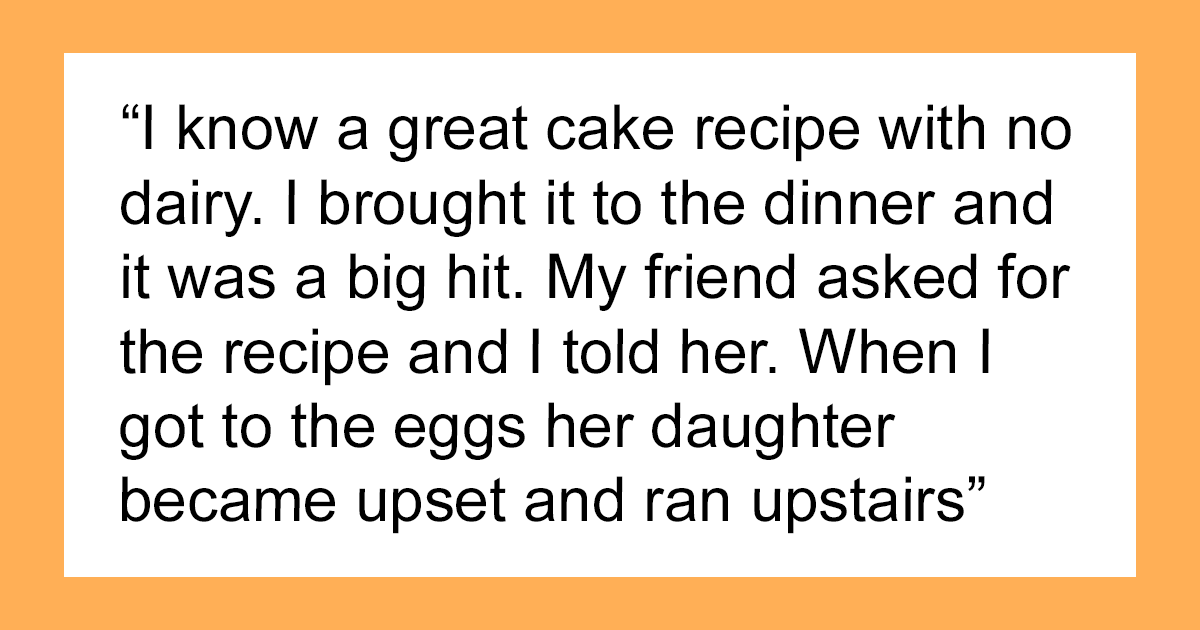
There are few things more dangerous at a friendly gathering than a dessert table, a vague dietary label, and one person who has recently become the self-appointed Supreme Court of Cake. That is how a simple dairy-free cake can turn into a full-blown friendship feud. One friend bakes a cake without milk, butter, cream, or cheese. Another friend discovers it contains eggs. Suddenly, the room is divided: Was the cake truly dairy-free? Was it misleading? Was it secretly not inclusive enough? And most importantly, who gets the last slice while everyone argues?
The title may sound like a sitcom episodeFriends Have A Massive Spat Over One Of Them Baking A Dairy-Free Cake Using Eggsbut the confusion behind it is surprisingly common. Many people lump eggs and dairy together because both are animal-derived, both sit near each other in grocery stores, and both show up in classic baking. But nutritionally, legally, and culinarily, eggs are not dairy. Dairy comes from the milk of mammals. Eggs come from birds. A hen may be talented, but she is not secretly a cow in feathers.
Still, the argument is not entirely silly. Dietary language matters. “Dairy-free” does not mean “vegan.” “Vegan” does not automatically mean safe for every person with allergies. “Lactose-free” does not always mean milk-free. And “I thought everyone knew” is not a reliable food-safety plan. In today’s world of food allergies, ethical diets, intolerances, and plant-based swaps, clear communication can save friendships, stomachs, and birthday parties.
This article breaks down the dairy-free cake debate with practical examples, food facts, baking science, social etiquette, and a generous serving of common sense. No frosting fight required.
What Does “Dairy-Free” Actually Mean?
In standard American food usage, “dairy-free” means a food does not contain milk or ingredients made from milk. That includes cow’s milk, goat’s milk, butter, cream, cheese, yogurt, whey, casein, milk powder, and many other milk-derived ingredients. People may choose dairy-free foods because of lactose intolerance, a milk allergy, acne concerns, digestive comfort, religious reasons, personal preference, or simply because oat milk has convinced half the country it belongs in everything.
But dairy-free does not automatically mean free from all animal products. A dairy-free meal can include chicken, fish, honey, gelatin, and yes, eggs. A dairy-free cake can be made with flour, sugar, oil, cocoa powder, baking powder, vanilla, almond milk, and eggs. As long as it contains no milk-derived ingredients, it can accurately be called dairy-free.
Dairy-Free vs. Lactose-Free
Another layer of confusion comes from the difference between dairy-free and lactose-free. Lactose is the natural sugar found in milk. People with lactose intolerance have difficulty digesting lactose, often leading to gas, bloating, cramps, or diarrhea. Lactose-free products may still be made from milk; the lactose has simply been removed or broken down. That means lactose-free milk is not necessarily safe for someone with a milk allergy.
Dairy-free, on the other hand, should mean there is no milk ingredient at all. For someone avoiding lactose, dairy-free foods are usually suitable. For someone with a true milk allergy, the stakes are higher, and labels need to be checked carefully.
Dairy-Free vs. Vegan
This is where the cake fight usually begins. Vegan foods avoid animal-derived ingredients, including dairy, eggs, honey, gelatin, and meat. Dairy-free foods avoid dairy only. So, a vegan cake is dairy-free, but a dairy-free cake is not necessarily vegan. Think of it like squares and rectangles, but with more frosting and fewer high school geometry flashbacks.
If the friend expected a vegan cake, they needed to ask for a vegan cake. If the baker advertised the cake only as dairy-free, using eggs was not a contradiction. The misunderstanding may be emotional, but the terminology is clear.
Are Eggs Dairy? The Straight Answer
No, eggs are not dairy. Dairy products come from the milk of mammals such as cows, goats, sheep, or buffalo. Eggs come from birds such as chickens, ducks, and quail. Eggs are usually classified as poultry products, not dairy products.
So why do so many people think eggs are dairy? There are several reasons. Eggs are commonly sold near milk and butter in grocery stores because they require refrigeration. They are also associated with breakfast, baking, and traditional farm products. Many people hear “animal product” and mentally place eggs and dairy in the same basket. That basket, however, is scientifically wobbly.
Eggs contain no lactose. They contain no milk protein. They are not made from milk. A person avoiding dairy because of lactose intolerance can generally eat eggs unless they have a separate egg allergy or dietary restriction. A person avoiding all animal products, however, would avoid eggs because eggs are animal-derived.
Why the Friend Got Upset: The Emotional Side of Food Labels
On paper, the baker was correct: a cake made without milk, butter, cream, or cheese can be dairy-free even if it contains eggs. But social conflicts are rarely solved by waving a dictionary over a dessert plate. Food is personal. People attach health, identity, culture, ethics, religion, body image, and trust to what they eat. When someone feels misled about food, the reaction can be intense.
The upset friend may have assumed dairy-free meant vegan. They may have been protecting someone with an egg allergy. They may have recently changed their diet and still be learning the language. Or they may simply have been embarrassed after realizing they misunderstood the term and decided to turn embarrassment into a courtroom speech. Humans are creative that way.
The baker may also feel unfairly attacked. They made an effort to accommodate a dairy-free need, bought alternative ingredients, baked from scratch, and likely expected gratitudenot a cross-examination about poultry. When effort is criticized, especially in front of others, defensiveness comes quickly.
Both sides can learn something. The guest can ask clearer questions before eating. The baker can label foods more specifically. The friendship can survive if both people care more about each other than about winning the Great Cake War of the Year.
Food Allergies Make Clear Labels More Than Polite
This debate becomes much more serious when allergies are involved. In the United States, milk and eggs are both among the major food allergens identified for labeling purposes. Other major allergens include peanuts, tree nuts, fish, crustacean shellfish, wheat, soy, and sesame. For people with severe food allergies, a mislabeled dessert is not a minor inconvenience. It can cause hives, swelling, vomiting, breathing difficulty, or anaphylaxis.
That is why “dairy-free” should never be used casually if the cake was made in a kitchen with possible cross-contact from milk products. A home baker may not have separate pans, spatulas, mixers, or storage areas. Even if the recipe itself contains no dairy, traces of milk can appear through shared tools, frosting containers, chocolate chips, or baking mixes.
The same is true for eggs. A dairy-free cake made with eggs is not safe for someone with an egg allergy. If a guest has allergies, the safest approach is to provide a full ingredient list and ask whether cross-contact is a concern. The phrase “I’m pretty sure it’s fine” is not an allergy-management strategy. It is a suspense novel.
Why Eggs Are Used in Cake
Eggs are not tossed into cake recipes for decoration. They do real work. In baking, eggs help bind ingredients, add moisture, create structure, support rise, enrich flavor, and improve texture. Egg whites contribute proteins that help set the cake’s structure, while yolks add fat and tenderness. In sponge cakes and chiffon cakes, whipped eggs can create lift and volume without much chemical leavening.
This is why many dairy-free cakes still use eggs. Removing butter or milk is usually easier than removing eggs because oil, plant-based milk, coconut milk, oat milk, or vegan butter can replace dairy with relatively simple adjustments. Replacing eggs requires more strategy. The right substitute depends on what the egg is doing in the recipe.
Common Dairy-Free Cake Ingredients
A dairy-free cake may use vegetable oil instead of butter, almond milk or oat milk instead of cow’s milk, coconut cream instead of heavy cream, and dairy-free chocolate instead of milk chocolate. It may still use eggs for structure. Many classic cakes can be made dairy-free this way without losing texture or flavor.
For example, a dairy-free chocolate cake might include flour, cocoa powder, sugar, baking soda, salt, oil, coffee, vanilla, vinegar, and eggs. A dairy-free lemon cake might use olive oil, lemon juice, zest, flour, sugar, almond milk, and eggs. A dairy-free birthday cake might use neutral oil and plant milk but still rely on eggs for that soft, springy crumb people expect from a celebration cake.
Egg-Free and Dairy-Free Options
If the goal is both egg-free and dairy-free, there are many good options. Bakers may use applesauce, mashed banana, flaxseed meal mixed with water, chia seeds, commercial egg replacers, carbonated water, aquafaba, tofu, baking soda with vinegar, or starch-based mixtures. Each substitute behaves differently. Applesauce adds moisture. Flax and chia help bind. Aquafaba can mimic whipped egg whites. Baking soda and vinegar help with lift. Banana works beautifully in some cakes and announces itself loudly in others, like a tropical guest who brought a ukulele.
Old-fashioned “wacky cake” or “depression cake” is a famous example of a dessert made without eggs, milk, or butter. It uses pantry staples such as flour, cocoa powder, sugar, oil, vinegar, baking soda, and water. The reaction between vinegar and baking soda helps the cake rise, proving that chemistry can be delicious and occasionally more reliable than group chat communication.
Who Was Right in the Cake Argument?
If the cake was described only as dairy-free and it truly contained no dairy ingredients, the baker was technically right. Eggs do not make a cake “not dairy-free.” The upset friend was wrong if they claimed eggs are dairy.
However, if the baker knew the friend expected a vegan dessert and failed to clarify, the situation becomes more complicated. Accuracy is not only about words; it is also about context. If someone says, “Can you make something dairy-free for Alex? They don’t eat animal products,” the correct response is not to make a cake with eggs and later argue semantics. The correct response is, “Do you mean dairy-free or fully vegan?”
In other words, the baker may be right about food categories but still could have communicated better. The friend may be wrong about eggs being dairy but still could have had a legitimate concern about dietary expectations. The winner is not the person who shouts the loudest. The winner is the person who labels the cake clearly and remembers to bring forks.
How to Label Homemade Food Without Starting a Family Feud
Homemade food does not come with a nutrition panel, so the host or baker has to become the label. That does not mean writing a legal document next to the cupcakes. It simply means being specific.
Instead of saying “safe cake,” say “dairy-free chocolate cake made with eggs and almond milk.” Instead of “allergy-friendly,” say “contains wheat and eggs; no dairy ingredients; made in a kitchen that also uses milk and nuts.” Instead of “vegan-ish,” do not say that at all. Nothing good comes from “vegan-ish.”
Here are practical labels that prevent confusion:
- Dairy-free, contains eggs: Good for people avoiding milk but not suitable for vegans or egg allergies.
- Vegan: No animal-derived ingredients, including dairy and eggs.
- Egg-free and dairy-free: Suitable for people avoiding both, assuming no cross-contact concerns.
- Lactose-free: May still contain milk proteins and may not be safe for milk allergy.
- Made without dairy ingredients: More cautious than “dairy-free” if cross-contact is possible.
How Guests Should Ask About Food Without Sounding Like Dessert Police
Guests also have responsibilities. If you have an allergy, intolerance, religious restriction, vegan diet, or strong preference, ask specific questions before eating. “Is this dairy-free?” is useful, but “Does this contain milk, butter, cream, whey, casein, or cheese?” is better if you have a milk allergy. “Is this vegan?” is clearer than “Is this dairy-free?” if you avoid all animal products.
A polite approach sounds like this: “This looks amazing. I avoid both dairy and eggsdo you know whether either is in it?” That question is friendly, direct, and unlikely to make the baker feel like they are being grilled on national television.
If the baker is unsure, do not eat it. That is not rude. It is responsible. You can still appreciate the effort without gambling with your health. “Thank you so much for making it. I’m going to skip it because I need to be extra careful, but it looks wonderful” is a perfectly gracious response.
How Hosts Can Handle Mixed Dietary Needs
Hosting people with different food needs can feel like solving a puzzle where every piece is hungry. One guest is dairy-free, another is vegan, one is gluten-free, one avoids nuts, and one has decided sugar is “not their journey right now.” The best solution is not panic. It is organization.
Ask guests in advance about allergies and dietary restrictions. Keep ingredient packages if possible. Label homemade dishes. Use separate utensils for allergen-free foods. Avoid making broad claims unless you are certain. If someone has a severe allergy, consider letting them bring their own food or coordinating with them directly.
For dessert, one flexible option is to serve multiple choices: a regular cake, a clearly labeled dairy-free cake with eggs, and a vegan or allergen-friendly option if needed. Cupcakes can be easier than one large cake because they reduce cross-contact and make labeling simpler.
The Bigger Lesson: Dietary Words Carry Trust
The dairy-free cake spat is not just about eggs. It is about trust. When someone eats food prepared by another person, they rely on that person’s accuracy. When someone prepares food for a friend, they hope their effort will be received with goodwill. Misunderstandings happen when assumptions fill the space where clear communication should be.
In a perfect world, everyone would know that eggs are not dairy. In the real world, many people do not. That does not make them foolish; it makes them human. Food categories are confusing, marketing terms are inconsistent, and grocery stores do not help when they place eggs beside milk like they are cousins at a reunion.
The best approach is simple: be specific, be kind, and do not treat dietary mistakes like moral failures unless someone knowingly puts another person at risk. A friend who confuses dairy-free with vegan needs information, not humiliation. A baker who feels attacked needs appreciation, not a lecture shouted over buttercream.
Examples of Better Communication
Scenario 1: The Dairy-Free Birthday Cake
A friend says, “Can you make the birthday cake dairy-free?” The baker replies, “Sure. Eggs are okay, right?” That one sentence prevents the entire plot from becoming a social media debate. If eggs are fine, the baker can make a beautiful dairy-free cake with eggs. If eggs are not fine, the baker can look for a vegan recipe.
Scenario 2: The Vegan Guest
A vegan guest asks, “Is the cake dairy-free?” The host says, “Yes, but it contains eggs.” This is the ideal answer. It does not argue. It does not assume. It gives the guest the information they need.
Scenario 3: The Allergy-Sensitive Party
A parent asks whether the cake is safe for a child with a milk allergy. The baker says, “The recipe has no dairy ingredients, but I made it in a kitchen that uses milk and butter. I can send the ingredient list.” That answer is honest and helpful. It allows the parent to decide based on their child’s risk level.
Experience Section: What This Cake Fight Teaches Us About Real-Life Friendships
Anyone who has ever brought food to a party knows the emotional gamble. You arrive holding a cake like an offering to the social gods. You hope people smile, ask for seconds, and maybe whisper, “Who made this?” in the tone usually reserved for celebrity sightings. You do not expect your dessert to become the opening argument in a dietary terminology trial.
But food has a funny way of exposing how people communicate. A dairy-free cake with eggs may seem like a small issue, yet it reveals a lot about assumptions. One person assumes “dairy-free” is obvious. Another assumes it means “plant-based.” Someone else assumes the baker should have known better. Meanwhile, the cake sits there, innocent and probably delicious, wondering why it got dragged into interpersonal drama.
The first lesson is that kindness matters more than being technically correct. Yes, eggs are not dairy. That is true. But if a friend is upset because they misunderstood, opening with “Actually, you’re wrong” may not be the friendship-saving move. A better response is, “I’m sorry that wasn’t clear. I meant dairy-free as in no milk ingredients, but I should have mentioned it contains eggs.” That sentence keeps the facts intact without turning the conversation into a duel.
The second lesson is that guests should not outsource all responsibility. If you follow a specific diet, especially for health or ethical reasons, ask direct questions. A baker cannot read minds, even if they can make a perfect ganache. Saying “I don’t eat eggs or dairy” is much clearer than saying “I’m dairy-free” and hoping everyone interprets it the same way. Clear requests prevent awkward moments later.
The third lesson is that labels should be written for real people, not food experts. “Dairy-free” may be accurate, but “dairy-free, contains eggs” is better. It is short, clear, and drama-resistant. At potlucks, baby showers, office parties, and birthdays, that kind of label is a tiny act of hospitality. It tells guests, “I thought about you enough to make this easy.”
The fourth lesson is that not every dietary disagreement needs a villain. Sometimes people are careless, but often they are simply confused. Food language changes quickly. Plant-based, dairy-free, lactose-free, vegan, allergen-friendly, clean, natural, and free-from all get tossed around in conversation and marketing. No wonder people mix them up. The solution is education, not instant outrage.
Finally, this situation reminds us that friendship is bigger than cake. If the baker made an honest effort, acknowledge it. If the guest felt misled, listen. If someone has an allergy, take it seriously. If someone is vegan, respect their boundary. If someone makes a mistake, give them room to fix it. The goal is not to win the argument; the goal is to make sure everyone feels safe, respected, and maybe slightly overfed.
Next time, the whole spat can be avoided with a simple label: “Chocolate cake: dairy-free, contains eggs, made with oat milk.” There. No confusion, no courtroom energy, no friendship explosion. Just cake. And honestly, cake has enough pressure already.
Conclusion: The Cake Was Dairy-Free, But the Communication Needed Frosting
A dairy-free cake can absolutely contain eggs because eggs are not dairy. Dairy comes from milk; eggs come from birds. The friend who argued that eggs made the cake non-dairy-free was mistaken. However, the conflict also shows why clear food labeling matters. Dairy-free is not the same as vegan, lactose-free is not the same as milk-allergy safe, and homemade desserts should be described with enough detail for guests to make informed choices.
The smartest solution is simple: say exactly what is in the food. “Dairy-free, contains eggs” is better than “dairy-free” alone. “Vegan” should be reserved for foods with no animal-derived ingredients. “Made without dairy ingredients” is helpful when cross-contact is possible. With allergies and dietary restrictions, clarity is not nitpicking. It is care.
In the end, the cake argument is a reminder that food is more than food. It is trust, comfort, identity, effort, and sometimes a little chaos on a dessert plate. The next time a friend bakes for a group, label the cake clearly. The next time a guest has a dietary need, ask directly. That way, everyone can spend less time arguing about eggs and more time enjoying dessertwhich, frankly, is what civilization has been working toward all along.