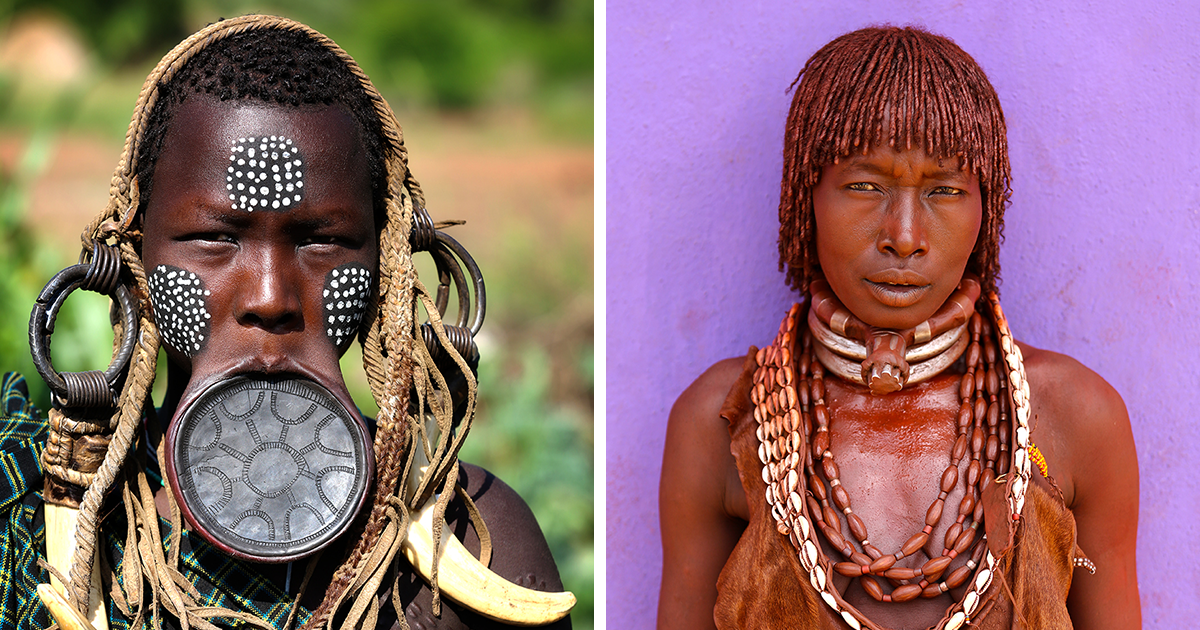
Some travel photos say, “Here is a mountain.” Others say, “Here is a beach where your sunscreen gave up.” But a great portrait says something far more interesting: “Here is a person, a culture, a memory, and a whole world you almost walked past.” That is the heart of The World in Faces, a portrait photography project created by ethnographic photographer Alexander Khimushin to celebrate the beauty, dignity, and diversity of people from remote communities around the globe.
The project is not about collecting “exotic” images like souvenirs from an airport gift shop. It is about slowing down, looking people in the eye, and recognizing that cultural identity is not a costume, a backdrop, or a travel trend. It is language, family, landscape, faith, clothing, memory, craft, humor, hardship, resilience, and yes, sometimes a hat so magnificent it deserves its own publicist.
Across portraits of the Ixil Maya, Wakhi, Daasanach, Bodi, Hamar, Kaqchikel Maya, Ladakhi, Afar, Kyrgyz, Tibetan, Xhosa, Buryat, Meitei, Uzbek, and many others, The World in Faces invites viewers to think about humanity as both wildly diverse and deeply connected. The faces are different. The emotions are familiar. The result is a visual conversation about who we are before globalization edits everyone into the same pair of jeans.
The Idea Behind The World in Faces
The World in Faces began with a simple but powerful realization: people are often the most unforgettable part of any journey. Landscapes impress us, cities entertain us, and food teaches us whether we are brave enough for mystery soup. But people stay with us. A face can hold a century of history in one glance.
Khimushin’s project focuses on people from Indigenous and traditional communities, especially those whose cultures, languages, and ways of life face pressure from globalization, conflict, discrimination, migration, and environmental change. These portraits are not just beautiful images; they are reminders that cultural diversity is living, fragile, and worth protecting.
In a world where trends move faster than a toddler with a permanent marker, many local traditions are disappearing quietly. UNESCO has warned that a significant percentage of the world’s languages are endangered, and language loss often means the loss of songs, jokes, place names, healing knowledge, oral histories, and family stories. When a language disappears, humanity does not simply lose vocabulary. It loses a way of seeing the universe.
Why These 30 Portraits Feel So Powerful
The original collection of 30 portraits includes people from many regions, ethnic groups, and cultural backgrounds. Some images show children whose expressions are open and curious. Others show elders whose faces seem carved by wind, sunlight, laughter, and the kind of patience modern people usually lose when Wi-Fi buffers for eight seconds.
What makes the portraits stand out is not only their color or composition, although both are striking. It is the sense of presence. The subjects are not decorative figures placed in front of a camera. They look back. They occupy the frame. They ask the viewer to meet them as individuals, not as stereotypes.
Portraits as Cultural Memory
A portrait can preserve details that written descriptions often flatten. The beadwork of a Daasanach woman, the textiles of Maya communities, the facial expression of a Wakhi woman, the posture of a Sahrawi man, or the traditional clothing of a Ladakhi woman all communicate identity in layered ways. These are not random visual details. They are part of cultural memory.
Traditional clothing, jewelry, hairstyles, woven patterns, and body adornment often carry meanings related to age, region, status, ceremony, marriage, spirituality, or community belonging. To an outsider, a garment may simply look “colorful.” To the wearer, it may be family history stitched into fabric. That difference matters.
Faces Beyond Borders
One of the most refreshing things about The World in Faces is that it breaks the lazy habit of reducing people to maps. A person is not merely “from Guatemala,” “from Ethiopia,” “from India,” or “from Siberia.” A person may be Ixil Maya, Kaqchikel Maya, K’iche’ Maya, Karo, Hamar, Afar, Buryat, Tuvan, Meitei, or Uzbek, each with a specific cultural story.
That specificity is important for SEO, history, education, and basic human decency. Saying “people from around the world” is pleasant, but naming communities helps readers understand that global diversity is not vague. It is precise. It has names, languages, songs, recipes, ceremonies, and grandmothers who know exactly when you are not eating enough.
The 30 Portraits: A Journey Through Human Diversity
The series includes portraits such as an Ixil Maya girl, a Samoan boy, a Wakhi woman, a Daasanach tribe woman, a Bodi tribe man, a Shughnan girl, a Japanese girl, a Tsemay tribe girl, a Mauritanian girl, a Karo tribe woman, a Mursi tribe girl, a Hamar tribe woman, a Nyangatom tribe woman, a Sahrawi man, a Djibouti girl, a Konso tribe woman, a Kaqchikel Maya girl, a Somaliland man, a Mam Maya man, a Ladakhi woman, an Afar woman, a K’iche’ Maya man, a Mongolian Tuvan man, a Rajasthani man, a Kyrgyz man, a Tibetan man, a Xhosa woman, a Buryat man, a Meitei man, and an Uzbek man.
Reading that list feels a little like opening a human atlas. It reminds us that “the world” is not a single story. It is a library, and every person is a book with a cover, a chapter, a plot twist, and possibly a recipe for something your taste buds are not emotionally prepared for.
What Makes a Good Cultural Portrait?
A strong cultural portrait requires more than a good camera and dramatic lighting. It requires trust. In communities where outsiders have often arrived to extract resources, stories, images, or labor, a photographer must approach with humility. Consent is not a polite extra. It is the foundation.
Ethical portrait photography begins before the shutter clicks. It includes learning about the community, asking permission, respecting cultural protocols, understanding what should not be photographed, and giving people the dignity of context. A portrait should not make a person look like an artifact from the past. Indigenous and traditional communities are not museum exhibits. They are contemporary people living with history, change, humor, struggle, and agency.
This is where The World in Faces succeeds as more than a pretty gallery. It encourages viewers to see individuals first. The portraits are visually rich, but they do not need melodrama. A quiet gaze can be more powerful than a thousand-word caption wearing hiking boots.
Why Representation Matters
Representation shapes how people are remembered. For centuries, photography has sometimes been used to classify, romanticize, or stereotype Indigenous peoples. Today, responsible visual storytelling must do better. It must move away from the colonial habit of treating people as “types” and toward a more respectful approach that recognizes identity, voice, and selfhood.
Portraits can be bridges, but only when they avoid turning people into scenery. The best portraits do not say, “Look how different they are from us.” They say, “Look how much humanity can hold.” That is a major reason this project resonates with global audiences. It shows difference without making difference feel distant.
Culture Is Not Frozen in Time
One trap in cultural photography is the belief that authenticity means staying unchanged forever. That is unfair. No one asks people in New York, Chicago, or Los Angeles to prove their cultural identity by refusing smartphones, sneakers, or streaming services. Traditional communities should not be held to a stricter standard just because their clothing looks better in photographs.
Culture evolves. Young people may speak multiple languages, use social media, wear traditional clothing for ceremony and modern clothing for daily life, and move between village, city, school, and work. None of that makes them less authentic. It makes them human.
The strongest reading of The World in Faces is not that these communities are relics. It is that they are alive. Their cultural expressions deserve recognition not because they are old, but because they are meaningful.
The Emotional Power of Looking Closely
In fast online culture, images often become disposable. We scroll, like, forget, repeat. Portraits like these slow the process down. They reward attention. The wrinkles around an elder’s eyes, the confidence of a young girl’s expression, the careful arrangement of a head covering, or the directness of a subject’s gaze creates a moment of pause.
That pause matters. It is where curiosity begins. A viewer might start by admiring color and composition, then wonder: What language does this person speak? What is their community’s history? What challenges do they face? What traditions are they working to preserve? A good portrait opens the door. The viewer’s responsibility is to walk through respectfully.
Lessons for Travelers, Photographers, and Curious Humans
For travelers, the project offers a useful reminder: do not treat local people as background decoration for your adventure. The goal is not to “capture” a place, as if you are a pirate with a camera strap. The goal is to listen, learn, and move with enough humility that people do not immediately regret telling you where the good tea is.
For photographers, the lesson is even sharper. Technical skill matters, but emotional intelligence matters more. Ask before photographing. Explain your purpose. Share images when possible. Learn names. Avoid captions that reduce people to vague labels. Do not exaggerate poverty or hardship for dramatic effect. Beauty and struggle can exist together, but neither should be exploited.
For readers, the takeaway is simple: cultural diversity is not an abstract slogan. It is visible in faces. It lives in people who are raising children, telling stories, herding animals, weaving textiles, farming difficult land, singing old songs, learning new tools, and deciding what to carry forward.
Experience Notes: What a Face-to-Face Project Teaches You
A portrait project like The World in Faces teaches lessons that no airport lounge, travel app, or glossy itinerary can provide. The first lesson is patience. In many places, the best photograph does not happen when the photographer arrives. It happens after tea, after introductions, after laughter, after awkward translation, after someone’s uncle decides whether you are harmless or merely strange. Spoiler: photographers are often both.
The second lesson is that silence can be generous. Not every moment needs direction. Sometimes the subject knows exactly how to stand, how to look, and how to carry themselves. The photographer’s job is not to manufacture drama but to recognize dignity already present. That is harder than it sounds. Modern photography often trains us to chase spectacle. Human portraiture asks us to notice presence.
The third lesson is that clothing is never just clothing. A scarf may tell a story about climate, modesty, ceremony, trade, or family. Beads may represent beauty, identity, age, or tradition. A woven textile may carry patterns passed down through generations. When a photographer sees only color, they miss meaning. When they ask thoughtful questions, the portrait becomes more than visual decoration; it becomes a doorway into culture.
The fourth lesson is that humor travels well, even when language does not. A smile after a mispronounced greeting can save an introduction. A shared joke about dust, weather, animals, or the universal chaos of children can turn strangers into collaborators. This matters because the camera can create tension. Humor lowers the temperature. It reminds everyone that photography is not surgery. Nobody needs to hold their breath like a passport photo is being taken by a disappointed government printer.
The fifth lesson is responsibility. Once a portrait leaves the village, the desert, the mountain road, or the family courtyard, it enters the global internet, where context can be lost faster than luggage during a tight connection. That means captions, framing, and storytelling matter. A respectful portrait should not invite mockery, pity, or lazy stereotypes. It should invite attention, curiosity, and respect.
The sixth lesson is that every person photographed is more than the image. A portrait may show a face, but not the entire life behind it. It cannot fully show the subject’s jokes, worries, songs, childhood memories, favorite foods, private griefs, or dreams for their children. That limitation should keep photographers humble. A portrait is not ownership. It is a meeting.
Finally, a project like this teaches that the world is not becoming less interesting; we are sometimes becoming less attentive. Amazing people are everywhere. Some live in megacities. Some live in mountain villages. Some speak global languages. Some speak languages at risk of disappearing. Some wear business suits. Some wear handmade textiles. The point is not to rank these lives by how photogenic they seem. The point is to recognize that every culture carries knowledge, and every face deserves to be seen with care.
Conclusion
30 Portraits Of Amazing People Of The World From My ‘The World In Faces’ Project is more than a gallery of beautiful faces. It is a reminder that humanity is richer than borders, broader than stereotypes, and far more interesting than the algorithm usually admits. Alexander Khimushin’s project celebrates cultural diversity by bringing viewers face-to-face with people from communities whose stories deserve attention, respect, and preservation.
In an age when languages are disappearing, traditions are under pressure, and visual culture moves at dizzying speed, projects like The World in Faces matter. They encourage us to look slowly. They ask us to value Indigenous knowledge, traditional culture, and human dignity. Most importantly, they remind us that behind every portrait is not just a face, but a world.