Note: This article is written for general informational and lifestyle purposes. It synthesizes common therapist-backed ideas from reputable U.S. mental health organizations, medical centers, and psychology resources, while paraphrasing social-media-style advice instead of copying individual tweets.
Therapists have a special talent for saying one calm sentence that rearranges your entire mental furniture. You walk into a session carrying a suitcase full of worries, and somehow they hand you back one neat sticky note: “You are allowed to disappoint people.” Suddenly, your nervous system blinks like a confused raccoon in daylight.
That is why therapist advice travels so well on Twitter, now X. People love sharing the lines that made them pause, laugh, cry, breathe, or finally stop treating themselves like a group project nobody volunteered for. The best life advice from therapists is usually not flashy. It is practical, human, and quietly powerful. It helps people set boundaries, challenge negative thoughts, stop chasing perfection, and remember that rest is not a crime scene.
Below are 30 pieces of therapist-inspired life advice often shared online, rewritten and expanded with context, examples, and a little humor. Think of this as emotional housekeeping: we are not demolishing the house, just clearing the hallway so you stop tripping over the same old box labeled “stuff I should probably deal with.”
Why Therapist Advice Goes Viral Online
Therapist advice spreads because it gives language to feelings people have carried silently for years. A simple sentence like “Your boundaries do not need a courtroom defense” can help someone understand a pattern they never had words for. Good therapy language is memorable because it is specific, compassionate, and usable in real life.
Another reason this kind of advice resonates is that it balances kindness with accountability. It does not say, “Everything is fine, go eat a cookie.” It says, “You are responsible for your healing, but you do not have to bully yourself into becoming better.” That difference matters. Emotional growth is not a punishment. It is maintenance, like brushing your teeth, except the toothbrush is self-awareness and the toothpaste is occasionally uncomfortable honesty.
30 Pieces of Life Advice From Therapists Shared By People On Twitter
1. Your feelings are valid, but they are not always instructions
Feeling angry, scared, jealous, or rejected does not make you wrong. But emotions are signals, not steering wheels. A therapist might encourage you to notice the feeling, name it, and pause before acting. For example, feeling ignored by a friend may signal a need for connection, not a need to send a dramatic paragraph at 1:17 a.m.
2. You can be kind without being endlessly available
Many people confuse kindness with unlimited access. Therapists often remind clients that healthy relationships include limits. You can love your friends and still not answer every message immediately. You can care deeply and still need a quiet evening with your phone on silent, your socks mismatched, and your soul rebooting.
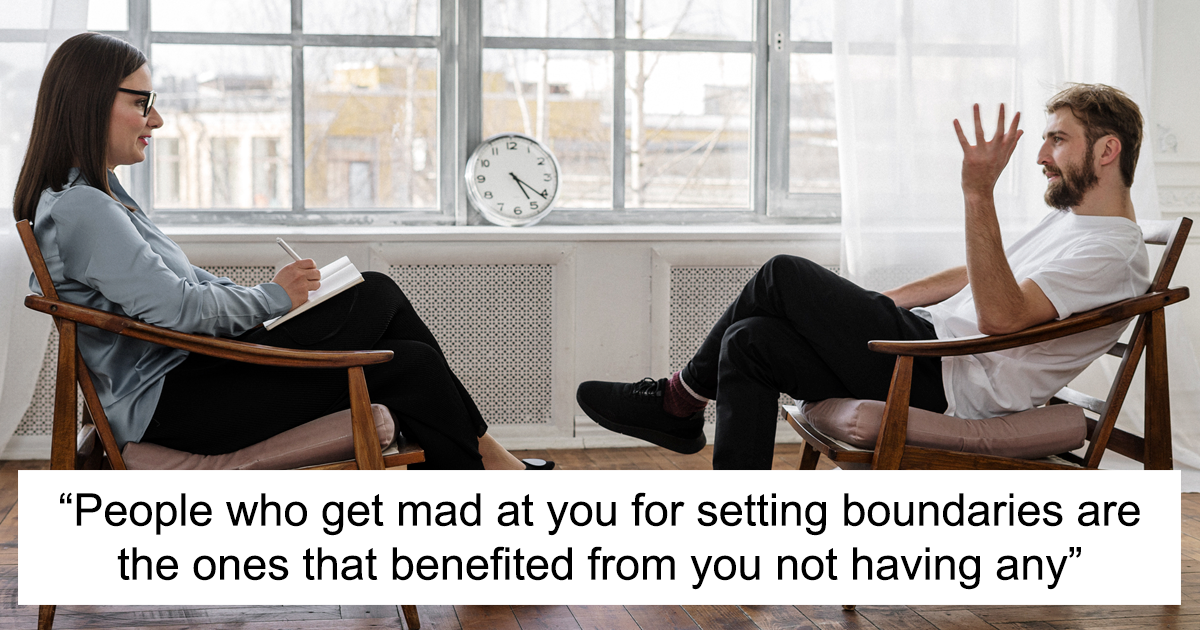
3. Boundaries are not punishments
A boundary is not an attack. It is a clear explanation of what you can do, what you cannot do, and what happens next. “I cannot discuss this when we are yelling” is not cruelty. It is emotional traffic control. Without boundaries, relationships become bumper cars with feelings.
4. Stop auditioning for people who already decided not to value you
One of the hardest lessons is accepting when someone is unwilling or unable to show up for you. Therapists may help clients see the difference between earning trust and begging for basic respect. If you constantly have to prove you are worth care, the relationship may be asking for a performance instead of offering connection.
5. Rest is productive
Modern life treats rest like a suspicious activity. Yet mental health professionals regularly emphasize recovery, sleep, downtime, and stress management. Rest helps people think clearly, regulate emotions, and avoid burnout. You are not a machine, and even machines get maintenance. Your laptop gets updates; surely your nervous system deserves a nap.
6. Your inner critic is not your life coach
Some people believe being harsh with themselves keeps them motivated. In reality, constant self-criticism often drains energy and increases shame. A more helpful approach is self-compassion: noticing mistakes without turning them into a full character assassination. “I messed up” is useful. “I am a disaster in sneakers” is not.
7. You do not have to explain your “no” until it becomes a TED Talk
Many people over-explain because they fear disappointing others. A therapist might suggest practicing short, respectful refusals: “I cannot make it, but thank you for inviting me.” That is a complete sentence. It does not need a documentary, three pie charts, and a sworn affidavit from your cat.
8. Anxiety loves uncertainty, but certainty is not always available
Anxiety often demands perfect answers before you act. What if it goes badly? What if they judge me? What if I fail? Therapy can help people build tolerance for uncertainty. Life rarely hands out guarantees. Sometimes the goal is not to feel completely fearless, but to move carefully while fear rides in the passenger seat wearing a tiny seatbelt.
9. You are allowed to outgrow old versions of yourself
Growth can feel disloyal to the person you used to be. But changing your opinions, goals, routines, or relationships is part of being alive. The version of you who tolerated too much may have been doing their best with limited tools. Thank them, then upgrade the toolbox.
10. Conflict is not automatically a sign of failure
Healthy relationships do not avoid every disagreement. They repair after disagreements. Therapists often focus on communication, accountability, and emotional safety. The question is not “Do we ever argue?” The better question is, “Can we talk, listen, apologize, and change?”
11. Your needs are not inconvenient; they are information
People who grew up pleasing others may view their own needs as problems. But hunger, loneliness, overwhelm, and exhaustion are not moral flaws. They are messages. Ignoring them does not make you low-maintenance; it makes you a phone at 2% battery pretending everything is fine.
12. You cannot heal in the same pattern that hurt you
If a habit, relationship, or environment keeps reopening the same wound, healing becomes harder. This does not always mean making huge dramatic changes overnight. Sometimes it starts with noticing the pattern: the people you chase, the work you overdo, the apologies you give when you did nothing wrong.
13. Being understood by everyone is not the goal
Therapists often help clients separate self-worth from public approval. Not everyone will understand your choices. Some people may misunderstand you no matter how carefully you speak. Peace grows when you stop trying to win every imaginary courtroom in other people’s minds.
14. Small habits count
Mental health improvement is not always cinematic. Sometimes it is drinking water, taking a walk, journaling for five minutes, opening the curtains, or sending one honest message. Tiny habits may not look impressive on Instagram, but they can quietly change the atmosphere of your day.
15. You can miss someone and still know distance is healthier
Missing a person does not always mean they belong in your life the same way. Grief, nostalgia, and attachment can coexist with wisdom. A therapist might help you hold two truths at once: “I care about them” and “This relationship was not good for me.”
16. Your childhood explains some patterns, but it does not have to excuse every behavior forever
Therapy often explores early experiences because they shape beliefs about safety, love, trust, and worth. But insight is the beginning, not the finish line. Understanding why you react a certain way can help you choose a healthier response next time. Awareness opens the door; practice walks through it.
17. Do not confuse peace with boredom
If you are used to chaos, calm can feel strange. Some people interpret stable relationships or quiet routines as boring because their nervous system is familiar with intensity. Therapy can help people learn that peace is not emptiness. Sometimes peace is what safety feels like before your brain stops checking for danger every three seconds.
18. You are not responsible for managing everyone’s mood
It is caring to be considerate. It is exhausting to become the emotional thermostat for every room you enter. Therapists often help people stop taking ownership of reactions that belong to others. You can be respectful without becoming the unpaid manager of everyone’s feelings department.
19. Apologizing is powerful, but over-apologizing can hide fear
A real apology acknowledges harm and supports repair. Over-apologizing, however, may come from anxiety or people-pleasing. If you say sorry for taking up space, asking a normal question, or needing time to think, it may be worth practicing different language: “Thank you for waiting” instead of “Sorry I exist near your schedule.”
20. You can forgive without giving someone the same access to you
Forgiveness is personal. It does not require pretending nothing happened or reopening the front door of your life. Therapists often distinguish emotional release from relational access. You can let go of bitterness while still choosing distance, privacy, or a new boundary.
21. Thoughts are not facts
Cognitive behavioral therapy often teaches people to notice automatic thoughts and test them. “Everyone hates me” may feel true during a hard moment, but feelings are not evidence. A more balanced thought might be, “I feel embarrassed right now, but I do not actually know what everyone thinks.” This is less dramatic, yes, but dramatically more useful.
22. Avoidance makes fear louder
Avoidance can reduce discomfort in the short term, but it often strengthens fear over time. Therapists may help clients approach difficult tasks gradually, safely, and realistically. The goal is not to sprint into every fear like an emotional action hero. The goal is to stop letting fear design your entire calendar.
23. Healthy love does not require self-abandonment
If loving someone means abandoning your values, voice, sleep, goals, friendships, or basic dignity, something is off. Healthy love makes room for two people. It does not ask one person to shrink until they fit inside the other person’s comfort zone.
24. You are allowed to take up space
Taking up space means having preferences, asking questions, sharing ideas, and existing without constant apology. For people who learned to stay small to stay safe, this can feel uncomfortable. Start gently. Choose the restaurant. Ask for clarification. Say what you mean. The world will survive your fully formed opinion about tacos.
25. Not every problem needs immediate solving
Sometimes people need comfort before strategy. Therapists often validate feelings before moving into problem-solving because a regulated brain thinks better. If someone is upset, “That sounds really hard” may help more than launching a 12-step repair plan while they are still emotionally on fire.
26. Your body keeps score of stress
Stress is not only mental. It can show up as muscle tension, stomach trouble, headaches, shallow breathing, irritability, or fatigue. Healthy coping tools such as movement, breathing, time outdoors, relaxation practices, and supportive conversations can help the body settle. Your shoulders are not earrings; let them drop.
27. You can be grateful and still want more
Gratitude does not mean accepting every situation forever. You can appreciate your job and still want better pay. You can love your family and still need space. You can be thankful for your life and still want change. Gratitude and ambition are not enemies; they can share a duplex.
28. Healing is not linear
Progress often looks like two steps forward, one step sideways, and one mysterious step into an old habit you thought you retired. That does not mean you failed. It means you are human. A setback is data, not a verdict.
29. Choose people who make repair possible
Every relationship will have awkward moments, misunderstandings, and mistakes. What matters is whether repair is possible. Can they listen? Can they own their part? Can they change behavior? A relationship without repair is like a phone screen with a crack that keeps spreading.
30. You do not need to become a new person; you need to become more honestly yourself
Therapy is not about turning into a flawless inspirational quote with legs. It is about understanding yourself, caring for yourself, and making choices that match your values. The goal is not perfection. The goal is alignment, courage, and a life that feels less like a performance and more like home.
How To Use Therapist Advice Without Turning It Into Another To-Do List
Therapist advice is helpful only when it becomes livable. The internet can make self-improvement feel like a full-time job with homework, bonus homework, and a side quest involving color-coded journals. But emotional growth does not have to be complicated. Choose one idea from the list and practice it for a week.
For example, if boundaries are your focus, start with one small boundary: delaying a reply, declining one extra task, or saying, “I need to think about that.” If self-compassion is your focus, notice when your inner critic gets loud and try asking, “Would I speak this way to someone I love?” If stress is your focus, choose one body-based reset, such as a walk, deep breathing, stretching, or stepping outside for fresh air.
The magic is not in reading 30 pieces of advice. The magic is in applying one piece consistently enough that your brain says, “Oh, we live like this now?” That is where change begins.
Common Themes Behind the Best Therapist Advice
Self-awareness before self-improvement
You cannot change a pattern you refuse to notice. Many therapist-backed insights begin with observation: What do I feel? What story am I telling myself? What do I usually do next? This kind of self-awareness creates a pause between reaction and response.
Compassion with accountability
The strongest advice does not shame people, but it also does not remove responsibility. You can understand your pain and still work on your behavior. You can be gentle with yourself and still make repairs. Growth requires both warmth and honesty.
Relationships as practice grounds
Much of life advice from therapists involves relationships because relationships reveal our patterns. Do we chase approval? Avoid conflict? Over-give? Shut down? Choose unavailable people? Therapy helps people notice these patterns and try new ones in real conversations, not just in theory.
Examples of Therapist Advice in Everyday Life
Imagine someone named Maya who always says yes at work. Her manager asks her to take on another task, and her usual response is automatic agreement followed by private resentment. After learning about boundaries, Maya tries a new sentence: “I can help with that tomorrow, but I cannot take it on today.” Nobody applauds. A marching band does not appear. But nothing terrible happens either. That small moment teaches her nervous system that a boundary can be safe.
Or consider Daniel, who assumes every delayed text means someone is upset with him. Instead of spiraling, he practices the idea that thoughts are not facts. He tells himself, “I am having the thought that they are mad. I do not have proof yet.” That tiny reframe gives him enough space to continue his day instead of emotionally moving into his phone screen.
Then there is Nina, who feels guilty whenever she rests. She starts treating rest as maintenance rather than laziness. She schedules one quiet hour on Sunday without turning it into a productivity challenge. No self-help confetti falls from the ceiling, but she begins Monday less irritable. That counts.
of Experiences Related to “30 Pieces of Life Advice From Therapists Shared By People On Twitter”
The most relatable thing about therapist advice shared online is how ordinary the situations are. People are not always posting about giant life transformations. Often, they are sharing one sentence that helped them survive a Tuesday. A person reads, “You can love someone and still need distance,” and suddenly the confusing ache in their chest has a name. Another person sees, “Rest is not something you earn after collapse,” and realizes they have been treating exhaustion like a loyalty program.
In everyday experience, these therapist-inspired lessons usually show up in small but meaningful ways. Someone who always over-explains their decisions may try saying, “That does not work for me,” and then stop talking before panic adds seven unnecessary paragraphs. At first, the silence feels enormous. They may want to fill it with excuses about traffic, weather, childhood, Mercury retrograde, and the emotional condition of their houseplants. But with practice, they learn that simple honesty is enough.
Another common experience is learning that feelings can be intense without being permanent. Many people online describe the relief of realizing that a hard emotion does not have to become an identity. Feeling lonely does not mean you are unlovable. Feeling anxious does not mean danger is guaranteed. Feeling behind does not mean your life is ruined. This kind of advice helps people separate the weather from the climate. A stormy afternoon is not the entire planet.
Therapist advice also changes how people handle relationships. A person might notice that they always become the “fixer” in their friend group. They answer every late-night message, mediate every conflict, and absorb everyone’s stress until they feel like an emotional storage unit with Wi-Fi. After learning about boundaries, they may begin asking, “Do I have the capacity for this conversation right now?” That question can feel selfish at first. Over time, it becomes an act of honesty. Real support should not require self-erasure.
People also discover that healing can be weirdly boring. There may be no dramatic movie montage. Sometimes healing looks like making breakfast, going to bed earlier, opening mail on time, taking a walk, or choosing not to respond to a message while angry. These small decisions may not make great cinema, but they build self-trust. One steady choice becomes another, and eventually a person starts to feel less like they are constantly negotiating with chaos.
The funniest part is that good therapist advice often sounds obvious after it lands. “You are allowed to have needs.” Of course. “You cannot control other people’s reactions.” Obviously. “You should not set yourself on fire to keep others warm.” Reasonable. And yet many people need to hear these truths at exactly the right moment, in exactly the right language, before they become real. That is why Twitter threads about therapist advice keep circulating. They make private breakthroughs feel communal. They remind people that emotional growth is not about becoming perfect; it is about becoming more honest, more grounded, and slightly less likely to argue with reality before breakfast.
Conclusion
The best life advice from therapists is rarely complicated. It usually points back to the same essentials: notice your patterns, respect your limits, question harsh thoughts, repair when you can, rest before you break, and stop confusing self-abandonment with love. Social media may package these lessons into short, shareable lines, but their value comes from how deeply they apply to real life.
Whether you found this article because you love therapy wisdom, enjoy thoughtful Twitter threads, or simply needed one sentence to make today feel less heavy, take the advice slowly. Pick one idea. Practice it gently. Let it become part of how you speak to yourself and others. You do not have to rebuild your whole life overnight. Start with one honest boundary, one kinder thought, one real pause, or one brave conversation. That is not small. That is how change usually begins.