Windows are supposed to bring light into a room, not expose your breakfast routine to the entire neighborhood. That is where 2-inch bamboo custom blinds enter the conversation: warm, textured, made to fit, and considerably more attractive than hanging a bedsheet over the glass.
These natural-looking window treatments can soften bright sunlight, add privacy, and connect modern interiors with the earthy character of bamboo. The phrase “2-inch bamboo custom blinds,” however, can describe more than one product. Some shoppers are looking for horizontal blinds with broad 2-inch slats and a bamboo-style finish. Others want custom woven bamboo shades featuring reeds, grasses, or strips arranged in a bold pattern approximately two inches wide.
Understanding that distinction is the first step toward ordering a window treatment that fits both the window and the job. This guide explains materials, light control, measuring, mounting, safety, styling, installation, maintenance, and the real-world experience of living with custom bamboo blinds.
What Are 2-Inch Bamboo Custom Blinds?
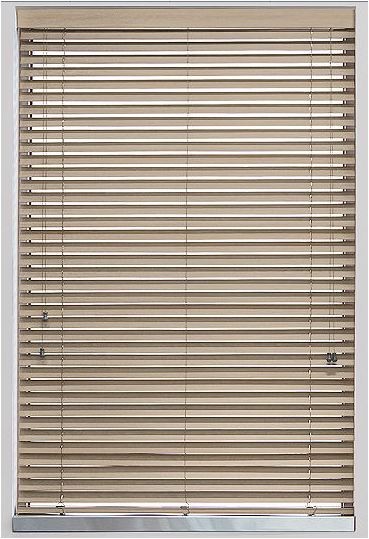
Traditional horizontal blinds contain individual slats that tilt open and closed. When a product is described as a 2-inch blind, the measurement normally refers to the height of each horizontal slat. Wider slats create a substantial, furniture-like appearance and provide a clearer outside view when tilted open than narrow mini-blind slats.
True bamboo window treatments are more commonly constructed as woven shades. Thin bamboo strips, reeds, grasses, jute, or similar natural fibers are woven together into a continuous panel. Instead of tilting, the panel raises into folds or rolls upward. Retailers often call these products bamboo blinds, natural shades, woven wood shades, or bamboo Roman shades.
Why the terminology matters
A horizontal 2-inch blind gives you adjustable slats. You can tilt them to redirect sunlight without raising the entire blind. A woven bamboo shade filters light through its material and must usually be raised or lowered to change the view. Both can look beautiful, but they behave differently.
Before ordering, study the product description rather than relying on the title alone. Look for phrases such as “2-inch slats,” “woven bamboo,” “Roman shade,” “roller shade,” “light-filtering liner,” or “room-darkening liner.” Product photographs should also show whether the treatment has separate slats or one woven panel.
Why Choose Custom Bamboo Window Treatments?
Stock blinds work well when a window happens to match a common retail size. Unfortunately, windows have a mischievous habit of being one-quarter inch narrower, slightly crooked, or apparently designed by someone who disliked standard measurements.
Custom bamboo blinds are manufactured according to the dimensions supplied for each opening. The result is usually a cleaner fit, more consistent light coverage, and fewer awkward gaps. Custom ordering also opens the door to more choices in weave, stain, edge binding, valance style, liner opacity, mounting method, and control system.
Natural texture without visual clutter
Bamboo brings visible grain, tonal variation, and handcrafted character into a room. That texture can prevent white kitchens from feeling sterile, make minimalist bedrooms more inviting, and add structure to relaxed coastal or farmhouse spaces. It also works surprisingly well in contemporary rooms where smooth walls and hard surfaces need something warmer.
A softer relationship with sunlight
Unlined woven bamboo shades do not normally create complete darkness. Instead, they break harsh sunlight into a softer glow. The room remains bright, but glare on televisions, computer screens, and polished countertops may be reduced.
This light-filtering quality is one of bamboo’s greatest strengths. It is also why an unlined shade may be disappointing in a bedroom where someone expects hotel-level darkness at noon. Bamboo is charming, but it does not negotiate with the sun unless you add a suitable liner.
Light Control, Privacy, and Liner Options
The openness of a bamboo weave determines how much light and visibility pass through it. Closely woven material offers more coverage, while an open weave creates a breezier appearance and allows more daylight into the room.
Unlined bamboo
An unlined shade preserves the most natural appearance. Sunlight reveals variations in the fibers and creates an attractive layered effect. During the day, the bright outdoors may make it difficult for people outside to see into the room. At night, however, interior lights can reverse that advantage. Shapes and movement may become visible through an open weave.
Privacy liners
A privacy liner reduces visibility while retaining some filtered light. It is a practical option for dining rooms, home offices, street-facing living rooms, and other spaces that need dependable coverage without becoming excessively dark.
Room-darkening or blackout liners
A room-darkening liner blocks substantially more light and improves nighttime privacy. It is better suited to bedrooms, nurseries, media rooms, and windows facing intense afternoon sun. Small light gaps may still appear around the edges, especially with an inside mount. An outside mount with generous overlap generally provides better coverage.
Independent liners
Some premium custom shades offer a liner that operates separately from the bamboo panel. This arrangement provides greater flexibility: lower the bamboo layer for filtered daylight, lower the liner when privacy is needed, or use both for stronger light control.
Inside Mount vs. Outside Mount
Inside mount
An inside-mounted blind or shade sits within the window opening. It produces a tailored, built-in appearance and leaves decorative trim visible. The window recess must be deep enough to hold the headrail and allow the treatment to operate without hitting locks, handles, screens, or cranks.
Inside mounts can have narrow light gaps along the sides because manufacturers need a small amount of clearance. Those gaps are normal. They matter less in living rooms but can be noticeable in bedrooms when the morning sun discovers them at 5:47 a.m.
Outside mount
An outside-mounted treatment attaches to the wall or trim and overlaps the window opening. This method can hide an uneven frame, make a small window appear larger, and reduce light leakage. It is also useful when the recess is too shallow for an inside mount.
The extra coverage must be planned carefully. Check that the shade will clear projecting trim, handles, radiators, tile, and nearby cabinets. Confirm that the mounting surface is strong enough to support the headrail.
How to Measure for Custom Bamboo Blinds
Custom products are made from the numbers you submit, so accuracy matters. Use a rigid steel tape measure rather than a cloth sewing tape, which can stretch or sag. Record measurements in inches to the precision requested by the manufacturer, commonly the nearest one-eighth inch.
Measuring for an inside mount
- Measure the inside width at the top, middle, and bottom of the opening.
- Record the narrowest width unless the manufacturer gives different instructions.
- Measure the height at the left, center, and right.
- Record the height according to the product instructions, often using the longest measurement for a custom shade.
- Measure the available depth and note window hardware or other obstructions.
Do not automatically subtract from the width. Many custom manufacturers apply their own inside-mount deduction. Subtracting again can create a treatment that is unnecessarily narrow.
Measuring for an outside mount
- Decide where the headrail or brackets will be positioned.
- Measure the total width you want the treatment to cover.
- Add sufficient overlap on both sides for privacy and light control.
- Measure from the planned headrail position to the desired bottom point.
- Confirm that the mounting area is flat and free from obstacles.
Manufacturers commonly recommend several inches of total side overlap, but exact requirements vary by product. Follow the instructions for the model being ordered rather than borrowing deductions from a different brand.
Measure every window separately
Two windows that look identical may differ slightly. Measure each opening and label the results by room and position, such as “living room, left of fireplace.” This small organizational step prevents a future game of musical blinds.
Choosing Color, Weave, and Finish
Bamboo is a natural material, so variation is part of its appeal. Fibers can differ in color, thickness, knots, and grain. A sample is therefore more useful than a photograph viewed on a bright phone screen.
Light finishes
Blonde, wheat, and natural honey shades help small rooms feel open. They pair easily with white walls, pale oak, linen, rattan, and soft neutral upholstery.
Medium finishes
Caramel, chestnut, and warm brown weaves provide contrast without dominating the room. They work well with transitional interiors, traditional furniture, earthy tile, and medium-toned wood floors.
Dark finishes
Espresso, charcoal, and deep walnut treatments create a stronger architectural statement. They can frame a bright view and balance dark cabinets or metal fixtures. In a small room, however, a dense dark shade may feel visually heavy.
Order samples first
Examine samples during morning, afternoon, and evening light. Hold them against the window and next to permanent room finishes. A weave that looks pleasantly beige under showroom lighting can appear distinctly orange beside a cool gray wall.
For several windows in one room, order the treatments together when possible. Natural materials and production batches may vary, and ordering as one group improves visual consistency.
Safety and Operating Systems
Cordless operation is the preferred choice in homes with young children. It also creates a cleaner appearance because there are no dangling pull cords beside the window.
Depending on the product, custom bamboo window treatments may be available with cordless lift, a continuous-loop control secured to the wall, top-down/bottom-up movement, or motorization. Motorized shades are particularly useful on tall windows, behind furniture, or in locations that are difficult to reach.
Top-down/bottom-up operation
This configuration allows the upper portion of the window to remain open while the lower portion stays covered. It is helpful for street-facing bedrooms and bathrooms because daylight can enter above eye level while privacy is maintained below.
Motorized controls
Motorization can synchronize multiple shades and may support remote, app, schedule, or smart-home control. Check power requirements before ordering. Some systems use replaceable batteries, some use rechargeable packs, and others require nearby electrical access.
Energy Performance: Keep Expectations Realistic
Any well-fitted window covering can help manage direct sunlight when it is closed at the appropriate time. A lined bamboo shade may improve comfort by reducing glare and limiting some solar heat entering the room.
However, woven bamboo should not automatically be treated as a high-performance insulating product. Open weaves allow air and radiant heat to pass more readily than tightly constructed treatments. Homeowners whose primary goal is maximum insulation should compare bamboo with insulated cellular shades or other products carrying verified energy-performance information.
A practical compromise is to pair bamboo shades with lined drapery. The bamboo supplies texture and daytime light filtering, while the curtains add softness, nighttime coverage, and another layer between the room and the glass.
Installation Basics
Most custom blinds arrive with brackets, screws, and model-specific instructions. Common tools include a pencil, steel tape measure, level, screwdriver, drill, and the correct drill bits for the mounting surface.
- Hold the brackets in the planned locations and verify that they are level.
- Mark the screw holes accurately.
- Drill pilot holes where appropriate.
- Use anchors or fasteners suitable for drywall, plaster, masonry, metal, or wood.
- Secure the brackets firmly before attaching the headrail.
- Test the treatment through its full range of movement.
- Install handles, tension devices, or safety hardware supplied with the product.
Wide shades can be awkward to lift while aligning the headrail, so a second person is useful. Professional installation may also be worthwhile for oversized windows, masonry walls, motorized systems, or a whole-house order where one crooked shade would become the only thing anyone notices.
Cleaning and Caring for Bamboo Blinds
Routine cleaning should be gentle. Use a feather duster, microfiber cloth, or vacuum with a soft brush attachment to remove surface dust. Support the material with one hand while cleaning so delicate reeds are not bent or pulled.
Avoid saturating natural bamboo. Excess moisture may affect the fibers, finish, adhesive, cords, or liner. For a small mark, follow the manufacturer’s care instructions and test any approved cleaning method in an inconspicuous area.
Natural bamboo is not automatically waterproof. Before installing it near a shower, sink, or frequently steamy window, verify that the specific product and finish are approved for that environment. Even then, provide ventilation and avoid direct water exposure.
Raise and lower the shade evenly. Do not tug one side, force a jammed mechanism, or leave a heavy woven treatment partly crooked for long periods. Careful operation protects both the lift system and the alignment of the natural material.
Where 2-Inch Bamboo Custom Blinds Work Best
Living rooms
Woven bamboo shades add warmth without covering the window in heavy fabric. A privacy liner is useful for street-facing rooms, while unlined material suits windows overlooking a private yard.
Kitchens
Bamboo complements wood cabinetry, stone, painted finishes, and metal hardware. Keep the treatment away from open flames, heavy grease, and direct splashing. A cordless shade is easier to operate above a counter.
Bedrooms
Choose a room-darkening liner and consider an outside mount if sleep quality is the priority. Layered curtains can cover side gaps and create a more finished appearance.
Home offices
A medium-density weave can soften screen glare while preserving daylight. Test the treatment against the direction of the sun; a lovely open weave may not be enough for a west-facing monitor at 4 p.m.
Dining rooms
Natural shades provide texture without competing with artwork, lighting, or patterned upholstery. They are especially effective when repeated across several windows for a calm, unified backdrop.
Common Buying Mistakes to Avoid
- Assuming every bamboo product has tilting slats: Confirm whether it is a horizontal blind or a woven shade.
- Expecting an unlined weave to provide complete privacy: Check the material against a bright light and add a liner where necessary.
- Making your own factory deduction: Follow the manufacturer’s measuring policy exactly.
- Ignoring mounting depth: Window locks and cranks can interfere with the headrail or shade.
- Ordering from a digital image alone: Request physical samples and inspect them in the room.
- Overlooking child safety: Select cordless or inaccessible-cord operation in spaces used by children.
- Calling bamboo waterproof: Confirm moisture suitability for the exact product.
- Expecting identical natural fibers: Small variations in color and texture are normal.
Real-World Experiences With 2-Inch Bamboo Custom Blinds
Homeowner experiences with custom bamboo treatments tend to follow a predictable pattern. The first reaction is usually visual: the room immediately feels warmer. A plain window that previously looked like an unfinished rectangle gains texture, shadow, and a sense of intention. Even a neutral bamboo shade can have more presence than a basic white roller shade without becoming the loudest feature in the room.
The next discovery involves daylight. An unlined weave can make strong sun look pleasantly golden, especially during the morning or late afternoon. Dust, unfortunately, also looks rather artistic in that golden light, which is a polite reminder to use the vacuum brush occasionally. In rooms with televisions or computer monitors, owners often find that light filtering helps but does not eliminate glare from a direct sunbeam. A denser weave or liner usually performs better.
Privacy is where expectations most often collide with reality. During a sunny day, an unlined bamboo shade may seem comfortably private from inside the house. After dark, turning on the lamps can make the interior more visible from outdoors. People who tested a sample against the window before ordering are rarely surprised. Those who did not may suddenly become enthusiastic customers for privacy liners or curtains.
Custom sizing generally earns positive reviews because the finished treatment looks deliberate rather than improvised. An accurately measured inside mount aligns neatly with the frame. An outside mount with thoughtful overlap can make a narrow window appear broader and more substantial. The main frustration comes from measuring mistakes. A quarter-inch error can be insignificant in some decorating projects; in a custom window opening, it can become a very expensive quarter inch.
Operation also shapes the daily experience. Cordless shades keep the window area uncluttered and are convenient when the bottom rail is easy to reach. On a window above a deep kitchen counter, however, reaching the center of the shade can be awkward. A motorized system or accessible control wand may be a better investment in that location. Owners of wide treatments often appreciate motorization because it raises the shade evenly rather than allowing one side to wander upward like it has independent weekend plans.
Natural variation is another recurring theme. Small differences in color, reed thickness, knots, and weave are visible when the sun passes through the material. Most buyers consider these variations part of the character. A shopper expecting the mechanical uniformity of vinyl blinds may see them differently. Physical samples help establish the right expectation, but even samples cannot predict every detail of a full-size handmade-looking panel.
Layering bamboo with curtains is frequently the most satisfying arrangement. The shade handles everyday daylight and provides visual texture. The curtains improve nighttime privacy, soften the window edges, and can reduce noticeable side gaps. This combination also makes it easy to change the room’s personality later: replacing curtains is simpler than replacing custom shades.
Maintenance is usually manageable. Dust becomes visible along textured reeds and wider horizontal surfaces, but regular light cleaning prevents buildup. Problems are more likely when a shade is exposed to cooking grease, repeated condensation, direct spray, or rough operation. Buyers who treat natural bamboo like finished furniture rather than washable plastic tend to enjoy it longer.
The strongest overall experience is that custom bamboo window treatments feel less like equipment and more like part of the room. They still perform practical workcontrolling light, covering glass, and adding privacybut they also contribute color and texture throughout the day. Morning sunlight emphasizes the weave, afternoon light deepens the tone, and evening lamps make the material appear richer. Few window treatments change character quite so gracefully without demanding floral swags, tassels, or a supporting role in a historical drama.
Final Thoughts
2-inch bamboo custom blinds combine useful light management with the warmth of natural materials, but the best purchase begins with precise terminology. Decide whether you want adjustable 2-inch slats or a woven bamboo shade. Then choose the weave density, liner, mount, operating system, and finish according to the room’s actual privacy and light-control needs.
Measure every window carefully, follow the selected manufacturer’s deduction policy, and request samples before committing to a whole-room order. Choose cordless operation where children may be present, and do not assume that natural bamboo is waterproof or highly insulating.
When those details are handled correctly, custom bamboo treatments can make an ordinary window look architectural, soften aggressive sunlight, and give the room a relaxed, finished character. That is a respectable amount of work for something whose main job is technically to sit in front of glass.