Note: This article is written in standard American English for web publishing and synthesizes public Reddit discussion themes, language research, psychology context, and real-world examples without copying original comments.
Popular sayings are society’s pocket-sized instruction manuals. They are short, catchy, and easy to throw into a conversation when someone is sad, broke, tired, heartbroken, or standing in front of a suspiciously calm pot of water. The problem? A lot of them collapse faster than a lawn chair at a family barbecue the second real life sits on them.
That is exactly why the viral Reddit thread asking people what popular saying is actually nonsense struck a nerve. Thousands of users jumped in with phrases they had heard from parents, teachers, bosses, coaches, movies, motivational posters, and that one coworker who says “rise and grind” before 8 a.m. The replies were funny, sharp, occasionally brutal, and surprisingly thoughtful.
What made the conversation so addictive was not just the jokes. It was the relief. People were finally saying out loud what many of us have quietly suspected for years: not every proverb is wisdom. Some sayings are outdated. Some are incomplete. Some sound nice but can be emotionally lazy. And some are just nonsense wearing a tiny graduation cap.
Why Popular Sayings Stick Around Even When They Are Wrong
A saying survives because it is memorable, not because it is accurate. “A watched pot never boils” has rhythm. “Money can’t buy happiness” sounds noble. “Everything happens for a reason” feels comforting to the person saying it, even if it feels like a wet sock to the person hearing it.
Language experts define proverbs and idioms as compact expressions that carry meaning beyond their literal words. That compactness is useful. We need shortcuts. Nobody wants a 900-word TED Talk every time someone spills coffee. But shortcuts become dangerous when they replace thinking.
Many sayings also contradict each other. “Look before you leap” sounds smart until someone fires back with “He who hesitates is lost.” “Absence makes the heart grow fonder” competes with “Out of sight, out of mind.” Apparently, wisdom has been arguing with itself for centuries and billing us for both sides.
30 Popular Sayings Redditors Called Nonsense
1. “Money can’t buy happiness.”
Redditors had no patience for this one. Money may not buy permanent joy, spiritual enlightenment, or a personality upgrade, but it can buy rent, food, medical care, transportation, safety, and the magical ability to answer unknown phone numbers without fearing a debt collector. A better version might be: money cannot buy everything, but not having enough can absolutely make life harder.
2. “The customer is always right.”
This phrase has been used to excuse some truly Olympic-level public tantrums. The more reasonable interpretation is that customers are right about their own tastes. If someone wants a neon-green couch shaped like a taco, that is their home’s problem. But the customer is not automatically right about policies, facts, prices, or whether a cashier deserves to be treated like emotional bubble wrap.
3. “There are plenty of fish in the sea.”
Technically true. Also technically unhelpful. The sea contains fish, trash, sharks, jellyfish, and mysterious objects that probably belong in a horror movie. After a breakup, people usually do not need a marine biology lecture. They need compassion, time, and maybe the removal of their ex’s Netflix profile.
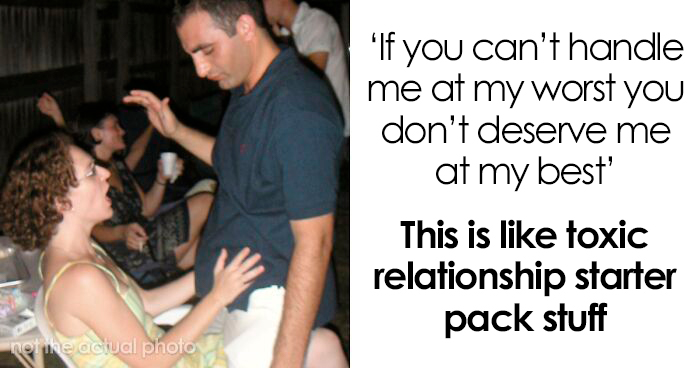
4. “If you can’t handle me at my worst, you don’t deserve me at my best.”
Reddit treated this as a red flag wearing sunglasses. Everyone has bad days, but this saying can become a permission slip for selfishness. A healthier version is: relationships should include patience, accountability, and growth. Your “worst” should not be a recurring subscription service.
5. “What doesn’t kill you makes you stronger.”
Sometimes hardship builds resilience. Sometimes it leaves trauma, medical bills, anxiety, grief, or a knee that predicts rain. This saying often oversimplifies suffering. Pain does not automatically make people stronger; support, recovery, treatment, time, and meaning-making may help people rebuild.
6. “Looks don’t matter.”
They should not matter as much as they do, but pretending they do not matter at all is fantasy. Appearance affects first impressions, dating, hiring bias, social confidence, and how people are treated. The honest version is: looks matter, but they are not the only thing that matters.
7. “It doesn’t matter who started it.”
Anyone who has ever been blamed for “being involved” in a conflict they did not start understands the outrage here. Context matters. In schools, workplaces, families, and even legal situations, who initiated harm can be extremely important. Fairness requires more than punishing everyone in the room because sorting facts is inconvenient.
8. “Good things come to those who wait.”
Waiting can be useful when bread is rising or your phone is updating. But in life, waiting without action is often just procrastination in formalwear. Good things usually come to people who prepare, ask, apply, practice, risk rejection, follow up, and occasionally refresh their inbox like a caffeinated woodpecker.
9. “It’s just how I am.”
This saying often appears when someone does not want to apologize, improve, or stop turning every gathering into a hostage situation. Personality explains behavior; it does not excuse all of it. Growth begins when “that’s just how I am” becomes “that’s something I should work on.”
10. “Bill Gates and Mark Zuckerberg were college dropouts.”
Yes, but that sentence leaves out the part where they dropped out of Harvard, had extraordinary technical ability, strong networks, timing, resources, and rare opportunities. “A billionaire dropped out” is not a universal business plan. It is a biographical detail, not career advice.
11. “Happiness is a choice.”
This sounds empowering until it is said to someone dealing with depression, grief, chronic illness, poverty, burnout, or trauma. People can choose habits that support well-being, but they cannot simply select happiness like a ringtone. Mental health is more complicated than a wall decal.
12. “Everything happens for a reason.”
For many people, this is the king of unhelpful comfort phrases. It can make tragedy sound tidy when real suffering is anything but tidy. Sometimes the kinder response is not to explain pain but to acknowledge it. “I’m here with you” beats “the universe has a filing system” almost every time.
13. “God doesn’t give you more than you can handle.”
Even people of faith can find this phrase painful. It can imply that suffering is assigned based on strength, which is a heavy thing to place on someone already struggling. Better support focuses on presence, practical help, and humility rather than turning pain into a cosmic endurance test.
14. “Life is like a box of chocolates. You never know what you’re gonna get.”
Redditors pointed out that many chocolate boxes literally include a guide. Caramel is labeled. Coconut is labeled. The weird orange cream is usually avoidable if you read carefully. Life may be uncertain, but chocolate is often better documented than your health insurance benefits.
15. “Just exercise and drink water.”
Exercise and hydration are good. They are not magic wands. Telling a depressed person to “just” do anything can add guilt to an already heavy situation. Helpful advice should recognize barriers, not pretend motivation grows on trees next to the reusable water bottles.
16. “Practice makes perfect.”
Practice makes habits. Bad practice makes bad habits. Focused, corrected, intentional practice is what improves performance. If you practice piano with the wrong fingering for six months, congratulations: you are now highly trained at annoying your future teacher.
17. “Sleep is for the weak.”
No, sleep is for mammals trying not to become emotional soup. Sleep supports memory, mood, immune function, concentration, and physical health. Bragging about sleep deprivation is not impressive; it is your brain sending a low-battery warning while you call it ambition.
18. “You don’t need money to be happy.”
This cousin of “money can’t buy happiness” often comes from people whose basic needs are already covered. A person with housing, healthcare, savings, and food can philosophize about simplicity. A person deciding between groceries and electricity may have a less poetic interpretation.
19. “Einstein was bad in school.”
This myth refuses to retire. Einstein disliked rigid schooling, but he was not the helpless academic disaster motivational speakers sometimes describe. The lesson should not be “grades never matter.” It should be “curiosity, persistence, and the right environment matter too.”
20. “Violence is never the answer.”
As a moral preference, this is admirable. As an absolute statement, Redditors were skeptical. Self-defense, protection, and urgent intervention complicate the slogan. The better principle is that violence should never be casual, cruel, or avoidable, but real danger may require real defense.
21. “A watched pot never boils.”
It does. Science remains undefeated. The saying is really about impatience making time feel slower, which is fair. But literally speaking, watching the pot may prevent it from boiling over and turning your stove into a crime scene.
22. “If you tell me the truth, you won’t get in trouble.”
Children everywhere would like a word. Often the truth merely changes the flavor of trouble. A better promise is: “If you tell me the truth, we can deal with the real problem.” That is less catchy, but also less likely to destroy trust.
23. “It’s just a few bad apples.”
The original idea is that a few bad apples spoil the bunch. Using the shortened phrase to protect an institution misses the point. If a system keeps producing the same problem, the issue may not be a few apples. It may be the barrel, the storage room, and the person insisting the smell is normal.
24. “Be yourself.”
Good advice, unless “yourself” currently includes being cruel, careless, dishonest, or allergic to feedback. The upgraded version is: be your authentic self, but keep editing. Personal growth is not betrayal. It is maintenance.
25. “Hard work never killed anyone.”
History, workplace injury data, and anyone who has pulled a double shift in unsafe conditions would like to object. Work can be meaningful, but overwork and dangerous labor are not cute character-building exercises. Rest and safety are not signs of weakness.
26. “This hurts me more than it hurts you.”
Usually said by someone about to punish someone else, this phrase rarely lands well. If it truly hurts you more, perhaps reconsider the method. Discipline, correction, and consequences do not need dramatic emotional theater to be effective.
27. “Sleep like a baby.”
Anyone who has lived with an actual baby knows this saying is suspicious. Babies wake up crying, hungry, damp, confused, and ready to begin a full opera at 3:17 a.m. “Sleep like a retired golden retriever” would be far more aspirational.
28. “You can achieve anything you set your mind to.”
Motivation matters, but biology, money, access, age, disability, discrimination, timing, training, and luck matter too. A realistic dream is not a smaller dream. It is a dream with shoes, directions, and a backup charger.
29. “It’s better to ask forgiveness than permission.”
In some situations, bold action is necessary. In others, this saying is just selfishness in a business-casual blazer. If your choice affects other people, their property, their time, or their trust, permission may be more than polite. It may be the whole point.
30. “If you love something, set it free.”
Sometimes love requires space. Sometimes it requires communication, boundaries, loyalty, and not disappearing into the emotional wilderness to see whether destiny sends a postcard. Romance is not a bird documentary. People need clarity.
What These Reddit Responses Reveal About Modern Advice
The thread became viral because it did more than mock old sayings. It exposed a bigger frustration with lazy advice. People are tired of phrases that sound wise but dodge complexity. They want language that recognizes real life: money stress, mental health, grief, toxic behavior, unfair institutions, bad bosses, broken trust, and the fact that babies are terrible sleep role models.
Another pattern is that many sayings are not completely wrong; they are incomplete. “Practice makes perfect” becomes useful when changed to “deliberate practice improves performance.” “Be yourself” becomes healthier when paired with self-awareness. “Money can’t buy happiness” becomes more honest when it admits that financial security reduces misery.
The best sayings survive revision. The worst ones demand obedience. A good proverb should open a conversation, not shut one down. When a phrase makes someone feel dismissed, blamed, or silenced, it has stopped being wisdom and started being verbal furniture: decorative, familiar, and mostly in the way.
Personal Experience: When Popular Sayings Fail in Real Life
Most of us first hear popular sayings when we are young, which is probably why they feel so official. Adults say them with confidence, teachers write them on posters, and movies deliver them with swelling music. For a while, they seem like cheat codes for life. Then real life arrives, kicks the door open, eats the snacks, and reveals that half the cheat codes were typed wrong.
One experience that makes people question these sayings is work. “Hard work pays off” sounds great until you see the hardest-working person in the room being underpaid, ignored, or asked to train the manager’s nephew. Effort matters, but effort without opportunity, strategy, boundaries, or recognition can become exploitation. That does not mean people should stop working hard. It means they should stop worshiping hard work as if exhaustion automatically prints success.
Relationships teach the same lesson. “If it’s meant to be, it will be” can sound romantic, but it can also become an excuse to avoid communication. Healthy relationships do not run on destiny alone. They need timing, honesty, repair, and two people willing to do the unglamorous parts. Love is not just fireworks; sometimes it is apologizing properly, discussing rent, and learning that “fine” may not mean fine.
Grief and mental health reveal the biggest weakness in cliché advice. When someone is hurting, a neat phrase can feel like a lid being placed over their pain. “Everything happens for a reason” may help the speaker feel useful, but it can make the listener feel unseen. In hard moments, people usually do not need a slogan. They need someone to stay, listen, bring food, help with paperwork, or simply admit, “This is awful, and I’m sorry.” That kind of honesty is not fancy, but it works.
Even small everyday sayings can be misleading. “A watched pot never boils” is meant to teach patience, but sometimes watching closely is exactly what prevents a mess. “Just be yourself” is good for someone hiding their harmless quirks, but terrible for someone refusing to grow. “You can be anything” inspires children, but adults eventually learn that dreams need plans, resources, feedback, and sometimes a realistic pivot.
The real lesson from the viral Reddit thread is not that all sayings are useless. It is that advice should fit the situation. A proverb is a tool, not a law. You would not use a hammer to brush your teeth unless your dental plan is extremely confusing. In the same way, we should stop using one-size-fits-all phrases for complex human problems.
Good advice has context. Good advice leaves room for exceptions. Good advice respects the person receiving it. And the best advice often sounds less like a bumper sticker and more like a thoughtful sentence: “That sounds hard. What would actually help right now?” Not as catchy, maybe. But far less likely to make Reddit roast it five years later.
Conclusion
The viral Reddit discussion about popular sayings that are actually nonsense became popular because it gave people permission to question inherited wisdom. Some phrases are harmless jokes. Some are useful in the right context. But many become frustrating when they are used to dismiss pain, excuse bad behavior, oversimplify success, or pretend life is fairer than it is.
The smartest response is not to throw every proverb into the trash. It is to treat sayings like leftovers in the fridge: check them before serving. If they still help, use them. If they smell weird, let them go. Wisdom should make life clearer, kinder, and more honest. If a phrase does the opposite, Reddit is probably already writing jokes about it.