Some travelers chase mountains. Others chase museums, beaches, castles, or that one bakery TikTok made impossible to ignore. But the world’s famous streets? They are where cities take off their formal jackets and start talking. A street can be a runway, a history book, a movie set, a shopping marathon, a religious path, a music shrine, a food crawl, or a beautifully chaotic place where your step count politely files for overtime.
That is why this list of 30 famous streets around the world is not just about addresses. It is about atmosphere. These iconic avenues, boulevards, lanes, and pedestrian streets have become global travel landmarks because they compress a city’s personality into a walkable stretch. Some sparkle with neon. Some smell like coffee, roasted chestnuts, rain on cobblestones, or extremely confident street food. Some are glamorous enough to make your wallet hide behind your passport.
From the Champs-Élysées in Paris to Shibuya Crossing in Tokyo, from Bourbon Street in New Orleans to Caminito in Buenos Aires, these are the legendary streets we would love to visit one daywith comfortable shoes, an open schedule, and absolutely no intention of pretending we are “just browsing.”
Why Famous Streets Make the Best Travel Memories
Landmarks are wonderful, but streets are alive. A monument waits for you; a street pulls you into its rhythm. You hear snippets of different languages, smell dinner before you see the restaurant, dodge photographers, admire architecture, and discover that “just a short walk” is travel code for “cancel your afternoon.”
The best streets in the world are famous because they do more than connect two points on a map. They connect past and present. They host parades, protests, markets, festivals, movie scenes, religious rituals, luxury shopping, local gossip, and late-night snack decisions that seemed wise at the time. In other words, streets are where cities become human.
30 Famous Streets Around the World Worth Dreaming About
-
Champs-Élysées, Paris, France
The Champs-Élysées is Paris at full dramatic volume. Stretching toward the Arc de Triomphe, this grand avenue mixes luxury shops, cafés, national celebrations, and postcard-perfect views. It is elegant, busy, slightly theatrical, and exactly the kind of place where even buying a coffee feels like making an entrance.
-
La Rambla, Barcelona, Spain
La Rambla is Barcelona’s famous pedestrian artery, running through the city center with flower stalls, performers, cafés, markets, and a constant stream of visitors. It is lively, colorful, and occasionally overwhelmingthe kind of street that reminds you to watch your bag and your sense of wonder at the same time.
-
Broadway, New York City, USA
Broadway is more than a street; it is a neon-lit promise that someone nearby is about to sing their feelings. From Times Square to the Theater District, Broadway represents New York’s entertainment heartbeat. Even if you do not catch a show, the billboards alone deserve a standing ovation.
-
Fifth Avenue, New York City, USA
Fifth Avenue is where New York dresses up. Famous for luxury shopping, major museums, St. Patrick’s Cathedral, and views toward Central Park, it delivers a polished city walk with serious window-shopping potential. It is also where budgets go to learn humility.
-
Wall Street, New York City, USA
Wall Street may be short, but its influence is enormous. Associated with the New York Stock Exchange and global finance, it turns capitalism into a tourist stop. Visitors come for the history, the architecture, and the strange thrill of standing where money seems to move faster than pigeons.
-
Bourbon Street, New Orleans, USA
Bourbon Street is loud, musical, historic, and not especially interested in your bedtime. Located in the French Quarter, it is famous for nightlife, balconies, jazz energy, and party crowds. Beneath the revelry, New Orleans’ layered French, Spanish, Creole, and American history gives the street real depth.
-
Lombard Street, San Francisco, USA
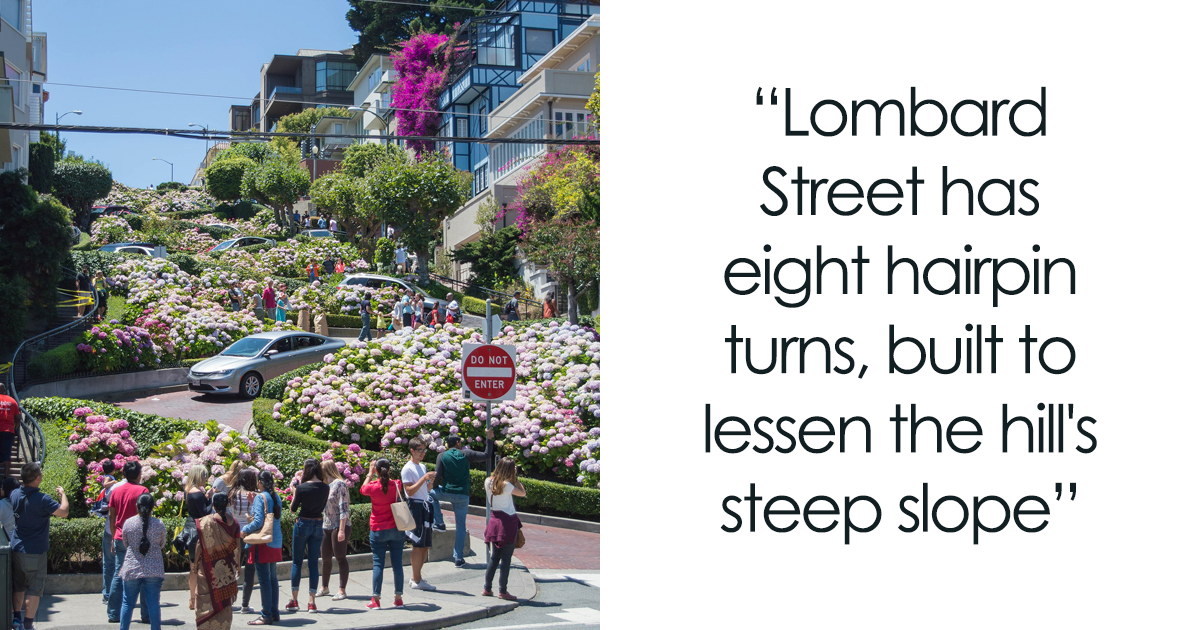
Lombard Street is best known for its steep, flower-lined hairpin turns. Often called the “crookedest street,” it is more accurately a beautifully landscaped zigzag with a world-class talent for appearing on postcards. Walking it is easier than driving it, and much better for your nerves.
-
Hollywood Boulevard, Los Angeles, USA
Hollywood Boulevard is famous for the Hollywood Walk of Fame, historic theaters, souvenir shops, and movie-industry mythology. Is it glamorous every second? Not exactly. But that is part of its charm. It is show business with the makeup slightly smudged, which somehow makes it more interesting.
-
Rodeo Drive, Beverly Hills, USA
Rodeo Drive is luxury retail turned into street theater. Palm trees, designer boutiques, polished storefronts, and expensive-looking sunglasses dominate the scene. Even if you buy nothing, you can enjoy the architecture, the people-watching, and the fantasy of saying, “I’ll take it,” without checking your banking app.
-
The Las Vegas Strip, Nevada, USA
The Las Vegas Strip is technically a stretch of Las Vegas Boulevard, but emotionally it is an entire planet. Casinos, resorts, fountains, themed architecture, restaurants, shows, and neon create a surreal walking experience. It is subtle in the same way a marching band is subtle.
-
Ocean Drive, Miami Beach, USA
Ocean Drive is where pastel Art Deco buildings, palm trees, beach air, neon lights, and outdoor cafés combine into one very photogenic stroll. Located in Miami Beach’s Art Deco Historic District, it is ideal for architecture lovers, beach walkers, and anyone who enjoys buildings that look like sherbet.
-
Abbey Road, London, England
Abbey Road became immortal thanks to The Beatles’ album cover and the famous zebra crossing outside Abbey Road Studios. The street itself is fairly ordinary, which makes the pilgrimage funnier and sweeter. Four people crossing a road turned into one of music’s most copied images.
-
Oxford Street, London, England
Oxford Street is one of London’s most famous shopping streets, packed with department stores, international brands, buses, crowds, and determined shoppers. It is not a quiet stroll; it is a retail obstacle course. But for big-city energy, holiday lights, and people-watching, it is hard to beat.
-
Carnaby Street, London, England
Carnaby Street is tied to London’s swinging 1960s fashion scene and still carries a creative, boutique-heavy personality. Today it offers independent shops, restaurants, colorful installations, and a more playful feel than nearby shopping giants. It is London with a wink and better shoes.
-
The Royal Mile, Edinburgh, Scotland
The Royal Mile runs through Edinburgh’s Old Town between Edinburgh Castle and Holyrood Palace. Cobblestones, closes, historic buildings, whisky shops, ghost tours, bagpipers, and festival crowds make it one of Europe’s most atmospheric walks. Every corner looks prepared to tell a dramatic story.
-
Grafton Street, Dublin, Ireland
Grafton Street is Dublin’s beloved pedestrian shopping street, known for buskers, cafés, flower sellers, and constant movement. It feels musical even before anyone starts performing. A walk here can turn into an accidental concert, which is one of the better ways a travel plan can go sideways.
-
Via Dolorosa, Jerusalem
Via Dolorosa is one of the world’s most spiritually significant streets, traditionally associated with the route Jesus walked on the way to crucifixion. Pilgrims follow the Stations of the Cross through Jerusalem’s Old City, making this a street of faith, reflection, history, and deep emotional power.
-
Via Appia Antica, Rome, Italy
The ancient Appian Way is one of Rome’s legendary roads, with roots reaching back to the Roman Republic. Walking or cycling along its stone surface feels like borrowing a path from history. It offers ruins, catacombs, countryside, and the humbling realization that Roman infrastructure had serious confidence.
-
Via Monte Napoleone, Milan, Italy
Via Monte Napoleone is Milan’s high-fashion runway in street form. Located in the city’s luxury shopping district, it is lined with elite Italian and international fashion houses. Even the window displays appear to have personal stylists. Come for fashion inspiration; leave with your credit card breathing heavily.
-
Shibuya Crossing, Tokyo, Japan
Shibuya Crossing is not exactly a long street, but it is one of the most famous pedestrian scenes on Earth. When the lights change, people move from every direction in organized chaos. Neon screens, crowds, shopping, and energy make it Tokyo compressed into one unforgettable moment.
-
Ginza Chuo-dori, Tokyo, Japan
Ginza’s Chuo-dori is Tokyo’s polished luxury shopping boulevard, where department stores, flagship boutiques, galleries, and immaculate design meet. On pedestrian-friendly days, it becomes a stylish urban promenade. It is refined, futuristic, and dangerous if you are easily seduced by beautiful packaging.
-
Nanjing Road, Shanghai, China
Nanjing Road is one of Shanghai’s most famous commercial streets, known for shopping, lights, crowds, and its connection to the Bund area. It captures Shanghai’s blend of history and modern spectacle. At night, the signs glow with the confidence of a city that knows it looks good.
-
Myeongdong, Seoul, South Korea
Myeongdong is Seoul’s shopping and street-food magnet, famous for cosmetics stores, fashion shops, bright signs, and snack stalls. It is the place to test your curiosity, your skincare discipline, and your ability to say no to one more hotteok. Spoiler: saying no may not happen.
-
Orchard Road, Singapore
Orchard Road is Singapore’s iconic shopping belt, lined with malls, hotels, restaurants, and polished urban design. It is sleek, efficient, air-conditioned in all the right places, and perfect for travelers who believe “just looking” can reasonably last six hours.
-
Khao San Road, Bangkok, Thailand
Khao San Road is Bangkok’s backpacker legend: budget stays, bars, street food, travel agents, massage shops, and late-night chaos packed into a short stretch. It is not everyone’s cup of tea. It is more like three energy drinks and a plate of pad Thai at midnight.
-
İstiklal Avenue, Istanbul, Turkey
İstiklal Avenue is one of Istanbul’s great urban walks, running from Taksim toward the historic Tünel area. Shops, cafés, churches, galleries, music, crowds, and the nostalgic red tram give it constant motion. It feels like Europe and Asia having a very stylish conversation.
-
Hollywood Road, Hong Kong
Hollywood Road in Hong Kong is famous for antique shops, galleries, temples, cafés, and hillside city character. It blends old and new Hong Kong with unusual ease. One minute you are browsing art; the next, you are climbing steps and pretending this counts as a workout.
-
Caminito, Buenos Aires, Argentina
Caminito in La Boca is a colorful open-air street museum filled with painted buildings, tango energy, artists, and photo-ready corners. Its immigrant history and portside character give the brightness meaning. It is cheerful, theatrical, and practically designed to defeat camera storage limits.
-
Avenida Paulista, São Paulo, Brazil
Avenida Paulista is São Paulo’s cultural and civic spine, home to museums, bookstores, business towers, street art, cafés, and Sunday pedestrian life. It shows the city as ambitious, creative, diverse, and enormous. Walking it feels like reading Brazil’s urban future in real time.
-
Rua do Senado, Rio de Janeiro, Brazil
Rua do Senado has gained attention as one of Rio’s coolest revived streets, with historic townhouses, traditional bars, samba energy, restaurants, and creative venues. It proves famous streets do not have to be frozen in the past. Sometimes they become exciting because they are changing right now.
How to Enjoy Iconic Streets Without Acting Like a Lost Pigeon
Visiting famous streets sounds easy: arrive, walk, take photos, eat something, go home with sore feet and too many pictures of signs. But the difference between a forgettable stroll and a great travel memory is usually a little strategy. The first rule is simple: go early if the street is famous for beauty, and go later if it is famous for nightlife. Lombard Street, Caminito, and the Royal Mile feel different before tour groups arrive. Bourbon Street, the Las Vegas Strip, and Shibuya Crossing earn their reputations after sunset.
Second, look up. Famous streets often hide their best details above eye level: carved balconies, old signs, stained glass, faded advertisements, rooflines, flags, murals, and architectural jokes placed there by people who probably enjoyed confusing future visitors. On Ocean Drive, the buildings tell the story. On İstiklal Avenue, upper floors reveal historic layers. On Fifth Avenue, the skyline is part of the show.
Third, eat locally but choose wisely. A famous street will always have tourist traps; that is practically a law of urban physics. Step one or two blocks away when prices become too dramatic. Near La Rambla, explore nearby market culture and side streets. Around Myeongdong, follow the food stalls with steady turnover. In Singapore, Orchard Road’s malls can hide excellent food courts and restaurants behind all that polished glass.
Fourth, build in time to wander. The best experiences usually happen when you stop treating the street like a checklist. Maybe you hear a busker on Grafton Street who makes everyone pause. Maybe you find a tiny gallery near Hollywood Road. Maybe you sit on a bench on Avenida Paulista and realize the passing crowd is more interesting than any scheduled attraction. Travel rewards curiosity, especially when curiosity wears comfortable sneakers.
Finally, remember that famous streets are also real neighborhoods, workplaces, and communities. People live above the shops, commute through the crowds, clean the sidewalks, open the cafés, tune the instruments, guard the museums, and keep the place alive after visitors leave. The best traveler is not the one with the most photos, but the one who notices the human rhythm. Smile, move aside for locals, tip performers when you stop to enjoy them, and do not block an entire sidewalk for a “candid” photo that required fourteen rehearsals.
Extra Travel Experiences Inspired by Famous Streets
The dream of visiting famous streets around the world is really the dream of collecting small, vivid moments. You may remember the monument, but you will probably remember the human details more clearly: the vendor who handed you food with expert speed, the musician who made a crowd go quiet, the smell of rain on stone, the funny sign in a shop window, or the moment you realized you had been walking in the wrong direction for twenty minutes but somehow found a better view.
Imagine starting a day in Paris on the Champs-Élysées with a coffee that costs more than your first childhood bike, then ending it by watching the Arc de Triomphe glow at dusk. The experience would not be just about luxury; it would be about scale, symmetry, and the feeling that Paris knows exactly how to frame a scene. In Barcelona, La Rambla would offer the opposite mood: warmer, busier, messier, more spontaneous. You might begin with a careful plan and end up following the smell of grilled seafood or fresh bread into a side street.
In Tokyo, Shibuya Crossing would be less about distance and more about timing. You would stand at the curb with hundreds of strangers, wait for the signal, and suddenly become part of a living pattern. Nobody is the main character, yet everyone is in the scene. A few hours later, Ginza Chuo-dori would slow the pace and polish the edges, offering quiet design, elegant storefronts, and the satisfying calm of a city that understands presentation.
In New Orleans, Bourbon Street would challenge all romantic expectations by being loud, imperfect, and wildly alive. That is part of the point. Famous streets are rarely tidy museum pieces. They are working stages where culture changes costume every few blocks. The same goes for Hollywood Boulevard, where the myth of film history meets souvenir shops and everyday city grit. The contrast can be funny, but it is also honest.
Some streets would feel reflective rather than entertaining. Via Dolorosa in Jerusalem would ask visitors to slow down and understand that walking can be a form of devotion. Via Appia Antica in Rome would turn every stone into evidence of time. The Royal Mile in Edinburgh would do something similar, layering royal history, ghost stories, church bells, festival posters, and cobbled closes into one atmospheric climb.
Then there are streets that celebrate color and social life. Caminito would invite photographs, tango rhythms, and conversations with artists. Avenida Paulista would show how culture, business, protest, art, and leisure can share the same urban stage. Orchard Road would turn shopping into a climate-controlled expedition, while Khao San Road would remind travelers that chaos can be memorable even when it is not graceful.
The best way to experience any famous street is to give it enough time to surprise you. Walk once with your camera ready, then walk again with your phone in your pocket. Notice doors, sounds, languages, window reflections, local habits, and the way the street changes from morning to night. A famous street is not only a destination. It is a moving story, and for a little while, your footsteps become part of it.
Conclusion
The world’s most famous streets are proof that travel does not always require climbing a mountain, booking a boat, or decoding a museum map before breakfast. Sometimes the best destination is simply a street with a strong personality. These iconic streets around the world offer culture, food, architecture, music, shopping, history, faith, nightlife, and people-watching so good it deserves popcorn.
Whether you dream of crossing Abbey Road, wandering La Rambla, shopping on Fifth Avenue, watching Shibuya move like a human tide, or soaking up samba energy on Rua do Senado, each street promises more than a photo. It offers a city in motion. And one day, with the right shoes and a flexible itinerary, we would happily visit them all.