If grapevines had a love language, it would probably be “firm boundaries.” Left alone, they sprawl, tangle, climb, and generally behave like they’re auditioning for a jungle documentary. That is exactly why winter pruning matters. A grapevine that looks wildly overgrown in January can become a productive, manageable, fruit-filled plant by summer if you cut it back the right way.
The good news is that learning how to prune grape vines for winter is not nearly as mysterious as it looks. Once you understand one key principle, everything gets easier: grapes are produced on shoots that grow from one-year-old wood. In plain English, that means last year’s canes hold the buds that matter most for next season’s crop. Your job during winter is to remove the extra growth, keep the best fruiting wood, and shape the vine so sunlight, airflow, and fruit quality all improve.
Most home gardeners do not prune hard enough. Grapevines are not offended by decisive cuts. In fact, they usually need you to remove the majority of the previous season’s growth. The right prune helps control crop load, improves ripening, keeps the vine healthy, and stops your arbor from turning into a leafy octopus.
In this guide, you will learn three simple ways to prune grape vines for winter: spur pruning, cane pruning, and renovation pruning for neglected vines. Whether you grow table grapes, a backyard Concord, or a mystery vine that came with the house, you will know what to do when the leaves have dropped and the pruners come out.
Why Winter Pruning Matters
Winter pruning is usually done during the vine’s dormant season, after leaf fall and before buds begin to swell in late winter or early spring. That timing matters. If you prune too early, especially before the coldest part of winter has passed, you can increase the risk of winter injury. If you prune too late, the vine may “bleed” sap from the cuts. That looks dramatic, but it is generally not harmful. It is the plant equivalent of saying, “Well, that was unexpected.”
Pruning does four important things at once. First, it keeps the vine in a manageable shape. Second, it balances growth and fruiting so the plant does not overproduce weak shoots and tiny clusters. Third, it improves airflow and light penetration, which supports fruit quality and helps reduce some disease pressure. Fourth, it sets up next year’s structure by keeping the best canes and renewal wood close to the trunk or cordon.
If you skip pruning, the vine can carry far too many buds. That often leads to a huge number of clusters that never size up properly or ripen well. You do not get a better harvest. You get a busier plant with worse grapes. More is not more here. More is just chaos wearing tendrils.
Quick Vine Vocabulary Before You Start
- Trunk: The main vertical stem of the vine.
- Cordon: A permanent horizontal arm trained along a wire.
- Cane: One-year-old wood that grew last season.
- Spur: A short cane cut back to a few buds.
- Renewal spur: A short spur left to grow replacement canes for next year.
- Bud/node: The point where new shoots and fruiting growth begin.
Once those terms click, pruning instructions stop sounding like ancient vineyard poetry and start sounding practical.
Way #1: Spur Prune Cordon-Trained Vines
Spur pruning is one of the easiest and most popular methods for home gardeners. It works especially well on vines that have permanent cordons trained horizontally along a wire. Many cordon-trained European grapes, French hybrids, and muscadines are maintained this way. The basic idea is simple: instead of keeping long fruiting canes, you keep short spurs spaced along the cordon.
How Spur Pruning Works
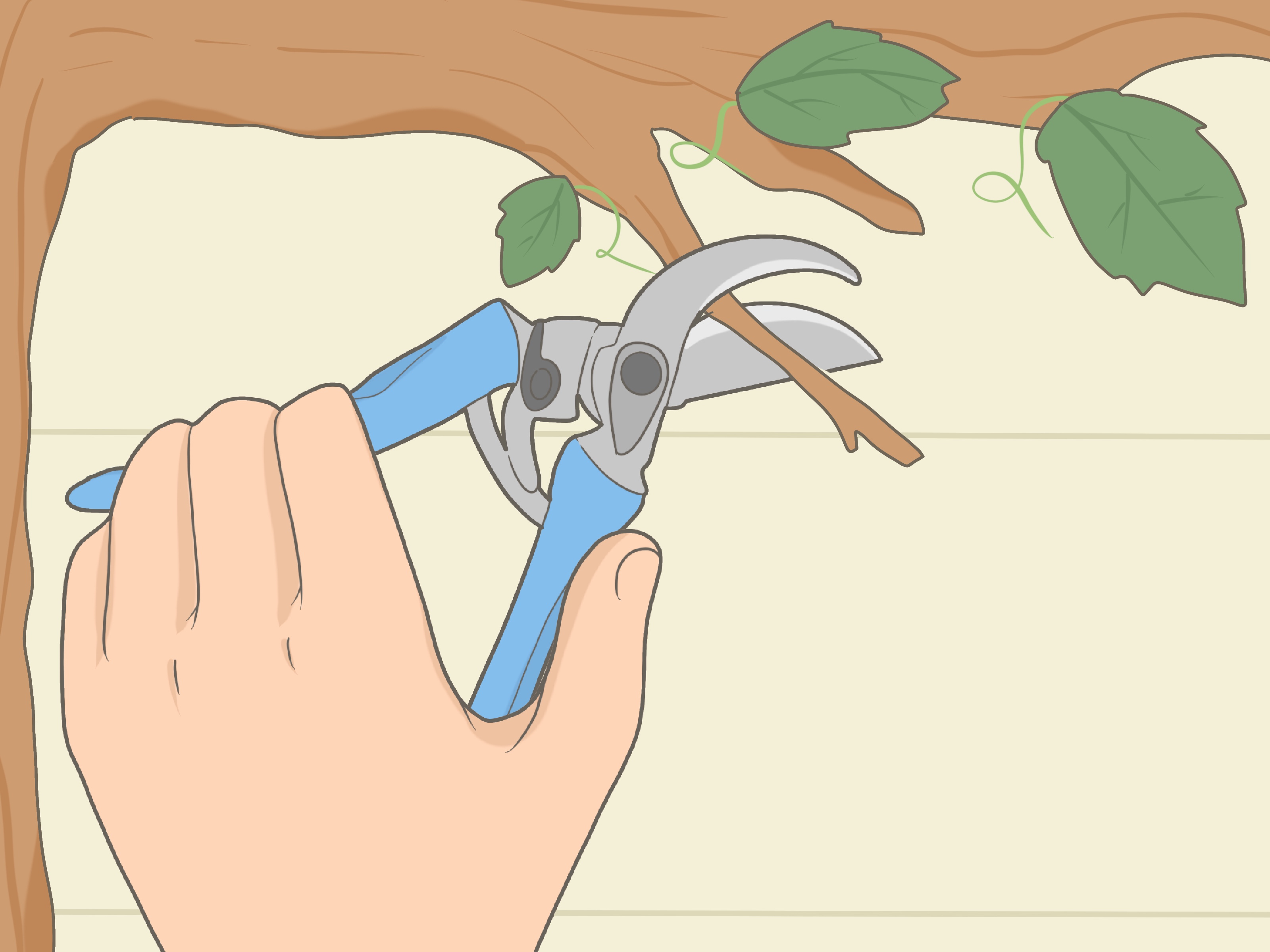
Look along each cordon for healthy one-year-old canes growing from well-positioned spots. Choose strong canes that are about pencil thickness. Cut each selected cane back to about 2 to 3 buds, or in some systems 3 to 5 buds, depending on the vigor of the vine and the system you are using. Space those spurs evenly along the cordon, generally every 4 to 6 inches. Remove the rest of the one-year-old growth.
The result should look surprisingly bare. Good. That means you are probably doing it right.
Why It Works
Spur pruning keeps fruiting positions close to the permanent structure of the vine. That makes annual pruning easier and helps maintain a tidy framework. It is a great method when the variety fruits well from buds near the base of the cane.
Simple Spur Pruning Steps
- Remove dead, weak, tangled, and damaged wood first.
- Select strong, well-spaced one-year-old canes along each cordon.
- Cut each selected cane back to a short spur with 2 to 3 buds.
- Keep spurs evenly spaced instead of clustered together.
- Remove extra canes so the vine is not overcrowded.
For many mature backyard vines, leaving roughly 40 to 50 buds total is a reasonable ballpark, though exact bud count depends on vigor, climate, variety, and winter injury. If the vine had a rough winter, you may leave a few extra buds as insurance.
Best For
Use spur pruning when your vine has permanent cordons and the variety fruits reliably from basal buds. It is the most straightforward system for many backyard growers because it is easier to repeat year after year.
Way #2: Cane Prune Vines That Need Longer Fruiting Wood
Cane pruning is the other main method, and it is often the better choice for varieties that produce more fruitful buds farther away from the base of the cane. Many American grapes, including Concord types, and some hybrids are commonly cane pruned. Some table grapes also perform very well with cane pruning.
Instead of leaving short spurs all along a cordon, you keep a few longer one-year-old canes for fruiting and a few short renewal spurs to grow next year’s replacement canes. Think of it as rotating your fruiting wood every year.
How Cane Pruning Works
Select 2 to 4 healthy fruiting canes that originate near the trunk or head of the vine. These canes should be strong, well ripened, and about pencil thickness. Cut each fruiting cane to an appropriate length, often around 8 to 15 buds depending on vine vigor and the training system. Then leave a nearby 1- or 2-bud renewal spur for each fruiting cane. Remove the rest of the canes.
After pruning, tie the retained fruiting canes to the support wire before buds swell. Waiting too long can rub off tender buds, and that is a heartbreaking way to lose your crop before it even starts.
Simple Cane Pruning Steps
- Start by removing dead and weak wood.
- Choose 2 to 4 strong fruiting canes near the trunk.
- Cut those canes to the length your vine can support.
- Leave renewal spurs close to the base for next year.
- Remove all other canes and tie the fruiting canes to the trellis.
Why Gardeners Like This Method
Cane pruning can improve yield and fruit quality on varieties whose best buds are not right at the cane base. It also helps reset the fruiting zone each year, which can be useful in cold climates or on vines where old spurs have become too long and unproductive.
Best For
Use cane pruning for varieties like Concord and for vines that have not performed well under spur pruning. If your vine keeps giving lots of leaves but disappointing fruit, the pruning system may be part of the story.
Way #3: Renovation Prune Neglected or Overgrown Vines
Sometimes the issue is not choosing between cane pruning and spur pruning. Sometimes the issue is that the vine looks like it ate the fence and is thinking about dessert. That is where renovation pruning comes in.
Old, neglected grapevines can often be saved, but the process usually takes one to two seasons. The goal is to rebuild a clear structure: one healthy trunk or a limited number of trunks, well-placed cordons or canes, and fresh renewal wood close to the framework.
How to Renovation Prune a Messy Vine
- Prune during dormancy, just before spring growth begins.
- Identify the main trunk and the healthiest permanent structure.
- Remove dead wood and obviously broken or diseased parts first.
- Reduce extra trunks gradually if the vine has several.
- Select younger canes close to the trunk to form future fruiting wood.
- Do not try to save every old branch just because it is there.
If the vine has been neglected for years, avoid trying to make it perfect in a single afternoon. Severe correction is sometimes necessary, but many vines respond best when you restore order in stages. In year one, focus on reclaiming structure. In year two, refine fruiting positions. By year three, the vine should be much easier to manage.
When Renovation Is the Smart Choice
Choose renovation pruning when the vine has multiple trunks, long bare arms, crowded old spurs, weak fruiting wood, or a general “help me” vibe. It is also useful when spur creep has pushed fruiting positions too far away from the cordon or trunk.
Common Winter Pruning Mistakes to Avoid
- Not pruning hard enough: Grapevines need decisive thinning. Leaving too much wood leads to poor fruit quality.
- Keeping weak canes: Pencil-thick, well-ripened canes are usually more productive than skinny, flimsy ones.
- Pruning too early: Wait until the vine is dormant and the harshest winter cold has mostly passed.
- Ignoring vine type: Some grapes respond better to cane pruning, others to spur pruning.
- Panicking over sap: Late pruning can cause bleeding, but it usually does not damage the vine.
- Letting spurs get too long: Old spurs can creep outward and become less productive over time.
A Simple Backyard Example
Let’s say you have a mature backyard grapevine trained to a high wire cordon with about 8 feet of cordon total. A simple spur-pruned approach might leave around 10 to 12 evenly spaced spurs, each carrying 3 to 4 buds. That puts you in the neighborhood of 40 to 50 buds, which is often a practical target for a healthy mature vine.
Now imagine you have a Concord vine that fruits better farther out on the cane. A cane-pruned version might keep 4 long canes with about 10 buds each, plus a few short renewal spurs for next year. Same vine family, different haircut, better results.
The point is not to memorize every number like you are cramming for a vineyard final exam. The point is to match the method to the vine and keep enough fruitful wood without turning the plant into a grape traffic jam.
Practical Experiences and Lessons From Winter Grape Pruning
One of the most common experiences gardeners talk about after pruning grapevines for the first time is pure hesitation. The vine looks large, valuable, and full of possibility, and the idea of cutting away most of it feels wrong. Then spring arrives, the remaining buds burst, and the plant rebounds with impressive strength. That moment changes how people think about pruning. Grapevines are far tougher and more forgiving than they appear in winter.
Another real-world lesson is that pruning gets easier once you stop looking at the whole vine and start working section by section. Standing in front of a mature vine can feel overwhelming, especially when canes cross in every direction. Experienced growers often start the same way every year: remove dead wood first, then weak wood, then badly placed wood, and only after that decide what to keep. That sequence turns confusion into a clear structure. It is less like solving a puzzle and more like clearing a workbench before you start building.
Gardeners in colder regions often learn to appreciate timing through trial and error. A vine that looks fine in midwinter may still have hidden cold injury, so pruning later in the dormant season helps reveal what survived. People who prune too early sometimes wish they had waited. People who prune a little later usually feel more confident because they can see which canes still look healthy and which buds remain sound. In frost-prone areas, delayed pruning can also slightly delay bud break, which feels like a small gift from the gardening gods.
Many backyard growers also discover that different grape varieties behave very differently. A vine that performs beautifully with spur pruning may sit next to another that crops better with cane pruning. That experience teaches an important lesson: there is no single universal formula. Good pruning is not about forcing every vine into the same pattern. It is about observing how that specific vine fruits, grows, and responds over time.
Overgrown vines create their own memorable lessons. People often inherit a neglected grapevine and assume it is beyond saving because it has several trunks, a mass of old wood, and fruit only at the far ends. Then they start cutting, simplify the framework, and suddenly the plant has a future again. Renovation pruning teaches patience more than anything else. The best results often come from two winters of thoughtful correction rather than one dramatic attack with loppers and questionable optimism.
There is also the famous sap bleeding experience. Almost everyone who prunes a bit late sees it at least once and assumes they have made a terrible mistake. In reality, the vine usually carries on just fine. The bigger issue is not the sap; it is handling the vine gently once buds begin to swell, since tender buds can rub off when old canes are yanked from the trellis. That is one of those small lessons people rarely forget after doing it exactly once.
Perhaps the most useful experience of all is learning that annual pruning prevents future headaches. A vine pruned every winter is manageable, productive, and far less intimidating. A vine ignored for two or three years becomes a project. Consistency wins. A little winter discipline pays off in better clusters, better ripening, and a vine that looks intentional instead of accidental.
Final Thoughts
If you remember only one thing about winter grape pruning, make it this: grapevines need bold, thoughtful cuts to produce their best fruit. Spur pruning keeps cordon-trained vines tidy and productive. Cane pruning works well for varieties that fruit farther out on one-year-old wood. Renovation pruning gives neglected vines a second chance. All three methods rely on the same core principle: keep the best fruiting wood, remove the rest, and shape the plant for balance.
So when winter arrives and your grapevine looks like a brown knot of confusion, do not overthink it. Grab sharp pruners, wait for dormancy, follow the structure, and prune with confidence. The vine will not hold a grudge. It will just make better grapes.