Note: Clean body-only HTML for direct publishing; source artifacts removed.
South Park has pulled off one of TV’s weirdest magic tricks: the kids almost never age, but the characters absolutely evolve. That is the fun of doing a “then vs. now” look at the show. Stan is still Stan. Cartman is still Cartman. Kenny is still somehow Kenny. But the jobs these characters do inside the story, the jokes built around them, and the emotional weight they carry have changed a lot since the series first landed in 1997.
In the early years, South Park characters were often blunt comic weapons. Over time, many of them became sharper, stranger, and more layered. Some grew from background chaos-makers into breakout stars. Others stayed visually the same while becoming morally messier, funnier, or surprisingly more human. That is why looking at South Park then vs. now is more interesting than a basic character list: it shows how the show matured without ever fully growing up. Which, honestly, feels very on-brand.
Why “Then vs. Now” Hits Different in South Park
The beauty of South Park through the years is that the town itself changes faster than the character ages do. The boys are still in fourth grade, but the satire around them keeps mutating. Early South Park leaned harder on shock, fast jokes, and simple archetypes. Later seasons expanded the adults, gave side characters more room, and let long-running traits turn into full-blown identities. Randy became a main event. Butters became a secret MVP. Wendy stopped being “Stan’s girlfriend” and started throwing haymakers, sometimes literally.
20 South Park Characters Through the Years: Then vs. Now
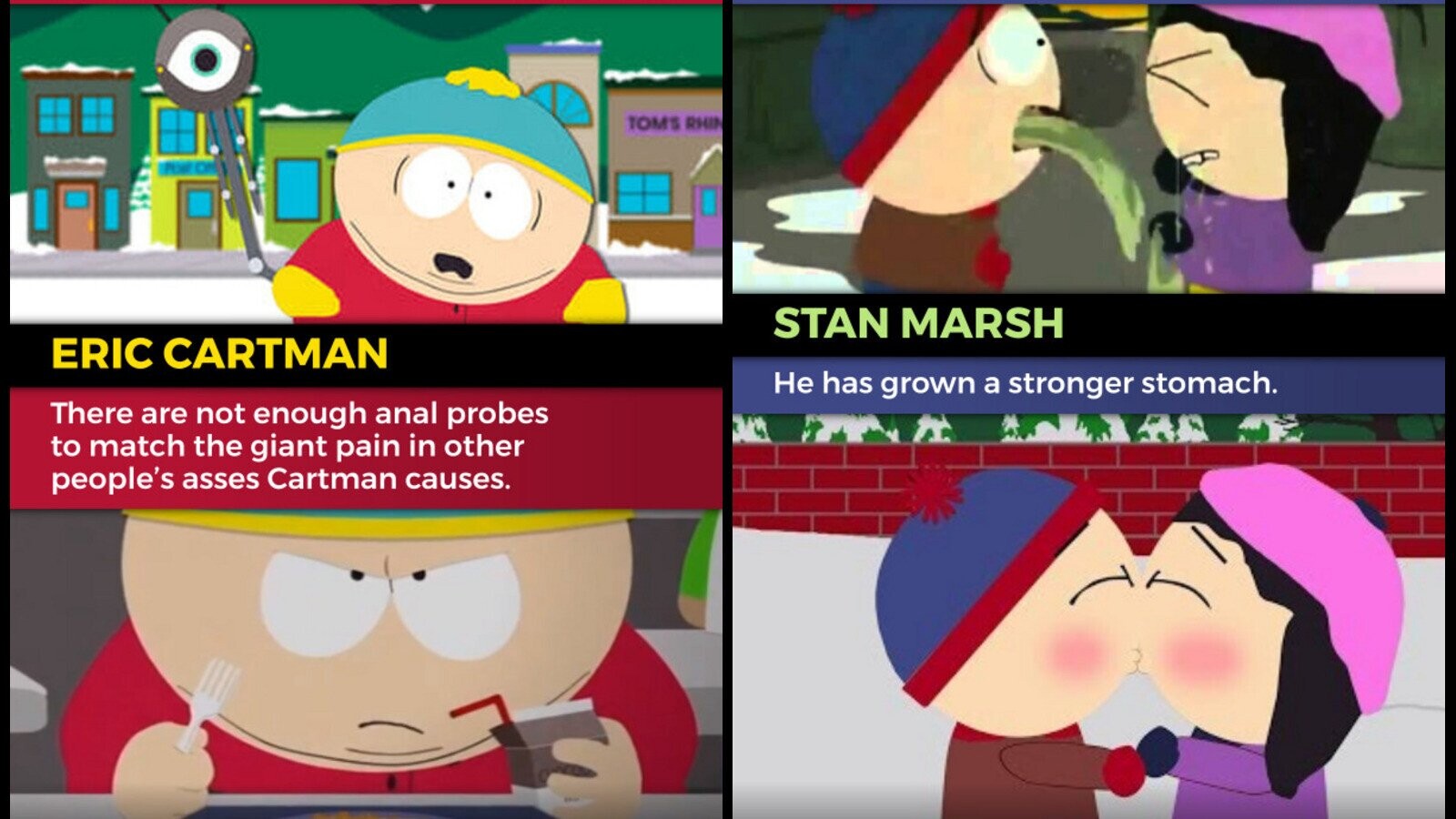
1. Stan Marsh
Then: Stan started as the closest thing the show had to an everykid hero: decent, confused, and usually the emotional center of the main four.
Now: Stan still works as the audience’s doorway into the madness, but later stories give him more cynicism and emotional burnout. He became less “generic good kid” and more “kid quietly realizing the world is ridiculous,” which is a much more South Park flavor of maturity.
2. Kyle Broflovski
Then: Kyle was the smart, moral counterweight to Cartman, often delivering the famous speech that wrapped up the lesson.
Now: He is still the conscience of the group, but with more bite. Kyle’s frustration, insecurity, and occasional hypocrisy make him stronger as a character. He is not just the moral compass anymore; he is the compass that knows the map is terrible.
3. Eric Cartman
Then: Early Cartman was a loud, selfish brat with a talent for being offensive before breakfast.
Now: He evolved into one of TV’s great chaos engines: manipulative, theatrical, occasionally brilliant, and morally bankrupt in ways that somehow keep getting worse. The genius of Cartman is that he keeps changing tactics without changing his rotten little soul.
4. Kenny McCormick
Then: Kenny was the muffled kid in the orange parka whose main job was dying in spectacular fashion.
Now: He is still the show’s king of filthy whispers, but later seasons gave him more personality, odd sweetness, superhero energy, and even heroic sacrifice. Once the writers stopped using him as only a punchline, Kenny got cooler. Still doomed, but cooler.
5. Butters Stotch
Then: Butters was the soft target: timid, gullible, and permanently one grounding away from disaster.
Now: He is one of the richest characters in the series. Butters can be innocent, creepy, heroic, pathetic, and weirdly resilient in the same episode. He went from backup kid to all-purpose comic weapon, which is a serious promotion for someone grounded by weather.
6. Randy Marsh
Then: Randy was just Stan’s dad, a somewhat ordinary adult in a town of somewhat less ordinary adults.
Now: Randy became one of the show’s biggest stars. The writers turned him into an idiot prophet of American nonsense: weed mogul, panic machine, culture-war participant, and walking bad decision. Few South Park characters through the years changed more dramatically than Randy.
7. Wendy Testaburger
Then: Wendy was mostly known as Stan’s crush and one of the more sensible girls in class.
Now: Wendy is one of the smartest and toughest people in town. She became a principled, outspoken force who can challenge trends, defend causes, and absolutely destroy Cartman when needed. Her glow-up was less cosmetic and more philosophical.
8. Herbert Garrison
Then: Mr. Garrison began as a bizarre teacher with puppet-based issues and deeply chaotic classroom energy.
Now: He became a vehicle for some of the show’s wildest reinventions: personal identity shifts, social satire, political absurdity, and eventually national-level nonsense. Garrison may be the purest example of South Park refusing to leave any character in one lane.
9. Tolkien Black
Then: For years, Tolkien was often used too narrowly, usually as the rich kid or the kid dragged into race-based jokes.
Now: More recent South Park lets him feel fuller and more self-possessed. He is talented, grounded, observant, and increasingly central in group dynamics. Thankfully, he now reads more like a character and less like a setup.
10. Jimmy Valmer
Then: Jimmy entered as an upbeat classmate with a love of comedy and a knack for scene-stealing.
Now: He remains one of the show’s most reliable joke-delivery systems, but he also became a dependable social bridge in the class. Jimmy often adds warmth without losing edge, which is not easy in a town where kindness usually gets hit by a bus.
11. Timmy Burch
Then: Timmy started as a one-word gag who looked like he might be used for quick punchlines and little else.
Now: Timmy is a fully established presence with band history, superhero status, and a surprising amount of personality packed into very few words. Somehow, he became both absurdly simple and oddly iconic. That is hard to do with one name and a wheelchair.
12. Craig Tucker
Then: Craig was the deadpan kid flipping people off and acting mildly irritated at all times.
Now: His appeal is still the same, but it has deepened. Craig’s dryness became one of the show’s best balancing tools, and later stories gave him emotional stakes without ruining his “I do not have time for this” energy.
13. Tweek Tweak
Then: Tweek was pure nerves: jittery, frantic, caffeinated panic in human form.
Now: He is still a stress tornado, but later stories turned that anxiety into something sweeter and more grounded. His relationship arc with Craig gave him a softer center and made him feel more emotionally real, not just loudly vibrating.
14. Sharon Marsh
Then: Sharon was mostly the sensible mom in a family powered by Randy’s nonsense and Stan’s confusion.
Now: She has become one of the show’s best straight-face reactors. Sharon works because she keeps the Marsh family from floating into orbit. The more deranged Randy gets, the more essential Sharon becomes. She is basically the emergency brake with better hair.
15. Sheila Broflovski
Then: Sheila was the classic overprotective mother, a walking source of parental outrage and neighborhood crusades.
Now: She still meddles like a professional, but later portrayals add more texture. Sheila is not just a punchline about moral panic anymore; she is a major influence on Kyle’s worldview and a recurring reminder that activism, panic, and love can get hilariously tangled together.
16. Liane Cartman
Then: Liane mostly functioned as the permissive mother who enabled Cartman’s worst impulses.
Now: Later seasons gave her more spine. She is still wrapped up in Cartman’s manipulation, but she increasingly pushes back, which makes their relationship funnier and sharper. Watching Liane discover boundaries is like watching someone try to train a raccoon with a flamethrower.
17. PC Principal
Then: When PC Principal arrived, he felt like a one-era satire bomb dropped directly into the school.
Now: Instead of fading out, he stuck around and became part of the town’s structure. That is what makes him interesting now: he shifted from topical parody to actual recurring institution, which is a very South Park way of saying the joke got promoted.
18. Chef
Then: Chef was the wise, musical adult the boys could run to when the rest of the town failed them.
Now: Even though Chef is long gone from the show’s regular present, his legacy is huge. He represents an early version of South Park storytelling, when the kids often needed one grown-up who could explain the madness with soul, swagger, and questionable love advice.
19. Clyde Donovan
Then: Clyde was a rotating classmate presence, useful for school politics, playground dynamics, and occasional vanity.
Now: He is still not a main-four giant, but he has become a recognizable supporting anchor. The more the show expanded the class, the more Clyde settled into a reliable role as the handsome-ish, not-always-bright kid who somehow keeps getting dragged into everything.
20. Ike Broflovski
Then: Ike began as Kyle’s tiny Canadian little brother and, yes, the subject of the eternally terrible “kick the baby” bit.
Now: Ike grew into one of the show’s sneakiest scene-stealers. He is still adorable chaos in a tiny parka, but later episodes treat him like a real little weirdo with his own interests, loyalties, and comic rhythm. That makes him much more than a baby joke with citizenship paperwork.
What These Character Changes Say About South Park
If there is one big takeaway from South Park then vs. now, it is this: the show survived because it stopped relying only on shock. The early seasons built the brand, but the later seasons kept it alive by deepening the bench. Randy becoming bigger, Butters becoming stranger, Wendy becoming sharper, and side characters becoming more flexible all helped the show avoid turning into a museum of its own greatest hits.
That does not mean every change was soft or sentimental. This is still South Park. Characters grow in ways that are crooked, mean, absurd, and often deeply inappropriate. But that is exactly why the evolution works. The show understands that staying the same is not the same thing as standing still. The kids may remain in fourth grade forever, but the writing around them keeps mutating like it drank something glowing in a Denver alley.
500 More Words on the Experience of Watching South Park Characters Change
One of the strangest and most satisfying experiences of revisiting South Park is realizing that the characters have been changing right in front of us while pretending not to. On paper, nothing should move much. The boys are still kids. The town is still snowy. Somebody is still yelling. Cartman is still one Cheesy Poof away from a felony. Yet if you watch early episodes and then jump to the newer eras, the emotional experience is different.
When a lot of people first discover the show, they usually connect with the kids. Stan and Kyle feel like the center. Cartman feels like the shock machine. Kenny feels like the running gag you wait for. But after enough years, many viewers have the same experience Trey Parker and Matt Stone have described: you start relating more to the adults. Suddenly Randy is not just “Stan’s embarrassing dad.” He is the human form of modern panic, ego, consumerism, and midlife nonsense. Sharon becomes funnier because she is exhausted in a way adult viewers recognize in their bones. Sheila stops reading like just a pushy mom and starts reading like a person who thinks she is one petition away from fixing civilization.
Another big experience shift comes from the side characters. Early on, they can feel like a blur of funny designs and recurring bits. But over time, you start noticing how much world-building they do. Butters becomes essential because he lets the show tell stories the main four cannot. Wendy matters because she brings intelligence and moral pressure without sounding like a lecture. Jimmy and Timmy work because they can be outrageous and oddly uplifting at the same time. Craig and Tweek, meanwhile, show how South Park can turn a joke into something unexpectedly tender without losing its sarcasm.
There is also a nostalgia effect. Watching old South Park can feel like opening a time capsule from every weird panic America ever had. But the characters keep that nostalgia from becoming stale. You are not just remembering old headlines; you are seeing how these personalities adapt to whatever fresh absurdity comes next. That is why the show still has energy. The world changes, and the characters reveal new angles.
Maybe that is the real fun of a South Park characters through the years list. It is not about who looks older, because basically nobody does. It is about who got deeper, who got stranger, who became more useful to the show, and who turned into the person you never expected to love. Twenty-something years later, South Park still works because its characters know how to evolve while acting like they absolutely have not. That is not just a joke. It is the whole engine.
Conclusion
Looking at 20 South Park characters through the years: then vs. now makes one thing clear: the show’s staying power comes from evolution disguised as repetition. The hats stay the same. The voices stay familiar. The town still runs on chaos. But the character functions, emotional layers, and satirical uses have all shifted over time. That is why fans can rewatch old episodes, jump into newer ones, and still find fresh angles on the same people.
So yes, Cartman is still awful. Stan is still tired. Kyle is still trying. Kenny is still one hoodie away from doom. But the “now” versions of these characters are richer than the “then” versions, and that is a big reason South Park remains one of the most recognizable animated comedies ever made. Not bad for a town where no lesson stays clean for more than six seconds.