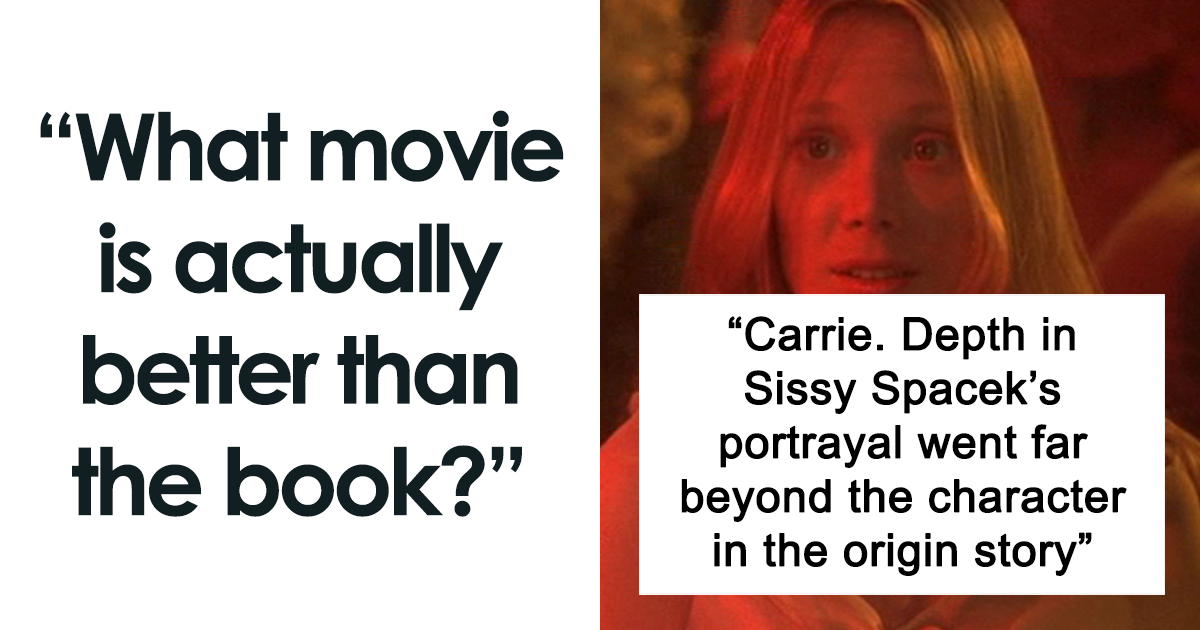
Every reader knows the sacred rule: “The book is always better.” It is repeated in book clubs, comment sections, and living rooms where someone is definitely clutching a paperback like a tiny courtroom exhibit. But every rule has exceptions, and cinema has produced some glorious ones. Sometimes a movie does not merely adapt a book; it sharpens it, trims the wobble, adds unforgettable performances, and turns a good idea into a cultural landmark.
This list of 30 surprising film adaptations that outdid their books is not an insult to literature. Books remain magical little portals made of paper, glue, and occasionally emotional damage. But film has its own superpowers: music, faces, silence, editing, production design, and that rare actor who can say more with one eyebrow than a paragraph can manage with five metaphors and a weather description.
Below are book-to-movie adaptations that, for many viewers and critics, improved on their source material through pacing, casting, atmosphere, structure, humor, or pure cinematic electricity.
Why Some Movies Beat the Books
A great adaptation does not have to copy every chapter. In fact, many of the best ones understand what to remove. Novels can wander, explain, repeat, and pause for interior thoughts. Movies must choose. That limitation can become an advantage. A smart screenplay compresses conflict, turns themes into visuals, and lets actors carry emotional weight without narrating every heartbeat.
The best movie adaptations also know when to be respectfully disobedient. They keep the soul of the story while changing the bones. Sometimes they shift the point of view. Sometimes they soften a character. Sometimes they cut a subplot that, frankly, was standing around wearing a “please skip me” sign. The result can feel cleaner, funnier, scarier, sadder, or simply more alive.
30 Film Adaptations That Outdid Their Books
1. The Godfather
Mario Puzo’s novel is pulpy, sprawling, and packed with side plots. Francis Ford Coppola’s film turned that material into a controlled opera of power, family, loyalty, and moral decay. The movie’s restraint is its genius. Marlon Brando, Al Pacino, Gordon Willis’s shadowy cinematography, and Nino Rota’s haunting score elevated the story into one of American cinema’s defining achievements.
2. Jaws
Peter Benchley’s novel includes extra relationship drama that slows the terror. Steven Spielberg’s 1975 film strips the story down to its most primal elements: a beach town, a shark, a mayor in denial, and three men on a boat having the worst fishing trip in history. The malfunctioning mechanical shark accidentally helped create suspense, proving that sometimes broken equipment deserves a screenwriting credit.
3. The Shawshank Redemption
Stephen King’s novella “Rita Hayworth and Shawshank Redemption” is excellent, but Frank Darabont’s film gives the story a broader emotional glow. Morgan Freeman’s narration, Tim Robbins’s quiet resilience, and the film’s patient rhythm turned a prison story into a lasting meditation on hope. The movie feels bigger than the page without losing the intimacy of King’s original idea.
4. Fight Club
Chuck Palahniuk’s novel is sharp, strange, and satirical, but David Fincher’s film adds a slick visual identity that makes the alienation feel immediate. The editing, narration, performances, and grimy consumer-culture nightmare all work together. The movie also lands its dark humor with surgical timing, like a corporate training video that escaped into a basement and learned sarcasm.
5. The Shining
Stephen King’s novel is more emotionally explicit and sympathetic toward Jack Torrance. Stanley Kubrick’s film is colder, stranger, and more mysterious. That distance is exactly why it endures. The Overlook Hotel becomes a maze of dread, and Jack Nicholson’s performance turns domestic collapse into cinematic mythology. It is less faithful, but arguably more unforgettable.
6. Blade Runner
Philip K. Dick’s “Do Androids Dream of Electric Sheep?” offers brilliant philosophical questions, but Ridley Scott’s “Blade Runner” gives them rain, neon, smoke, and melancholy synth music. The film’s world-building is so influential that entire sci-fi cities still look like they owe it rent. It transforms a provocative novel into a visual language for futuristic loneliness.
7. Jurassic Park
Michael Crichton’s novel is smart techno-thriller entertainment, but Spielberg’s film turned cloned dinosaurs into wonder, terror, and popcorn history. The movie streamlines the science, softens some characters, and lets the dinosaurs become movie stars. The first reveal of the brachiosaurus still feels like cinema gently tapping viewers on the shoulder and saying, “Yes, this is why theaters exist.”
8. Forrest Gump
Winston Groom’s novel is more satirical and bizarre than the film. Robert Zemeckis’s adaptation reshaped it into an emotional American fable. Tom Hanks gives Forrest warmth and sincerity, while the screenplay creates a cleaner journey through decades of cultural change. The result is sentimental, yes, but powerfully accessible and far more beloved than the original book.
9. The Silence of the Lambs
Thomas Harris’s novel is gripping, but Jonathan Demme’s film adds unnerving intimacy. The close-ups, pacing, and performances by Jodie Foster and Anthony Hopkins turn a procedural thriller into a masterclass in psychological tension. The film understands that fear is not always about what jumps out; sometimes it is about someone looking directly at you and speaking calmly.
10. One Flew Over the Cuckoo’s Nest
Ken Kesey’s novel is narrated through Chief Bromden, giving it a more surreal interior world. Miloš Forman’s film shifts the focus toward McMurphy and the institution around him. That choice makes the story more direct and dramatically explosive. Jack Nicholson and Louise Fletcher create a battle of wills so vivid that the film became one of Hollywood’s rare “big five” Oscar winners.
11. The Wizard of Oz
L. Frank Baum’s book is a classic, but the 1939 film became a cultural monument. The songs, Technicolor transformation, Judy Garland’s performance, and iconic production design made Oz feel permanently lodged in the American imagination. The book built the road; the movie painted it yellow and invited generations to skip along.
12. The Princess Bride
William Goldman adapted his own novel, which may explain why the movie understands exactly what to keep. The film is lighter, tighter, and endlessly quotable without feeling overstuffed. Its fairy-tale romance, comedy, swordplay, and affectionate self-awareness make it feel like a bedtime story told by someone who also moonlights as a stand-up comic.
13. The Devil Wears Prada
Lauren Weisberger’s novel offers a juicy workplace premise, but the film gives it style, speed, and Meryl Streep. The adaptation adds nuance to Miranda Priestly and makes Andy’s journey feel more cinematic. Fashion becomes character, office politics become sport, and every icy pause from Streep feels like a performance review written in frost.
14. Die Hard
Roderick Thorp’s “Nothing Lasts Forever” is darker and more pessimistic. “Die Hard” keeps the skyscraper siege but turns the material into a lean, charismatic action classic. Bruce Willis’s John McClane feels vulnerable, funny, exhausted, and stubborn. The movie improves the emotional engine by making survival feel personal, not just structural.
15. Who Framed Roger Rabbit
Gary K. Wolf’s “Who Censored Roger Rabbit?” is an inventive mystery, but the film adaptation creates a dazzling blend of live action, animation, noir, and Hollywood nostalgia. It changes major story elements and benefits from doing so. The result is funnier, warmer, and technically astonishing, with a cartoon rabbit somehow holding his own against noir cynicism.
16. Clueless
Jane Austen’s “Emma” is brilliant, so saying “Clueless” outdid it sounds like literary treason in a plaid skirt. But Amy Heckerling’s 1995 update is one of the smartest modernizations ever made. By moving Austen’s matchmaking satire to Beverly Hills high school culture, the film finds a perfect new language for class, vanity, growth, and romance.
17. 10 Things I Hate About You
Based on Shakespeare’s “The Taming of the Shrew,” this teen comedy improves the source for modern audiences by softening the gender politics and adding emotional sincerity. Heath Ledger and Julia Stiles bring charm, bite, and vulnerability. The film keeps the battle-of-wits energy while avoiding the dusty discomfort of the original’s more troubling edges.
18. Arrival
Ted Chiang’s “Story of Your Life” is a magnificent short story, but Denis Villeneuve’s “Arrival” turns its linguistic puzzle into a visual and emotional experience. Amy Adams anchors the film with quiet grief and intelligence. The adaptation expands the atmosphere while preserving the central idea: language can reshape how we understand time, love, and loss.
19. Stand by Me
Stephen King’s novella “The Body” is moving, but Rob Reiner’s film captures childhood friendship with extraordinary tenderness. The performances feel natural, the pacing is graceful, and the nostalgic narration never becomes syrupy. The film understands that growing up often happens quietly, somewhere between a bad joke, a long walk, and a moment you only understand years later.
20. Misery
King’s novel is terrifying, but the film adaptation gains enormous power from Kathy Bates’s Oscar-winning performance. She makes Annie Wilkes frightening because she can be cheerful, wounded, polite, and explosive within the same scene. The movie tightens the claustrophobic setup and turns fandom gone wrong into a chilling two-person pressure cooker.
21. The Graduate
Charles Webb’s novel has the bones of a generational comedy-drama, but Mike Nichols’s film gives it rhythm, style, and cultural bite. Dustin Hoffman’s anxious stillness, Anne Bancroft’s complexity, and Simon & Garfunkel’s music turn the story into a portrait of post-college confusion. The movie does not just adapt the book; it defines an era’s awkward shrug.
22. Psycho
Robert Bloch’s novel is effective, but Alfred Hitchcock’s film is a landmark of suspense. The direction, editing, score, and carefully managed point of view changed popular cinema. Hitchcock made the story less about plot mechanics and more about viewer manipulation. In other words, he turned the audience into willing accomplices and charged them for popcorn.
23. The Bourne Identity
Robert Ludlum’s novel launched a successful spy series, but the 2002 film modernized the premise with urgency and realism. Matt Damon’s grounded performance, practical action, and stripped-down storytelling made Jason Bourne feel like a new kind of screen spy: less tuxedo, more survival instinct. The film cuts through complexity and finds pure momentum.
24. Shrek
William Steig’s picture book is clever and odd, but DreamWorks turned “Shrek” into a full comic universe. The movie adds friendship, romance, fairy-tale satire, pop music, and a surprisingly durable emotional arc. It is loud, cheeky, and occasionally looks like it escaped from a karaoke swamp, but it works because its heart is real.
25. How to Train Your Dragon
Cressida Cowell’s books are playful and charming, but the animated film gives the story sweeping emotional power. The relationship between Hiccup and Toothless is visual storytelling at its finest. Their bond grows through movement, trust, and silence. The movie also adds a grand sense of flight that no page, however lovely, can fully duplicate.
26. The Iron Giant
Ted Hughes’s “The Iron Man” is a respected children’s book, but Brad Bird’s film adaptation deepens the emotional stakes by placing the story in Cold War America. The result is funny, beautiful, and quietly devastating without needing to over-explain itself. It turns a metal giant into one of animation’s most humane characters.
27. No Country for Old Men
Cormac McCarthy’s novel is spare and powerful, so the Coen brothers did not need to reinvent it. Instead, they translated its silence, dread, and moral exhaustion with remarkable precision. The film’s pacing, sound design, and performances make the story feel almost mythic. It proves that sometimes outdoing the book means understanding exactly when not to decorate it.
28. L.A. Confidential
James Ellroy’s novel is dense, ambitious, and tangled in noir corruption. Curtis Hanson’s film streamlines the plot without losing the rot beneath the glamour. The adaptation gives viewers a cleaner emotional route through the maze while preserving the sense that old Hollywood had more secrets than a locked studio filing cabinet.
29. Brokeback Mountain
Annie Proulx’s short story is already devastating, but Ang Lee’s film expands its emotional landscape with restraint and visual beauty. Heath Ledger and Jake Gyllenhaal give performances built from silence, hesitation, and longing. The movie honors the story while giving its tragedy room to breathe across mountains, years, and missed chances.
30. The Social Network
Adapted from Ben Mezrich’s “The Accidental Billionaires,” “The Social Network” transforms a tech-origin story into a razor-sharp drama about ambition, friendship, status, and betrayal. Aaron Sorkin’s dialogue, David Fincher’s direction, and Trent Reznor and Atticus Ross’s score make the film feel like a courtroom deposition conducted inside a thundercloud.
What These Adaptations Teach Us About Storytelling
The strongest movies based on books do not win by disrespecting the source. They win by recognizing that different mediums need different tools. A novel can explore a character’s thoughts for pages. A film can show one glance and let the audience do the emotional math. A book can build a world through description. A movie can do it with a hallway, a costume, a sound, or a single perfectly timed cut.
That is why many of these best book-to-movie adaptations succeed by subtraction. “Jaws” removes clutter. “The Godfather” tightens melodrama into tragedy. “The Devil Wears Prada” turns a sharp premise into a performance-driven comedy. “Clueless” proves that modernization can be more than a gimmick; it can uncover a classic’s hidden flexibility.
The lesson for writers, filmmakers, and viewers is simple: faithfulness is not the same thing as greatness. A movie can be faithful to the feeling of a book while changing characters, structure, tone, or setting. The real question is not “Did it include every scene?” The better question is, “Did it understand why the story mattered?”
Experience: Watching the Movie First, Then Meeting the Book
There is a particular kind of surprise that happens when someone watches a beloved film first and reads the book later. You sit down expecting the source material to be the grand, superior blueprint. After all, the book came first. It should contain the secret sauce, the master plan, the literary treasure chest. Then, halfway through, you realize the movie did not simply copy the book. It made choices. Very good choices. Possibly choices wearing sunglasses and walking away from an explosion in slow motion.
That experience can be confusing at first. Reading “Jaws” after seeing Spielberg’s film, for example, can feel like discovering extra rooms in a house you already loved, only some of the rooms are oddly furnished and not helping the floor plan. The movie’s version feels cleaner because it focuses on fear, community pressure, and the final hunt. The book has more complications, but not all complications are improvements. Sometimes a subplot is just a suitcase you do not need for a weekend trip.
The same thing happens with “The Devil Wears Prada.” The book gives readers the workplace nightmare, but the film gives that nightmare a face, a wardrobe, and a temperature approximately equal to a walk-in freezer. Meryl Streep’s Miranda Priestly changes the experience completely. On the page, a difficult boss can be entertaining. On screen, with the right actor, she becomes a cultural event. You do not just understand why everyone fears her; you feel the office oxygen change when she enters.
Reading after watching can also reveal how much actors contribute to adaptation. “The Shawshank Redemption” is a strong story in novella form, but Morgan Freeman’s voice gives the film a kind of spiritual gravity. “Stand by Me” benefits from young actors who make friendship feel messy, funny, and fragile. “Brokeback Mountain” uses pauses and landscapes to express emotions that prose can describe but cinema can make ache in the room.
There is also joy in noticing what the movie removed. Viewers often complain when adaptations cut material, but cuts can be mercy. A two-hour film cannot carry every side character, tangent, and thematic footnote without collapsing like a folding chair at a family barbecue. The best adaptations are not afraid to say, “Lovely chapter, but you are not boarding this flight.” That discipline is why “The Godfather,” “Jurassic Park,” and “The Bourne Identity” move with such confidence.
Of course, this does not mean books are lesser. Often the book offers texture the movie cannot hold. But the most surprising film adaptations prove that cinema is not literature’s assistant. It is a sibling art form with its own personality: louder at parties, more visual, occasionally dramatic, but capable of emotional precision. When a film outdoes its book, it is not because pages failed. It is because the story found a new shape and, somehow, that shape fit even better.
Conclusion
The debate over film adaptations that outdid their books will never end, and honestly, thank goodness. Without it, the internet would have to survive on recipe comments and people arguing about how to load a dishwasher. The truth is that great adaptations do not replace great books. They create a second life for a story.
From “The Godfather” to “Clueless,” from “Jaws” to “Arrival,” these movies show what happens when filmmakers understand both the source material and the demands of cinema. They cut, reshape, elevate, and sometimes completely reimagine. The best of them leave viewers with the rarest adaptation reaction of all: “I loved the book, but the movie? The movie understood the assignment.”
Note: This article is an original synthesis based on real film history, awards recognition, preservation records, and widely discussed critical comparisons. It is written for publication without copied passages or source-link clutter.