Note: This article is written in standard American English and is based on real lawn-care practices used by university extensions, turfgrass specialists, organic gardeners, and homeowners who prefer healthier soil over quick chemical fixes.
A healthy lawn does not have to come from a bottle with a warning label, a neon-green promise, or instructions that make you feel like you need a chemistry degree and safety goggles. Sometimes, the secret to a greener yard is much simpler: feed the soil, protect the roots, and give your grass a better place to live. That is where topdressing comes in.
Topdressing a lawn means spreading a thin layer of compost, screened topsoil, sand, or a carefully blended mix over the grass. Done correctly, it improves soil structure, supports beneficial microbes, reduces minor bumps, helps seed germinate, and can slowly create a thicker, greener lawn without relying on synthetic lawn chemicals. Done incorrectly, it can smother grass faster than a heavy blanket on a hot summer night. The difference is technique.
Below are 14 practical topdressing tips for a healthy, green lawn without chemicals, plus real-world experience notes to help you avoid the classic homeowner mistakes: too much material, wrong timing, cheap compost, and the famous “I thought more was better” disaster.
What Is Lawn Topdressing?
Lawn topdressing is the process of applying a thin, even layer of soil-improving material over an existing lawn. For natural lawn care, compost is usually the star of the show because it adds organic matter, improves moisture retention, supports microbial activity, and releases nutrients slowly. Sand may be used in specific situations, especially for leveling or improving drainage, but it must be chosen carefully. Topsoil can help fill small low spots, though it should match the existing soil as closely as possible.
The goal is not to bury the lawn. The goal is to let topdressing settle around the grass crowns and into the soil surface, where it can improve the root zone over time. Think of it as giving your lawn a light snack, not dropping an entire buffet on its head.
14 Topdressing Tips for a Healthy, Green Lawn Without Chemicals
1. Start With a Soil Test Before You Spread Anything
Before buying compost by the bag, truckload, or “my neighbor knows a guy” arrangement, test your soil. A soil test tells you your soil pH, nutrient levels, and organic matter status. This matters because topdressing is not magic dust. If your soil is too acidic, compacted, nutrient-poor, or overloaded with phosphorus, you need to know that before adding more material.
For most lawns, a slightly acidic soil is ideal. If your test shows low organic matter, compost topdressing can be especially helpful. If your test shows high phosphorus, be careful with composted manure or rich organic products because they can add more phosphorus than your lawn needs. Healthy lawn care starts with facts, not guesswork.
2. Choose Screened, Mature Compost
The best natural topdressing material for many home lawns is screened, mature compost. “Screened” means it has been filtered so large chunks, sticks, rocks, and mystery objects are removed. “Mature” means it has fully decomposed and should smell earthy, not sour, ammonia-like, or swampy.
Immature compost can tie up nitrogen, introduce weed seeds, or create odor problems. A good compost should be dark, crumbly, and fine enough to fall between grass blades. If it looks like mulch, it is too chunky for topdressing. Save chunky compost for garden beds, not your lawn.
3. Keep the Layer Thin: Usually About 1/8 to 1/4 Inch
One of the most important topdressing tips is also the easiest to ignore: apply a thin layer. For established lawns, 1/8 to 1/4 inch is usually enough. In some renovation or overseeding situations, 1/4 to 1/2 inch may be used, but only when the grass will not be smothered and the material is worked into the surface.
If the grass disappears under compost, you used too much. Grass blades need sunlight and air. A thin layer improves soil; a thick layer can create rot, disease pressure, and ugly brown patches. Your lawn wants a sprinkle, not a landslide.
4. Topdress When Grass Is Actively Growing
Timing depends on your grass type. Cool-season grasses such as tall fescue, Kentucky bluegrass, and perennial ryegrass usually respond best in early fall or spring, with early fall often preferred. Warm-season grasses such as bermudagrass, zoysiagrass, and St. Augustinegrass are best topdressed in late spring through summer when they are actively growing.
Do not topdress dormant grass, drought-stressed grass, or a lawn struggling in extreme heat. Active growth helps the turf recover quickly and grow through the topdressing layer. If your lawn is already gasping dramatically like it is auditioning for a survival show, wait until conditions improve.
5. Mow Before Topdressing, But Do Not Scalp
Mow the lawn a little lower than usual before topdressing, but do not scalp it. Shorter grass makes it easier for compost to reach the soil surface, but scalping weakens the plant and exposes crowns to stress. Remove excessive clippings if they clump, but light clippings can remain if they are finely chopped.
A good pre-topdressing mow creates a clean working surface. It also helps you see low spots, thin patches, and compacted areas. Just remember: your mower is a grooming tool, not a shaving razor.
6. Core Aerate Before Topdressing for Better Results
If your soil is compacted, core aeration before topdressing can dramatically improve the results. Core aeration removes small plugs of soil, opening channels for air, water, roots, and compost. When compost falls into those holes, it gets direct access to the root zone instead of sitting only on top of the grass.
This is especially useful for lawns with heavy clay soil, frequent foot traffic, poor drainage, or thin growth. Aeration plus compost topdressing is one of the best chemical-free combinations for long-term lawn improvement.
7. Use the Right Material for Your Lawn’s Problem
Not all topdressing materials do the same job. Compost improves soil biology and organic matter. Screened topsoil helps fill minor depressions. Sand can improve surface leveling, but it should be used carefully because adding sand to clay soil can create a dense, cement-like texture if done improperly.
For most natural lawn care goals, compost or a compost-topsoil blend is safer than straight sand. If your goal is leveling a bumpy lawn, a sand-soil-compost blend may work better. If your goal is soil health, compost is usually the better choice.
8. Match Topsoil Texture to Your Existing Soil
If you use topsoil, choose one that is similar to your existing lawn soil. A very different soil texture can create layering problems, where water moves poorly between layers. For example, putting fine, heavy soil over sandy soil can interrupt drainage. Putting coarse sand over clay can create uneven moisture patterns.
The safest approach is to use high-quality screened compost for soil improvement and reserve topsoil blends for small leveling repairs. Avoid bargain “fill dirt” unless you enjoy importing rocks, weeds, and regret.
9. Spread Evenly With a Shovel, Rake, or Compost Spreader
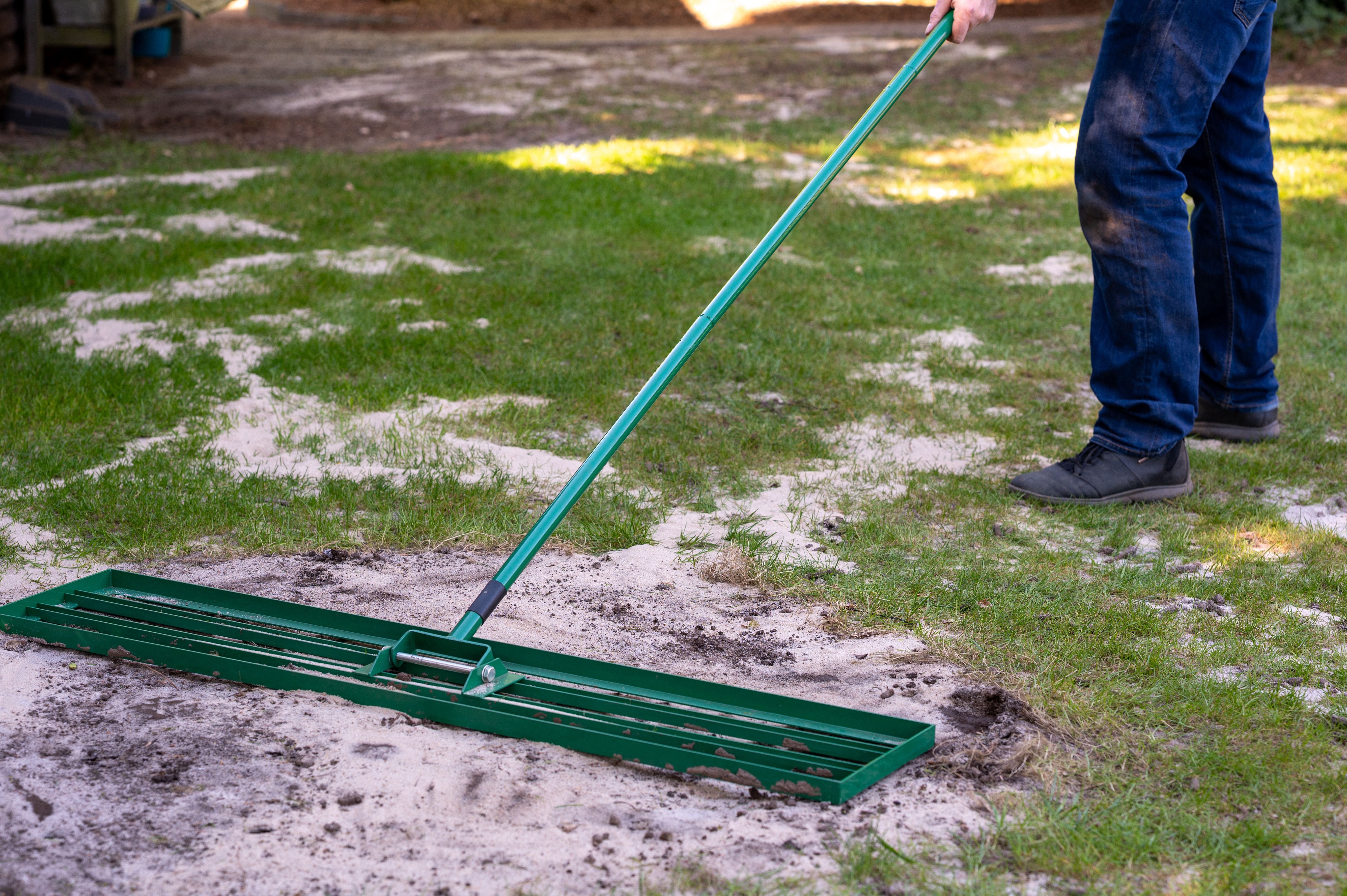
Even spreading is everything. For small lawns, use a wheelbarrow and shovel to toss small amounts across the grass, then distribute it with a leaf rake or leveling rake. For larger lawns, a compost spreader can save time and produce a more even layer.
After spreading, rake the material gently so grass blades stand upright. You should still see green grass after topdressing. If you see mostly brown compost, rake harder, remove excess, or prepare for your lawn to send a strongly worded complaint.
10. Water Lightly After Topdressing
After topdressing, water lightly to help the material settle into the turf canopy and soil surface. The goal is to moisten the compost, not create muddy soup. Light irrigation also helps reduce dust and encourages compost particles to move down around the grass crowns.
If rain is expected, you may let nature handle this step. However, avoid topdressing right before a heavy storm, because runoff can move compost into sidewalks, driveways, storm drains, or low corners of the yard.
11. Combine Topdressing With Overseeding
Topdressing and overseeding are best friends. After aerating and spreading grass seed, a thin compost layer can help keep seed moist and improve seed-to-soil contact. This is especially useful for thin lawns, bare patches, and cool-season lawns that need annual thickening.
The key is not to bury the seed too deeply. Most grass seed needs good contact with soil and consistent moisture. A light compost cover protects seed from birds, wind, and drying out. It is basically a tiny blanket, not a burial ceremony.
12. Do Not Use Fresh Manure on the Lawn
Fresh manure is not appropriate for lawn topdressing. It can burn grass, smell terrible, attract flies, introduce weed seeds, and create potential pathogen concerns. If manure-based compost is used, it should be fully composted, mature, and preferably tested for nutrient content.
For homeowners who want chemical-free lawn care, plant-based compost, leaf compost, or well-finished yard-waste compost is often a safer and easier option. Your lawn should smell like healthy soil, not like a barn moved in overnight.
13. Repeat Light Applications Instead of One Heavy Application
Topdressing works best as a slow improvement strategy. One thin application per year can gradually improve soil structure and lawn health. Some lawns may benefit from one to two light applications annually, depending on soil needs, grass type, climate, and local nutrient rules.
Do not try to fix years of poor soil in one afternoon with a mountain of compost. Soil improvement is a marathon. Unfortunately, it is not the kind of marathon where you can drive to the finish line with a dump truck.
14. Support Topdressing With Natural Lawn Habits
Topdressing works better when the rest of your lawn care routine supports healthy grass. Mow high enough for your grass type, water deeply but less often, leave finely chopped grass clippings on the lawn, reduce foot traffic on wet soil, and overseed thin areas before weeds take over.
A dense lawn is one of the best natural weed controls because it shades the soil and leaves less room for weed seeds to germinate. Topdressing helps build that density over time, but it should be part of a full soil-first lawn care plan.
Common Topdressing Mistakes to Avoid
Applying Too Much Compost
The most common mistake is spreading compost too thickly. More compost does not mean more green. It can smother grass, hold too much moisture, and create a messy surface. Stay thin and even.
Using Poor-Quality Material
Cheap, unscreened material may contain weed seeds, plastic bits, stones, wood chunks, or unfinished organic matter. Always inspect compost before buying a large amount.
Topdressing at the Wrong Time
Topdressing during dormancy, drought, or extreme heat can stress the lawn. Apply when your grass is strong enough to recover quickly.
Skipping Aeration on Compacted Soil
If your lawn soil is hard as a sidewalk, compost sitting on top will help only a little. Core aeration gives organic matter a better pathway into the root zone.
How Much Compost Do You Need?
For a 1/4-inch layer of compost, you need about 0.77 cubic yards per 1,000 square feet. For a 1/8-inch layer, you need about half that amount. Always calculate before ordering. Compost looks innocent until a giant pile lands in your driveway and you realize your Saturday has been promoted to “upper-body workout day.”
Measure your lawn area, decide on the depth, and order slightly less if you are new to topdressing. You can always add more later. Removing excess compost from a lawn is much less fun than spreading it correctly the first time.
Natural Benefits of Topdressing a Lawn
Topdressing can improve a lawn in several ways. It adds organic matter, supports beneficial microorganisms, improves moisture retention in sandy soils, helps loosen heavy soils over time, encourages deeper roots, and can improve seed germination when overseeding. It may also help thatch break down by supporting microbial activity near the soil surface.
Best of all, topdressing focuses on the soil rather than forcing grass into quick, temporary growth. Synthetic fertilizers can green up a lawn fast, but soil-building practices create a healthier foundation. In other words, topdressing helps your lawn become less needy. Every homeowner can appreciate a lawn that behaves less like a demanding celebrity.
Experience Notes: What Homeowners Learn After Topdressing a Lawn
The first thing many homeowners learn about topdressing is that the job looks simple until the compost arrives. A few bags from the garden center are manageable. A bulk delivery, however, can look like someone dropped a small mountain in the driveway. The best experience-based tip is to prepare before delivery: mow the lawn, mark sprinkler heads, gather rakes, borrow a wheelbarrow, and recruit help if the yard is large. Topdressing is not technically complicated, but it is physical work.
Another lesson is that dry compost spreads more easily than wet compost. Slightly moist compost is fine, but soggy compost clumps like brownie batter and refuses to sift into the grass. If rain has soaked your compost pile, wait a day or two before spreading. Your back will thank you, your rake will thank you, and your lawn will not end up with random compost meatballs scattered across it.
Homeowners also discover that raking matters more than spreading. Tossing compost across the lawn is only half the job. The real improvement happens when the material is worked down through the grass canopy. A flexible leaf rake works well for small areas, while a leveling rake is excellent for smoothing low spots. The goal is to leave grass blades standing upright. If you finish and the lawn looks lightly dusted rather than buried, you are probably doing it right.
One practical example: a thin, tired front lawn with compacted clay soil may not transform overnight after one compost application. But after core aeration, overseeding, and a 1/4-inch compost topdressing in early fall, the difference often becomes visible within weeks. Seedlings emerge more evenly, bare patches fill in, and the lawn holds moisture better. By the following spring, the grass may look thicker and more resilient, especially if mowing height and watering habits also improve.
Another common experience is realizing that topdressing does not eliminate every weed immediately. It is not an organic herbicide. Instead, it helps grass grow denser, and dense grass naturally competes better against weeds. If the lawn is full of dandelions, crabgrass, plantain, or bare soil, topdressing should be paired with overseeding, hand weeding, proper mowing, and patience. A healthy lawn is built season by season, not by one heroic Saturday.
Finally, many homeowners learn that the best chemical-free lawn care is quieter than traditional lawn care. There is less dramatic “instant green” and more steady improvement. Compost topdressing feeds the soil food web, supports roots, and helps the lawn handle stress naturally. It is not flashy, but it works. Think of it as making your lawn eat its vegetables. The lawn may not applaud, but over time, it will look healthier, greener, and much less dramatic.
Conclusion
Topdressing is one of the smartest ways to grow a healthy, green lawn without depending on synthetic chemicals. By using screened compost, applying a thin layer, timing the work correctly, aerating compacted soil, and supporting the process with good mowing and watering habits, you can improve your lawn from the roots up. The secret is patience. A truly healthy lawn is not painted green from the top; it is built from living soil below.