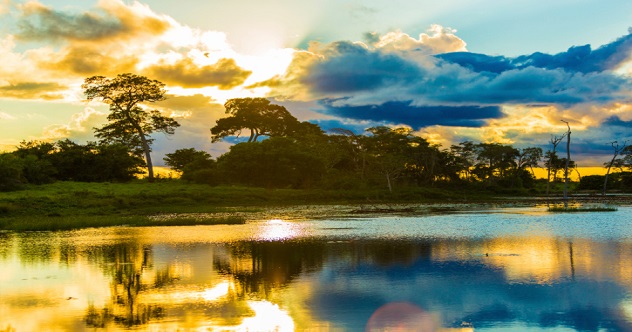
The Amazon Rainforest is not just “a lot of trees having a group project.” It is the largest tropical rainforest on Earth, a giant green engine that helps move water, store carbon, shelter wildlife, support communities, and occasionally remind humans that nature was building skyscrapers long before we invented elevators.
Stretching across northern South America, the Amazon is home to dazzling biodiversity, massive rivers, ancient human history, and ecological tricks so impressive they sound like they were written by a fantasy novelist after too much coffee. From jaguars and poison dart frogs to clouds made with help from trees, the Amazon Rainforest is both mysterious and surprisingly practical. It feeds rivers, cools landscapes, and supports millions of people.
Below are 10 wild facts about the Amazon Rainforest that show why this ecosystem is one of the most importantand most jaw-droppingplaces on the planet.
1. The Amazon Is the Largest Tropical Rainforest on Earth
The Amazon Rainforest covers roughly 2.3 million square miles, or about 6 million square kilometers. That makes it the biggest tropical rainforest in the world by a comfortable margin. If rainforests had a heavyweight championship belt, the Amazon would be walking into the arena with fog machines, dramatic music, and a very confident toucan.
The rainforest occupies much of the Amazon River basin and spreads across multiple countries, including Brazil, Peru, Colombia, Bolivia, Ecuador, Venezuela, Guyana, Suriname, and French Guiana. Brazil contains the largest share, but the Amazon is not “just Brazil’s forest.” It is a continental system with rivers, wetlands, upland forests, savannas, mountains, and floodplains all working together like an enormous natural machine.
Its size matters because large forests influence climate, rainfall, biodiversity, and carbon storage at a regional and global scale. The Amazon is not simply scenery. It is infrastructurejust built with roots, leaves, fungi, rivers, and an absurd number of insects.
2. It Holds About 10% of the World’s Known Biodiversity
One of the most famous Amazon Rainforest facts is also one of the hardest to fully understand: the Amazon contains about 10% of the world’s known biodiversity. That means one forest region shelters an enormous share of Earth’s identified plant and animal life.
Scientists have documented at least 40,000 plant species, hundreds of mammal species, more than 1,300 bird species, hundreds of reptiles and amphibians, and thousands of freshwater fish species in the Amazon. And that is only the cataloged life. Countless insects, fungi, microbes, and small organisms remain poorly studied or unknown to science.
To put that in everyday terms, walking through the Amazon is not like walking through a park where you see “tree, bird, squirrel, repeat.” It is more like entering a living library where every branch, puddle, vine, and leaf may hold a species with its own story. Some animals are famous, such as jaguars, sloths, macaws, anacondas, and pink river dolphins. Others are tiny, strange, shy, nocturnal, or so good at camouflage that they could win hide-and-seek against wallpaper.
3. The Amazon River System Is a Freshwater Giant
The Amazon Rainforest and the Amazon River are inseparable. The river system is one of the most powerful on Earth, and the Amazon River releases an enormous amount of freshwater into the Atlantic Ocean. In fact, the Amazon River accounts for roughly 15% to 16% of the world’s total river discharge into the oceans.
The Amazon River basin includes thousands of tributaries, many of them huge rivers in their own right. During seasonal floods, water can rise dramatically, spreading into forests and creating flooded ecosystems where fish swim between trees. Yes, in parts of the Amazon, “forest fish” is not a jokeit is a lifestyle.
This flood pulse shapes the entire region. It moves nutrients, supports fisheries, creates breeding habitats, and links forests to rivers in ways that scientists are still studying. The Amazon is not just a rainforest with a river running through it. It is a rainforest-river partnership, and both sides are doing heavy lifting.
4. The Forest Helps Make Its Own Rain
Here is where the Amazon starts showing off: the rainforest helps create its own wet season. Trees pull water from the soil and release moisture into the air through transpiration. Add evaporation from land and water surfaces, and the result is a huge recycling system that helps feed clouds and rainfall.
Scientists have found that Amazon vegetation contributes a major share of the moisture that falls back as rain across the region. NASA research has described the Amazon as part of a self-watering cycle, with the forest storing and recycling at least halfand possibly even moreof regional rainfall.
This is one reason deforestation is so serious. When trees are removed, the region loses more than shade and wildlife habitat. It also loses part of its rain-making machinery. Fewer trees can mean drier air, hotter conditions, greater fire risk, and weaker rainfall patterns. In other words, cutting the forest is a bit like removing parts from the engine while expecting the car to keep driving smoothly. Spoiler: the car complains.
5. The Canopy Is a City in the Sky
The rainforest canopy is the dense layer of treetops where sunlight is strongest and life is wildly busy. In tropical rainforests, the canopy can sit roughly 100 feet above the ground, with emergent trees rising even higher. The Smithsonian Tropical Research Institute describes the canopy as one of the richest zones for rainforest species.
Up there, animals feed, nest, hunt, hide, and travel without touching the forest floor. Monkeys swing through branches, birds search for fruit, insects pollinate flowers, and orchids grow on tree limbs like botanical freeloaders with excellent taste in real estate.
The canopy also changes how rain reaches the ground. A heavy downpour may hit the upper leaves first, then trickle down as softer rain, streams along trunks, and dripping water. The result is a vertical ecosystem with many layers: emergent trees, canopy, understory, shrub layer, and forest floor. Each layer has its own light levels, humidity, animals, and plant strategies.
6. The Soil Is Not as Rich as the Forest Looks
Many people assume that because the Amazon grows so much vegetation, its soil must be ridiculously fertile. Not quite. Much of the rainforest’s nutrient wealth is stored in living plants, leaf litter, roots, fungi, and fast-moving decomposition cyclesnot deep, naturally rich soil.
When leaves fall, fungi, insects, bacteria, and other decomposers break them down quickly. Nutrients are rapidly reused by plants. The system is efficient, but it can also be fragile. Remove the forest, expose the soil to sun and heavy rain, and nutrients can wash away or degrade faster than expected.
One fascinating exception is Amazonian dark earth, often called terra preta. These fertile soils were created or enriched by Indigenous peoples long before modern industrial agriculture. They contain charcoal, organic waste, pottery fragments, and other materials that improved fertility. Terra preta is a reminder that the Amazon was never simply an untouched wilderness. Humans have lived in, managed, and shaped parts of it for thousands of years.
7. The Amazon Is Home to Millions of People
The Amazon Rainforest is often described as wild, remote, and mysterious, but it is also home. Tens of millions of people live in the Amazon region, including Indigenous Peoples, river communities, farmers, fishers, and urban residents in cities such as Manaus and Iquitos.
Indigenous communities have deep knowledge of forest plants, animals, seasons, soils, rivers, and medicines. Many conservation researchers now recognize that Indigenous territories are among the best-preserved parts of the Amazon. That is not luck. It reflects long-standing relationships with land, careful resource use, cultural traditions, and legal land protections where they are respected.
The Amazon’s future is not only about trees and animals. It is also about people, rights, livelihoods, health, culture, and justice. Protecting the rainforest works best when local and Indigenous communities are partners, not afterthoughts politely mentioned at the end of a brochure.
8. The Amazon Is Not Really “The Lungs of the Earth”
You may have heard the Amazon called “the lungs of the Earth.” It is a catchy phrase, but it is not scientifically perfect. The Amazon produces oxygen through photosynthesis, but much of that oxygen is used again by plants, animals, fungi, and microbes through respiration and decomposition.
A better way to understand the Amazon is as a climate regulator, carbon storehouse, biodiversity reservoir, and water-cycle powerhouse. Healthy forests absorb carbon dioxide and store carbon in trees, roots, soils, and organic matter. But when forests are burned, logged, fragmented, or stressed by drought, they can release carbon back into the atmosphere.
This distinction matters. The Amazon is not valuable because it is a giant oxygen vending machine. It is valuable because it stabilizes systems that life depends on: rainfall, temperature, carbon balance, freshwater flow, and habitat. “Lungs” is a cute nickname, but the Amazon’s real resume is much longer.
9. Some Amazon Animals Sound Like They Were Invented by a Mischievous Cartoonist
The Amazon Rainforest is packed with animals that seem almost too strange to be real. The hoatzin, for example, is a bird with a punk-rock crest and a digestive system that ferments leaves, earning it the glamorous nickname “stinkbird.” The electric eel can produce powerful electric shocks. The glass frog has see-through skin. The poison dart frog wears colors so bright it looks like nature’s warning label.
Then there is the jaguar, the Amazon’s top feline predator. Strong, stealthy, and comfortable around water, jaguars can hunt animals from capybaras to caimans. The green anaconda, one of the world’s heaviest snakes, lives in swamps and slow-moving waters. Pink river dolphins swim through Amazon waterways with flexible necks that help them maneuver around submerged branches.
The point is not just that Amazon wildlife is weird and wonderful. Each species plays a role. Predators regulate prey populations. Birds spread seeds. Insects pollinate plants. Fish move nutrients through rivers and floodplains. The Amazon works because its life forms are connected in ways that are complex, efficient, and occasionally very odd-looking.
10. The Amazon Is Under Pressurebut Protection Can Work
The Amazon faces serious threats from deforestation, illegal mining, road expansion, poorly planned agriculture, fires, drought, and climate change. Over recent decades, large areas have been cleared or degraded. Forest loss can fragment habitats, reduce rainfall recycling, threaten species, release carbon, and harm communities that depend on clean rivers and healthy forests.
However, the story is not hopeless. Protected areas, Indigenous territories, satellite monitoring, sustainable forest economies, restoration projects, and stronger enforcement can make a measurable difference. Conservation groups and scientists use satellite imagery, drones, field surveys, and local partnerships to detect deforestation and support better land management.
The Amazon does not need pity. It needs smart protection, political will, responsible markets, respect for Indigenous land rights, and global attention that lasts longer than a trending hashtag. The rainforest is resilient, but resilience is not magic. Even the toughest ecosystem has limits.
Why the Amazon Rainforest Matters More Than Ever
The Amazon Rainforest matters because it connects local life with global systems. It influences rainfall across South America, stores vast amounts of carbon, supports some of the richest biodiversity on Earth, and provides food, medicine, materials, transportation, and cultural identity for millions of people.
It also challenges the way we think about nature. The Amazon is not empty land waiting for “use.” It is already being usedby trees making rain, fungi recycling nutrients, fish feeding communities, birds spreading seeds, Indigenous peoples sustaining cultures, and scientists learning how Earth’s living systems function.
Calling the Amazon “wild” is fair, but it should not mean untouched, simple, or separate from humans. It is wild because it is alive with relationships: river to forest, tree to cloud, insect to flower, community to land, past to future. That is the real magic. No wand required.
Experience Section: What It Feels Like to Learn About the Amazon Rainforest
Learning about the Amazon Rainforest can feel like opening a nature documentary and discovering that every scene has a sequel, a prequel, and three mysterious side characters hiding under a leaf. At first, most people picture a wall of green trees, a few colorful birds, and maybe a dramatic jaguar staring into the camera like it knows your Wi-Fi password. But the deeper you go, the more the Amazon becomes less like a place and more like a living conversation.
Imagine standing near a river at sunrise. Mist hangs over the water. The forest is not quiet; it is tuning up. Birds call from different layers of the canopy. Insects buzz with the confidence of creatures that outnumber almost everything. Somewhere in the branches, fruit falls. Somewhere in the mud, tracks tell a story from the night before. The air feels thick, not just with humidity, but with activity.
One of the most powerful experiences related to the Amazon is realizing that the forest is not random. It may look chaotic, but it is organized in ways that are easy to miss. A tree drops fruit, animals eat it, seeds travel, fungi break down what falls, roots reclaim nutrients, and water rises through leaves to help form clouds. Nothing is wasted for long. The Amazon is basically the world’s most advanced recycling program, except nobody had to print a motivational poster for the break room.
Another unforgettable part of understanding the Amazon is seeing how strongly people are connected to it. River communities know the timing of floods, the behavior of fish, the uses of plants, and the personality of waterways. Indigenous knowledge carries generations of observation, trial, memory, and care. This kind of experience changes the story from “humans versus nature” to “humans within nature,” which is a much better plot and has fewer bulldozers.
The Amazon also teaches humility. A single scoop of soil, a single tree trunk, or a single pond can contain more life than most of us can name. You quickly realize that “biodiversity” is not just a fancy science word. It means relationships so dense and layered that pulling one thread can affect many others. That makes conservation feel less like saving something distant and more like protecting a system that helps keep the planet balanced.
For travelers, students, writers, nature lovers, or curious readers, the Amazon Rainforest offers a rare lesson: wonder is not childish. Wonder is how attention begins. And attention is exactly what the Amazon needs. The more we understand its rivers, trees, animals, people, and climate role, the harder it becomes to treat it like an endless supply closet. The Amazon is not endless. It is extraordinaryand extraordinary things deserve care.
Conclusion
The Amazon Rainforest is one of Earth’s greatest natural systems: huge, biodiverse, water-making, carbon-storing, people-supporting, and gloriously strange. Its rivers move freshwater on a continental scale. Its trees help shape rainfall. Its wildlife ranges from elegant to bizarre. Its Indigenous communities hold knowledge that modern conservation increasingly recognizes as essential.
But the Amazon is also vulnerable. Deforestation, fire, mining, drought, and climate change put pressure on a system that affects far more than South America. Protecting the Amazon is not just about saving beautiful scenery. It is about defending biodiversity, climate stability, freshwater systems, human cultures, and the future health of the planet.
The wildest fact about the Amazon may be this: it is powerful enough to influence the world, but fragile enough to need our attention. That combination should make all of us sit up a little straighter.