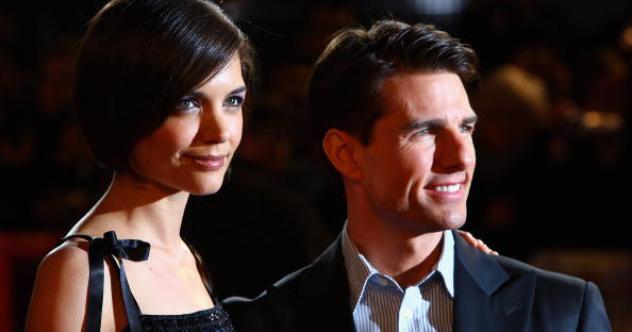
Fame is weird. One minute, a celebrity is releasing an album, starring in a movie, or hosting a children’s show in a cardigan. The next minute, the internet is convinced they are immortal, frozen in a secret chamber, secretly replaced by a clone, or casually living under a new identity in a grocery-store parking lot. Welcome to the glittery, chaotic circus of celebrity rumors.
The phrase “ridiculously absurd rumors about famous people” sounds like a comedy category, but these stories reveal something bigger about pop culture. Fans love clues. Gossip loves mystery. The internet loves a theory that starts with “I’m not saying this is true, but…” and ends with someone zooming in on a blurry photograph like they are solving an international art heist.
This article looks at ten of the most famous, funniest, and most eyebrow-raising celebrity rumors ever spread. Some began as tabloid bait. Others grew from fan theories, radio chatter, old photos, or pure internet mischief. None should be treated as fact. Think of this as a guided tour through the haunted mansion of celebrity misinformationbring snacks, skepticism, and maybe a magnifying glass.
Why Absurd Celebrity Rumors Spread So Fast
Celebrity rumors work because famous people feel both familiar and unreachable. We hear their songs, watch their movies, follow their interviews, and see their faces everywhere. That creates the illusion that we “know” them. But because we do not actually know them, gaps appear. Rumors rush in to fill those gaps like glitter in a carpet: impossible to control and somehow still there years later.
The best absurd celebrity rumors usually have three ingredients: a famous person, a strange coincidence, and a public eager to connect dots that may not belong in the same galaxy. Add online forums, social media, edited clips, and old photos, and suddenly a normal human haircut becomes “proof” of a government-level identity swap.
10 Ridiculously Absurd Rumors About Famous People
1. Paul McCartney Died and Was Replaced by a Look-Alike
One of the grandfathers of celebrity conspiracy rumors is the “Paul is dead” theory. The rumor claimed that Paul McCartney died in the 1960s and was replaced by a look-alike. Fans searched Beatles lyrics, album covers, clothing, and even walking patterns for “clues.” The Abbey Road cover became a courtroom exhibit in the trial of public imagination: John in white, Ringo in black, George in denim, and Paul barefoot. Clearly, the rumor said, this was not a crosswalk photo. It was a coded funeral procession. Obviously. Because nothing says “top-secret cover-up” like putting clues on one of the most famous album covers in history.
The rumor eventually became a pop-culture legend, but McCartney was very much alive. In fact, his long post-Beatles careerWings, solo albums, tours, awards, and decades of public appearanceshas been the most relaxed rebuttal imaginable. If he was replaced, the replacement had an astonishing work ethic and a suspiciously strong understanding of being Paul McCartney.
2. Walt Disney Was Cryogenically Frozen
The rumor that Walt Disney was frozen after death is so persistent that it practically deserves its own theme-park ride. The story claims that Disney’s body, or sometimes just his head, was preserved in a secret cryogenic chamber so he could be revived in the future. Depending on the version, he is hidden under Disneyland, under a ride, or somewhere so secret that only the most committed urban-legend tour guides can point vaguely toward it.
The reality is much less sci-fi. Public records and historical reporting show that Disney was cremated and his remains were interred. Still, the rumor survives because it fits the mythology around Disney: futurism, imagination, technology, and the idea that tomorrow might be engineered with enough ambition and a very large budget. It is a rumor built from branding, not evidence.
3. Elvis Presley Never Died
Few celebrity rumors have had a longer afterlife than “Elvis is alive.” Elvis Presley died in 1977, but supposed sightings continued for decades. People claimed to spot him at restaurants, airports, shopping centers, and other deeply unroyal locations. Apparently, if the King of Rock and Roll faked his death, his grand plan involved wandering around in places with fluorescent lighting.
The Elvis rumor has lasted because he was larger than life. For fans, accepting that such a huge cultural figure was gone felt impossible. The theory gave people a strange kind of comfort: maybe Elvis had simply escaped fame and was living quietly somewhere, free from crowds. It is emotionally understandable, even when the evidence says otherwise. Celebrity death hoaxes often say more about the audience’s grief than about the celebrity.
4. Avril Lavigne Was Replaced by “Melissa”
The Avril Lavigne replacement theory is internet folklore at its most dramatic. According to the rumor, the pop-punk singer died years ago and was replaced by a look-alike named Melissa. “Evidence” included changes in style, handwriting, facial features, lyrics, and red-carpet fashion. In normal life, changing your hair or clothing is called growing up. In internet conspiracy land, it is apparently grounds for a full identity investigation.
Lavigne has laughed off the rumor publicly, and that response may be the best way to handle a theory so silly it sounds like fan fiction written by a detective who only owns eyeliner. The rumor also shows how uncomfortable people can be with celebrities changing. When young stars mature, fans sometimes mistake normal evolution for mystery. The truth is usually simple: people grow, trends change, and nobody owes the internet the same haircut forever.
5. Nicolas Cage Is a Vampire
Nicolas Cage has played so many intense, unusual, and delightfully unpredictable roles that the internet eventually looked at him and thought, “Yes, ancient vampire makes sense.” The rumor gained attention after an old photograph surfaced of a man who resembled Cage. The claim was not merely that he had an old-timey look-alike. No, that would be too normal. The claim was that Cage was an immortal vampire who had been quietly moving through history, possibly waiting for the right moment to star in another wildly committed performance.
Cage denied being a vampire with the kind of logic that should end the matter: he has a reflection, and he is not hundreds of years old. Still, the rumor works because Cage’s public persona is already meme-friendly. He is not a boring celebrity to attach a rumor to. If someone claimed a tax accountant was a vampire, the internet might shrug. With Cage, the internet says, “Continue.”
6. Keanu Reeves Is Immortal
Keanu Reeves has also been the subject of immortality rumors, though his version is gentler and more flattering. Old paintings and historical photos of men who vaguely resemble him have fueled jokes that Reeves has lived for centuries. It helps that he appears calm, kind, and unusually resistant to the normal wear-and-tear of Hollywood chaos. The rumor is less “dark conspiracy” and more “what moisturizer does this man use, and was it invented in 1473?”
The Keanu immortality theory thrives because it matches the internet’s affection for him. Some celebrity rumors are cruel. This one is almost a compliment wearing a fake mustache. It says: Keanu seems timeless. Still, resemblance is not reincarnation, and good lighting is not proof of eternal life. Sometimes a face just has historical range.
7. Mister Rogers Was a Secret Military Commando
Fred Rogers, the beloved host of Mister Rogers’ Neighborhood, became the target of one of the strangest reputation-flipping rumors in television history. The story claimed that behind the soft voice, sweaters, and songs about feelings, Rogers had a hidden military background. Some versions said he wore long sleeves to cover tattoos. It was the internet trying to turn the gentlest neighbor in America into an action-movie character.
The rumor is false. Rogers was a children’s television pioneer, musician, minister, and advocate for kindness. But the rumor became popular because it created an absurd contrast: what if the calmest man on television had a secret dramatic past? The answer is simpler and better: his “secret weapon” was emotional intelligence. Not every famous person needs a hidden action franchise.
8. Michael Jackson Bought the Elephant Man’s Bones
In the 1980s and 1990s, Michael Jackson became the center of countless tabloid stories, and one of the most bizarre involved Joseph Merrick, historically known as the Elephant Man. Reports claimed Jackson tried to buy Merrick’s remains. Jackson later denied owning them and dismissed the story in a famous televised interview, while acknowledging that he felt moved by Merrick’s life and suffering.
This rumor shows how tabloids can turn curiosity and empathy into spectacle. Jackson was already portrayed by the media as eccentric, so almost any strange story attached itself to him like Velcro. The more unusual the claim, the more profitable it became. Whether readers believed it or not almost stopped mattering; the headline itself did the work.
9. Stevie Wonder Is Not Really Blind
One of the more uncomfortable celebrity rumors claims that Stevie Wonder is not actually blind. The rumor has circulated for years, often based on clips where he appears to react quickly or move with confidence. But this kind of speculation reveals more about public misunderstanding of blindness than about Wonder himself. Blindness is not always understood accurately by sighted audiences, and blind people can be skilled, coordinated, funny, observant, and independent without secretly faking anything.
Wonder has addressed the rumor with humor and grace. The fact that such a rumor persists says a lot about how people misunderstand disability. It also proves that celebrity gossip can become harmful when it treats a person’s lived experience as a puzzle for strangers to solve. Not every surprising moment is a clue. Sometimes it is simply a talented person being talented.
10. Beyoncé Faked Her Pregnancy
Beyoncé has been the subject of many rumors, but one of the most invasive claimed she faked her pregnancy with Blue Ivy. The speculation grew from a televised appearance where fabric and camera angles led some viewers to overanalyze her body. From there, the rumor spread through entertainment media and online chatter with the speed of a group chat that has lost all adult supervision.
The rumor was false and hurtful. It is also a reminder that celebrity rumors often cross a line from silly to cruel. A person’s pregnancy is not public property just because the person is famous. This rumor belongs on the list not because it is funny in itself, but because it is absurd in the extremeand because it shows how quickly “just asking questions” can become a machine for humiliation.
What These Celebrity Rumors Have in Common
At first glance, these stories seem random. A frozen animator. An immortal actor. A replaced pop star. A singer accused of faking a pregnancy. A children’s host turned imaginary commando. But underneath the glitter and nonsense, the same patterns appear again and again.
They Turn Normal Change Into Suspicion
Celebrities age, change styles, gain confidence, lose privacy, and evolve creatively. Fans sometimes freeze them at one moment in time. When they move beyond that image, the public can react strangely. A different outfit becomes “evidence.” A new sound becomes “proof.” A mature face becomes “a replacement.” The rumor machine dislikes normal human development because normal human development is not dramatic enough.
They Reward People for Finding “Clues”
Absurd rumors turn fans into detectives. Album covers, interview pauses, blurry photos, hand gestures, and coincidences become puzzle pieces. The problem is that when people want a theory to be true, every detail can be bent until it fits. A barefoot Beatle? Clue. A historical painting? Clue. A cardigan? Obviously concealing secrets. At some point, the clue-hunt becomes more entertaining than the truth.
They Spread Because They Are Fun to Repeat
Many people repeat celebrity rumors without fully believing them. They share them because they are funny, dramatic, or strange. But repetition gives rumors oxygen. A joke can become a “fact” after enough retellings, especially online, where tone disappears and screenshots live forever. The phrase “I know this is probably fake” does not always stop a rumor from growing legs, renting an apartment, and starting a podcast.
How to Enjoy Celebrity Pop Culture Without Falling for Every Rumor
You do not have to become a joyless fact-checking robot to enjoy celebrity culture. Rumors, myths, and urban legends are part of entertainment history. The trick is knowing how to enjoy them without confusing them with truth.
First, check whether the claim has credible reporting behind it. A rumor repeated by thousands of people is still just a rumor if nobody can show reliable evidence. Second, watch for emotional manipulation. If a headline makes you feel shocked, superior, furious, or desperate to share immediately, pause. That feeling may be the hook. Third, ask who benefits. Tabloids, content farms, and social media accounts often profit from outrageous claims even when the claims are flimsy.
Finally, remember that famous people are still people. The silliest rumors can seem harmless until they target someone’s family, health, identity, grief, or private life. Laugh at the absurdity of the rumor machine, not at the person trapped inside it.
Personal Experiences and Reflections on Absurd Famous-People Rumors
Almost everyone has had the experience of hearing a celebrity rumor and briefly thinking, “Wait… could that be true?” That tiny pause is exactly where absurd rumors live. They do not need full belief at first. They only need curiosity. Maybe you heard an older relative say Elvis was spotted somewhere. Maybe a friend insisted that an actor looked exactly like a person in a 19th-century photograph. Maybe social media served you a video that opened with “This celebrity conspiracy will change how you see everything,” which is usually internet language for “Please ignore the lack of evidence and enjoy the spooky music.”
One relatable experience is the group-chat effect. Someone drops a wild claim into the chat, and within minutes everyone is reacting. One person sends laughing emojis. Another person searches for “proof.” Someone else says, “My cousin told me this years ago.” Suddenly the rumor feels familiar, and familiarity can disguise itself as credibility. That is how a ridiculous story moves from entertainment to belief. The more people discuss it, the more real it seems, even if nobody has added a single verified fact.
Another common experience is the late-night rabbit hole. You plan to watch one short video about celebrity myths, and an hour later you are reading about album-cover symbolism, historical portraits, and secret identities. The content is designed to keep you scrolling. Each “clue” is presented as if it is part of a grand reveal. But when you step back, the evidence often looks like a pile of coincidences wearing a trench coat.
These rumors also teach a useful lesson about media literacy. The most convincing false stories are rarely completely random. They usually attach themselves to something people already believe or feel. People believed Walt Disney might be frozen because he was associated with futurism and imagination. People joked that Keanu Reeves might be immortal because he seems timeless and calm. People believed Elvis might still be alive because losing him felt culturally enormous. A good rumor is not necessarily logical; it is emotionally sticky.
For writers, bloggers, and content creators, absurd celebrity rumors are a fascinating topic because they combine entertainment, psychology, media history, and humor. But they also require responsibility. It is easy to write a cheap gossip piece that repeats claims without context. It is better to write with clarity: identify the rumor, explain why it spread, state what is known, and avoid presenting speculation as fact. That approach protects readers and makes the content more trustworthy.
The best way to enjoy these stories is to treat them like modern folklore. They are campfire tales for the digital age. Instead of ghosts in the woods, we have pop stars with alleged doubles, actors accused of immortality, and singers supposedly hiding in plain sight. The fun comes from understanding why people believe strange things, not from attacking the famous people involved.
So the next time someone tells you a celebrity is secretly a vampire, frozen under a theme park, or replaced by a clone named Melissa, you can smile and ask the most powerful question in the universe: “What is the evidence?” If the answer is “a blurry photo and vibes,” congratulations. You have just survived another trip through the rumor factory.
Conclusion: The Rumor Factory Never Closes
Ridiculously absurd rumors about famous people are funny, fascinating, and sometimes wildly creative. They reveal how pop culture turns celebrities into symbols, puzzles, and characters in stories they never agreed to star in. Some rumors are harmless jokes that become memes. Others can become invasive or hurtful when they target someone’s body, health, family, or grief.
The smartest way to read celebrity rumors is with a mix of humor and skepticism. Enjoy the weirdness. Appreciate the folklore. Laugh at the mental gymnastics. But do not confuse repetition with reality. Fame may be strange, but truth still matterseven when the rumor is wearing sunglasses, crossing Abbey Road barefoot, and claiming to be immortal.