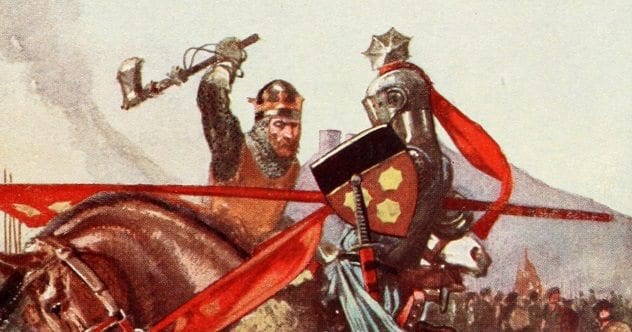
Single combat has always had a weirdly oversized place in human history. Put two people in a field, on a bridge, in a courtyard, or in a dusty town square, and suddenly a private quarrel starts pretending it speaks for law, honor, justice, politics, art, or even national identity. That is part of the fascination. Single combat is never just about two fighters. It is usually about the crowd watching, the culture behind it, and the story everyone tells afterward.
Sometimes these clashes were formal judicial duels, where courts effectively said, “Fine, let God sort it out.” Sometimes they were affairs of honor, born from insults that today would be resolved with a muted group chat and a deeply passive-aggressive email. And sometimes they were public showdowns that turned one moment of violence into permanent legend. The details change from century to century, but the pattern remains the same: pride steps forward, witnesses gather, and history gets a scene it never forgets.
What makes these stories so compelling is not just who won. It is the strange mix of theater and sincerity. The participants often believed they were defending something bigger than themselves, whether that was a wife’s reputation, a military name, a political future, or a personal code that seemed more important than common sense. So, with that in mind, here are 10 intriguing cases of single combat that show just how dramatic, absurd, and revealing one-on-one conflict can be.
Why Single Combat Still Captivates Readers
Few historical forms are as compact and symbolic as single combat. A full battle is chaos. A duel is focused. It gives history a close-up. That is why stories of famous duels, trial by combat, and dramatic one-on-one encounters keep resurfacing in books, movies, and search results. They offer suspense, personality, and a ready-made narrative arc: insult, challenge, ritual, clash, aftermath.
They also reveal what a culture considers worth fighting for. Medieval Europe turned single combat into a legal instrument. Samurai tradition wrapped it in discipline and legend. The early United States, despite all its talk of republican virtue, kept finding public men who were apparently only one insult away from a field at sunrise. In other words, single combat is history with the volume turned up.
10 Intriguing Cases of Single Combat
1. Jean de Carrouges vs. Jacques Le Gris (1386)
If you want a case that captures the bizarre seriousness of medieval trial by combat, this is the one. French knight Jean de Carrouges accused Jacques Le Gris after Carrouges’s wife, Marguerite, made a grave accusation against him. The legal process stalled, evidence remained contested, and the case eventually reached the point where the Parlement of Paris authorized a judicial duel. That is a sentence that should make any modern legal system sweat nervously.
The fight became famous because it was not just personal. It was public, ceremonial, and loaded with enormous consequences. If Carrouges lost, Le Gris would be vindicated. Carrouges won, and for many observers that settled the matter. But the story only grew more haunting because later accounts suggested another man may have confessed to the crime. That possibility turned the duel into a lasting example of why divine justice and courtroom procedure are not always the dream team they appear to be.
2. Ben Jonson vs. Gabriel Spenser (1598)
Ben Jonson is remembered as one of the great playwrights of the English Renaissance, but he also had the kind of life that makes modern publicists break into a cold sweat. In 1598, he fought actor Gabriel Spenser in a duel and killed him. The exact cause of the quarrel is uncertain, though reports later suggested it may have involved rivalry and insult inside London’s theatrical world.
What makes this case intriguing is how closely art and violence rubbed shoulders in the period. Jonson was not some delicate literary orchid floating above ordinary human mess. He was brilliant, combative, and very much a man of his age. He avoided execution by claiming the “benefit of clergy,” a legal loophole that spared him the gallows. So yes, one of English literature’s major names once survived a lethal duel and then went back to writing plays. History occasionally has the plot discipline of prestige television.
3. Miyamoto Musashi vs. Sasaki Kojiro (1612)
No list of single combat would feel complete without the most famous samurai duel of all. Musashi and Sasaki Kojiro met on a small island off Japan in 1612, and the encounter quickly passed from history into legend. According to the best-known version, Musashi arrived late, rattled his opponent psychologically, and used a wooden sword he had fashioned from an oar while traveling to the site.
That story has probably been polished by centuries of retelling, but the core point remains irresistible. This was a duel between two men whose names had already grown larger than ordinary life. Kojiro represented elegance, precision, and reputation. Musashi represented adaptation, nerve, and a stubborn refusal to play the fight by anyone else’s script. Whether you read the duel as martial philosophy, calculated mind games, or the world’s rudest time-management lesson, it remains one of history’s most iconic examples of one-on-one combat.
4. Alexander Pushkin vs. Georges d’Anthès (1837)
Single combat often fed on gossip as much as fury, and few examples prove that better than the duel that killed Alexander Pushkin. The great Russian poet was drawn into a poisonous swirl of rumor when Georges d’Anthès aggressively pursued the attention of Pushkin’s wife, Natalya. D’Anthès later married Natalya’s sister, which should have calmed the waters. It did not. If anything, it made the scandal feel even more like the setup for a very expensive tragedy.
The two men met in 1837. D’Anthès survived with a minor wound. Pushkin did not. What makes this duel so intriguing is the contrast between the pettiness of its social origins and the magnitude of its cultural consequence. A nation lost its greatest poet not in war, not in revolution, but in a ritualized quarrel driven by honor, jealousy, vanity, and rumor. That is single combat at its most absurd and most devastating.
5. Alexander Hamilton vs. Aaron Burr (1804)
This is the celebrity duel of early American history, and it earned that status the hard way. By 1804, Hamilton and Burr had spent years collecting political grudges like other people collect stamps. Burr had tied with Thomas Jefferson in the election of 1800, Hamilton had helped sink Burr’s hopes more than once, and the two men had become fierce rivals in New York politics. When Burr demanded satisfaction over insults to his character, the road to Weehawken opened.
The duel is intriguing not just because Hamilton died, but because the event still resists neat interpretation. Did Hamilton intend to miss? Who fired first? Was this a calculated killing, a grim ritual gone wrong, or a little of both? Historians still debate the sequence. What is not in dispute is the aftermath: Hamilton was dead, Burr’s career was politically doomed, and the young republic got a brutal lesson in what happens when elite honor culture collides with public office.
6. Andrew Jackson vs. Charles Dickinson (1806)
Before Andrew Jackson became president, he was already cultivating a reputation as a man who treated conflict like a calling card. His duel with Charles Dickinson grew out of a quarrel involving a horse-racing bet, mutual contempt, and insults aimed at Rachel Jackson. Dickinson was widely considered a dangerous shot, which is a trait you really do not want your opponent to have when pistols are involved.
At the duel, Dickinson fired first and hit Jackson. Jackson remained standing and returned the shot, killing his opponent. The encounter became part of the larger Jackson myth: tough, vengeful, relentless, and perfectly willing to turn personal grievance into public legend. It is an intriguing case because it shows how dueling culture worked in the early American South, where political ambition, masculinity, and honor often behaved like three rowdy cousins in the same room.
7. Stephen Decatur vs. James Barron (1820)
The Decatur-Barron duel is proof that even decorated naval officers were not immune to the terrible logic of wounded honor. Barron had long resented criticism and disgrace connected to his earlier suspension from service, and tensions with fellow naval hero Stephen Decatur hardened over time. Eventually, letters were exchanged, positions were taken, and a duel was arranged near Bladensburg, Maryland.
What makes this case especially striking is that both men were national figures, not hotheaded nobodies looking for a reckless headline. Decatur was one of the Navy’s most celebrated officers, and yet he walked into a ritual that offered prestige but very little wisdom. He was mortally wounded in the encounter. Barron survived. The duel exposed how deeply the code of honor still shaped elite American life in the early 19th century, even inside institutions that supposedly valued discipline over drama.
8. Henry Clay vs. John Randolph (1826)
Some duels end in death. Some end in embarrassment. The Clay-Randolph duel somehow managed to flirt with both before settling for awkward survival. Senator John Randolph accused Secretary of State Henry Clay of “crucifying the Constitution and cheating at cards,” which, to be fair, is not exactly a light workplace disagreement. A challenge followed, and the men met to settle the matter in classic dueling fashion.
The actual exchange was almost comic in its theatricality. Randolph’s pistol misfired. Clay missed. Randolph then shot wide on purpose. Cooler heads finally intervened, and the two men shook hands. The case is intriguing because it shows that even at the height of dueling culture, many participants were torn between the need to appear brave and the desire not to actually kill anyone. It was political theater with live ammunition, which is not a genre anyone should try to revive.
9. Abraham Lincoln vs. James Shields (1842)
Yes, that Abraham Lincoln. Before the beard, the presidency, and the marble memorial, Lincoln was pulled into one of American history’s strangest almost-duels. The dispute grew out of satirical letters mocking Illinois state auditor James Shields. Shields demanded satisfaction, and Lincoln accepted the challenge. Because the challenged party had some say over conditions, the lanky Lincoln reportedly leaned into the one advantage nature had very generously given him: reach.
What matters most is that the duel never happened. Friends and seconds managed to smooth things over before swords were used. But the near-miss remains fascinating because it reminds us that 19th-century American political culture could slide from newspaper mockery to deadly ritual with alarming speed. It also gives us the wonderfully surreal image of future President Lincoln standing on the edge of a sword duel, as though history briefly wandered into an alternate script and then thought better of it.
10. Wild Bill Hickok vs. Davis Tutt (1865)
If Hamilton and Burr gave America its most famous political duel, Hickok and Tutt helped give it its most cinematic frontier showdown. In Springfield, Missouri, an escalating feud over gambling debt and a confiscated pocket watch boiled over into a public face-off in the town square. Both men were armed. Both were proud. And both understood that by this point the dispute was no longer really about money.
When the shooting started, Tutt missed and Hickok did not. The whole thing lasted seconds, but its legend lasted far longer. Hickok’s acquittal helped transform the episode into one of the earliest classic “Wild West” gunfight stories. That is what makes it so intriguing. It sits at the border between documented event and American mythmaking, where a tense personal clash turns into a cultural template for every Western stare-down that followed.
Conclusion
From medieval court-sanctioned violence to political duels and frontier gunfights, these cases of single combat reveal far more than who had the steadier hand. They show how societies have tried to turn private grievance into public meaning. Honor, reputation, justice, pride, masculinity, performance, fear, and spectacle are all packed into these encounters like powder in a pistol.
That is why famous duels and one-on-one combat stories still fascinate modern readers. They feel intensely personal, yet they always point outward to a wider world. Every duel says something about the age that produced it. Sometimes that something is noble. Sometimes it is ridiculous. Often it is both at once. And that, more than the clash itself, is what makes single combat such a durable subject in history and storytelling.
The Human Experience of Single Combat: Fear, Ritual, and the Weight of Being Watched
Reading about single combat from a comfortable chair makes it easy to reduce everything to outcomes. Who won, who lost, who missed, who became a legend. But for the people who actually took part, the experience must have felt like time slowing down while reputation sped up. A duel or formal one-on-one combat was not just a physical contest. It was a psychological corridor. Every step toward the field, every letter exchanged beforehand, every witness standing nearby would have made the coming moment feel heavier. A person was not merely facing an opponent. He was facing expectation.
That expectation mattered because single combat was usually wrapped in ritual. Weapons were chosen. Seconds were appointed. Distances were measured. Rules were discussed. Clothing, posture, and even facial expression became part of the performance. Ritual can calm people, but it can also trap them. Once the machinery of honor started moving, backing out became harder. The duel might begin as a private insult, yet the ceremony transformed it into a public examination of courage. Even a man who desperately wanted the whole thing to vanish could find himself acting brave because too many eyes were on him.
Then there was the waiting. History often skips over this part because it lacks a bang, a blade, or a dramatic final line. But the waiting may have been the most unbearable piece of all. Imagine eating breakfast before a duel. Imagine trying to make small talk while knowing that in an hour or two a single movement, a single sound, or a single failure of nerve might define your name forever. That suspended period between challenge and combat explains why so many of these stories feel emotionally charged long before the first shot or strike. The duel began well before the weapons were raised.
There is also something revealing about the way participants tried to preserve morality inside an obviously dangerous custom. Some duelists shot wide. Some aimed to wound rather than kill. Some hoped the ritual itself would satisfy honor before blood was spilled. That tension tells us a lot. Many of these men were not simple killers. They were people stuck inside social rules that rewarded nerve and punished retreat. In that sense, single combat was often less about aggression than about coercion by culture. The code promised dignity, but it frequently cornered people into choices they might never have made alone.
And afterward came the strangest experience of all: survival. If a participant lived, he had to keep living with whatever the duel had done to him. Some became famous. Some became disgraced. Some carried a story that followed them into every room for the rest of their lives. Even the victors rarely walked away untouched. Single combat was supposed to settle matters cleanly, but history suggests the opposite. It created legends, yes, but it also created ghosts: political ghosts, emotional ghosts, cultural ghosts. That may be the deepest reason these stories endure. They are not only about combat. They are about the terrifying human desire to make one moment decide everything.