Most founders think fundraising begins when the bank account starts making horror-movie noises. The runway gets shorter, the board asks careful questions, the CFO opens a spreadsheet with the energy of a storm cloud, and suddenly the CEO announces, “Time to raise.” Lovely. Also, late.
Startup fundraising is not a seasonal sport. It is not a dramatic three-week sprint powered by cold brew, panic, and a pitch deck named “Final_FINAL_v9_really_this_time.pdf.” Fundraising is a relationship business. Relationships do not appear on command like a rideshare car. They are built slowly, with context, trust, consistency, and a little bit of useful repetition.
That is where the 1-and-30 Rule comes in. The idea is beautifully simple: every week, spend one hour developing new investor relationships and 30 minutes communicating with existing investors. That is it. Ninety minutes a week. Less time than many founders spend debating whether the homepage headline should say “AI-powered” or “AI-native.”
But done consistently, this habit can change the entire fundraising experience. Instead of showing up desperate when you need money, you show up familiar, prepared, and credible. Instead of asking strangers to believe your story overnight, you let smart people watch the story unfold over time.
Why Fundraising Should Happen All Year
Founders often treat fundraising like a special event: clear the calendar, polish the deck, warm up introductions, and sprint toward term sheets. That approach can work when the market is hot, your metrics are sparkling, and investors are competing for access. But in normal marketsand especially in selective onesit is risky.
Venture capital is based on confidence. Investors are not only buying into your current numbers; they are buying into your future judgment. They want to see how you think, how fast you learn, how honestly you communicate, and whether your company is moving from “interesting” to “inevitable.” That takes more than one meeting.
Year-round fundraising does not mean begging for checks every Monday morning like a very determined street musician. It means continuously building investor awareness. It means letting potential backers understand your market before you officially raise. It means making sure current investors become champions, not silent names on a cap table.
When the time comes to raise a seed extension, Series A, bridge round, or growth round, you should not be introducing yourself from scratch. Ideally, several investors should already know your company, your traction, your challenges, and your momentum. The fundraising round then becomes a conversion event, not a cold-start event.
What Is the 1-and-30 Rule?
The 1-and-30 Rule is a weekly operating habit for startup CEOs and founders:
1 Hour for New Investor Relationships
Spend one hour each week meeting, researching, or engaging with a new investor. This might be a short Zoom call with a VC, coffee with an angel investor, a thoughtful reply to an investor’s post, a warm introduction request, or attendance at a small founder-investor gathering.
The goal is not to pitch aggressively every week. The goal is to keep the top of your investor pipeline alive. Think of it as prospecting, but for capital. A founder who waits until they need funding to start investor outreach is like a sales team that waits until revenue is down before looking for customers. Technically possible, emotionally spicy, strategically questionable.
30 Minutes for Existing Investor Communication
Spend 30 minutes each week keeping current investors informed and useful. This might include writing a monthly investor update, sending a quick metric snapshot, asking for customer introductions, sharing a hiring need, or scheduling a short check-in with an important backer.
Existing investors are not decorative furniture. They can help with follow-on funding, references, recruiting, partnerships, customer leads, and credibility. But they can only help if they know what is happening. Silence is not mysterious. In startup land, silence usually smells like trouble.
Why the Rule Works: Fundraising Is a Funnel
The smartest way to understand startup fundraising is to treat it like a sales funnel. At the top, you have potential investors who may be relevant someday. In the middle, you have people who know your company and are tracking progress. Near the bottom, you have serious investors who may participate in the next round.
A weak fundraising funnel looks like this: ignore investors for nine months, suddenly send 80 emails, receive 51 polite non-responses, panic, revise the deck, panic again, and call it “running a process.”
A strong fundraising funnel looks different. You steadily meet relevant investors. You qualify them by stage, sector, check size, geography, portfolio fit, and decision-making speed. You update them occasionally. You learn what they care about. You notice who leans in. When your metrics are ready, you already know which investors should be in the first wave.
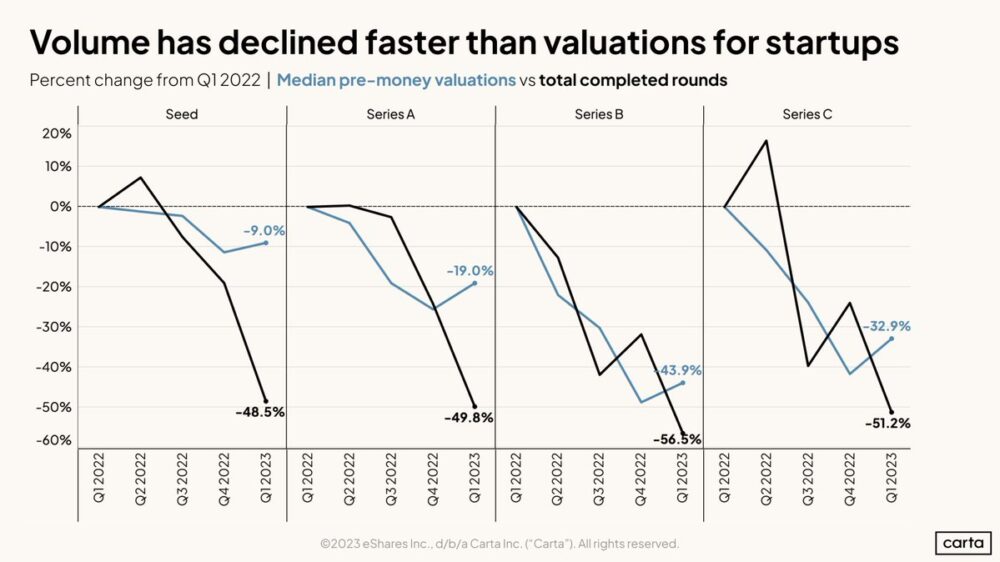
This is especially important because venture markets have become more selective and more concentrated. Capital may still be available, but it does not flow evenly to every startup with a nice logo and a founder who says “massive TAM” with confidence. Investors are looking for stronger signals: revenue quality, retention, growth efficiency, founder-market fit, product velocity, and credible paths to scale.
The One-Hour Habit: What to Do Each Week
The first half of the 1-and-30 Rule is your weekly new-investor habit. Here are practical ways to use that hour well.
Build a Target Investor List
Start with a simple spreadsheet or CRM. Include investor name, firm, stage, typical check size, sectors, portfolio overlap, last contact date, introduction path, notes, and next step. This does not need to be a NASA control panel. It just needs to prevent your investor pipeline from living in your brain, where good ideas go to wear sweatpants and disappear.
Prioritize investors who actually fund companies like yours. If you are raising a pre-seed round for B2B software, a late-stage consumer growth investor is probably not your first call. If you are building healthcare infrastructure, find investors who understand healthcare sales cycles, compliance, and enterprise adoption. Relevance beats prestige.
Take the Best Investor Meeting Available
Each week, ask: “What is the highest-quality investor interaction I can create?” Sometimes that is a meeting with a partner. Sometimes it is a conversation with an associate who deeply understands your category. Sometimes it is a warm introduction from a founder in the investor’s portfolio.
Do not dismiss every junior investor. Many associates and principals influence deal flow, prepare internal memos, and help partners understand emerging markets. Treat them professionally. Today’s associate may be tomorrow’s partner. Also, people remember founders who were kind before they had leverage.
Ask for Advice Before You Ask for Money
One of the best ways to build investor relationships early is to ask for specific feedback. For example: “We are not raising right now, but we are thinking about how Series A investors evaluate net revenue retention in our category. Could I get your perspective?”
This lowers pressure and creates a useful conversation. It also lets investors see how you think. A thoughtful founder who asks sharp questions and follows up with progress is far more memorable than a founder who immediately launches into slide 17 like a caffeinated auctioneer.
Create a Reason to Follow Up
Every investor conversation should end with a natural next step. That might be sending a metric update in 60 days, sharing a customer case study, asking for feedback on positioning, or reconnecting when a key milestone is hit.
Do not send empty “just checking in” emails. Investors receive plenty of those. Instead, send signal: new revenue milestone, customer expansion, product launch, strategic hire, regulatory win, retention improvement, or a sharper market insight.
The 30-Minute Habit: Turn Current Investors Into Champions
The second half of the rule is about existing investors. These people already said yes once. That makes them valuable. But if you neglect them, their enthusiasm can fade. Worse, when a future investor calls for a reference, a lukewarm response from an existing backer can quietly sink the round.
Send a Monthly Investor Update
A good investor update is short, honest, and consistent. It should include wins, challenges, key metrics, financial runway, hiring needs, product progress, customer stories, and specific asks. The best updates are not glossy press releases. They are operating documents.
Use a predictable structure. For example:
- Top three wins this month
- Key metrics: revenue, growth, churn, retention, burn, runway
- What changed in the market or customer behavior
- Main challenges or risks
- Specific asks: introductions, hiring referrals, customer leads, expertise
- Next month’s priorities
Consistency builds trust. If investors hear from you only when something is broken, they will learn to fear your emails. That is not investor relations. That is a haunted inbox.
Share Bad News Early
Founders sometimes hide bad news because they want to appear strong. This usually backfires. Experienced investors know startups are messy. They do not expect perfection; they expect clarity, urgency, and ownership.
If churn spikes, say so. If a key hire falls through, explain the plan. If enterprise sales cycles are longer than expected, show what you are testing. Bad news delivered early with a thoughtful response can strengthen trust. Bad news delivered late with jazz hands does the opposite.
Make Specific Requests
Investors are more helpful when the ask is concrete. “Can you help with sales?” is vague. “Can you introduce us to VP-level RevOps leaders at B2B SaaS companies with 200 to 1,000 employees?” is useful.
The same applies to hiring. “We need engineers” is forgettable. “We are hiring a senior backend engineer with experience in data infrastructure and Python; here is the job description” gives investors something to forward.
How the 1-and-30 Rule Changes Your Next Round
When founders follow the 1-and-30 Rule, fundraising becomes less theatrical. There is less dramatic deck rewriting, less awkward cold outreach, and fewer mysterious investor silences. The next round becomes a continuation of existing conversations.
Investors who have watched your company for months can evaluate momentum more confidently. They have seen whether you hit goals, how you communicate, and whether you turn feedback into action. This creates trust before the formal process begins.
It also helps you understand the market. Investor conversations reveal what themes are hot, which metrics matter at your stage, how funds are thinking about valuations, and whether your category narrative is landing. That information is extremely usefuleven when the investor does not invest.
In a competitive market, founders who maintain relationships have an advantage. They are not shouting into the void. They are activating a network that already understands the company.
Common Mistakes Founders Make
Mistake 1: Meeting Investors Only When Cash Is Low
Nothing kills leverage like obvious desperation. When investors sense that a founder needs money immediately, they slow down, ask tougher questions, or wait for better terms. Building relationships early gives you more options and more confidence.
Mistake 2: Treating Every Investor the Same
Not all investors are equal for your company. Some are category experts. Some are tourists. Some can lead. Some can only follow. Some are great at seed but useless at Series B. Segment your pipeline so you spend time on the right people.
Mistake 3: Confusing Updates With Spam
An investor update should be useful, not noisy. Do not send weekly essays to every potential investor unless they asked for that cadence. Keep external updates tight and milestone-driven. For current investors, monthly is usually a strong rhythm.
Mistake 4: Hiding the Actual Metrics
Investors can smell vague traction from across the internet. “Strong momentum” is not a metric. “Pipeline expanding rapidly” is not a metric. Use real numbers where appropriate: ARR, MRR, growth rate, gross margin, retention, activation, burn, runway, CAC payback, or sales cycle length.
Mistake 5: Forgetting That Investors Talk
The venture world is smaller than it looks. A sloppy process, inconsistent story, or poor investor communication can travel. So can a reputation for transparency, speed, and strong execution. Choose your legend wisely.
A Simple Weekly Schedule for the 1-and-30 Rule
Here is a practical version of the rule for busy founders:
Monday: Review the Investor Pipeline
Look at your investor list. Decide which relationship deserves attention this week. Identify one new investor interaction and one existing investor touchpoint.
Tuesday or Wednesday: Take the Investor Meeting
Use the one-hour block for a call, coffee, intro request, event, or research. Keep notes immediately afterward. Record what the investor cares about, objections raised, and potential next steps.
Friday: Send or Prepare Investor Communication
Use the 30-minute block for current investor updates, quick notes, thank-you messages, or specific requests. If it is the end of the month, draft the full investor update.
This rhythm keeps fundraising present without letting it swallow the company. You still have time to build product, sell customers, recruit talent, and occasionally remember that sleep is not a deprecated feature.
Specific Example: A Founder Using the Rule
Imagine a founder running a B2B SaaS startup with $70,000 in monthly recurring revenue. The company has 13 months of runway and is not planning to raise for another six months. Under the old approach, the founder might ignore investors until month nine, then rush to raise with four months of runway left.
Under the 1-and-30 Rule, the founder spends one hour each week building investor relationships. In month one, she meets two seed investors, one Series A investor, and one angel operator. In month two, she sends a short progress note to the most relevant contacts. In month three, she shares a customer expansion story and asks for feedback on Series A readiness. In month four, one investor introduces her to another fund. In month five, several investors already understand the company’s growth curve.
Meanwhile, she sends monthly updates to existing investors. They know the company’s metrics, hiring needs, and customer wins. One investor introduces a VP of Sales candidate. Another introduces a potential enterprise customer. A third agrees to serve as a strong reference for the next round.
By the time she officially raises, the process is not easyfundraising is rarely easybut it is warmer, faster, and better informed. That is the point.
How to Keep Fundraising From Becoming a Distraction
The biggest objection to year-round fundraising is reasonable: founders are busy. Very busy. Ridiculously busy. The kind of busy where lunch becomes a concept rather than an event.
But the 1-and-30 Rule is designed to be small. It is not asking you to spend 15 hours a week charming venture capitalists. It is asking for 90 minutes of disciplined relationship maintenance. The danger is not that you will spend too little time fundraising during a formal round. The danger is that you will spend zero time before the round and then have to spend far too much time when the company can least afford distraction.
Keep it contained. Put it on the calendar. Track outcomes. Do not let casual investor chats replace operating discipline. If an investor meeting is low-quality, learn from it and improve targeting. If your updates take too long to write, create a template. If you never have anything useful to share, that may reveal an execution problem worth solving.
What to Include in a Founder’s Investor Update
A strong investor update should be scannable. Investors should understand the business in two minutes and know how to help in five. Here is a useful format:
Subject Line
“Company Name March Update: 18% MRR Growth, 2 Enterprise Pilots, Hiring Backend Lead”
Opening Summary
Start with three bullets: one big win, one challenge, one ask.
Metrics
Include the numbers that matter for your model. For SaaS, this might mean ARR, MRR, net revenue retention, churn, pipeline, burn, runway, and cash balance. For marketplaces, it may include GMV, liquidity, repeat usage, take rate, and cohort behavior.
Wins
Share customer wins, product launches, hiring progress, partnerships, press, or strategic milestones.
Challenges
Be direct. Explain what is not working and what you are doing about it.
Asks
End with two or three specific ways investors can help. Make forwarding easy.
Experience-Based Lessons: What Founders Learn the Hard Way
One common experience among founders is that fundraising feels simple from the outside and deeply weird from the inside. Before doing it, you may assume investors make decisions based on obvious logic: great product, big market, strong team, check written. Then you enter the process and discover that timing, trust, portfolio construction, partner dynamics, market fashion, fund size, ownership targets, and internal conviction all matter. In other words, the investor may like you and still not invest. This is annoying, but it is not personal. Well, mostly not personal.
Founders who practice the 1-and-30 Rule learn to separate relationship-building from immediate outcomes. A meeting that does not produce a check can still produce market feedback, a useful introduction, a future lead, or a sharper pitch. The founder who treats every investor conversation as a pass-or-fail exam will burn out. The founder who treats each conversation as data will improve.
Another hard-earned lesson: investor updates are not just for investors. They force the founder to think clearly. Writing a monthly update exposes vague strategy. If you cannot explain what changed this month, what improved, what broke, and what help you need, the issue may not be communication. The issue may be focus. The update becomes a mirror. Sometimes it is a flattering mirror. Sometimes it is the mirror in a hotel bathroom under fluorescent lighting. Either way, it tells the truth.
Many founders also discover that existing investors are more helpful when they feel included before the crisis. If you email an investor after six silent months asking for emergency introductions, they may help, but they are starting cold. If they have watched your progress through regular updates, they can forward your company with confidence. They know the story. They know the numbers. They know why now matters.
A practical founder experience is to keep an “investor help menu.” This is a short list of asks that can be copied into updates or follow-up emails. For example: “We are looking for intros to CFOs at mid-market logistics companies,” “We need candidates for a founding account executive,” or “We would value feedback from anyone who has sold into hospital systems.” This makes it easy for investors to help without decoding a vague distress signal.
Another useful habit is to maintain two versions of the company narrative. The first is the formal fundraising narrative: market, problem, solution, traction, business model, team, and round details. The second is the relationship-building narrative: what you are learning, what assumptions are changing, and what milestone you are working toward next. The second narrative is often more useful before a round because it invites conversation instead of forcing a decision.
Founders also learn that not every investor deserves equal access. Some provide thoughtful feedback, useful introductions, and fast decisions. Others create fog machines of ambiguity. Track behavior. Did they respond when they said they would? Did they understand your market? Did they ask serious questions? Did they introduce you to someone valuable? Your fundraising pipeline should qualify investors just as much as investors qualify you.
Finally, the biggest experience-based lesson is emotional: the 1-and-30 Rule reduces fear. Fundraising becomes less like jumping off a cliff and more like walking a trail you have already mapped. You still need courage. You still need numbers. You still need timing. But you are not starting from zero. And in startup life, not starting from zero is a beautiful thing.
Conclusion: Fundraising Is a Weekly Discipline, Not a Panic Button
The 1-and-30 Rule works because it respects how trust is actually built. Investors rarely fund companies because of one perfect email or one dazzling meeting. They invest when conviction accumulates. They invest when the market makes sense, the metrics support the story, and the founder seems capable of navigating chaos without turning every update into interpretive dance.
Spending one hour a week on new investor relationships and 30 minutes a week on existing investors may feel small, but small habits compound. Over 52 weeks, that is 52 hours of investor pipeline development and 26 hours of investor communication. More importantly, it creates a company culture where capital strategy is proactive, not reactive.
So yes, you need to fundraise 52 weeks a year. Not because you are always asking for money, but because you are always building trust. The founders who understand this raise with more confidence, better timing, and stronger allies. The founders who ignore it may still raisebut they often do it with more stress, fewer options, and a pitch deck that has seen things no PDF should ever see.