Brussels has never been a city that survives on waffles alone. Behinies lies a more daring culinary tradition—one involving marrow bones, veal brains, kidneys, tongue, tripe, and practically every other part of an animal that cannot be shaped into a tidy steak.
For nearly two decades, Viva M’Boma celebrated that tradition from a former butcher shop near Brussels’ historic Saint-Catherine district. The restaurant’s name roughly meant “long live grandmother,” an affectionate salute to the economical, flavor-first cooking of earlier generations. Its philosophy was simple: respect the animal, waste as little as possible, and never underestimate what a patient cook can accomplish with an intimidating-looking organ.
Historical identity, meaning, setting, and closure verified through Remodelista, The Brussels Times, and BRUZZ. >
A Brussels Restaurant That Used the Whole Animal
Nose-to-tail cooking means preparing far more than premium cuts such as tenderloin, rib eye, or pork loin. Cheeks become slow-braised centerpieces. Bones provide marrow and stock. Tongue turns silky after long cooking. Kidneys, liver, heart, stomach, tail, feet, and sweetbreads receive the attention they deserve instead of being treated as culinary spare parts.
The approach is often associated with chef Fergus Henderson and London’s St. John, which helped revive international interest in neglected cuts. Yet the underlying idea is much older. Families, butchers, taverns, and working-class kitchens across Europe had practiced whole-animal cooking for generations, usually because throwing away edible food made neither financial nor practical sense.
Viva M’Boma expressed that philosophy through traditional Belgian cooking. It was not interested in disguising every ingredient beneath foam, smoke, or a tiny edible flower placed with surgical tweezers. The kitchen instead relied on browning, braising, simmering, seasoning, and the transformative powers of butter, mustard, beer, stock, and time.
This was comfort food with an adventurous streak. Some dishes sounded familiar and reassuring. Others sounded like a dare issued by a particularly mischievous grandmother.
The modern nose-to-tail movement and its influence were synthesized from Food & Wine and The Guardian. n>
Inside Viva M’Boma
The restaurant stood at Rue de Flandre 17, within walking distance of the Grand-Place and close to the lively Saint-Catherine neighborhood. Its exterior was painted a deep, confident blue, with a bold sign that made the building difficult to miss even on one of Brussels’ famously gray afternoons.
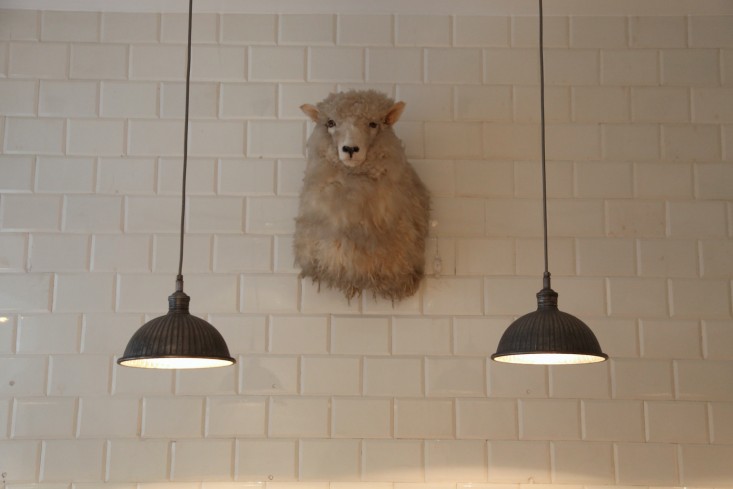
Inside, glossy white wall tiles preserved the atmosphere of the building’s earlier life as a butcher shop. Marble-topped tables and simple white chairs kept the dining room practical rather than precious. Black-and-white photographs recalled an older Brussels, while barn-style lamps cast low, warm light across the room.
A Dining Room With a Dark Sense of Humor
The decorations did not allow guests to forget what kind of restaurant they had entered. A mounted pig’s head watched over the cellar door like a very judgmental maître d’. A sheep stood beneath pendant lamps fashioned from vintage X-ray viewing shades. The room balanced nostalgia, butcher-shop functionality, and just enough theatrical oddness to make dinner feel like an expedition.
Daily specials appeared on a chalkboard that could be moved from table to table. That detail suited a kitchen shaped by traditional preparations and changing ingredients. It also meant diners could not pretend they had failed to notice the calf’s brains listed three inches from their water glass.
Architectural and interior details verified through Remodelista and visitor descriptions. n>
What Was on the Menu?
Viva M’Boma became known as a triperie, a restaurant specializing in tripe and other forms of offal. Depending on the season and the day’s offerings, diners might encounter marrow bones, veal liver, kidneys, brains, tongue, sweetbreads, oxtail, pig’s feet, andouille-style sausage, cow’s udder, or tripe.
That list may sound alarming to anyone whose normal restaurant order begins with “boneless” and ends with “skinless.” Yet each cut has its own character. Liver can be mineral-rich and tender when cooked carefully. Kidney has a firm texture and assertive flavor. Sweetbreads become creamy inside and crisp outside. Beef cheek and oxtail reward slow cooking by turning deeply savory and spoon-tender.
Bone Marrow: The Friendly Introduction
Roasted marrow is often the diplomatic ambassador of nose-to-tail dining. Split bones arrive hot, revealing a rich interior that can be scooped onto bread. The flavor is buttery, beefy, and luxurious without requiring diners to examine an organ-shaped object on the plate.
At a restaurant such as Viva M’Boma, marrow helped establish the central argument of whole-animal cooking: an ingredient that looks humble can taste extravagant when treated properly.
Sweetbreads: Deliciously Misnamed
Sweetbreads are neither sweet nor bread. They generally refer to the thymus or pancreas of a young animal, commonly veal or lamb. The name may be confusing, but the appeal is straightforward. Properly prepared sweetbreads have a delicate interior and a browned, lightly crisp surface.
They are often among the easiest organ meats for curious beginners because their flavor is relatively mild. Reports from Viva M’Boma frequently praised the restaurant’s veal sweetbreads, including combinations that paired them with kidneys or traditional sauces.
Brains, Tongue, and Other Conversation Starters
Brains are exceptionally soft and creamy, with a texture closer to custard than steak. Tongue, after long simmering and careful trimming, becomes tender and richly beefy. Cheeks and tails contain connective tissue that melts during slow cooking, producing the kind of sauce that makes diners consider drinking directly from the plate.
Viva M’Boma also served less confrontational Belgian dishes for guests who wished to support their adventurous companions from a safe distance. Sausage with stoemp—Belgium’s hearty mashed potato and vegetable preparation—and Flemish beef stew with fries offered recognizable comfort.
Former menu specialties and diner reports synthesized from Beers ’n’ Bites, The SunBreak, Wanderlog, Vice, and historical restaurant coverage. n>
Choesels: A Rare Taste of Old Brussels
One of the most culturally significant dishes associated with the restaurant was choesels, an old Brussels specialty that became increasingly difficult to find in modern dining rooms.
Recipes and definitions vary, as they often do with food passed between generations rather than standardized by committee. Traditional versions could combine several kinds of offal, including tripe and sweetbreads, in a dark, deeply flavored sauce. Gueuze, the spontaneously fermented beer associated with Brussels and the surrounding region, was sometimes part of the preparation.
Choesels represented more than culinary shock value. It reflected a period when skilled cooks turned inexpensive or overlooked ingredients into substantial meals. The dish demanded cleaning, preparation, balancing, and long cooking. Nothing about it was lazy, even if the ingredients lacked the glamorous reputation of lobster or filet mignon.
Serving choesels allowed Viva M’Boma to preserve a piece of Brussels history. It placed the city’s everyday culinary heritage beside more famous Belgian exports such as mussels, fries, chocolate, beer, and waffles. Those classics deserve their popularity, of course, but Brussels contains multitudes—some of them simmered in a very dark sauce.
Choesels history and ingredients verified through TasteAtlas and Brussels reporting on the restaurant. n>
Why Nose-to-Tail Dining Still Matters
It Shows Greater Respect for the Ingredient
Eating meat while rejecting most of the animal creates an uncomfortable contradiction. Nose-to-tail cooking does not eliminate the environmental or ethical questions surrounding meat production, but it encourages fuller use of an animal once it has been raised and slaughtered.
The philosophy asks diners to see meat as an entire animal rather than as a collection of anonymous rectangular portions. That perspective can promote appreciation, moderation, and less wasteful habits.
It Preserves Traditional Cooking Skills
Premium steaks can be excellent with little more than salt, heat, and good timing. Offal often asks more of the cook. Tongue must be simmered and peeled. Kidneys require cleaning and careful cooking. Tripe depends on thorough preparation and a flavorful broth. Tough cuts need patience so their collagen can soften.
These methods preserve practical kitchen knowledge: blanching, braising, making stock, building sauces, managing texture, and seasoning assertive ingredients. A restaurant centered on organ meats therefore functions as both a dining room and a living archive of technique.
It Expands the Vocabulary of Flavor
Modern diners often claim to love variety while repeatedly ordering the same few cuts. Offal introduces flavors and textures that ordinary muscle meats cannot reproduce. Heart is dense and lean. Liver is smooth and mineral-forward. Tripe is mild but texturally distinctive. Marrow is lush. Sweetbreads are delicate and creamy.
Not every diner will love every organ, and that is perfectly reasonable. Nose-to-tail eating is not a personality test. Disliking kidney does not mean a person lacks courage, sophistication, or a passport. The value lies in approaching unfamiliar food with curiosity rather than automatic disgust.
Organ Meats Can Be Nutrient-Dense
Many organ meats provide substantial protein, vitamins, iron, and other micronutrients. Liver, for example, is especially concentrated in vitamin A and several B vitamins. That nutritional density also means portions and individual dietary needs matter; more is not automatically better.
Food safety is equally important. The U.S. Department of Agriculture advises cooking organ and variety meats such as heart, kidney, liver, and tongue to a safe internal temperature of 160 degrees Fahrenheit. Professional handling is one reason many people prefer their first exploration of offal to occur in an experienced restaurant kitchen rather than during a chaotic home experiment involving an unfamiliar kidney and an optimistic YouTube video.
Nutrition and food-safety context synthesized from Colorado State University, USDA, and peer-reviewed research indexed by the National Library of Medicine. n>
How Viva M’Boma Fit Into Brussels
Brussels is a bilingual, international capital, but its food culture remains rooted in the habits of local cafés, taverns, markets, breweries, and family kitchens. Belgian cuisine frequently combines French technique with generous northern European comfort. Butter, cream, beer, potatoes, mustard, endive, onions, and slow-cooked meat appear with reassuring frequency.
Viva M’Boma belonged naturally in that landscape. The restaurant was not simply importing a fashionable nose-to-tail concept. It was reviving dishes connected to the city’s own history, especially foods that had slowly disappeared as restaurant menus became more standardized.
Its location near Saint-Catherine was particularly appropriate. The surrounding area has long been associated with commerce, food, fish markets, restaurants, and nightlife. Visitors could wander from the ornate center of Brussels toward a dining room where a mounted pig stood guard and the specials board might contain more anatomical vocabulary than a biology quiz.
Brussels cultural and culinary setting informed by Visit Brussels, city resources, and historical restaurant accounts. n>
What Made the Restaurant Memorable
Restaurants devoted to challenging ingredients can easily become gimmicky. They may turn dinner into a stunt in which guests order the strangest plate available, photograph it, and spend the rest of the evening congratulating themselves.
Viva M’Boma appears to have endured because the kitchen treated offal as food rather than spectacle. The cooking was grounded in Belgian traditions, the atmosphere was welcoming, and diners who did not want brains could still find meatballs, stew, sausage, potatoes, or dessert.
The design also reinforced the concept without becoming sterile. White butcher-shop tiles, vintage photographs, animal figures, dark lighting, and chalkboard menus created a recognizable identity. The room felt nostalgic but playful—like grandmother’s kitchen after grandmother hired an eccentric set designer.
Most importantly, the restaurant gave people permission to reconsider ingredients they had rejected without tasting. A well-browned sweetbread or slowly cooked cheek could transform anxiety into appetite. That small shift in perspective is one of the most valuable things a restaurant can provide.
The Experience: What a Visit to Viva M’Boma Felt Like
A typical experience began before the food arrived. Guests approaching from central Brussels would leave the grand architecture and crowded tourist corridors behind, moving toward the narrower streets near Saint-Catherine. Rain on the pavement would make the storefronts shine, and the restaurant’s deep-blue exterior would emerge with all the subtlety of a dinner bell.
Opening the door meant entering a space that immediately explained itself. The white tiles said butcher shop. The marble tables said old-fashioned café. The pig’s head said, rather firmly, that vegetarians had taken a wrong turn.
The most entertaining part of the meal may have been watching a table read the specials. One diner would lean forward with genuine excitement. Another would pretend to understand the difference between sweetbreads and brains. A third would quietly search the board for the safest possible arrangement of potatoes.
Ordering worked best as a shared adventure. Marrow bones could provide a rich opening, spread across toast and sharpened with salt or something acidic. Sweetbreads offered contrast: crisp and browned on the surface, tender within. Tongue demonstrated how patient cooking can turn a visually challenging ingredient into meat with a familiar, comforting flavor.
Then came the more distinctive plates. Kidney delivered a deeper mineral character. Brains nearly dissolved on the tongue. Tripe offered gentle flavor but an unmistakable texture. Oxtail and cheek brought the group back onto common ground, their sauces dark, glossy, and concentrated enough to inspire aggressive bread-mopping.
The experience was not necessarily about loving everything. In fact, a proper nose-to-tail dinner benefits from disagreement. One person discovers a lifelong affection for sweetbreads. Another decides that liver has been given enough opportunities. Someone who arrived terrified of tongue asks for another bite. The table becomes a miniature culinary debate club, except everyone has beer.
Belgian beer naturally complemented the food. A malty dark ale could match the sweetness of a braised sauce, while a tart gueuze might cut through marrow or other rich preparations. Fries, mashed potatoes, bread, and mustard served as useful supporting characters, absorbing sauces and providing comfort between unfamiliar bites.
Dessert offered a return to safer territory. After navigating a menu containing brains, intestines, glands, and tails, a classic Belgian sweet could feel almost suspiciously normal. A cold dessert, chocolate sauce, cream, or coffee allowed the meal to conclude with pleasure rather than anatomical discussion.
Leaving the restaurant, diners carried more than fullness. The meal encouraged them to question why certain animal parts are celebrated while others inspire disgust. Tenderloin is muscle; tongue is muscle too. One is displayed under flattering supermarket lighting, while the other suffers from an unfortunate branding problem.
That was the enduring value of Viva M’Boma. It created an experience that was historical, humorous, educational, and delicious without feeling like a lecture. Guests could participate as boldly as they wished. They might order the rarest Brussels specialty available, or they might remain loyal to sausage and stoemp while sampling one cautious bite from a friend’s plate.
Either way, the restaurant made the whole animal visible. It reminded visitors that traditional cooking often emerged from necessity, respect, and creativity. The glamorous cuts were only one chapter of the story. Viva M’Boma served the rest of the book.
Composite experience based on documented interior details, historical menus, and published visitor reports. n>
A Lasting Nose-to-Tail Legacy
Viva M’Boma is no longer serving marrow bones or choesels on Rue de Flandre. Its former location moved on to a different restaurant concept, as city storefronts inevitably do. Yet its story remains relevant because the questions behind nose-to-tail cooking have not disappeared.
How much of an animal should meat eaters be willing to use? Which traditional dishes deserve protection? Why do some cuts become expensive luxuries while others vanish from menus? Can restaurants help guests become less wasteful without turning dinner into homework?
Viva M’Boma answered those questions with white tiles, Belgian beer, grandmotherly recipes, and plates that occasionally required courage. It honored overlooked ingredients while giving Brussels a restaurant as quirky and complex as the city itself.
The restaurant may have closed, but its central lesson still has bite: great cooking does not begin with the most expensive cut. It begins with knowledge, patience, respect, and a willingness to look beyond the filet.
Closure and the later change of restaurant concept verified through The Brussels Times and BRUZZ. n>