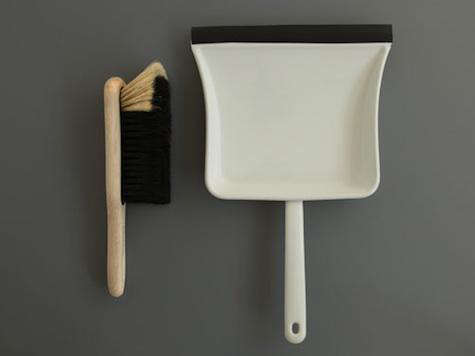
A dustpan rarely appears on anyone’s design wish list. It usually hides under a sink beside mystery sponges and a bottle of cleaner with three drops left. The White Dustpan and Natural Bristle Brush takes a different approach. Its white enamel pan, unvarnished wooden brush, soft natural bristles, and floor-friendly rubber lip make an ordinary cleaning tool attractive enough to keep within reach.
That visibility has a practical benefit. When a brush is easy to grab, breakfast crumbs, loose potting soil, fireplace debris, and dust along a baseboard can be handled before they travel through the house. No battery, no cord, no app, and no tiny warning light demanding emotional support.
What Is the White Dustpan and Natural Bristle Brush?
This compact set combines a white enamel dustpan with a handheld wooden brush. The pan is approximately 25 centimeters wide and has a rubber lip along the front edge. The brush is made from unvarnished wood and fitted with soft natural bristles. Product descriptions identify the pan as Austrian-made and the brush as English-made, giving the set the traditional European utility style often featured in design-focused American publications.
Its restrained white-and-wood palette fits modern kitchens, farmhouse mudrooms, Scandinavian-inspired interiors, and apartments where utility storage is visible. Still, good looks are merely the opening act. The materials and proportions determine whether it can actually finish the cleanup.
Why the Materials Matter
White Enamel: Sturdy, Smooth, and Easy to See
Enamel-coated metal feels more substantial than a thin plastic pan and provides a smooth surface that is easy to wipe after collecting ordinary dry debris. The white finish makes leftover dirt obvious, which helps prevent yesterday’s crumbs from returning to the closet as unwanted souvenirs.
Enamel can chip if dropped onto a hard edge, so this is not a garage tool to throw around after losing an argument with a pile of sawdust. Use it confidently, but store it where heavier objects will not crash into it.
Soft Natural Bristles for Controlled Indoor Sweeping
Fine natural fibers are well suited to light particles such as flour, dust, lint, coffee grounds, and crumbs. Soft-bristle brooms are commonly recommended for routine cleaning on many hardwood, laminate, vinyl, and tile floors because they remove loose grit without the harsh contact of a stiff outdoor brush.
Natural bristles are not all-purpose scrubbers. Grease, standing water, harsh chemicals, rough concrete, and wet leaves can mat or damage the fibers. Think of this set as an indoor specialist, not a driveway warrior dressed in white.
A Rubber Lip for the Final Dust Line
The front edge of a pan decides whether sweeping ends cleanly or becomes six attempts to capture the same pale stripe. A flexible rubber lip helps the pan meet the floor and guides small particles over the edge. It also reduces direct contact between the enamel and delicate flooring. Dustpan reviews consistently treat a well-fitted rubberized lip as an important feature for collecting fine debris.
Where This Dustpan and Brush Set Works Best
Kitchen and Dining Messes
Cereal flakes, rice, toast crumbs, coffee grounds, and the flour cloud created by an overconfident baker are ideal targets. The compact brush can maneuver around table legs, pantry corners, toe kicks, and the strip beside a refrigerator. Handheld sets also perform well for localized kitchen cleanup because their small heads offer control in tight spaces.
Use another method for oil, sticky sauces, raw-food residue, or wet spills. Natural bristles are happiest when the mess is dry.
Smooth Hard Floors
The set is particularly useful for quick maintenance on finished wood, laminate, vinyl, and smooth tile. Removing loose grit matters because particles tracked under shoes and furniture can contribute to surface wear. On deeply textured tile or wide grout lines, however, the soft fibers may leave material behind; a stiffer angled broom or suitable vacuum attachment will usually reach uneven areas more effectively.
Desks, Plant Corners, and Work Surfaces
The handheld format can collect pencil shavings, dried leaves, loose potting soil, and craft debris. Keep separate sets for food areas and dirt-heavy utility work. A brush should not travel from fertilizer to cookie crumbs and pretend nothing happened.
Fireplace HearthsOnly When Completely Cool
A small brush can gather cold ash and bark from a hearth. Use slow strokes so fine ash does not become airborne, and never collect warm ash or live embers with a household dustpan. Hot fireplace waste requires appropriate metal tools and safe disposal.
Where It Is Less Convincing
A handheld dustpan requires bending or kneeling, which may be uncomfortable for people with back pain, balance concerns, or limited mobility. A long-handled upright set is a better ergonomic choice for frequent whole-room sweeping.
Soft natural bristles also struggle with gravel, wet leaves, heavy workshop debris, deeply embedded rug hair, and rough outdoor concrete. Choose a stiff synthetic broom, rubber broom, shop brush, or vacuum for those jobs. This set offers convenience and finesse, not brute force.
How to Get a Cleaner Sweep
- Build one compact pile. Use short strokes instead of launching crumbs across the room.
- Check the lip. Remove any debris trapped beneath the rubber edge so the pan can sit flat.
- Use light pressure. Let the bristle tips gather dust; pressing hard only splays the fibers.
- Sweep beyond the edge. Move debris fully into the pan rather than stopping at the lip.
- Reposition once. Move the pan slightly backward and use lighter strokes for the remaining dust line.
- Empty immediately. Remove hair from the brush before putting the set away.
For a larger area, work from the room’s perimeter toward a central pile. Dust shelves and baseboards first so gravity can finish its contribution before the floor is cleaned.
Cleaning and Caring for the Set
After Routine Use
Shake the brush over a trash bin, then pull out hair and lint with your fingers or a wide-tooth comb. Wipe the pan with a soft damp cloth and dry it. Keeping the rubber edge clean helps it maintain close contact with the floor.
Deeper Brush Cleaning
Natural-bristle and wooden tools need conservative care. Avoid soaking the entire brush. Dip only the bristle ends into lukewarm water with a small amount of mild dish soap, gently loosen dirt, rinse briefly, and blot excess moisture. Dry the brush with its bristles facing downward or hanging freely so water does not collect in the wooden stock. General broom-care guidance also emphasizes removing trapped debris, washing according to the fiber material, and drying thoroughly before storage.
Do not put the brush in a dishwasher, leave it submerged, or dry it on a radiator. Excess water and heat can distort natural fibers and cause unfinished wood to swell or crack. Confirm material compatibility before applying disinfectants.
Protecting the Enamel
Use a nonabrasive sponge or cloth for marks on the pan. Steel wool and gritty powders can scratch or dull the finish. If the enamel chips, keep the exposed area dry and watch for corrosion.
Storage That Protects the Bristles
Store the brush so the fibers are not crushed against a wall or shelf. A hook, peg rail, or shallow basket works well. If the brush nests inside the pan, make sure both pieces are completely dry first.
The attractive finish makes open storage realistic. Design publications have repeatedly highlighted good-looking household tools as objects that can remain visible, which may also make quick cleanup more convenient.
Is It a More Sustainable Choice?
A durable manual brush and metal pan can reduce dependence on frequently replaced plastic tools when the set remains useful for years. It consumes no electricity during operation and requires no filters, bags, batteries, or replacement charging cables.
However, “natural” does not automatically mean impact-free. The bristles may be animal-derived, while wood processing, metal production, enamel coating, manufacturing, and shipping all have environmental costs. Buyers who avoid animal materials should ask the retailer to identify the fiber source. The best sustainability strategy is often to choose a tool that suits the household, maintain it properly, and keep using it.
What to Check Before Buying
- Bristle source: Confirm the fiber if vegan materials, allergies, or sourcing practices matter.
- Floor compatibility: Soft bristles favor smooth indoor surfaces over rough exterior ones.
- Comfort: Choose a long-handled alternative when bending is difficult.
- Lip alignment: The rubber edge should sit evenly without curling or gaps.
- Storage: The brush should hang or rest without crushing its fibers.
- Finish quality: Check the enamel for chips and the wood for splinters or loose bristle bundles.
Everyday Experience: Living With the Set
The most noticeable change is not that sweeping suddenly becomes thrilling. It does not. No dustpan has inspired a stadium chant. The change is that small messes feel less irritating because the tool is pleasant to handle and easy to keep nearby.
Picture it hanging from a peg beside a pantry. On Monday morning, coffee grounds miss the container. Instead of reaching for paper towels, which tend to push the finer particles around, you grab the brush. The soft fibers gather the grounds in a few light passes, and the rubber edge guides them into the pan without leaving a dark crescent. Breakfast continues without the vacuum making its dawn concert debut.
By midweek, a houseplant drops dry soil and brittle leaves onto a wood floor. The bristles feel gentle, while the compact head fits between the pot stand and the wall. This is where a hand brush beats a full broom: it offers control. You can sweep close to furniture without rearranging half the room or sending a decorative object into its next life.
Pet hair creates a more mixed experience. Loose tufts on smooth flooring gather easily, but long strands can wrap around the natural fibers. The brush then needs a quick comb-through. It takes less than a minute, yet it is genuine maintenance. Anyone expecting a self-cleaning woodland creature will be disappointed. In a home with heavy shedding, a rubber broom or vacuum remains the stronger primary tool.
The white enamel reveals every speck left in the pan. That visibility encourages you to empty and wipe it instead of storing yesterday’s crumbs. It is less helpful when you are trying to pretend the job is finished. Fortunately, a damp cloth usually restores the clean appearance quickly.
Technique improves after several uses. Heavy pressure is unnecessary and can bend the fibers. Light strokes collect fine particles more efficiently. Holding the pan steady, then shifting it slightly for one final pass, handles most of the remaining dust line. The process becomes quiet and nearly automatic for localized messes.
The set also changes where a cleaning tool can live. A fluorescent plastic pan often gets hidden; white enamel and wood can hang in sight without making the room resemble a supply closet. That visibility shortens the distance between noticing a mess and cleaning it. In a compact apartment, this is useful because every cabinet is already performing advanced storage mathematics.
There are compromises. The pan may clang when dropped, enamel can chip under rough treatment, and unfinished wood may darken where it is handled. Soft bristles are not ideal for wet porches, gravel, or stubborn debris in textured grout. Repeated bending can also be uncomfortable, so the set works best as a companion to larger floor-care equipment.
Still, the everyday experience is satisfying because it does one category of work well: small, dry, indoor cleanup. It feels balanced, looks calm, and turns five-minute irritations into quick tasks. That is not revolutionary, but domestic life is built from tiny frictions. Removing one of them is a modest luxuryand unlike a smart appliance, this tool never asks for the Wi-Fi password.
Conclusion
The White Dustpan and Natural Bristle Brush combines traditional materials with thoughtful details. The enamel pan feels substantial, the rubber lip helps collect fine debris, and the soft fibers suit quick cleanup on many smooth indoor surfaces. It is attractive enough for visible storage and simple enough to work without charging, pairing, updating, or blinking mysteriously.
It is not ideal for heavy outdoor debris, wet messes, intensive pet-hair removal, or users who need an upright ergonomic design. For kitchens, dining areas, desks, hearths, and plant corners, however, this elegant dustpan and brush set proves that a humble object can become more useful through better materials and careful design.
Note: Exact bristle composition, dimensions, manufacturing details, and availability can change. Confirm current specifications and care instructions with the retailer before purchasing or washing the brush.