Note: This article is for educational and editorial purposes only. It is not financial advice, a stock recommendation, or a crystal ball wearing a tiny Wall Street vest.
For several years, investors have asked a very reasonable question: When are value and growth going to matter again? It is easy to understand the frustration. Traditional investment styles used to feel like useful road signs. Growth stocks meant companies expected to increase earnings faster than the market. Value stocks meant companies trading at lower prices relative to earnings, book value, sales, or cash flow. Then came a market where artificial intelligence, mega-cap technology, index concentration, inflation shocks, and interest-rate drama turned those road signs into confetti.
But here is the honest answer: value and growth already matter. They just do not matter in the neat, tidy, “flip a switch and rotate your portfolio on Tuesday” way many investors want. These styles matter most when valuations, earnings, interest rates, and investor expectations begin pulling in different directions. In other words, they matter when the market stops rewarding everything with a good story and starts asking the rude but necessary question: “Yes, but what am I paying for this?”
What Do Value and Growth Actually Mean?
Before asking when value and growth will matter again, we need to clear up what the labels mean. Growth investing focuses on companies expected to expand revenue, earnings, or cash flow faster than the average business. Think software platforms, semiconductor leaders, cloud computing firms, medical technology innovators, and companies riding major long-term trends. Growth investors often accept higher valuations because they believe future profits will justify today’s price.
Value investing, on the other hand, looks for stocks that appear inexpensive compared with fundamentals. That may include lower price-to-earnings ratios, higher dividend yields, stronger free cash flow, or assets that the market seems to be ignoring. Value stocks often live in less glamorous neighborhoods of the market: banks, energy, utilities, industrials, insurers, consumer staples, and mature healthcare companies. They may not have a rocket emoji attached to every earnings call, but they can still produce solid returns.
The problem is that the labels can be misleading. A “growth stock” can be wildly overpriced, reasonably priced, or even cheap after a selloff. A “value stock” can be a bargain, or it can be cheap for a very good reasonalso known as a value trap. Buying a declining business just because the price-to-earnings ratio looks low is like buying expired sushi because it is 70% off. Technically, you saved money. Emotionally, you may regret everything.
Why It Feels Like Style Investing Stopped Working
The reason investors feel confused is not because value and growth disappeared. It is because market leadership became unusually narrow. In recent years, large technology and artificial intelligence-related companies have carried a big share of U.S. market gains. When a small group of giant companies dominates index returns, style categories can feel less useful. The question becomes less “value or growth?” and more “Do you own the handful of companies everyone is talking about at Thanksgiving?”
Market concentration can make traditional diversification feel boring. A broad value portfolio may look sensible on paper, but if the market is rewarding mega-cap growth, patience can feel like watching paint dry during a fireworks show. Meanwhile, a growth-heavy portfolio can look brilliantuntil valuation risk shows up, interest rates rise, or earnings expectations get too optimistic.
This is why value and growth cycles often feel unfair. Growth can lead for years when capital is cheap, innovation is accelerating, and investors are willing to pay high multiples for future earnings. Value can lead when rates rise, inflation remains sticky, the economy broadens, or investors decide that cash flow today is suddenly more attractive than promises tomorrow.
The Interest Rate Connection: Why Money Is No Longer Free
Interest rates are one of the biggest reasons value and growth may matter more again. Growth stocks are often valued on profits expected far into the future. When interest rates are low, those future profits look more valuable in today’s dollars. When rates rise or stay higher for longer, future profits are discounted more heavily. That does not kill growth investing, but it does make investors more selective.
In 2026, inflation and Federal Reserve policy remain central to the value-versus-growth debate. Recent inflation data showed that price pressures had not fully returned to the Federal Reserve’s long-term target. The Fed has continued to emphasize both inflation risk and employment risk, which means the market cannot simply assume easy rate cuts whenever stock prices get cranky. This matters because the cost of capital affects valuation. When cash and bonds offer real competition, expensive growth stocks must work harder to justify their prices.
That does not mean value automatically wins. It means valuation discipline becomes more important. A high-quality growth company with durable earnings, strong margins, and a massive addressable market can still deserve a premium. But the market may punish growth companies whose valuations depend on perfect execution, heroic forecasts, and vibes strong enough to bend spreadsheets.
Why Value May Be Setting Up for a Better Era
Value stocks tend to shine when investors care about current earnings, dividends, cash flow, and balance-sheet strength. They also tend to benefit when market leadership broadens beyond a few technology giants. If banks, industrials, energy producers, healthcare companies, and consumer businesses begin delivering stronger earnings, value can regain attention.
One reason value may matter more is valuation spread. When expensive stocks become much more expensive than cheaper stocks, future returns often become more sensitive to starting price. This does not mean cheap stocks must immediately outperform. Markets are not vending machines. You cannot insert a low price-to-book ratio and receive a 12-month outperformance snack. But wider valuation gaps can create better long-term opportunities for disciplined investors.
Another reason is earnings breadth. If profit growth becomes less dependent on a handful of mega-cap companies, investors may start looking across more sectors. Industrials tied to infrastructure, financials benefiting from healthier loan demand, energy companies with capital discipline, and healthcare firms with steady cash flows could attract more attention. Value does not need growth to fail. It needs the rest of the market to stop being ignored.
Why Growth Is Not Dead Either
Every time value investors begin warming up their victory speeches, growth investors remind everyone that innovation is not a fad. Artificial intelligence, automation, cloud infrastructure, cybersecurity, biotech breakthroughs, digital payments, and advanced semiconductor demand are real forces. These themes can support growth companies for years if the earnings follow.
The key phrase is if the earnings follow. Growth investing works best when companies can convert big ideas into durable profits. A business that grows revenue quickly but burns cash endlessly may eventually discover that the market has developed allergies to “adjusted EBITDA.” On the other hand, a company with strong pricing power, high returns on invested capital, and expanding free cash flow can remain attractive even at a premium valuation.
This is why the next phase of growth investing may be more selective than the last one. Investors may still reward AI leaders and technology platforms, but they may separate real earnings power from fashionable storytelling. In a mature bull market, the slogan changes from “buy the dream” to “show me the margin.” Less romantic, perhaps, but much better for avoiding portfolio indigestion.
When Will Value and Growth Matter Again?
The better question is not when value and growth will matter again, but under what conditions they will matter more visibly. There are several signs to watch.
1. Market Leadership Broadens
When more sectors participate in market gains, style factors become easier to observe. If returns are no longer dominated by mega-cap technology, investors may pay more attention to valuation, dividends, earnings quality, and cyclicality. A broader market gives value stocks more room to compete and growth stocks more pressure to prove they deserve premium prices.
2. Earnings Growth Spreads Beyond Big Tech
If industrials, financials, healthcare, consumer companies, and energy firms begin posting stronger earnings revisions, value can regain momentum. The market loves growth, but it does not require that growth to come only from technology. A boring company with improving profits can become surprisingly exciting. Wall Street has a strange definition of romance.
3. Interest Rates Stay Meaningful
Higher-for-longer rates make valuation matter. They do not destroy growth stocks, but they reduce the market’s willingness to pay any price for future profits. If investors can earn a reasonable return from cash or bonds, equities must offer a stronger case. That often favors companies with visible earnings, strong cash flow, and disciplined capital allocation.
4. AI Spending Becomes More Practical
Artificial intelligence has supported growth leadership, especially in semiconductors, cloud infrastructure, and data centers. But as AI investment matures, investors may look for second-order beneficiaries: utilities, industrial equipment, power infrastructure, cooling systems, cybersecurity, consulting, and productivity software. This could blur the line between value and growth. Some “old economy” companies may suddenly have very modern growth drivers.
5. Valuation Gaps Become Too Wide to Ignore
When the most expensive stocks trade at huge premiums to the cheapest stocks, future returns often depend heavily on whether those premiums are justified. Sometimes they are. Great companies can stay expensive for a long time. But if expectations become too extreme, even good results may disappoint. That is when value can quietly walk back into the party wearing sensible shoes and carrying free cash flow.
What Investors Should Avoid
The biggest mistake is treating value and growth like rival sports teams. This is not Yankees versus Red Sox. A healthy portfolio can own both. Value can provide valuation discipline and income potential. Growth can provide exposure to innovation and long-term earnings expansion. The right balance depends on risk tolerance, time horizon, and whether the investor can survive underperformance without dramatically rearranging the portfolio every time CNBC raises its voice.
Another mistake is chasing whichever style just performed best. If growth has crushed value for several years, investors may pile into growth right before valuations cool. If value has a strong stretch, investors may abandon growth right before innovation-led earnings accelerate again. Style timing is hard because rotations often happen suddenly. By the time the pattern looks obvious, the easy money may already be gone.
Investors should also avoid confusing cheap with safe. A stock can trade at a low valuation because the market is overlooking it, or because the company is deteriorating. Debt, weak margins, declining revenue, poor management, and obsolete business models can turn a “bargain” into a slow-motion tax on optimism.
A Practical Way to Think About Value and Growth
Instead of asking whether value or growth will win, investors may get better results by asking four questions:
- What am I paying? Valuation matters because price affects future return potential.
- What am I getting? Earnings quality, margins, cash flow, and competitive advantages matter.
- What must happen for this investment to work? The more heroic the assumptions, the greater the risk.
- How much patience does this require? Even smart strategies can underperform for uncomfortable periods.
This framework works across both styles. A growth stock is not automatically reckless. A value stock is not automatically prudent. A great investment usually combines a reasonable price with fundamentals that can improve over time. That may sound simple, but in markets, simple does not mean easy. If it were easy, everyone would be retired on a private island complaining about the Wi-Fi.
Examples That Show Why the Cycle Matters
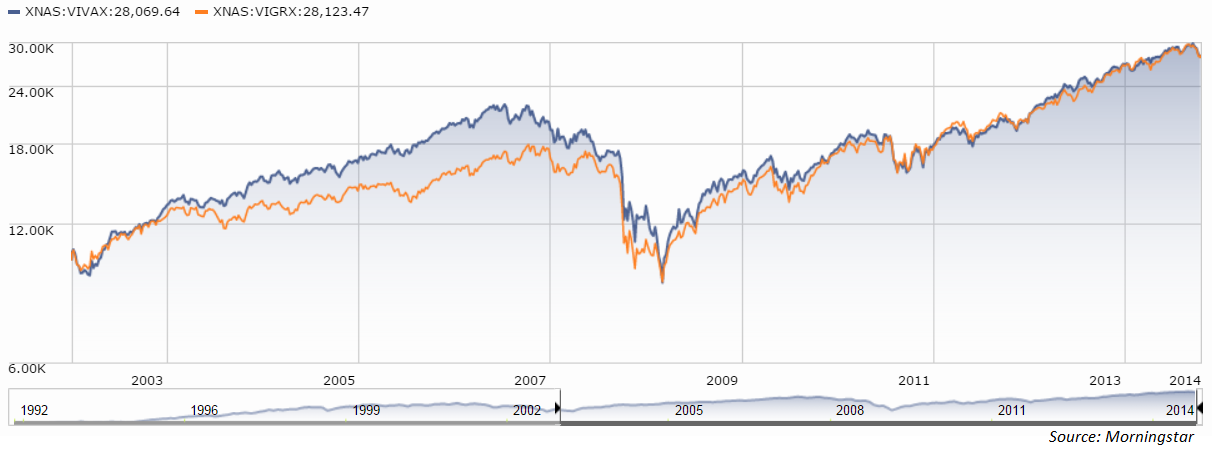
The dot-com bubble is the classic reminder that growth can become detached from reality. Many internet companies had exciting stories, but not enough profits to support their valuations. When expectations collapsed, value strategies performed far better for a period because investors rediscovered balance sheets, dividends, and earnings. The lesson was not that technology was useless. The lesson was that price still matters, even when the future is genuinely exciting.
The 2022 market offered another example. Inflation surged, interest rates rose, and long-duration growth stocks struggled. Energy and other value-oriented sectors performed comparatively well because cash flow today became more attractive than distant profits tomorrow. Then, as enthusiasm around artificial intelligence accelerated, growth leadership returned in force. The cycle did not die. It sped up, changed costumes, and made everyone check their asset allocation twice.
More recently, early-2026 market action showed how quickly leadership can shift. Value stocks gained attention during periods of volatility and rate uncertainty, while growth stocks rebounded when investors returned to AI and technology earnings. That back-and-forth is exactly why style labels still matter. They help investors understand what kind of risk they own, even when short-term performance feels chaotic.
So, Are Value and Growth Going to Matter Again?
Yesbut not because the market owes anyone a neat comeback story. Value and growth will matter because valuation, earnings, cash flow, innovation, and interest rates always matter eventually. The challenge is that “eventually” is not a calendar date. It is a market condition.
Value will matter more when investors demand stronger current fundamentals, when market leadership broadens, and when cheaper stocks offer improving earnings rather than just low multiples. Growth will matter more when companies can prove that innovation translates into durable profit, not just impressive slide decks and futuristic conference buzzwords.
The smartest approach may be to stop asking which style is “right” and start asking how each style behaves in different environments. Value can help when the market becomes price-sensitive. Growth can help when innovation drives real earnings expansion. Quality can help avoid weak businesses in both camps. Diversification can help investors stay invested long enough for any of this to matter.
Experience Notes: What Market Cycles Teach Investors
Anyone who has watched markets for more than a few years learns that investment styles do not move in polite, scheduled rotations. They lurch, stall, fake everyone out, and then suddenly make perfect sense in hindsight. Many investors first discover value after buying a “hot” growth stock at the wrong price. The company may still be excellent, the product may still be popular, and the CEO may still sound like a genius on podcasts. Yet the stock falls because expectations were too high. That is when investors learn the painful difference between a good company and a good investment.
On the other side, many investors discover growth after spending too long in low-priced stocks that never improve. A cheap stock can look comforting because the valuation appears modest, but if the business is shrinking, debt is rising, or management keeps saying “strategic transformation” without transforming anything, the discount may be deserved. That experience teaches another lesson: value investing is not about buying the lowest multiple. It is about buying mispriced fundamentals.
One useful experience from real market cycles is that emotional comfort often arrives at exactly the wrong time. Growth feels safest after it has already performed well. Value feels most attractive after it has already bounced. Investors love confirmation, but markets reward preparation. A balanced investor who owns both value and growth may feel slightly dissatisfied at all times, which is ironically a good sign. It means the portfolio is not built entirely around one market mood.
Another lesson is that patience is easier in theory than in a brokerage account. A value strategy can lag for years while expensive growth stocks dominate. A growth strategy can suffer sharp drawdowns when rates rise or earnings disappoint. The investor’s real edge is not predicting every rotation; it is knowing why each holding exists before the rotation arrives. If the reason for owning something is clear, temporary underperformance becomes easier to tolerate. If the reason is “it was going up,” the exit plan usually becomes “panic elegantly.”
Experienced investors also learn to respect rebalancing. When growth becomes a very large portion of a portfolio, trimming some gains can feel foolishuntil concentration risk appears. When value becomes deeply unpopular, adding exposure can feel uncomfortableuntil the market broadens. Rebalancing is not glamorous. Nobody writes heroic movie scenes about restoring a portfolio to target weights. But over time, it can enforce discipline when emotions want to drive the bus.
The final experience is humility. Markets can make intelligent people look silly for long stretches. Value can be early. Growth can be overextended and still keep rising. Interest rates can surprise. Inflation can linger. Earnings can beat expectations. The best investors do not need to win every style cycle. They need a process that survives many cycles. Value and growth are not dead. They are tools. Used thoughtfully, they help investors understand risk, opportunity, and price. Used carelessly, they become labels slapped onto wishful thinking.
Conclusion
Value and growth are going to matter again because they never truly stopped mattering. What changed was the market’s focus. In a narrow, momentum-driven market, style discipline can look outdated. In a broader, more valuation-sensitive market, it can look brilliant. The truth sits somewhere in the middle.
Investors should not wait for a perfect signal that value or growth is “back.” By the time the headline arrives, the rotation may already be underway. Instead, focus on valuation, earnings quality, cash flow, competitive advantage, and portfolio balance. Growth deserves attention when innovation produces real profits. Value deserves attention when low prices meet improving fundamentals. Both deserve respect, and neither deserves blind loyalty.
The market may continue to reward AI leaders and high-quality growth companies. It may also broaden into financials, industrials, energy, healthcare, and other value-heavy areas. The winning answer may not be value or growth. It may be value-aware growth, growth-aware value, and enough discipline to avoid buying yesterday’s excitement at tomorrow’s regret.