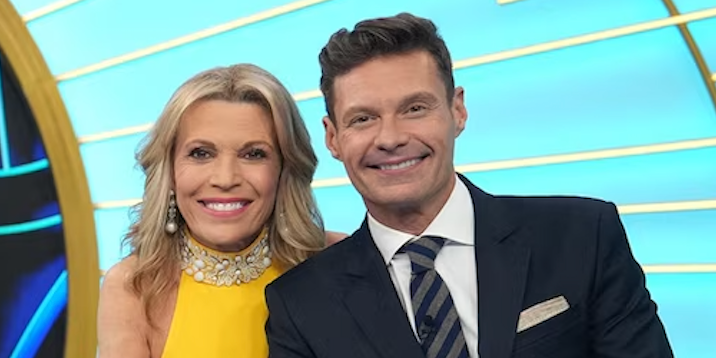
Replacing a television legend is usually the kind of job that comes with a giant spotlight, a tiny margin for error, and about twelve million armchair critics saying, “Well, that’s not how Pat did it.” So when Ryan Seacrest stepped into the host role on Wheel of Fortune, the big question was not whether he could read a puzzle board or smile on cue. Of course he could. The real question was whether America would keep spinning along with him.
The answer, at least by the numbers that matter most in television, is a loud and cheerful yes. Wheel of Fortune did not merely survive the post-Pat Sajak transition. It came out swinging, posting a huge premiere, a strong first month, and enough momentum to make the phrase “number 1” more than just a flashy headline. In key ratings windows, Seacrest helped the iconic game show reclaim bragging rights in a media world that rarely lets old-school TV look cool.
That is no small feat. This is not a shiny new streaming thriller with dragons, conspiracies, and a budget the size of a small moon. This is a puzzle board, a spinning wheel, and a format viewers already know by heart. And somehow, that very familiarity turned into the show’s superpower. Seacrest didn’t need to reinvent the wheel. He just had to keep it rolling without driving it into a decorative fern.
Why the “Number 1” Claim Actually Matters
Headlines love the phrase “number 1” because it sounds like a trophy with glitter on it. But in the case of Wheel of Fortune, the claim has real substance. During Ryan Seacrest’s first week as host, the show ranked as the top program in syndication. That alone was a strong opening statement, the television equivalent of walking into a crowded room and somehow getting everyone to stop checking their phones.
Even more impressive, the show’s early performance was not just a curiosity bump driven by people tuning in to see the new guy. The premiere episode drew enormous attention, and the first month of Seacrest’s run pushed Wheel of Fortune into elite company. In that period, it was described as the most-watched entertainment show across broadcast, cable, and syndication. That is a remarkable result for a format that first became a household habit decades ago.
Put simply, Seacrest did not inherit a fading nostalgia machine. He inherited a franchise with enormous emotional equity and then proved that the audience was still very much alive, loyal, and willing to embrace a new face at center stage. In television terms, that is about as close as you get to threading a needle while riding a roller coaster.
The Pat Sajak Problem, Also Known as “How Do You Replace a Legend?”
Every successful long-running show eventually collides with the same uncomfortable truth: no icon stays forever. Pat Sajak was not just the host of Wheel of Fortune; he was part of the furniture in the best possible way. He brought steadiness, timing, dry humor, and the kind of confidence that only comes from years of making the job look effortless. When he left, viewers were not just losing a presenter. They were saying goodbye to a nightly routine that felt woven into the culture.
That made Seacrest’s assignment uniquely difficult. He had to be familiar without feeling like an imitation. He had to honor the old era without looking trapped inside it. And he had to do all this on a show where the audience notices everything: the set, the pace, the chemistry, the contestant energy, even the amount of sparkle in the room. Wheel viewers are loyal, but loyal viewers are also the first to say, “Excuse me, who moved my favorite lamp?”
To his credit, Seacrest approached the role with the right instinct. He did not arrive trying to turn Wheel of Fortune into a brand-new show with an identity crisis. Instead, he treated the format like a classic car: polish it, respect it, maybe improve the ride a little, but do not paint flames on the side and pretend that is modernization.
Ryan Seacrest’s Biggest Advantage Was Never Just Fame
At first glance, Seacrest seemed like the obvious television professional for the job. He has hosted live events, talent competitions, countdown shows, radio programs, and enough major broadcasts to make caffeine nervous. But his real advantage on Wheel of Fortune is not simply experience. It is rhythm.
Game shows live or die by rhythm. A host has to manage contestants, keep the pace moving, explain the stakes, react quickly, and leave room for excitement without turning every vowel purchase into an Oscar speech. Seacrest has spent years mastering that kind of tempo. He knows how to steer a room, rescue a slow moment, and hand attention back to the players without making the whole thing feel mechanical.
That matters on Wheel because the format depends on warmth. The audience wants the contestants to have their moment. The host is there to guide, not dominate. Seacrest understands this kind of television hosting better than many people who are technically more “prestige” names. He knows when to brighten the energy and when to back off. That balance helped ease the transition for viewers who were prepared to be skeptical.
He Brought Polish Without Feeling Too Slick
One of the more interesting parts of Seacrest’s early run is that he managed to avoid the biggest trap of all: over-hosting. Because he is so associated with big TV moments, there was always a chance he would come in too glossy, too fast, too “event television” for a format built on comfort and habit. Instead, he mostly kept things light, friendly, and focused.
That restraint probably helped the ratings story. Viewers did not feel like they were being asked to accept a complete reboot. They were being asked to continue watching a show they already loved, with a host who understood the assignment. In the age of unnecessary reinvention, that may be the most underrated skill in television.
Vanna White Helped Turn the Transition Into a Handoff, Not a Shock
No discussion of Seacrest’s early success is complete without Vanna White. Her presence gave the new era continuity, credibility, and emotional stability. Viewers might have been willing to accept one major change at a time, but changing both the host and the show’s most enduring co-star all at once would have felt like asking America to do a triple backflip before dinner.
White’s role in the transition was bigger than the puzzle board. She represented the living bridge between the Pat Sajak era and the Ryan Seacrest era. Her chemistry with Seacrest did not need to be identical to what viewers had seen for years. It just needed to feel relaxed, respectful, and real. In the early episodes, that came through. The vibe was less “awkward corporate merger” and more “okay, this might actually work.”
That sense of continuity matters because Wheel of Fortune is not watched like a disposable content item. It is watched like a ritual. The audience wants reassurance that the ritual still belongs to them. Keeping White in place helped send that message loudly and clearly.
What the Ratings Say About the Audience
The success of Seacrest’s debut tells us something bigger than “popular host joins popular show and good things happen.” It reveals that broadcast-style appointment viewing still has serious power when the brand is trusted enough. Wheel of Fortune is one of the few programs left that spans generations with almost suspicious ease. Grandparents watch it. Parents watch it. Kids may not sit perfectly still through every puzzle, but they absolutely know when someone just missed an obvious answer and accidentally caused a living room meltdown.
In a fragmented media environment, that kind of cross-generational appeal is incredibly valuable. Most shows today are designed to win a niche, dominate a platform, or generate social chatter for one weekend before disappearing into the algorithmic fog. Wheel plays a different game. It aims to be reliable, familiar, and widely accessible. The ratings under Seacrest show that this strategy is not outdated. It is rare.
There is also a psychological element at work. Viewers do not necessarily tune in to Wheel of Fortune because they want a revolution. They tune in because they want a little fun, a little predictability, and the deeply human thrill of yelling the correct answer at the television before the contestant does. Seacrest’s arrival did not disrupt that pleasure. In many ways, he protected it.
Not Everyone Loved Every Change, and That Is Part of the Story Too
Of course, any major host transition comes with noise. Some viewers missed Sajak immediately. Others felt the set looked busier, the pacing slightly flashier, or the overall tone a bit more modern than they preferred. That criticism was not surprising. In fact, it was inevitable. When a show has been part of everyday life for decades, even a tiny design tweak can feel like someone rearranged your entire kitchen.
But here is the important part: criticism did not stop the ratings momentum. That is often the real test. Social chatter can be loud, dramatic, and wildly confident, but the ratings tell you whether people actually left the show behind. In this case, they largely did not. They sampled the new version, stayed with it, and helped turn Seacrest’s first season into a tangible success story.
That does not mean every critique was wrong. Some of it probably reflected a genuine desire for the series to keep its timeless identity. But the overall audience response suggests that Seacrest found the sweet spot between evolution and familiarity. He did enough to feel fresh, but not so much that the show lost its center.
Why This Matters for the Future of Legacy TV
Wheel of Fortune is more than a game show. It is a case study in how legacy television can survive a seismic change without breaking audience trust. That matters because many long-running franchises are facing the same problem: beloved stars age out, viewing habits shift, and the culture becomes more fragmented by the minute. The instinct is often to either fossilize completely or overcorrect with a full-blown makeover. Neither option is ideal.
Seacrest’s first stretch as host offers a better model. Respect the brand. Keep the core emotional promise intact. Let the new host bring professional energy without turning the whole show into a self-conscious reinvention project. And most importantly, remember why people loved the series in the first place. That is the secret sauce. Not glitz. Not noise. Not panic. Just clarity about what the show is supposed to do every night.
For Wheel of Fortune, that job is simple: entertain families, celebrate ordinary people, and make spelling feel weirdly thrilling. Somehow, against all odds, that recipe still works.
The Verdict: Yes, Ryan Seacrest Has a Real Ratings Win
So, is Wheel of Fortune really number one with Ryan Seacrest as host? In the most meaningful recent ratings snapshots, yes. The show opened as the top program in syndication during his debut week, posted one of its best recent starts, and turned its first month into a major audience victory. Even after the novelty factor faded, the season still held enough strength to finish with year-over-year improvement.
That is not just a polite success. That is a strong transition by any television standard. Seacrest did not merely avoid disaster. He helped prove that one of America’s most familiar game shows can keep thriving in a new era without sacrificing what made it beloved in the first place.
And maybe that is the biggest lesson here. The wheel still spins. The puzzles still tease. The audience still plays along from the couch with suspicious confidence. The host is different, but the magic remains recognizable. In television, that kind of continuity is not boring. It is almost miraculous.
500 More Words on the Experience of Watching the Ryan Seacrest Era
One of the most interesting experiences around Seacrest’s arrival has been the emotional layering of it all. Watching the new era of Wheel of Fortune is not just about judging a host. It is about watching a familiar ritual evolve in real time. For many viewers, the show is tied to dinner, family routines, childhood memories, or the simple comfort of hearing the familiar music after a long day. So when Seacrest walked out for his first episode, people were not just evaluating a television performer. They were measuring whether a tiny piece of their routine still felt like home.
That kind of experience is rare now. Most modern TV arrives with the expectation that viewers binge, react, meme it for 48 hours, and move on. Wheel of Fortune operates differently. It asks almost nothing from the audience except attention, a little patience, and a willingness to shout “HOW DID YOU NOT GET THAT?” at least once per episode. In return, it gives people something dependable. Seacrest stepped into that space with a style that was energetic but not chaotic, polished but not icy, familiar but not too rehearsed. That balance made the experience easier than many skeptics expected.
There is also a generational dimension to the viewing experience. Some longtime fans came in defensive because Pat Sajak had become inseparable from the format. Younger viewers, meanwhile, often knew Seacrest from other major shows and were more open to the transition from the start. What happened on screen was a kind of quiet meeting point between those groups. Older fans got continuity through the format and Vanna White’s presence. Younger viewers got a host whose media persona already felt current. The result was not a culture war over a game show. It was more like a negotiated peace treaty with bright lights and consonants.
Another part of the experience has been the social conversation around the show’s tone. Some viewers loved the added pep. Others thought the set, editing, or contestant energy felt a bit louder than before. That tension is actually revealing. It shows how carefully audiences watch shows they consider part of their lives. Nobody writes passionate comments about a program they do not care about. If anything, the early debate confirmed that Wheel still matters to people in a deeply personal way. And the fact that the audience stayed with the show even while debating its style says a lot about the franchise’s durability.
Then there is the pure couch experience, which may be the most important of all. Does the show still feel fun? Does the host keep it moving? Do the contestants still seem like real people having one surreal evening under very bright lights? On those points, Seacrest’s era has largely delivered. The games remain quick, the stakes feel clear, and the atmosphere still carries that classic mix of nerves, cheerfulness, and accidental comedy. In other words, viewers still get what they came for. The host has changed, but the nightly pleasure of playing along has not. That is probably the most meaningful victory of all.
Conclusion
Ryan Seacrest’s first run as host did not erase the memory of Pat Sajak, nor should it have. What it did do was something arguably harder: it convinced viewers that Wheel of Fortune could move forward without losing its identity. The ratings proved there was real curiosity. The sustained audience showed there was real acceptance. And the tone of the show, while slightly refreshed, remained true to the familiar formula that made generations of viewers love it in the first place.
In the end, the story is bigger than one host swap. It is about the resilience of a classic format, the importance of trust in television, and the rare ability of a legacy show to stay relevant without becoming desperate. Wheel of Fortune with Ryan Seacrest is not just surviving. In the windows that count most for this conversation, it is winning. That makes the “number 1” headline feel less like hype and more like a pretty fair summary of a very successful spin.