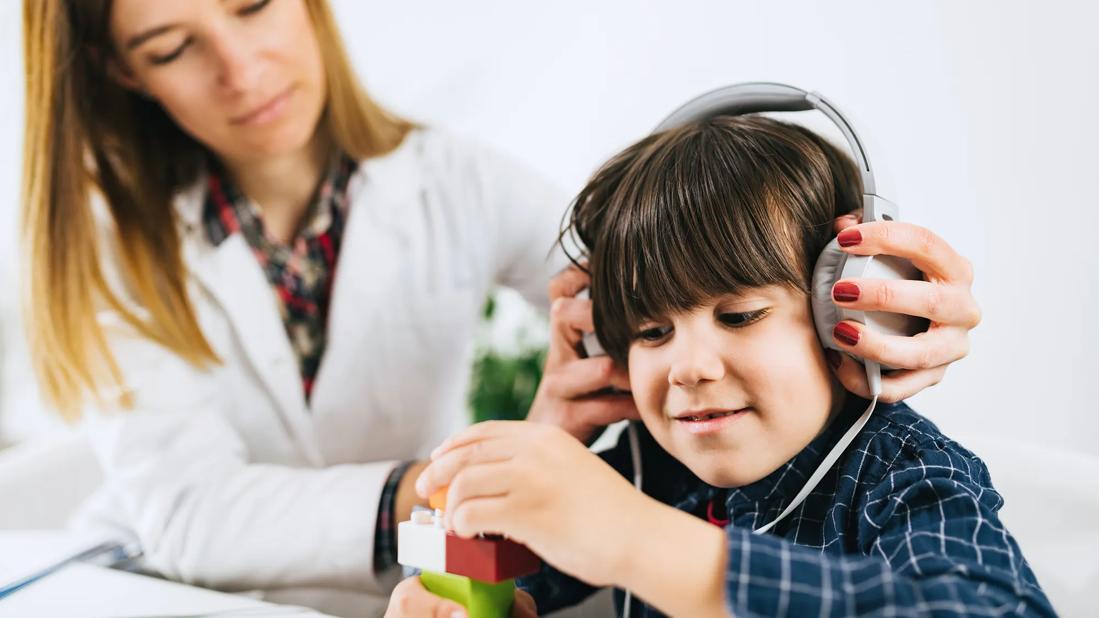
School hearing screenings are one of those quiet little public-health wins that rarely get a parade. No confetti. No marching band. Just a set of headphones, a few beeps, and a school nurse or screener trying to figure out whether a child is hearing well enough to learn, socialize, and survive group work without missing half the instructions.
That matters more than many families realize. A child can pass a newborn hearing screening and still develop hearing changes later. They can also have temporary issues, like earwax, congestion, or middle-ear fluid, that make classroom listening much harder than it looks from the outside. And because kids are not always great at announcing, “Excuse me, I may have a mild conductive hearing issue,” school screenings play a valuable backup role.
If you have ever gotten a note from school saying your child “did not pass” a hearing screening, take a breath. It does not automatically mean permanent hearing loss. It does mean the result deserves attention. That is the big idea behind school hearing screenings: catch possible problems early, sort out what is temporary from what is not, and help students get the support they need before hearing trouble starts messing with language, learning, behavior, or confidence.
Why School Hearing Screenings Still Matter
Many parents assume hearing problems would have already been found in infancy. That is a reasonable assumption, but it is not the whole story. Hearing can change over time. Some children develop hearing issues later because of infections, noise exposure, genetics, certain medical conditions, or other risk factors. Others may have mild or one-sided hearing changes that are easy to miss at home because kids adapt brilliantly. Sometimes a child becomes the master of nodding, guessing, and watching everyone else before answering. Impressive? Yes. Ideal for phonics, spelling, and classroom discussion? Not exactly.
That is why hearing screenings in schools remain important even in the era of newborn testing. They help flag students who may be struggling to hear in environments where hearing matters most: noisy classrooms, cafeterias, gym spaces, and group instruction. A child does not need profound hearing loss to have a hard time in school. Even mild hearing difficulty can make it tougher to catch soft speech sounds, follow directions, hear from across the room, and stay engaged without seeming distracted.
In other words, a school hearing screening is not random bureaucracy with clipboards. It is an attempt to spot a problem before it starts looking like something else, such as inattention, behavior issues, reading struggles, or “selective listening.” Sometimes kids really are ignoring us. Sometimes they just did not hear the sentence in the first place. Parenting keeps the mystery alive.
What a School Hearing Screening Actually Is
Screening is not the same as diagnosis
This is the most important distinction in the whole conversation. A hearing screening is a quick check to find out whether a child might have a hearing problem. It is usually a pass-or-refer process, not a full medical diagnosis. Think of it as a first filter, not a final answer.
A complete hearing evaluation is much more detailed and is typically performed by an audiologist. That is the step that determines whether there is hearing loss, what type it is, how much hearing is affected, and what kind of next steps make sense.
How screenings are commonly done
For many school-age children, the most common method is pure-tone screening. The student wears headphones and listens for tones at specific pitches and volumes. They might raise a hand, press a button, or otherwise signal when they hear the sound. It sounds simple because it is. The challenge is that it depends on attention, cooperation, and a reasonably quiet setting. So yes, a hallway that sounds like a marching zoo is not ideal.
Younger children, or students who cannot reliably complete a standard headphone screening, may be screened with other methods. These can include otoacoustic emissions, often called OAEs, which check inner-ear responses, or tympanometry, which looks at middle-ear function and can help identify issues like fluid behind the eardrum. Some children may also need play-based testing or a different diagnostic approach altogether.
When Schools Usually Screen Students
Here is where parents often get tripped up: there is no single national school schedule that every district follows. Hearing screening rules vary by state, and school systems may have their own grade-based routines. Some schools screen students at first entry, then again in certain grades. Others screen all or most students at set intervals, and many schools will also screen students who are new to the district, referred by teachers, or already showing signs of a possible hearing problem.
Professional pediatric guidance supports periodic hearing checks across childhood and adolescence, not just once and done. That makes sense because hearing is not static, and the listening demands placed on children change dramatically as they move from learning basic sounds and words to managing classrooms, lectures, technology, sports, and earbuds that believe volume knobs are a personal challenge.
So if your child was screened in kindergarten, third grade, middle school, or after transferring schools, that is normal. If your school district screens on a different timeline, that may be normal too. The key point is this: school hearing screening is common, useful, and often driven by state law, district policy, and school health resources.
Why a Child Might Not Pass a Screening
A “did not pass” result is a signal, not a sentence. There are many reasons a child may not pass a school hearing screening, and not all of them mean permanent hearing loss.
Temporary physical causes
One of the biggest reasons children do not pass is something temporary or treatable. Earwax can block sound. A cold can change ear pressure. Middle-ear fluid can make sound seem muffled. An ear infection can throw everything off. This is especially common in younger children, but it can happen at any age.
Testing-day issues
Sometimes the problem is not the ears. Sometimes it is the setting. Background noise, a rushed explanation, headphones that need repositioning, a child who is nervous, tired, confused, or simply having a very committed off day can all affect results. A screening is only as good as the environment and the student’s participation.
Actual hearing difficulty
And yes, sometimes the screening is picking up a real hearing problem. That may include conductive hearing issues involving the outer or middle ear, sensorineural hearing changes involving the inner ear, one-sided hearing difficulty, high-frequency hearing changes, or hearing problems that have developed since early childhood.
This is exactly why follow-up matters. A school screening is supposed to cast a careful net. It is better to investigate a questionable result than to shrug and hope the beeps sort themselves out.
What Parents Should Do After a School Referral
Do not panic, but do not procrastinate
The best response lives right in the sweet spot between panic and denial. No doom spirals. No “it was probably nothing” for six months. Read the notice, see whether the school plans a rescreen or recommends direct follow-up, and move on it promptly.
Ask useful questions
It helps to ask what type of screening was done, whether one or both ears were affected, and whether the school noted anything unusual about your child’s participation or the testing conditions. If your child recently had a cold, allergies, congestion, ear pain, or frequent ear infections, mention that too.
Follow through with medical or audiology care
Depending on the situation, the next step may be a rescreen, a pediatrician visit, an audiology evaluation, or sometimes an ENT referral. A full audiology evaluation is the gold-standard next step when screening results stay outside the expected range or when there are ongoing concerns from parents, teachers, or clinicians.
Try not to get stuck in repeat-screening limbo forever. A quick recheck can be appropriate, especially if there was illness or obvious distraction, but endless “let’s try again later” delays are not helpful. Children need answers, not a sequel trilogy of beeps.
Signs a Student May Be Having Hearing Trouble at School
Not every child with hearing difficulty will obviously complain about it. In fact, many do not. They may think everyone hears that way. Or they may compensate so well that adults miss the pattern.
Common signs include asking for repetition, seeming inattentive, misunderstanding directions, watching other students before starting a task, favoring one ear, turning the TV or tablet volume up, speaking unusually loudly or softly, trouble hearing in noisy places, or slipping academically for reasons nobody can quite explain. Some children may also show frustration, withdrawal, or fatigue from the constant work of trying to piece together what they missed.
Teachers sometimes notice the problem first because classrooms are tough listening environments. A child may hear fairly well one-on-one in a quiet room and still struggle when the teacher is across the room, the air conditioner is humming, someone is sharpening a pencil like it is a competitive sport, and half the class has decided now is the perfect time to unzip something loudly.
Why Older Kids and Teens Need Attention Too
School hearing screenings are not just a little-kid issue. Older students can develop hearing problems as well, and one growing concern is noise exposure. Loud music, earbuds, gaming headsets, concerts, sporting events, and other high-volume environments can put hearing at risk over time. A teen who hears “fine enough” in a quiet kitchen may still struggle with high-frequency sounds, speech in noise, or the subtle clarity needed in class discussions.
This is one reason experts continue to support hearing checks beyond the early grades. Hearing problems in older students may show up as missing instructions, zoning out in class, social withdrawal, or difficulty in noisy environments rather than classic signs parents associate with hearing loss.
How Schools and Families Can Work Together
The best outcomes usually happen when schools and families treat screening as the start of communication, not the end of it. If a child is being evaluated or has confirmed hearing difficulty, teachers, school nurses, audiologists, and parents can work together on practical support. That may mean preferential seating, reducing background noise when possible, making sure the child can see the speaker’s face, checking understanding after verbal instructions, or using classroom amplification or assistive listening technology when appropriate.
Documentation matters too. Screening results, referrals, follow-up visits, and confirmed diagnoses should not float around in the educational universe as vague rumors. Clear records help schools know whether a student needs another screen, medical monitoring, classroom accommodations, or formal educational support.
The Bottom Line
School hearing screenings are quick, imperfect, and extremely useful. They are not designed to diagnose every cause of hearing trouble, but they are designed to catch the possibility that a child is not hearing as well as they should. That simple goal can make a huge difference.
If your child passes, great. If your child does not pass, do not assume the worst, but do treat it seriously. Sometimes the answer is earwax or fluid. Sometimes it is a mild issue that still affects learning. Sometimes it is the first clue to a bigger hearing concern that deserves timely care. Either way, the screening has done its job by raising a flag.
And in school, where so much learning depends on listening, that flag matters. Kids should not have to work twice as hard just to hear the directions, follow the lesson, or join the conversation. A few well-timed beeps at school can be the reason they do not have to.
Common Real-World Experiences Families and Schools Often Describe
One of the most common experiences parents describe is surprise. Their child seems chatty at home, jokes around normally, and can absolutely hear the word “dessert” from two rooms away, so a school hearing referral feels out of nowhere. Then they start looking back and notice the smaller clues: the child saying “what?” more often, turning one ear toward the speaker, or getting stuck when directions are given fast. What felt sudden was often building quietly in the background.
Another frequent experience is the emotional whiplash of getting a note from school. Families often read “did not pass” and immediately imagine something permanent and scary. In real life, many follow-up visits reveal temporary problems like middle-ear fluid, congestion, or earwax. Parents often say the hardest part was the waiting, not the appointment itself. Once they reached the pediatrician or audiologist, the process usually felt more manageable and much less dramatic than the imagination had suggested.
Students have their own version of this experience. Some are nervous before follow-up testing because they think they are in trouble or think they somehow “failed” a test. Many feel relieved when adults explain that hearing screening is just a check, not a grade. Audiology visits can be surprisingly kid-friendly. Children often do better than parents expect, especially when testing is turned into a game or when the audiologist explains what is happening in simple terms.
Teachers and school nurses often describe a different pattern: they notice classroom behaviors long before anyone is talking about hearing. A student may drift during group instruction, miss endings of words, copy classmates before starting work, or seem inconsistent from day to day. Once hearing is checked, those behaviors suddenly make more sense. That can be a huge turning point because it shifts the conversation from blame to support.
There is also the experience of partial relief. Sometimes a child’s hearing is technically “within range,” but the family and school still learn something useful from the process. Maybe the issue is not permanent hearing loss but frequent ear infections, noise exposure, attention challenges, or a need for better classroom seating. The screening still helped because it pushed everyone to look more closely at why listening was hard.
For older students, the experience can be even subtler. Teens do not always volunteer that noisy cafeterias are exhausting or that teachers sound muddy when they talk while facing the whiteboard. They may just tune out, act irritated, or keep asking friends what was said. Families are often surprised to learn that hearing concerns in middle school or high school are not unusual and do not always look dramatic.
Finally, one of the most reassuring experiences families report is that action helps. Once there is a plan, whether that means rescreening, treating an ear problem, seeing an audiologist, protecting hearing from noise, or adding classroom supports, the uncertainty starts to shrink. The school note stops being a mysterious warning and becomes what it was supposed to be all along: an early nudge toward getting a child the help they need.