Some cookware whispers. A discada shows up with smoke, sizzling meat, warm tortillas, and the confidence of a cowboy who knows dinner is about to be excellent.
What Is a Discada?
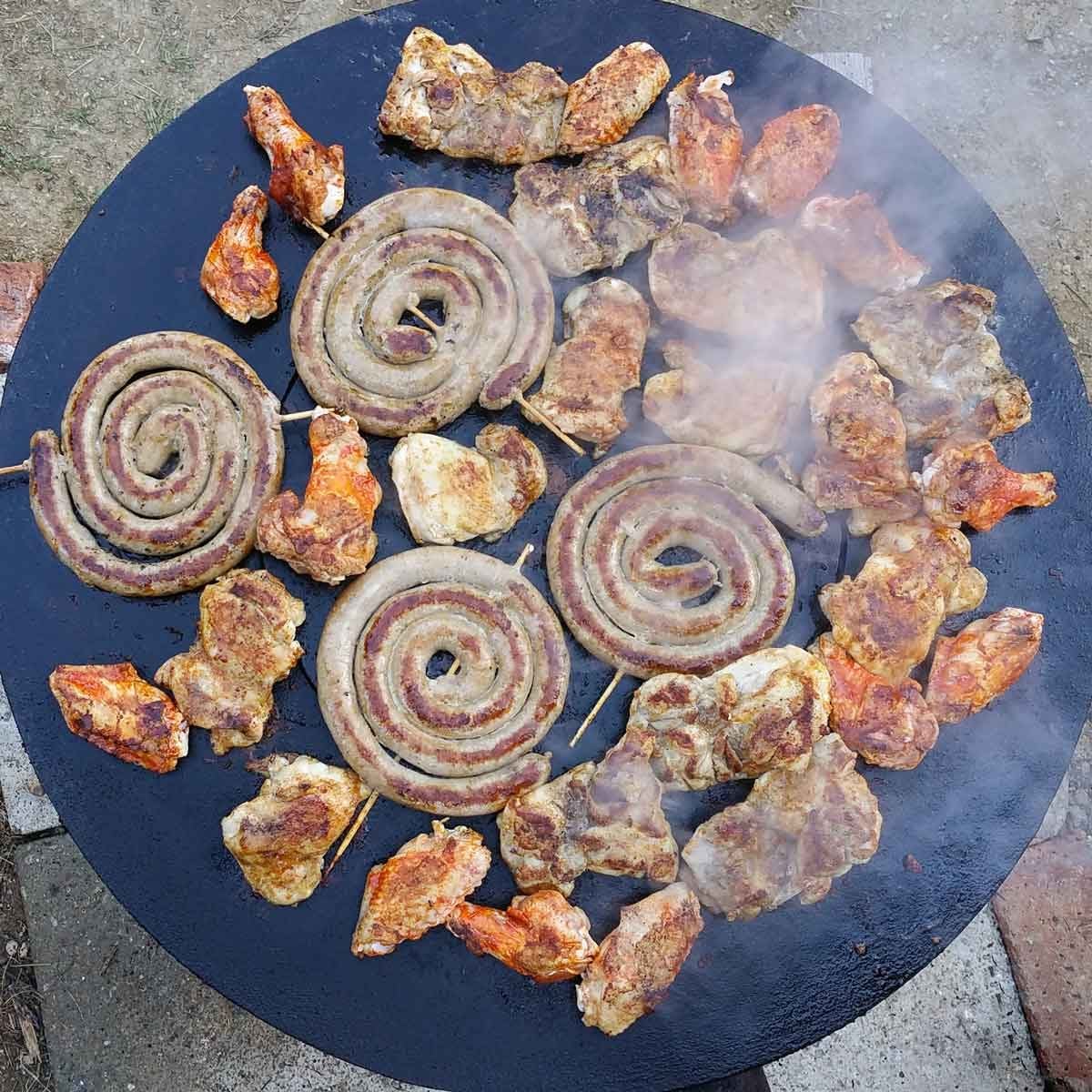
A discada is both a cooking tool and, depending on who is talking, the glorious pile of food cooked on it. The tool is a wide, shallow, concave metal disc traditionally made from an agricultural plow disc. In Northern Mexico and the Southwestern United States, it is also called a disco, plow disc cooker, disc grill, or the very lovable nickname: cowboy wok.
The name makes sense once you see it. A discada looks like a wok that spent a summer working on a ranch. It is broad, heavy, curved toward the center, and usually made from steel or iron. The center gets the most heat, while the outer rim stays gentler. That shape creates cooking zones without needing separate pans, which is why people use it for everything from tacos to breakfast, fajitas, vegetables, seafood, and big outdoor meals where one tiny skillet would simply cry for help.
But the discada is not just a piece of metal. It represents a style of cooking built around practicality, flavor, and feeding a crowd. In ranching culture, especially in northern Mexican regions such as Chihuahua, Durango, Nuevo León, and surrounding border areas, cooks used what they had: meat, fire, tortillas, vegetables, and a hardworking metal disc that could handle heat like a champ.
Discada as a Dish: The Mixed-Meat Legend
When someone says, “We’re making discada,” they may mean the dish itself: a rich, savory mixture of meats and vegetables cooked in stages on the disc. A traditional discada recipe often includes bacon, Mexican chorizo, beef, pork, ham, sausage, onions, peppers, tomatoes, garlic, jalapeños or serranos, and sometimes beer to help build a saucy, deeply seasoned base.
The process is part of the magic. Bacon usually goes first, rendering fat into the hot center of the disc. Chorizo follows with spice and color. Then come beef, pork, ham, or sausage, each taking a turn in the hottest zone before being moved up the sides. Vegetables go in later, soaking up the browned bits and meat juices. By the end, everything is folded together into one smoky, juicy mixture ready for tortillas, salsa, cilantro, lime, and possibly a quiet moment of emotional reflection.
Discada tacos are especially popular because they turn a large batch of food into easy, hand-held servings. Warm tortillas can rest around the outer rim of the disc, staying flexible without drying out. It is smart cooking: the center sizzles, the sides hold, the rim warms, and everybody stands nearby pretending they are “just checking” when they are clearly stealing bites.
Why Cook on a Discada Instead of a Grill or Skillet?
1. It Creates Natural Heat Zones
The curved design of a discada is the main reason cooks love it. The center is hot enough for browning meat, while the sloped sides are better for holding cooked ingredients, softening vegetables, or warming tortillas. On a flat griddle, everything competes for the same heat. On a discada, the pan practically gives you a traffic map: sear here, rest there, warm over there.
2. It Builds Flavor in Layers
A discada is excellent at capturing rendered fat, juices, spices, and browned bits in the center. Instead of losing flavor through grill grates, the liquid and seasoning stay in the cooking surface. That means bacon fat can season chorizo, chorizo can season beef, beef can season vegetables, and vegetables can return the favor by adding sweetness and moisture. It is less “one-pan meal” and more “one-pan flavor committee.”
3. It Feeds a Crowd Without Drama
Discadas are popular for backyard parties, tailgates, camping meals, family gatherings, and outdoor celebrations because they can handle volume. A normal skillet may be fine for two people. A discada is for the moment your cousin brings three friends, your neighbor smells chorizo from across the fence, and someone suddenly announces they “haven’t eaten all day.”
4. It Is Versatile
Although discada is famous for mixed meats and tacos, the tool can do far more. You can cook fajitas, breakfast potatoes, eggs, shrimp, stir-fried vegetables, quesadilla fillings, fried rice-style dishes, burgers, sausages, peppers and onions, mushrooms, and even pancakes if your confidence is high and your heat control is decent. Think of it as outdoor cookware with range.
What Does Food Cooked on a Discada Taste Like?
Discada cooking gives food a combination of seared, smoky, juicy, and slightly rustic flavors. Meat browns well because of the hot steel surface. Vegetables soften in seasoned fat and juices instead of plain oil. Tortillas pick up warmth and aroma from the edge of the pan. If you add beer, broth, or salsa to the center, it reduces into a concentrated sauce that coats everything.
The final flavor depends on the ingredients, but a classic taco de discada is usually rich, savory, slightly spicy, and deeply meaty. Bacon brings smoke and salt. Chorizo brings paprika, chile, garlic, and fat. Beef adds chew and depth. Peppers and onions brighten the mixture. Lime and salsa cut through the richness so the taco does not taste like it is trying to pay rent in your arteries.
How to Use a Discada: The Basic Method
You do not need to be a ranch cook to use a discada, but you do need patience and a little organization. Start by heating the disc over a stable outdoor burner or controlled flame. Add a small amount of oil only if needed, then begin with ingredients that render fat or need the most browning. Bacon, sausage, and chorizo are common first choices.
As each ingredient cooks, push it up the sides where the heat is lower. Add the next ingredient to the center. Repeat this process until the proteins are browned and the vegetables have softened. Then bring everything back together in the middle, add seasoning, salsa, beer, broth, or tomatoes if desired, and let the mixture simmer briefly until the flavors combine.
For tacos, keep tortillas on the cooler outer edge. Serve with chopped cilantro, diced onion, salsa verde, salsa roja, lime wedges, avocado, pickled onions, or grilled pineapple. For a full plate, add rice, beans, grilled vegetables, or a simple cabbage slaw to balance the richness.
What Can You Cook on a Discada?
The short answer: a lot. The better answer: anything that benefits from high heat, open-air cooking, and a large surface. Here are practical ideas for beginners and hungry overachievers.
Classic Discada Tacos
Use bacon, chorizo, beef, ham, sausage, onions, peppers, tomatoes, garlic, and fresh tortillas. This is the signature move and the best place to start.
Breakfast Discada
Cook potatoes, onions, peppers, sausage, and bacon first. Push them to the sides, scramble eggs in the center, then combine everything. Serve in tortillas with salsa. Breakfast suddenly becomes a team sport.
Fajita-Style Discada
Sear sliced steak or chicken with onions and bell peppers. Add lime juice, cumin, garlic, and a little chile powder. Keep tortillas warm around the edge.
Seafood Discada
Shrimp, fish, scallops, and vegetables cook quickly on the hot center. Use garlic, butter, lime, and chile. Keep the heat moderate because seafood goes from “perfect” to “rubber souvenir” quickly.
Vegetable Discada
Mushrooms, zucchini, corn, onions, peppers, potatoes, and cactus paddles all work beautifully. Add beans or cheese for a satisfying vegetarian taco filling.
Choosing the Right Discada
Modern discadas are often made specifically for cooking, which is the safest and easiest route. Look for food-safe steel or carbon steel, sturdy welded handles, a stable stand or burner setup, and a size that matches your cooking style. Common sizes range from smaller backyard-friendly models to large discs built for parties.
Avoid using an old agricultural disc unless it has been properly cleaned, stripped, and confirmed safe for cooking. Farm equipment may have residues, coatings, rust, unknown metals, or contamination that do not belong anywhere near dinner. A new, food-grade discada saves time and removes the “Is this taco seasoned with mystery tractor history?” concern.
Like cast iron or carbon steel cookware, a discada usually needs seasoning. Seasoning means applying a thin layer of oil and heating it until it forms a protective cooking surface. This helps reduce sticking and protects against rust. After cooking, scrape away food bits, wash gently, dry thoroughly, and apply a light coat of oil before storing.
Discada Cooking Safety Tips
Discada cooking is fun, but it involves high heat, heavy metal, open air, and lots of meat. That combination deserves respect. Set the discada on a stable surface away from children, pets, dry leaves, and anything that looks like it might dramatically catch fire. Use long-handled tools and heat-resistant gloves because the handles and rim can get extremely hot.
For food safety, keep raw meat separate from cooked food, use clean plates and utensils, and cook meats to safe internal temperatures. A food thermometer is not a sign of weakness; it is a sign that you enjoy dinner without gambling against bacteria. Also watch rendered fat. A little fat builds flavor, but a large pool of grease can make food heavy and increase flare-up risk.
Finally, cool leftovers quickly and refrigerate them in shallow containers. Discada leftovers are fantastic in breakfast tacos, quesadillas, nachos, rice bowls, and scrambled eggs. They are less fantastic if they sit outside all afternoon while everyone debates who made the best salsa.
Why the Discada Is Having a Moment
Outdoor cooking has become more creative in American backyards. People still love grills and smokers, but many home cooks want tools that feel social, flexible, and a little theatrical. A discada checks all those boxes. It has the live-fire drama of grilling, the control of a skillet, the size of a griddle, and the personality of a family recipe that refuses to be measured precisely.
Restaurants and taco trucks have also helped introduce discada to wider audiences. In places like Texas, New Mexico, Arizona, Colorado, and California, discada tacos appear as a regional specialty with deep Mexican and borderland roots. The dish fits modern food culture because it is casual, bold, shareable, and highly customizable. It can be traditional, Tex-Mex, street-food inspired, or backyard experimental.
Most importantly, discada cooking feels communal. People gather around it. They watch the ingredients move from center to edge and back again. They smell the chorizo before they see the tacos. They argue politely about salsa. They reach for tortillas. The discada turns cooking into part of the event instead of something hidden in the kitchen while guests hover near the chip bowl.
Common Mistakes Beginners Make
Using Too Much Heat
A discada can get ripping hot, but maximum heat is not always your friend. Too much heat burns chorizo, toughens meat, and scorches garlic. Start at medium heat and adjust gradually.
Adding Everything at Once
The best discada recipes build flavor in stages. If you dump everything in at once, the ingredients steam instead of brown. Cook proteins one by one, then combine them later.
Ignoring the Grease
Rendered fat is part of the flavor, but too much can make the final dish oily. Carefully remove excess fat when needed, especially if cooking bacon, chorizo, and sausage together.
Skipping Acid and Fresh Toppings
Discada is rich. Lime juice, salsa, cilantro, onion, pickled jalapeños, radishes, or pineapple can brighten the whole dish. Without something fresh, the taco may taste heavy.
Forgetting the Tortillas
The outer edge of the discada is perfect for warming tortillas. Do not waste that advantage. A great filling in a cold tortilla is like wearing a tuxedo with wet socks.
Personal-Style Experience: What Cooking on a Discada Feels Like
The first time you cook on a discada, it can feel slightly chaotic in the best possible way. Unlike a grill, where food stays in lanes, the discada asks you to move. You are stirring bacon in the center, sliding chorizo to the side, checking peppers, warming tortillas, and pretending you are calm while five people ask, “Is it ready yet?” The answer is always “almost,” which in discada language means “stop eating the meat with your fingers.”
The most memorable part is how quickly the smell takes over the space. Bacon hits the hot steel first, and suddenly everyone within conversational distance becomes extremely interested in your cooking technique. Then chorizo joins in, and the air changes. It smells like a taco stand, a backyard party, and a campfire all decided to collaborate. By the time onions and peppers go in, the discada is no longer just cookware. It is the center of gravity.
Cooking on it also teaches timing in a very practical way. You learn that the middle is powerful and the sides are forgiving. You learn that small pieces cook faster than your confidence expects. You learn that tortillas warm beautifully on the rim, but if you forget them too long, they become edible postcards. You learn that people will gather closer as the food gets better, so long-handled tools are not optional. They are personal space with a handle.
One of the best experiences is serving straight from the disc. There is something satisfying about folding the meats and vegetables together at the end, squeezing lime over the top, and letting people build tacos right there. Nobody asks for a formal plated presentation. Nobody needs a garnish placed with tweezers. Discada food is generous, loud, fragrant, and honest. It says, “Here is a tortilla. Make good choices.”
The leftovers are another reward. Discada mixture tastes even better the next morning because the flavors have settled into each other. Add it to scrambled eggs, tuck it into quesadillas, spoon it over rice, or make breakfast tacos with salsa and avocado. It is the kind of leftover that makes you open the refrigerator with purpose.
After a few cooks, the discada starts to feel less like a novelty and more like a tool you understand. You stop worrying about perfection and start enjoying the rhythm: center, side, stir, taste, warm tortillas, repeat. That rhythm is why people fall in love with discada cooking. It is not just efficient. It is fun. And in a world full of quiet appliances and lonely weeknight dinners, a giant sizzling cowboy wok has a pretty strong argument.
Conclusion: Should You Cook on a Discada?
Yes, especially if you enjoy outdoor cooking, tacos, bold flavors, and meals that make people drift toward the food like cartoon characters following a pie on a windowsill. A discada is practical, durable, versatile, and deeply connected to Northern Mexican and Southwestern cooking traditions. It can sear, sauté, simmer, warm tortillas, and feed a crowd from one impressive piece of steel.
The best reason to cook on a discada is not just the flavor, although the flavor is absolutely doing its job. The best reason is the experience. Discada cooking is social. It invites people to stand around, talk, taste, and participate. It turns dinner into a small event. Whether you make classic mixed-meat discada tacos, breakfast potatoes and eggs, fajitas, shrimp, or vegetables, the disc gives you heat, space, and personality.
So, what is a discada? It is a plow-disc-inspired cooking pan, a beloved regional dish, a taco machine, a backyard conversation starter, and possibly the most charming excuse to cook outdoors. Why would you cook food on it? Because food tastes better when it comes with smoke, sizzle, warm tortillas, and just enough controlled chaos to make dinner memorable.
SEO Tags
Note: This article is written for web publication and synthesizes real culinary, regional, recipe, cookware-care, and outdoor food-safety information without inserting source links into the article body.