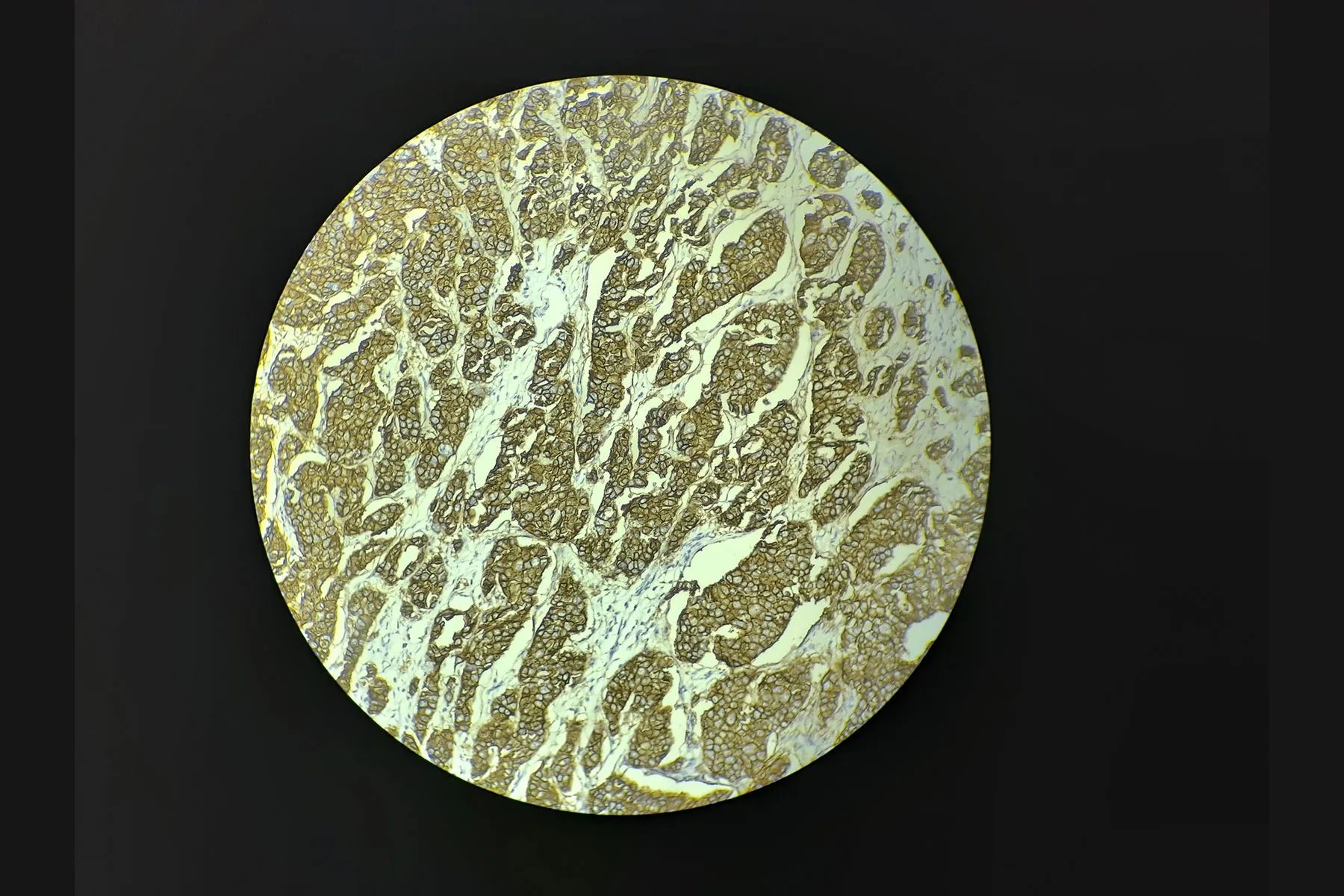
A breast cancer diagnosis can introduce an entire alphabet soup of medical abbreviations: ER, PR, HER2, IHC, ISH, FISH, and enough plus signs to make a pathology report look suspiciously like a math exam. Among these markers, HER2 is especially important because it can reveal something about how a breast cancer behaves and, just as importantly, which treatments may work against it.
HER2-positive breast cancer was once associated with a particularly aggressive course. Today, however, HER2-targeted treatments have dramatically changed the outlook. Researchers have also learned that HER2 is more complicated than a simple positive-or-negative switch. Terms such as HER2-low and HER2-ultralow now matter in certain treatment decisions, particularly for advanced breast cancer.
Understanding your HER2 status will not tell you everything about your cancer, but it gives your oncology team an important piece of the biological puzzle. Here is what HER2 means, how it is tested, how it affects treatment, and what patients may encounter along the way.
What Is HER2?
HER2 stands for human epidermal growth factor receptor 2. It is a protein found on the surface of cells, including normal breast cells. HER2 works like part of a cellular communication system, helping regulate growth, division, and repair.
The instructions for making this protein come from the ERBB2 gene, commonly called the HER2 gene. Some breast cancer cells contain extra copies of this gene, a change known as HER2 gene amplification. The result can be an excessive number of HER2 receptors on the cancer cell’s surface.
Think of a normal cell as an office with a reasonable number of phones. In a HER2-positive cancer cell, someone has apparently installed several hundred extra phones, and they are all receiving messages to grow. The result can be faster cell division and a tumor with more aggressive biological behavior.
Approximately 15% to 20% of breast cancers are traditionally classified as HER2-positive, although estimates vary somewhat depending on the population and testing criteria.
What Does HER2-Positive Breast Cancer Mean?
A breast cancer is considered HER2-positive when laboratory testing shows significant HER2 protein overexpression or HER2 gene amplification. These cancers historically tended to grow and spread faster than HER2-negative tumors.
That sounds alarming, but there is an important second half to the story: HER2 gives doctors a target. Drugs can be designed specifically to interfere with HER2 signaling or deliver cancer-killing medication directly to cells carrying HER2.
The development of trastuzumab, commonly known by the brand name Herceptin, transformed treatment for HER2-positive breast cancer. Since then, additional monoclonal antibodies, antibody-drug conjugates, and tyrosine kinase inhibitors have expanded the HER2 treatment toolbox.
HER2 Status Is Different From Cancer Stage
HER2-positive does not mean stage IV cancer. HER2 status describes a biological feature of the cancer, while stage describes factors such as tumor size, lymph node involvement, and whether cancer has spread to distant organs.
A person can have stage I HER2-positive breast cancer or metastatic HER2-positive breast cancer. The treatment approaches and prognosis can be very different.
How Doctors Test Breast Cancer for HER2
HER2 testing is generally performed on breast cancer tissue collected during a biopsy or surgery. Two major types of testing are commonly used.
Immunohistochemistry (IHC)
An IHC test measures the amount and pattern of HER2 protein visible on the cancer cell membrane. Results are usually scored as 0, 1+, 2+, or 3+.
- IHC 3+: generally classified as HER2-positive.
- IHC 2+: considered equivocal and usually requires additional testing for HER2 gene amplification.
- IHC 1+: traditionally HER2-negative, although it may fall into the clinically important HER2-low category.
- IHC 0: traditionally HER2-negative, but some tumors with very faint membrane staining can now be described as HER2-ultralow in specific treatment settings.
In Situ Hybridization and FISH
In situ hybridization (ISH), including fluorescence in situ hybridization or FISH, examines the HER2 gene rather than simply measuring protein on the cell surface. The test can determine whether cancer cells contain an increased number of HER2 gene copies.
An IHC result of 2+ combined with a positive ISH result generally supports a HER2-positive diagnosis. An IHC 2+ tumor without HER2 gene amplification is generally considered HER2-negative under the traditional positive-versus-negative classification.
HER2-Low and HER2-Ultralow Breast Cancer
This is where the HER2 vocabulary has become more interestingand admittedly less convenient for anyone hoping for a simple yes-or-no answer.
HER2-low commonly refers to tumors with an IHC score of 1+ or an IHC score of 2+ with a negative ISH result. These cancers are not HER2-positive according to standard HER2 classification, but they contain enough HER2 protein to be targeted by certain newer antibody-drug conjugates.
HER2-ultralow refers to certain tumors scored IHC 0 that nevertheless show faint HER2 membrane staining in a small proportion of tumor cells. This distinction has become clinically relevant because the FDA has expanded the use of trastuzumab deruxtecan for certain people with hormone receptor-positive, metastatic HER2-low or HER2-ultralow breast cancer.
Importantly, professional pathology guidance continues to emphasize accurate reporting of IHC and ISH findings rather than treating HER2-low as an entirely separate biological disease subtype. In other words, HER2-low is primarily a treatment-selection concept rather than simply a new replacement for traditional HER2 classification.
HER2 Status and Hormone Receptors
HER2 is only one biomarker doctors evaluate. Breast cancer is also tested for estrogen receptors (ER) and progesterone receptors (PR).
A tumor might therefore be:
- HER2-positive and hormone receptor-positive
- HER2-positive and hormone receptor-negative
- HER2-negative and hormone receptor-positive
- HER2-negative, ER-negative, and PR-negative, known as triple-negative breast cancer
A tumor that is ER-positive, PR-positive, and HER2-positive is sometimes informally called triple-positive breast cancer. Hormone receptor status matters because patients may benefit from endocrine therapy in addition to HER2-targeted treatment.
How HER2-Positive Breast Cancer Is Treated
Treatment depends on much more than HER2 status. Doctors consider cancer stage, tumor size, lymph node involvement, hormone receptors, previous therapy, other medical conditions, menopausal status, and individual preferences.
Treatment for Early HER2-Positive Breast Cancer
Early-stage treatment can involve surgery, chemotherapy, radiation therapy, and HER2-targeted medication. For some smaller tumors, surgery may occur first. For larger tumors or cancers involving lymph nodes, systemic treatment may be given before surgery.
This preoperative approach is called neoadjuvant therapy. It can shrink the tumor and also provide valuable information about how strongly the cancer responds to treatment.
Trastuzumab has long been a cornerstone of therapy. Pertuzumab may be added for selected patients, particularly when recurrence risk is higher. Historically, approximately one year of HER2-directed therapy has been common in the adjuvant setting.
Another important concept is pathologic complete response, or pCR. After neoadjuvant therapy, pathologists examine tissue removed during surgery. If no residual invasive cancer is found in the breast and sampled lymph nodes, that strong response is generally associated with a favorable outlook.
What Happens If Cancer Remains After Neoadjuvant Therapy?
Residual invasive cancer after treatment can indicate a greater risk of recurrence, so postoperative therapy may be intensified or changed.
The treatment landscape continues to evolve rapidly. In May 2026, the FDA approved trastuzumab deruxtecan, also called T-DXd or Enhertu, for specific early-stage HER2-positive settings, including certain adults with residual invasive disease following preoperative trastuzumab and taxane-based treatment. The FDA also approved a T-DXd-based neoadjuvant approach for certain stage II and III HER2-positive cancers.
Because these approvals are relatively new, the exact treatment sequence used in practice can depend on current oncology guidelines, individual risk factors, previous drugs, and physician judgment.
Treatment for Metastatic HER2-Positive Breast Cancer
Metastatic breast cancer means cancer has spread beyond the breast and regional lymph nodes to distant organs such as the bones, liver, lungs, or brain. Although metastatic breast cancer is generally treated as a chronic, noncurable condition, modern HER2 therapies can control the disease for substantial periods in many patients.
Available HER2-directed drugs include monoclonal antibodies, antibody-drug conjugates, and small-molecule tyrosine kinase inhibitors. Examples include trastuzumab, pertuzumab, trastuzumab deruxtecan, ado-trastuzumab emtansine (T-DM1), tucatinib, neratinib, lapatinib, and other agents used in selected situations.
The field has changed quickly. In December 2025, the FDA approved trastuzumab deruxtecan combined with pertuzumab as a first-line treatment for adults with unresectable or metastatic HER2-positive breast cancer meeting appropriate testing criteria.
For people whose tumors are both hormone receptor-positive and HER2-positive, treatment may also attack the hormone pathway. In June 2026, the FDA approved palbociclib combined with trastuzumab, with or without pertuzumab, plus endocrine therapy as maintenance treatment for certain adults with HR-positive, HER2-positive advanced or metastatic breast cancer following induction therapy.
This is one reason an articleor even a treatment guideline from several years agocan become outdated surprisingly fast. HER2 research does not appear to have received the memo about slowing down.
Antibody-Drug Conjugates: A Major HER2 Advance
Antibody-drug conjugates, or ADCs, are among the most important developments in modern breast cancer therapy.
An ADC combines a targeted antibody with a powerful cancer-killing payload. The antibody recognizes a target such as HER2, attaches to the tumor cell, and helps deliver the drug where it is needed.
Trastuzumab deruxtecan is particularly significant because it can work in tumors with much lower HER2 expression than older HER2-targeted strategies required. That discovery expanded treatment possibilities for people previously grouped simply into the HER2-negative category.
Side Effects and Monitoring During HER2 Therapy
HER2-targeted therapy is more selective than traditional chemotherapy, but targeted does not mean side-effect-free.
Potential effects depend heavily on the drug. Trastuzumab and some related HER2 therapies can affect heart function in a minority of patients. Doctors may therefore order an echocardiogram or another cardiac test before and during treatment.
Antibody-drug conjugates have their own safety considerations. Trastuzumab deruxtecan, for example, can cause nausea, changes in blood counts, fatigue, and other effects. One particularly important potential complication is interstitial lung disease or pneumonitis, an inflammatory lung condition that can occasionally become serious.
New cough, shortness of breath, fever, chest symptoms, or other concerning changes during treatment should be reported promptly rather than saved for the next routine appointment.
Can HER2 Status Change?
Yes. Breast tumors are biologically complicated, and receptor characteristics can sometimes differ between the original tumor and a recurrence or metastatic site.
One part of a tumor may also have somewhat different HER2 expression from another, a phenomenon called HER2 heterogeneity. Treatment itself may apply evolutionary pressure that changes which cancer cell populations survive.
For these reasons, doctors may recommend another biopsy if breast cancer returns or spreads when obtaining tissue is safe and clinically useful. Retesting ER, PR, and HER2 can uncover treatment options that were not appropriate based on the original tumor.
Does HER2-Positive Breast Cancer Have a Poor Prognosis?
HER2-positive breast cancer historically carried a worse prognosis because HER2 signaling can drive rapid tumor growth. That history can make the phrase “HER2-positive” sound terrifying when it first appears on a pathology report.
However, prognosis has changed dramatically with HER2-targeted therapy. Many patients with early-stage HER2-positive cancer can be treated with curative intent, while people with metastatic disease have substantially more treatment options than they did a generation ago.
No single HER2 result can predict an individual’s outcome. Stage, lymph nodes, tumor size, hormone receptor status, treatment response, general health, residual disease after preoperative therapy, and many other factors matter.
Questions to Ask About Your HER2 Results
If HER2 appears on your pathology report and immediately generates twelve new questions, that is entirely reasonable. Useful questions for the oncology team include:
- What is my exact HER2 IHC score?
- Was ISH or FISH testing performed?
- Is my cancer HER2-positive, HER2-low, HER2-ultralow, or HER2-negative?
- What are my estrogen and progesterone receptor results?
- How does HER2 status affect my treatment options?
- Will I receive treatment before or after surgery?
- Which side effects require an urgent phone call?
- Will my heart function need monitoring?
- Should HER2 be tested again if the cancer recurs?
Experiences and Practical Lessons When Navigating a HER2 Diagnosis
Reading the science of HER2 is one thing. Living through the appointments, pathology reports, scans, treatment calendars, and uncertainty is another. Although every patient’s experience is different, several practical themes repeatedly come up during HER2-positive breast cancer care.
The following examples are generalized, composite scenarios for education rather than accounts of specific patients.
Experience 1: The Pathology Report Can Be More Confusing Than the Diagnosis
Imagine someone opening an online patient portal and seeing: “ER 90%, PR 40%, HER2 IHC 2+, ISH amplified.”
The first reaction may be, “Excellent, apparently my breast has submitted quarterly financial results.”
What actually matters is understanding how the pieces connect. IHC 2+ alone is equivocal, but positive HER2 amplification on ISH generally establishes HER2-positive disease. ER and PR positivity may also make endocrine therapy relevant.
A useful habit is to keep a copy of the pathology report and write down the exact ER, PR, HER2, tumor grade, and other important findings. Those details can become useful when seeking a second opinion or discussing future treatment.
Experience 2: Treatment Before Surgery Can Feel Backward
People often assume that the first step after discovering breast cancer must be removing it immediately. Being told to start systemic therapy first can therefore feel counterintuitive.
For some HER2-positive cancers, however, neoadjuvant treatment offers several advantages. It attacks cancer throughout the body early, can shrink the breast tumor, may make surgery easier, and lets doctors measure the tumor’s response.
Someone who feels anxious about “leaving the tumor there” may find it helpful to remember that treatment has already begun. Surgery is not being ignored; it is being placed within a larger strategy.
Experience 3: Treatment Often Comes in Phases
A HER2 treatment plan may initially look like one giant block of therapy. In reality, it is often easier to manage mentally by dividing it into phases: preoperative medication, surgery, recovery, postoperative HER2 therapy, radiation when appropriate, and endocrine therapy for hormone receptor-positive disease.
Breaking the calendar into smaller pieces can make a long treatment course feel more manageable. Instead of thinking, “I have months of treatment ahead,” the practical question becomes, “What do I need to handle this week?”
Experience 4: Side-Effect Communication Matters
Patients sometimes hesitate to report side effects because they worry that complaining will cause effective treatment to be stopped. In reality, early reporting often gives clinicians more ways to manage symptoms while keeping treatment on track.
Keeping a simple symptom record can help. Note when a symptom began, how severe it is, whether it is getting worse, and what makes it better or worse. Fever, breathing difficulties, persistent diarrhea, dehydration, severe weakness, chest symptoms, or other significant changes deserve timely medical attention according to the instructions from the treatment team.
Experience 5: HER2 Research Keeps Changing the Conversation
A person treated for breast cancer several years ago may hear unfamiliar terms such as HER2-low, HER2-ultralow, or T-DXd and wonder whether the original diagnosis was wrong. Usually, the explanation is less dramatic: the science and available therapies have evolved.
A sample once labeled HER2-negative may still have an IHC result that matters for a newer drug. This is especially relevant when cancer becomes metastatic. Asking whether old tissue should be reviewed or a new biopsy tested can therefore be worthwhile.
Experience 6: Avoid Comparing Treatment Plans Too Literally
Two people can both have “HER2-positive breast cancer” and receive different treatment plans. One may have a small node-negative tumor; another may have a larger tumor with lymph node involvement. One may be ER-positive while the other is ER-negative. Another may have metastatic disease or previous exposure to HER2 therapy.
Online support groups can be tremendously valuable, but someone else’s regimen is not automatically evidence that your own treatment is missing something. Breast cancer treatment is increasingly personalized, so differences are often intentional rather than mistakes.
Conclusion: HER2 Is a Target, Not Just a Label
Understanding HER2 in breast cancer starts with one simple idea: HER2 is a growth-related protein that can be produced at unusually high levels by some breast cancers. When HER2 is overexpressed or its gene is amplified, the tumor is classified as HER2-positive and may respond strongly to therapies specifically designed to attack the HER2 pathway.
The story has become more nuanced with HER2-low and HER2-ultralow disease. These categories do not erase the traditional definition of HER2-positive breast cancer, but they can identify patients who may benefit from newer antibody-drug conjugates.
Most importantly, a HER2-positive result is not simply a sign that a cancer may behave aggressively. It is also actionable biological information. Decades of research have transformed HER2 from a troubling prognostic marker into one of the most successfully targeted pathways in modern oncology.
For anyone reading a pathology report, the best next step is to know the exact HER2 resultnot merely “positive” or “negative”and discuss how that result fits with stage, hormone receptors, treatment response, and the latest available therapies.
Note: This article is intended for general education and should not replace individualized medical advice. HER2 treatment recommendations and FDA approvals continue to evolve, so patients should discuss current options with their oncology team.