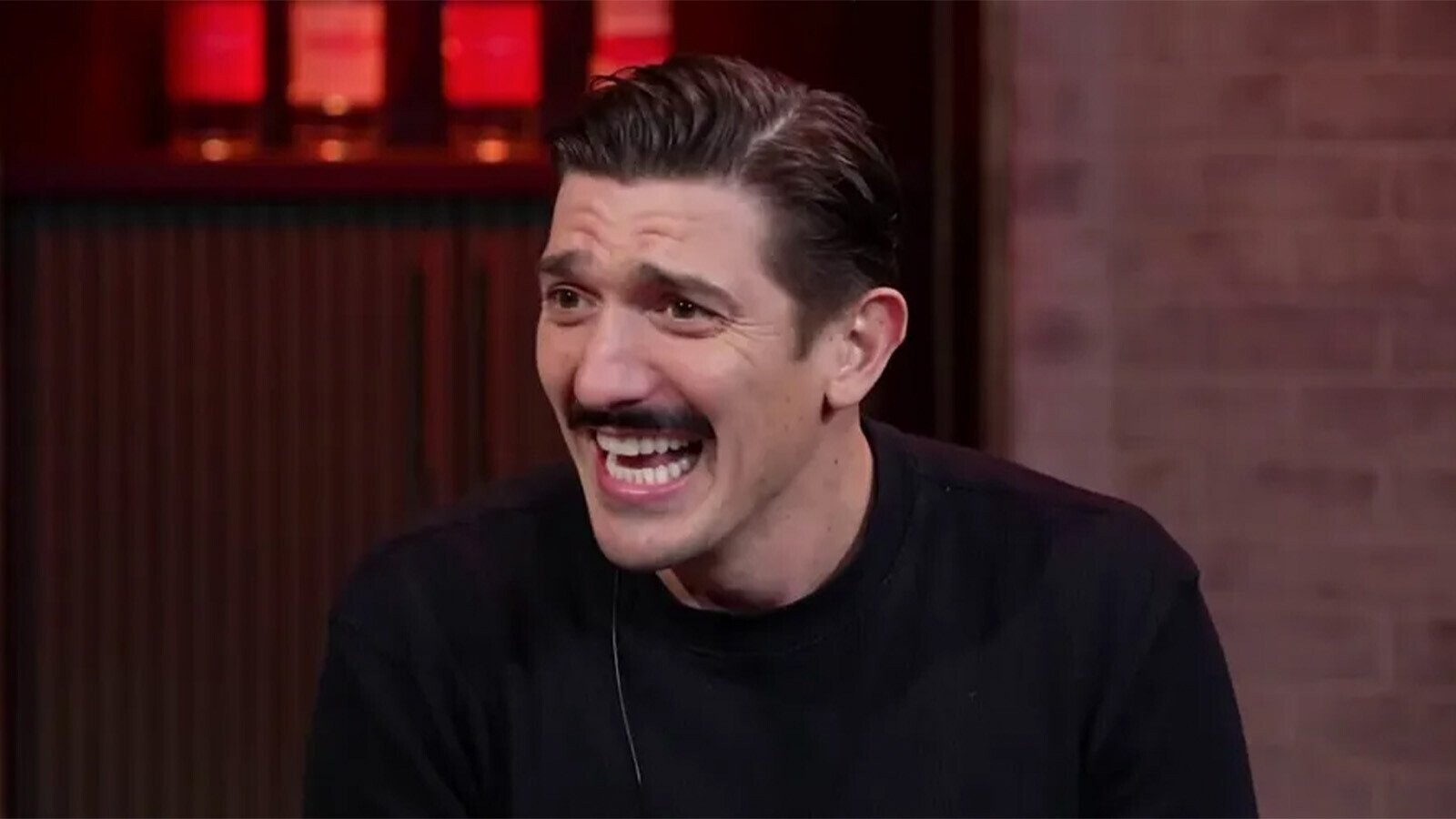
Note: This article is based on publicly reported entertainment coverage and commentary surrounding Kendrick Lamar’s GNX, Andrew Schulz’s podcast response, and the wider debate about comedy, race, and cultural accountability. No source links are included in the body copy.
When One Kendrick Lamar Line Turned Into a Full Internet Court Case
Kendrick Lamar has never needed a long paragraph to start a cultural earthquake. Sometimes, one bar is enough. On the opening track “wacced out murals” from his surprise 2024 album GNX, Lamar delivered a pointed warning: “Don’t let no white comedian talk about no Black woman, that’s law.” He did not name Andrew Schulz. He did not drop a podcast timestamp. He did not hand the internet a detective board with red string and push pins.
And yet, within hours, fans were circling Schulz’s name like it was the final answer on a game show. The reason was not random. Months earlier, Schulz had drawn backlash after comments on his Flagrant podcast during a conversation with British podcast hosts James Duncan and Fuhad Dawodu of ShxtsNGigs. The discussion centered on the so-called “Black girlfriend effect,” a viral phrase describing how some non-Black men appear to change their style after dating Black women. Schulz turned that setup into jokes many listeners considered insulting toward Black women, including stereotypes about stress, violence, and “protective” beards.
By the time Kendrick’s lyric arrived, the internet did what the internet does best: it grabbed a vague line, put it under fluorescent lighting, and interrogated every syllable. Andrew Schulz then responded publicly, suggesting Kendrick was being hypocritical and “woke” for criticizing white comedians while hip-hop itself has often faced criticism for misogynistic lyrics. The result was not just a celebrity spat. It became a messy, revealing debate about comedy, race, rap, audience loyalty, free speech, and who gets to laugh at whom.
The Backstory: Why Fans Connected Andrew Schulz to Kendrick’s Lyric
The Kendrick Lamar Andrew Schulz controversy did not appear out of thin air. It grew from a podcast clip that had already upset many Black women online. During the Flagrant episode featuring the ShxtsNGigs hosts, Schulz riffed on the “Black girlfriend effect” and made remarks that critics viewed as leaning on tired stereotypes about Black women being aggressive, difficult, or physically violent. The guests laughed along, which intensified the backlash because many fans of ShxtsNGigs were Black women who felt betrayed by the moment.
James and Fuhad later apologized, saying they should have challenged the remarks instead of laughing through them. Schulz, however, did not take the same route. He questioned the backlash, suggested the reaction was amplified by online outrage, and framed the issue as a matter of comedy being comedy. That response only kept the clip alive longer. In modern internet culture, nothing preserves a controversy quite like refusing to let it cool off.
So when Kendrick rapped about not letting a white comedian speak disrespectfully about Black women, many listeners immediately remembered the Flagrant moment. Gary Owen and other white comedians were also mentioned in fan discussions, but Schulz became the dominant name because his controversy was recent, highly visible, and directly connected to jokes about Black women.
Kendrick Lamar’s “Woke” Reputation Is More Complicated Than a Clapback
Calling Kendrick Lamar “woke” is both predictable and oddly lazy. Kendrick has spent much of his career writing about race, trauma, faith, violence, identity, hypocrisy, and the psychological cost of survival. That does not make him a motivational poster with better rhyme schemes. It makes him a rapper who has built an audience by refusing to separate personal stories from social context.
From good kid, m.A.A.d city to To Pimp a Butterfly, DAMN., Mr. Morale & the Big Steppers, and GNX, Lamar has repeatedly examined Black life with a mix of pride, discomfort, confession, and critique. He is not simply wagging a finger at everyone else. He often points the finger back at himself. That is part of what makes the “woke” label feel too small for the conversation. It turns a layered cultural argument into a bumper sticker.
In this case, Kendrick’s line was not a policy paper. It was a rap bar. It carried the exaggeration, force, and moral compression that rap has always used. “That’s law” does not mean Kendrick is introducing legislation on Capitol Hill. It means he is drawing a boundary in the language of hip-hop: some jokes may technically be allowed, but they still might get checked.
Andrew Schulz’s Response: Comedy Defense or Deflection?
Andrew Schulz’s brand is built on being unfiltered, fast, and allergic to apology. His fans enjoy that he says things mainstream entertainers often avoid. His critics argue that “everyone gets these jokes” can become a convenient shield when the joke lands hardest on people with less cultural power. That tension is exactly why his Kendrick response sparked such a strong reaction.
Schulz argued that it was hypocritical for a rapper to criticize comedians for disrespecting women when rap music has its own long record of misogyny. As a debate tactic, this is not meaningless. Hip-hop absolutely has a history of lyrics that demean women, and critics inside and outside the culture have discussed that for decades. But as a response to Kendrick’s specific point, the argument also dodges the main issue.
Kendrick was not saying every rapper has always treated women perfectly. He was saying white comedians should not casually make Black women the butt of racialized jokes. Those are related conversations, but they are not identical twins. One concerns misogyny in music; the other concerns racial power, outsider commentary, and the long history of Black women being stereotyped for laughs. Schulz’s rebuttal tried to move the goalposts so quickly they probably needed ankle braces.
Why the “Unspecified White Comedian” Part Matters
One of the funniest details in this whole saga is that Kendrick never said Andrew Schulz’s name. The lyric was broad enough to apply to a category, not a single person. That matters because Schulz’s reaction effectively placed himself inside the category. Kendrick opened the door, and Schulz walked in wearing a name tag.
This is a familiar internet phenomenon. A public figure hears a vague criticism, decides it must be about them, then responds so loudly that the original ambiguity disappears. It is the celebrity version of replying “Why are you talking about me?” under a post that never mentioned you. The response becomes the evidence.
Of course, fans had reasons to make the connection. The Flagrant clip was fresh in public memory, the subject matter lined up, and Schulz had already been criticized for jokes about Black women. Still, the fact that Lamar left the comedian unspecified gave the bar more reach. It was not just “Andrew Schulz, stop it.” It was a broader cultural warning aimed at a recurring pattern: comedians using Black women as edgy material, then acting shocked when Black audiences object.
Comedy, Race, and the Myth of “Everyone Gets Joked On”
The defense of edgy comedy often sounds simple: if everyone is a target, nobody should complain. In theory, that sounds fair. In practice, audiences know the difference between equal-opportunity roasting and punching the same bruise over and over.
Jokes do not arrive in a vacuum. A joke about Black women being violent lands in a society where Black women have long been stereotyped as angry, aggressive, undesirable, or unfeminine. That history changes the temperature in the room. A comedian may insist it is “just a joke,” but audiences are allowed to ask why the joke needed that specific stereotype to work.
This does not mean comedy must be soft, joyless, or approved by a committee of people holding clipboards. Comedy should be able to offend, provoke, and surprise. But good comedy usually reveals something sharper than “a marginalized group is annoying.” The best comics can walk into dangerous territory and come out with insight. The weakest version of shock comedy walks into dangerous territory, knocks over furniture, and calls the mess “art.”
Kendrick’s Bar as Cultural Boundary-Setting
Kendrick Lamar’s lyric hit hard because it sounded less like a random insult and more like boundary-setting. Black women are often expected to support artists, podcasts, comedians, and creators who do not always protect them in return. The ShxtsNGigs backlash showed that clearly. Many Black women who had helped build the show’s fan base felt that the hosts laughed along while they were being mocked.
That is why Kendrick’s line resonated beyond Schulz. It articulated a frustration already circulating online: the idea that Black women are treated as loyal audience members until they become convenient material. When they object, the same creators may accuse them of being too sensitive, too angry, or too eager to cancel someone. In other words, the response often repeats the stereotype that caused the problem in the first place.
Kendrick did not need to write an essay. He compressed the mood into one bar. That is what great rap can do. It can take a messy social argument and make it portable, repeatable, and impossible to ignore.
Was Andrew Schulz Really “Triggered”?
The word “triggered” gets thrown around so often online that it has become less of a diagnosis and more of a dunk. Still, Schulz’s response gave critics plenty to work with. He appeared to take Kendrick’s vague line personally, responded at length, accused Lamar of hypocrisy, and leaned into the kind of provocative humor that made the original backlash worse.
Supporters saw his response as a comedian refusing to be bullied by a superstar rapper. Critics saw it as a man unable to accept that jokes can receive jokes back, especially when the response comes from someone with Kendrick’s lyrical authority. Both interpretations explain why the controversy spread. It had all the ingredients: celebrity ego, racial politics, comedy culture, rap fandom, podcast clips, and enough sarcasm to power a small city.
But the bigger question is not whether Schulz was personally offended. The bigger question is why certain comedians frame criticism as censorship while building careers on criticizing everyone else. If a comedian can roast, the audience can roast back. Free speech includes the joke and the reaction to the joke. That is not cancellation. That is the marketplace of ideas having a food fight.
Why This Controversy Became Bigger Than a Rap Lyric
The Andrew Schulz Kendrick Lamar debate exploded because it sits at the intersection of several cultural shifts. Podcasts have become powerful media platforms. Comedians are no longer just club performers; they are political commentators, interviewers, influencers, and sometimes unofficial spokesmen for entire audiences. Rappers, meanwhile, remain some of the sharpest cultural critics in American entertainment.
When these worlds collide, the result is not just gossip. It becomes a fight over who controls the narrative. Schulz’s audience may see him as fearless and anti-establishment. Kendrick’s audience may see Lamar as defending Black women from a tired comedic pattern. Other observers may simply see two entertainers using controversy as fuel. All three readings can exist at once.
What makes the conversation important is that it reveals the limits of “just jokes” as a universal escape hatch. A joke can be legal, profitable, and still worthy of criticism. A rap lyric can be aggressive, theatrical, and still express a real cultural boundary. Audiences are increasingly comfortable holding both ideas at the same time.
Experience-Based Reflections: What This Moment Feels Like Online
For anyone who spends time in digital culture, the Kendrick and Schulz situation feels familiar. A clip goes viral. A community feels disrespected. The person at the center insists people are overreacting. Fans split into teams. Then the conversation becomes less about the original words and more about whether people are “allowed” to be upset. At that point, nuance usually leaves the group chat.
Many readers have experienced a smaller version of this dynamic in real life. Someone makes a joke at dinner, in a workplace, on a podcast, or in a friend group. The joke targets a group of people who are not fully represented in the room. A few people laugh because the moment is awkward. Someone else stays quiet because challenging it feels exhausting. Later, when the clip or memory resurfaces, the people who were hurt are told they should have spoken up sooner, laughed it off, or understood the “intent.”
That is why this controversy connected with so many people. It was not only about Andrew Schulz. It was about the social pressure to accept disrespect when it is packaged as humor. Black women online were not merely reacting to one podcast riff. Many were responding to a familiar pattern: being praised as stylish, strong, funny, loyal, and culturally influential, then mocked as aggressive or difficult when convenient.
The experience also shows how quickly public accountability has changed. In the past, a controversial comedy bit might live inside a club, disappear into memory, and survive only as a “you had to be there” story. Now, a clip can travel across TikTok, X, Instagram, YouTube, Reddit, and entertainment blogs in a matter of hours. The audience is no longer limited to people who bought tickets or subscribed to the podcast. The audience includes the people being joked about, and they can answer back immediately.
For creators, that new reality can feel unfair. A joke made in one context can be judged in another. A riff meant for fans can reach critics. A five-second clip can flatten a long conversation. Those concerns are real. But the solution is not to demand silent audiences. The solution is to understand that publishing a joke means releasing it into a world where people bring history, identity, and memory with them.
The most useful lesson from the Kendrick-Schulz controversy is not that comedians should stop taking risks. It is that risk has a cost. If a joke depends on stereotypes about Black women, the comedian should not be shocked when Black women and their defenders respond. If a rapper draws a line in defense of those women, he should expect comedians and fans to debate it. This is the cultural exchange now: messy, fast, emotional, and occasionally hilarious in the way a family argument over Thanksgiving seating can be hilarious.
In the end, the experience feels like a reminder that audiences are not passive anymore. They do not simply consume the joke, the song, or the podcast. They interpret it, challenge it, remix it, meme it, and sometimes reject it. Kendrick Lamar understood that power when he turned a public frustration into a single memorable bar. Andrew Schulz understood it too, even if his response suggested he did not love being on the receiving end.
Conclusion: The Joke, the Bar, and the Boundary
The controversy over Andrew Schulz calling Kendrick Lamar “woke” after the “white comedian” lyric is not just another celebrity dust-up. It is a snapshot of modern entertainment culture, where comedians want unlimited room to offend, rappers still function as cultural referees, and audiences have enough platforms to make their displeasure impossible to ignore.
Kendrick Lamar did not name Andrew Schulz, but the public connected the dots because the cultural context was already there. Schulz’s previous comments about Black women had drawn criticism, and his response to Kendrick’s lyric only expanded the debate. Whether one sees Schulz as a fearless comic or a comedian dodging accountability, the core issue remains: jokes about race and gender do not land on a blank page.
Comedy can be bold without being lazy. Rap can be confrontational without being empty outrage. And criticism is not the enemy of free speech; it is often the receipt that comes after speaking freely. Kendrick’s “that’s law” line worked because it named a boundary many listeners already felt. Schulz’s reaction worked, too, in a different way: it proved how powerful an unspecified lyric can become when the right person decides to answer it.