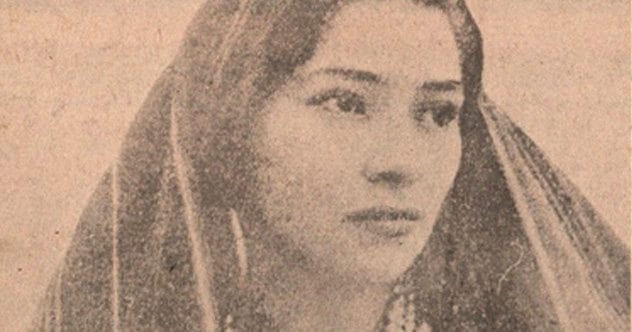
History remembers the gallows as a place of punishment, but these ten accounts reveal something more complicated: murder, fear, political vengeance, social prejudice, imperfect evidence, and legal systems that sometimes moved much faster than wisdom. Some of these women were demonstrably guilty of terrible crimes. Others were condemned through proceedings that later generations have regarded with disbelief.
What connects them is not innocence or guilt. It is the dreadful finality of execution. Once the trapdoor opened, no new witness, scientific discovery, legal reform, or royal pardon could repair a mistaken judgment. The gallows, unlike a courtroom, had no appeals department.
10. Elizabeth Potts: Nevada’s Only Executed Woman
In 1890, Elizabeth Potts and her husband, Josiah, were convicted of murdering Miles Faucett, an acquaintance who had lived with them in Carlin, Nevada. Faucett disappeared in 1888, but his remains were eventually discovered beneath the Potts property. The condition of the body and attempts to conceal it supplied prosecutors with a case gruesome enough to dominate local newspapers.
Both defendants blamed the other. The jury apparently concluded that the safest solution was to believe neither of them. Elizabeth and Josiah were sentenced to hang together on a specially constructed double gallows in Elko.
On June 20, 1890, they were executed before invited witnesses. Elizabeth became the first and only woman legally executed in Nevada. Contemporary reports devoted enormous attention to her clothing, composure, marriage, and supposed failure to behave like a respectable woman. Victorian journalists could describe a dismembered corpse with professional calm, yet a woman displaying insufficient femininity apparently required several alarmed paragraphs.
The Potts case remains disturbing because the evidence established a horrifying crime while leaving uncertainty about the precise role played by each spouse. Execution erased any possibility of obtaining a later confession or clearer account.
9. Minnie Dean: The Hatbox That Terrified New Zealand
Williamina “Minnie” Dean operated what Victorians called a baby farm near Winton, New Zealand. Unmarried mothers paid caregivers to raise or arrange homes for infants at a time when poverty, social stigma, and inadequate public assistance left women with few respectable choices.
Authorities had monitored Dean for years because children in her care had died or disappeared. Suspicion became a national sensation in 1895 when a railway employee saw her board a train carrying an infant and a hatbox. On the return journey, the child was gone and the hatbox appeared unusually heavy.
Police searched Dean’s property and found the bodies of two infants and the skeleton of an older child buried in the garden. She was tried for the murder of Dorothy Carter, whose death was attributed to an overdose of laudanum, an opiate commonly administered to quiet children. Dean argued that the overdose had been accidental, but the jury convicted her.
She was hanged at Invercargill Gaol on August 12, 1895, becoming the first and only woman executed in New Zealand. Her name later entered folklore as a warning used to frighten misbehaving children. That transformation obscured the broader scandal: an entire childcare economy had developed because society preferred to hide desperate mothers rather than help them.
8. Mary Ann Cotton: Death Followed Her Everywhere
Mary Ann Cotton lost husbands, children, a mother, a lover, and stepchildren with astonishing regularity. In nineteenth-century England, frequent death was not automatically suspicious. Infectious disease was common, medical diagnosis was uncertain, and arsenic poisoning produced symptoms that could resemble natural gastrointestinal illnesses.
Cotton also benefited from the growing life-insurance industry. Policies on deceased relatives repeatedly placed money in her hands. Eventually, the death of her young stepson Charles Edward Cotton attracted scrutiny. Investigators detected arsenic, and prosecutors charged her with his murder.
She was convicted of that single killing, although later writers linked her to many more deaths. Claims that she murdered approximately 20 people should therefore be treated as historical suspicion rather than 20 separate courtroom verdicts.
Cotton was hanged at Durham Gaol on March 24, 1873. The execution reportedly used a drop too short to break her neck immediately, causing a prolonged death by strangulation. It was a bleak conclusion to a case already filled with poisoned meals, insurance forms, premature funerals, and one very overdue police investigation.
Her story also illustrates why forensic chemistry mattered. Arsenic once looked almost invisible in a household full of ordinary illness. Improved testing turned an apparently unlucky widow into a murder suspect.
7. Bathsheba Spooner: Executed While Pregnant
Bathsheba Spooner’s case combined marital misery, adultery, murder, revolutionary politics, and a legal dispute over pregnancy. In 1778, she was convicted of arranging the killing of her husband, Joshua Spooner, whose body was beaten and thrown into a well.
Bathsheba had become involved with Ezra Ross, a young Continental Army soldier. Prosecutors alleged that she recruited Ross and two British deserters to eliminate her husband. The plot was not exactly a masterpiece of criminal strategy. The participants were quickly arrested, and stolen property connected them to the killing.
After receiving a death sentence, Bathsheba declared that she was pregnant and requested a delay. Under English common-law tradition, an execution could be postponed when a pregnancy had advanced sufficiently to indicate fetal movement. One examining panel rejected her claim, while a later examination supported it.
The authorities proceeded anyway. Bathsheba and the three men were hanged in Worcester, Massachusetts, on July 2, 1778. A postmortem examination reportedly established that she had been approximately five months pregnant.
She is frequently described as the first woman executed in the newly independent United States. Her guilt in organizing the murder appears strongly supported, but the refusal to delay the execution made the government responsible for extinguishing an additional life that had committed no crime at all.
6. Eva Dugan: The Hanging That Went Catastrophically Wrong
Eva Dugan worked for Arizona rancher Andrew Mathis before he disappeared in 1927. His vehicle was later found in Dugan’s possession, and his remains were eventually discovered in a shallow grave. She insisted that another man had committed the murder, but she was convicted and sentenced to death.
Dugan approached her execution with a public toughness that newspapers eagerly transformed into entertainment. She reportedly sold handmade beadwork to purchase a better coffin and played cards on her final evening. Behind the colorful reporting, however, stood an execution system relying on calculations that could turn a hanging into a disaster.
On February 21, 1930, Dugan was taken to the gallows at Arizona State Prison. When the trap opened, the force of the drop decapitated her. Witnesses fainted, public outrage followed, and the incident became one of America’s best-known botched executions.
Arizona subsequently abandoned hanging in favor of lethal gas, advertised at the time as a more humane method. History has not been especially kind to that claim either. The Dugan execution demonstrates a recurring habit of capital punishment: when one killing technology becomes publicly intolerable, governments often replace the machine rather than reconsider the killing.
5. Edith Thompson: Condemned by Murder and Imagination
On October 3, 1922, Frederick Bywaters stabbed Percy Thompson as Percy walked home with his wife, Edith, in Ilford, England. Bywaters was Edith’s younger lover. He admitted carrying out the attack but insisted that Edith had neither planned nor expected it.
The prosecution nevertheless charged both with murder and conspiracy. Its case against Edith relied heavily on intimate letters in which she described fantasies about escaping her marriage and referred to unsuccessful attempts to harm Percy. Prosecutors treated the language as evidence of a real murder agreement. Her defenders later argued that the letters were emotional fiction written by a frustrated woman performing a dramatic version of herself for her lover.
The trial became a judgment not only of Edith’s actions but also of her sexuality, marriage, clothing, reading habits, and private imagination. Bywaters repeatedly maintained that she had not participated in his decision to attack Percy. The jury convicted them both.
Edith and Bywaters were hanged simultaneously at separate London prisons on January 9, 1923. Doubts concerning the evidence against her helped energize campaigns against capital punishment. Her case presents an unnerving legal question: when does reckless private language prove criminal intention, and when is it merely terrible writing with catastrophic timing?
4. Mary Surratt: A Military Trial After Lincoln’s Murder
Mary Surratt owned the Washington boardinghouse where associates of John Wilkes Booth met before Abraham Lincoln’s assassination. She also owned a Maryland tavern where weapons connected to Booth’s earlier kidnapping scheme had been stored.
Following Lincoln’s murder, Surratt was arrested and tried before a military commission with seven other defendants. The government relied heavily on testimony that she had instructed the tavern’s tenant to prepare items for men who would arrive later. Her defenders questioned the credibility of witnesses and argued that association with conspirators did not prove knowledge of the assassination plan.
The commission convicted her. Several members reportedly recommended mercy, but no commutation arrived. On July 7, 1865, she was hanged alongside Lewis Powell, David Herold, and George Atzerodt at the Old Arsenal Penitentiary.
Surratt became the first woman executed by the United States federal government. Historians continue to debate her knowledge, culpability, and the fairness of trying a civilian before a military tribunal. The speed of the proceeding, the national rage following Lincoln’s death, and the later treatment of other defendants ensure that her case will never fit comfortably into a tidy verdict of justice served.
3. Ruth Ellis: Britain’s Last Executed Woman
Ruth Ellis shot and killed racing driver David Blakely outside a London pub on April 10, 1955. She did not deny firing the gun, and the legal rules then governing murder left the jury with little room to consider the emotional and physical abuse surrounding their relationship.
Ellis had experienced severe violence, coercion, financial instability, and repeated trauma. At trial, however, the central question was whether she intentionally killed Blakely. Once the jury answered yes, the mandatory sentence was death.
She was hanged at Holloway Prison on July 13, 1955, becoming the last woman executed in the United Kingdom. Public concern about her case strengthened criticism of capital punishment and highlighted the law’s failure to understand domestic abuse, diminished responsibility, and loss of control as they might be understood today.
Her story gained a remarkable postscript on July 8, 2026. The British government announced that King Charles III had granted Ellis a posthumous conditional pardon. The decision did not declare that she had not killed Blakely. Instead, it recognized that modern legal defenses and modern understanding of coercive abuse might have produced a manslaughter conviction and a life sentence rather than execution.
It was meaningful recognition, but it arrived 71 years too late for the woman at the center of the case.
2. Hannah Ocuish: A 12-Year-Old Sent to the Gallows
Few execution accounts are as difficult to comprehend as that of Hannah Ocuish, a 12-year-old Pequot girl hanged in Connecticut in 1786. She was convicted of killing six-year-old Eunice Bolles after an earlier dispute involving strawberries.
Historical descriptions portrayed Hannah as intellectually disabled and socially vulnerable. She reportedly confessed during questioning, but eighteenth-century interrogation offered none of the protections now considered essential when questioning a child. She had no modern juvenile court, psychological evaluation, specialized defense team, or legal principle recognizing that children possess diminished judgment.
The court imposed the mandatory punishment for murder. On December 20, 1786, Hannah was taken to the execution site in New London. Witnesses described her as frightened and appearing to seek help as the reality of the gallows became unavoidable.
She is generally identified as the youngest person executed in the United States whose age can be verified. Her case forces readers to separate two questions that her society largely merged: Did a child commit a deadly act, and did the state therefore have the moral right to kill that child?
Modern American law rejects the execution of people for crimes committed while younger than 18. Hannah’s death stands as a dreadful illustration of why childhood, disability, race, and vulnerability cannot be treated as irrelevant details.
1. Rebecca Nurse: A Respected Grandmother Condemned as a Witch
Rebecca Nurse was an elderly, respected member of Salem Village when she was accused of witchcraft in 1692. Her reputation initially made the charge seem incredible. Neighbors signed statements defending her character, and the jury first returned a verdict of not guilty.
The courtroom erupted. Accusers renewed their performances, spectators protested, and the judges asked the jurors to reconsider part of the testimony. The jury reversed itself and convicted her.
Rebecca was hanged with Sarah Good, Elizabeth Howe, Susannah Martin, and Sarah Wildes at Proctor’s Ledge on July 19, 1692. No physical evidence demonstrated supernatural activity, because supernatural activity was not occurring. The prosecution depended on spectral claims, personal grievances, fearful interpretation, and a court willing to treat theatrical accusation as proof.
Her case is the most dreadful on this list because the alleged offense did not exist. There was no murder weapon, poisoned child, concealed body, or confessed shooting. Rebecca died because a community converted anxiety into prosecution and prosecution into certainty.
The Salem proceedings have become shorthand for mass hysteria, but that phrase can sound almost accidental, as though panic simply floated into town like bad weather. Rebecca Nurse’s execution required identifiable human decisions: accusations were accepted, unreliable evidence was admitted, a favorable verdict was challenged, and authorities chose hanging over humility.
What These Gallows Accounts Reveal
These women were not one type of person. Some were convicted killers whose crimes were supported by physical evidence. Some may have participated in plots without fully understanding their consequences. Others were condemned by prejudice, political pressure, moral judgment, or beliefs that now appear indefensible.
Their stories reveal how capital punishment magnifies every weakness in a justice system. A biased prosecutor, frightened jury, unreliable confession, sensational newspaper, inflexible statute, or incompetent executioner can become the final authority over a human life.
The gallows also created a peculiar public theater. Officials claimed executions demonstrated solemn justice, while vendors, invited spectators, lurid reporters, and souvenir hunters turned death into an event. Apparently, the state could preserve its dignity while issuing tickets to the hanging. History has a dark sense of irony.
Experiences That Change How We Understand Women Condemned to the Gallows
Reading Trial Records Instead of Only Retellings
The most revealing research experience begins when a reader moves beyond a polished summary and enters the surviving legal record. Trial documents expose what later legends leave out: confusing testimony, unanswered questions, judicial instructions, rejected petitions, and witnesses who changed their stories.
Reading such material can be uncomfortable because certainty often weakens rather than strengthens. A famous “female monster” may emerge as a complicated defendant convicted of one crime but blamed by folklore for twenty. A supposed conspirator may appear surrounded by suspicious people without clear proof that she understood their plans. The experience teaches a valuable habit: never confuse a memorable story with a complete evidentiary record.
Comparing Newspaper Language About Men and Women
Another instructive experience involves comparing historical reporting on male and female defendants. Reports about condemned women frequently wandered away from evidence and toward appearance. Writers analyzed dresses, hairstyles, maternal behavior, romantic history, household skills, and whether a prisoner seemed appropriately emotional.
A woman who cried was manipulative. A woman who remained calm was cold. A woman who loved someone outside marriage was dangerous. A woman who failed as a mother became proof that nature itself had malfunctioned. The resulting portrait could influence public opinion before a jury had finished listening to testimony.
This comparison does not prove that every convicted woman was innocent. It demonstrates that guilt was often packaged inside expectations about femininity. The courtroom determined whether she violated the law; the newspaper determined whether she had also violated womanhood.
Visiting Memorials Rather Than Seeking Spectacle
Execution sites and memorials create a different experience from reading. Places such as Proctor’s Ledge in Salem encourage reflection because the physical setting strips away the melodrama added by movies and legends. A name carved into stone is quieter than a television reenactment, but frequently more powerful.
Responsible historical tourism treats these places as sites of death, law, and memorynot supernatural amusement parks. Visitors gain more by asking who controlled the court, whose testimony mattered, and which social fears drove the prosecution than by searching for ghosts. The dead have already supplied the tragedy; they do not need a gift shop to improve it.
Separating Legal Guilt From Moral Certainty
Researchers also experience the tension between a valid conviction and a troubling execution. Bathsheba Spooner may have arranged her husband’s murder, yet executing her during a confirmed pregnancy raises a separate moral issue. Ruth Ellis intentionally fired the fatal shots, yet modern law might have recognized abuse-related defenses unavailable in 1955.
This distinction matters. Opposing an execution does not require declaring every condemned person innocent. A legal system can correctly identify a killer and still impose a punishment that later generations consider unjust, discriminatory, unnecessary, or barbaric.
Recognizing the Importance of Reversible Justice
The final experience is the realization that historical understanding never stops changing. Archives open. Medical knowledge improves. False testimony is discovered. Social attitudes change, and lawmakers recognize defenses that earlier courts ignored.
Imprisonment cannot restore stolen years, but a living prisoner can be released, retried, interviewed, pardoned, or exonerated. Execution prevents every one of those possibilities. The conditional pardon granted to Ruth Ellis in 2026 could revise the official meaning of her sentence, but it could not return her to her children.
That is the lasting lesson of these dreadful gallows accounts. Courts are human institutions, and human institutions make errors. The death penalty demands perfect judgment from systems that history repeatedly proves are anything but perfect.
Conclusion
The stories of Elizabeth Potts, Minnie Dean, Mary Ann Cotton, Bathsheba Spooner, Eva Dugan, Edith Thompson, Mary Surratt, Ruth Ellis, Hannah Ocuish, and Rebecca Nurse span centuries and continents. Together, they show the gallows functioning as punishment, political theater, social warning, and sometimes an instrument of irreversible injustice.
These women should not be flattened into saints, monsters, or spooky historical trivia. Their cases deserve careful distinctions between accusation and evidence, conviction and certainty, punishment and justice. The most dreadful element is not simply that ten women died. It is that authorities claimed absolute confidence in cases that history continues to question.
Note: This article presents execution history with restraint and distinguishes documented convictions from allegations, folklore, and later historical interpretation.