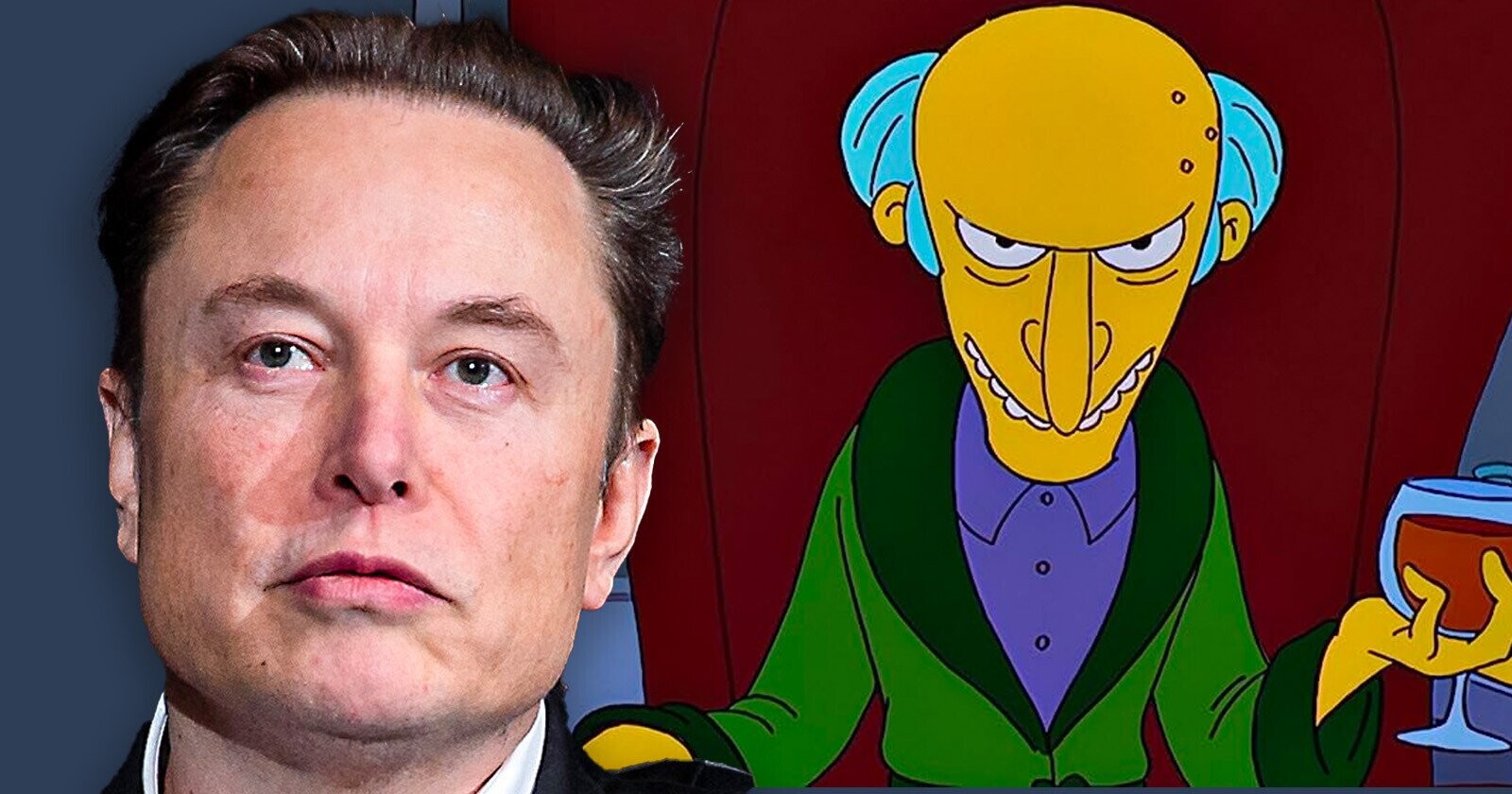
Elon Musk has built rockets, electric cars, satellite internet, and a public image so loud it practically needs its own zip code. Depending on whom you ask, he is a visionary, a chaos engine, a meme lord with a balance sheet, or a man who treats public relations like a flaming shopping cart rolling downhill. But every so often, Musk says or does something so detached from ordinary life that even Mr. Burns, the fictional billionaire from The Simpsons, might raise a bony finger and say, “Excellent… but perhaps a bit much.”
To be fair, satire works best when it has a factual skeleton underneath the clown suit. Musk is not a cartoon villain. He has helped push electric vehicles into the mainstream, expanded private spaceflight, and reshaped several industries. Still, public influence comes with public scrutiny. When one person controls major companies, speaks directly to hundreds of millions of followers, and makes decisions that affect employees, advertisers, investors, users, and sometimes public health conversations, “quirky billionaire behavior” stops being cute and starts looking like a case study in being out of touch.
This article looks at three highly public moments when Musk seemed unusually disconnected from how regular people, institutions, and markets actually work: his COVID-era comments and Tesla factory standoff, the Twitter/X verification and workplace shake-up, and his jaw-dropping fight with advertisers. Bring a hard hat. The billionaire discourse factory is open.
What Does “Out-of-Touch” Mean Here?
Being out of touch does not simply mean being rich. Many wealthy people are boring in perfectly ordinary ways: they invest, attend conferences, and occasionally buy a kitchen island the size of Rhode Island. In Musk’s case, “out-of-touch” describes a pattern: underestimating consequences that are obvious to everyone without a private jet, treating complex systems like they are personal toys, and assuming the rules of trust, labor, advertising, or public health can be rewritten by sheer force of confidence.
Mr. Burns is funny because he embodies the old-school tycoon who forgets workers are people. Musk’s out-of-touch moments are different. They are modern, extremely online, and powered by the belief that disruption is always better than patience. Sometimes that mindset produces innovation. Other times, it produces a verified fake pharmaceutical account announcing free insulin. That is not disruption. That is a smoke alarm wearing a blue check.
1. When COVID Was Treated Like a PR Annoyance
One of Musk’s most criticized public moments came during the early COVID-19 pandemic. In March 2020, as the virus was spreading and public health officials were urging caution, Musk posted that the “coronavirus panic” was “dumb.” Later, he criticized stay-at-home restrictions and called some lockdown measures “fascist.” For millions of people dealing with fear, illness, lost jobs, school closures, and uncertainty, the message landed badly. It sounded less like brave skepticism and more like a billionaire being annoyed that reality had scheduled a meeting without asking him.
The Tesla Factory Standoff
The conflict became more serious in May 2020, when Tesla reopened its Fremont, California, factory despite local restrictions in Alameda County. Musk publicly said he would be on the production line and suggested that if anyone should be arrested, it should be him. That was dramatic, sure. It was also the kind of drama easier to perform when you are the CEO, not the worker wondering whether showing up could affect your health, your family, or your paycheck.
For ordinary employees, pandemic decisions were not philosophical debates about freedom. They were practical questions: Is the workplace safe? Can I afford not to go? What happens if I get sick? Do I have paid leave? A billionaire can frame reopening as a bold stand. A factory worker may experience it as a choice between risk and rent. That gap is where the out-of-touch label starts waving its little red flag.
Why It Felt More Mr. Burns Than Maverick
The Mr. Burns comparison fits because the old cartoon joke is about power without perspective. Musk’s comments did not happen in a vacuum. They came from someone whose companies depend on thousands of people doing physical, technical, and logistical work. Even if Musk believed restrictions were excessive, the tone mattered. Leaders can disagree with policy while still showing empathy for workers and communities. Instead, the public saw a CEO using combative language during a public health crisis.
The deeper lesson is not that business leaders must always agree with government officials. It is that influence has weight. When a famous CEO minimizes a crisis, some fans may treat that attitude as permission to ignore risks. When the same CEO pushes for reopening, employees may wonder whether their concerns are being heard or simply steamrolled. Innovation is impressive. But compassion is also a technology, and in that moment, the software needed an update.
2. When Twitter Verification Became a $8 Costume Party
Musk’s 2022 purchase of Twitter, later rebranded as X, was one of the most dramatic tech takeovers in modern memory. The platform already had problems: harassment, misinformation, advertiser anxiety, political conflict, and the delightful experience of watching strangers argue about soup. But one of Musk’s first big changes was to overhaul verification by tying blue check marks to a paid subscription.
Before the change, verification had plenty of flaws. It was inconsistent, elitist, and sometimes confusing. Still, the blue check served one important function: it helped users know whether a public figure, company, journalist, agency, or organization was probably who they claimed to be. Musk’s paid model treated that trust signal as if it were merely a status symbol. The result was predictable to almost everyone except, apparently, the people pushing the launch button.
The Impersonation Explosion
After paid verification rolled out, fake accounts pretending to be major brands and public figures began appearing with blue checks. One of the most famous examples involved an impersonator account posing as Eli Lilly and posting that insulin was free. The fake post created confusion and forced the real company to respond. Other brand impersonations also spread across the platform, turning verification into a Halloween mask with monthly billing.
This was not just embarrassing. It was a trust problem. Social media platforms depend on advertisers, public figures, journalists, emergency agencies, and everyday users believing the platform can separate real identities from obvious fakes. When the symbol of authenticity becomes something anyone can buy, the platform is not democratizing trust. It is selling the fire extinguisher during a fire and then wondering why the smoke alarm is screaming.
Layoffs, “Hardcore” Culture, and the Human Cost
At around the same time, Twitter underwent massive layoffs. Musk also ended broad remote-work flexibility and reportedly expected employees to work from the office for at least 40 hours per week. He later sent an “extremely hardcore” ultimatum asking remaining staff to commit to intense work or accept severance. The language became instantly famous because it sounded less like a workplace policy and more like a medieval knight recruiting engineers for a siege.
Companies sometimes need restructuring. Tech firms can overhire. Leaders may make painful cuts. But the issue is not simply that Musk reduced headcount; it is the style and speed of the transformation. When workers are treated as replaceable inputs, institutional knowledge walks out the door. Safety teams, moderation systems, communications staff, engineers, and policy experts are not decorative office plants. They are part of the machinery that keeps a global platform from becoming a blender full of lawsuits, spam, and brand panic.
The Out-of-Touch Part
Musk’s apparent assumption was that Twitter could become leaner, faster, and more profitable through pressure, subscriptions, and cultural shock therapy. But social networks are not rockets. Rockets obey physics. Social platforms obey people, incentives, trust, regulation, advertisers, communities, trolls, journalists, governments, app stores, and millions of users who will absolutely ruin your afternoon if you give them a loophole.
That is why this moment felt more out-of-touch than clever. It confused a trust infrastructure with a luxury badge. It treated employees as if sleep and stability were optional plug-ins. It underestimated how quickly advertisers and users react when a platform looks unstable. Mr. Burns might release the hounds. Musk released paid verification and then had to watch the hounds open parody accounts.
3. When Advertisers Were Told, Essentially, to Get Lost
Advertising is the part of social media that nobody loves but almost everybody depends on. Users want free platforms. Platforms need revenue. Brands want safe places to appear. This relationship is awkward, commercial, and often annoying, but it is not mysterious. If advertisers believe their logos may appear next to offensive, hateful, or chaotic content, they pause spending. That is not censorship. That is brand management, also known as “not wanting your cereal mascot next to a digital dumpster fire.”
In 2023, X faced a major advertiser backlash after controversy over antisemitic content and Musk’s own highly criticized post. Several major brands paused or reduced advertising. Then, during a public interview, Musk used profanity toward advertisers who were leaving the platform and specifically called out Disney CEO Bob Iger. It was a stunning moment because it seemed to say the quiet part loudly, into a microphone, while the company’s business model sat nearby clutching a tiny paper bag.
Why Advertisers Matter
Some Musk supporters cheered the moment as anti-corporate defiance. But X was not a garage podcast with a donation button. It was a major social platform with huge operating costs and debt tied to Musk’s acquisition. Advertising had long been central to Twitter’s revenue. Telling advertisers to leave while also warning that an advertiser boycott could damage or even kill the company created a bizarre contradiction: the platform needed the money, but its owner publicly insulted the people providing it.
That is the heart of being out of touch. Most small business owners cannot yell at their biggest customers and then blame the customers for not returning. A restaurant owner who tells diners to get lost cannot be shocked when the tables are empty. A freelancer who insults clients cannot call it a revenue strategy. But when billionaires do it, the moment gets repackaged as bold authenticity. Sometimes authenticity is just bad customer service wearing sunglasses indoors.
The Mr. Burns Energy Was Off the Charts
Mr. Burns often behaves as if money should obey him because he is powerful. The advertiser episode had a similar flavor. Musk seemed to reject the basic bargain of an ad-supported platform: brands pay for reach, but they expect some level of safety, predictability, and professionalism. If a platform becomes unpredictable, advertisers do not need to prove a moral theory. They just move budgets somewhere else.
The irony is that Musk often describes himself as intensely rational and engineering-minded. Yet the advertiser confrontation looked emotionally reactive. It turned a business challenge into a public loyalty test. In engineering, ignoring constraints usually ends with a failed launch. In advertising, ignoring constraints ends with a media buyer quietly sending money to TikTok, YouTube, Instagram, or anywhere that feels less like a billionaire’s group chat.
Why These Moments Keep Happening
The pattern across these three examples is not random. Musk’s greatest strength and greatest weakness may come from the same place: extreme confidence in his own read of reality. In manufacturing, spaceflight, and product development, that confidence can push teams toward breakthroughs. In public communication, labor management, social media governance, and crisis response, the same confidence can become a blindfold.
Many Musk controversies begin with a belief that old systems are stupid. Sometimes they are. Verification systems can be elitist. Bureaucratic health rules can be clumsy. Advertisers can be cautious to the point of absurdity. But systems often exist because someone already discovered the hard way what happens without them. Identity verification exists because impersonation is easy. Workplace policies exist because humans are not batteries. Brand safety exists because companies do not enjoy explaining why their ad appeared beside extremist nonsense before breakfast.
In other words, institutions are not always wise, but they are rarely imaginary. Musk’s out-of-touch moments often come from treating social complexity as if it were merely a technical bottleneck. That is how you end up trying to solve trust with subscriptions, employee morale with ultimatums, and advertiser confidence with public humiliation.
What Ordinary People See That Billionaires Sometimes Miss
Regular people live close to consequences. A bad workplace policy affects childcare, rent, health, and sleep. A confusing verification system affects scams, misinformation, and whether users can trust emergency updates. A careless public health message affects behavior in families, schools, and workplaces. A billionaire can absorb reputational turbulence. Most people cannot absorb chaos so easily.
That difference matters. Musk can make a joke, reverse course, relaunch a product, rename a company, or shift attention to Mars. Workers, users, advertisers, and communities are left dealing with the practical fallout. That is why the phrase “out of touch” sticks. It is not just envy. It is frustration with leaders who seem insulated from the normal cost of their experiments.
Experiences and Lessons Related to the Topic
The most relatable part of the Musk-versus-Mr.-Burns comparison is not the billionaire part. Most readers are not buying social media platforms between lunch and dinner. The relatable part is dealing with powerful people who do not understand the room. Nearly everyone has experienced a boss, client, teacher, administrator, or manager who makes a sweeping decision from a comfortable distance and then acts surprised when everyone else has to clean up the mess.
Think about the workplace version. A leader announces a “return to office” policy with bold language about culture, collaboration, and excellence. Meanwhile, employees are calculating commute costs, caregiving schedules, disability needs, and whether the office even has enough desks. The leader sees a productivity philosophy. The workers see two hours in traffic and a sad vending machine sandwich. That is the same emotional gap that made Musk’s workplace ultimatums so controversial. The issue is not only whether office work can be useful. The issue is whether leaders understand the human math behind their orders.
There is also the customer-trust version. Anyone who has used a platform where scams spread quickly knows how fragile online trust can be. A small verification symbol, a support policy, or a moderation rule may look boring from the top. From the user side, it can be the difference between trusting an emergency account and falling for a fake. Musk’s paid verification experiment showed how quickly a familiar signal can lose meaning when a company changes the rules without respecting how people actually use the product.
Small business owners can learn from the advertiser episode, too. Customers and partners do not owe a company unconditional loyalty. Trust is earned repeatedly. If a café insults regulars, if a web designer mocks clients, or if a publisher ignores sponsors’ concerns, revenue will eventually notice. Musk’s public clash with advertisers was dramatic because it broke a simple rule that ordinary businesses understand instinctively: do not publicly dare your revenue stream to leave unless you have a very sturdy backup plan and possibly a helmet.
There is also a media-literacy lesson. Big personalities can make impulsive decisions look glamorous. The internet often rewards confidence before it checks consequences. A bold statement becomes a headline. A chaotic decision becomes a meme. Supporters call it genius. Critics call it disaster. But everyday experience teaches a quieter truth: good leadership is not just speed. It is listening, testing, adjusting, and remembering that other people live downstream from your choices.
For readers, the practical takeaway is simple. Admire innovation, but do not confuse disruption with wisdom. A person can build amazing things and still be wrong about public health, workplace culture, platform trust, or advertising. A billionaire can be brilliant in one arena and cartoonishly detached in another. That is not hypocrisy; it is humanity with a larger microphone. The trick is to evaluate each claim and decision on evidence, not aura. Mr. Burns may be fictional, but the lesson is real: when power stops listening, comedy becomes a warning label.
Conclusion: The Billionaire Bubble Is Real
Elon Musk remains one of the most consequential business figures of the modern era. His companies have changed transportation, space technology, communications, and artificial intelligence conversations. But influence does not come with an automatic exemption from criticism. In fact, the bigger the influence, the more important the criticism becomes.
The three examples above show Musk at his most disconnected: minimizing pandemic concerns while workers faced real risks, reshaping Twitter/X as if trust were a purchasable accessory, and insulting advertisers while running a platform that depended on advertising. Each moment revealed a version of leadership that was bold, loud, and sometimes entertaining, but not always grounded in the lived reality of employees, users, customers, or public institutions.
Mr. Burns is funny because he is exaggerated. Musk is fascinating because he sometimes makes exaggeration unnecessary. The lesson is not that ambitious people should stop taking risks. The lesson is that power needs perspective. Without it, even the smartest person in the room can end up looking like a cartoon billionaire pressing the wrong button and calling it innovation.
Note
This article is satirical commentary based on publicly reported events. It uses humor and comparison to analyze leadership style, business decisions, and public reactions; it does not claim that a fictional character is a real-world benchmark for corporate governance, though frankly, the bar should not be that hard to clear.