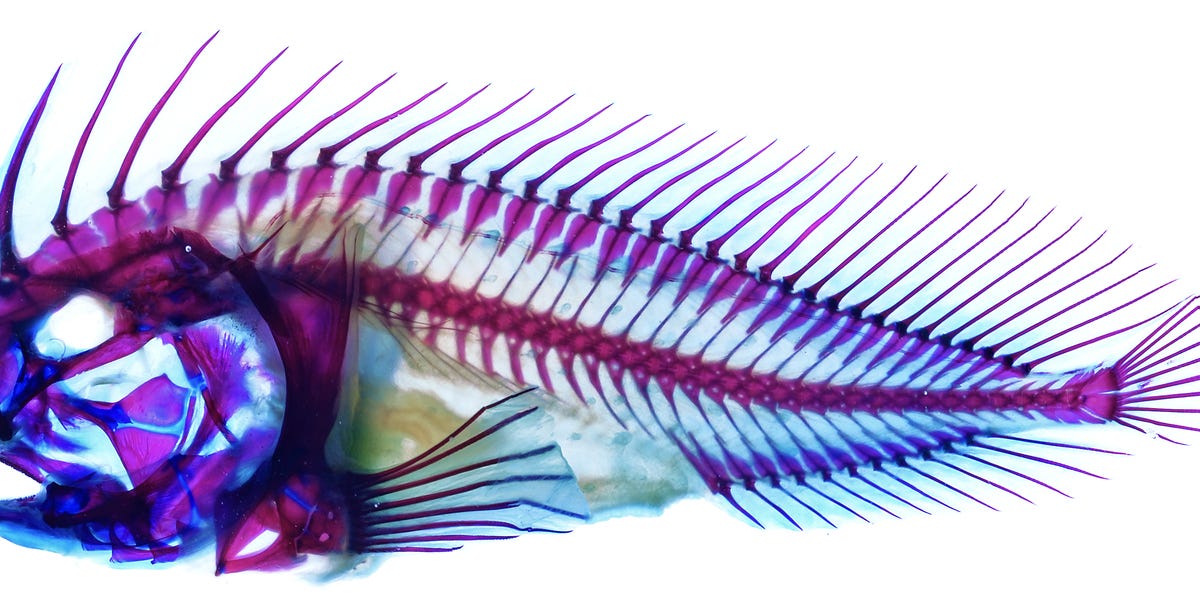
Some animals are born cute. Some are born fast. And then there is the stonefish, a grumpy-looking marine ambush predator that apparently read the ocean’s rulebook and decided, “I’ll take camouflage, venom, armor, andjust for flaira folding blade under each eye.” Yes, the fish with a switchblade on its face is real. No, it is not auditioning for an underwater action movie. It is part of a fascinating group of venomous fishes known for one of the strangest defensive tools in the sea: the lachrymal saber.
The phrase sounds like something a pirate would name his favorite dagger, but it comes from anatomy. “Lachrymal” refers to the bone below the eye, and “saber” describes the blade-like spine that certain stonefish relatives can swing outward when threatened. In plain English: this fish has a hidden facial spike that works a bit like a biological switchblade. Nature, once again, has chosen drama.
But the story is bigger than one scary-looking fish. The discovery of the lachrymal saber helped scientists rethink how stonefish and their relatives are classified. It also shows how evolution can turn a small facial bone into a defensive weapon, a warning sign, and a family-tree clue all at once. Let’s dive into the reef, carefully, and meet the fish that brought a blade to a staring contest.
What Fish Has a Switchblade on Its Face?
The fish at the center of this wonderfully weird headline belongs to the broader stonefish group, especially fishes in and around the family Synanceiidae. Stonefish are famous for their rock-like camouflage, venomous dorsal spines, and sit-still hunting style. They are mostly found in tropical Indo-Pacific waters, where coral reefs, sandy bottoms, mudflats, and estuaries provide perfect cover.
The “switchblade” is not a metal blade, of course. It is a specialized bony structure called a lachrymal saber. It sits beneath the eye on each side of the face. When the fish feels threatened, the saber can project outward, creating a sharp defensive point. Imagine a tiny armored reef goblin with cheek daggers, and you are emotionally close to the concept.
Researchers studying stonefish relatives found that this feature is more than a party trick. It appears across a group of related fishes, including stonefishes, waspfishes, velvetfishes, and several relatives that share similar defensive anatomy. That means the lachrymal saber is useful not only for defense but also for understanding fish evolution.
Meet the Lachrymal Saber: The Ocean’s Hidden Face Blade
The lachrymal saber is a modified spine connected with bones and muscles in the face. Unlike a dorsal spine, which sticks up from the back, this saber is tucked beneath the eye. When the fish opens or moves parts of its mouth and jaw, the mechanism can rotate the saber outward.
That mechanical connection is what makes the discovery so interesting. The saber is not simply a random spike. It is part of a coordinated anatomical system involving facial bones, jaw movement, muscles, and tendons. In other words, the fish did not just grow a pointy cheek and call it a day. Evolution built a working folding tool.
Why Is It Called a “Switchblade”?
The nickname comes from the way the saber can stay hidden close to the face and then swing outward when needed. A pocketknife folds into its handle; the lachrymal saber rests against the cheek. When danger gets too personal, the fish can deploy it. The effect is both elegant and deeply rude to anything trying to eat it.
Still, the word “switchblade” is a comparison, not an invitation to imagine the fish as aggressive. Stonefish are not underwater villains cruising around looking for trouble. They are usually slow, still, and defensive. Their main strategy is to avoid being noticed at all. If camouflage fails, the venomous spines and facial saber help discourage predators from making a bad lunch decision.
Stonefish: Masters of Looking Like Nothing
Stonefish are among the ocean’s great camouflage artists. Their bodies are lumpy, rough, mottled, and often covered in textures that resemble rock, coral, algae, or debris. A stonefish on the seafloor can look less like an animal and more like a suspiciously cranky rock.
This camouflage is useful for hunting and defense. As ambush predators, stonefish often wait motionless until small fish or crustaceans come close. Then they strike quickly, using a large mouth to suck in prey. They do not need to chase much. They are the marine version of a trapdoor with fins.
The same camouflage that helps them catch food also helps them avoid predators. Many animals advertise danger with bright colors, but stonefish often take the opposite approach: they vanish into the scenery. That is brilliant for the fish and occasionally unfortunate for bare human feet in shallow tropical waters.
Venom, Spines, and the Stonefish Reputation
Stonefish are often described as some of the most venomous fish in the world. Their venom is associated mainly with stout dorsal fin spines. These spines can inject venom when pressure is applied, such as when a predator bites down or a person accidentally steps on one.
The key point is that the venomous back spines and the facial lachrymal sabers are different defensive systems. The dorsal spines deliver venom. The lachrymal sabers are bony blades beneath the eyes. Together, they make stonefish relatives look like they came from a very intense design meeting.
For humans, the practical lesson is simple: do not touch, step on, poke, or attempt to “inspect” a stonefish. In areas where stonefish live, reef shoes, local guidance, and careful movement in shallow water matter. Admiring marine life is great. Treating a venomous camouflaged fish like a stress ball is not.
How Scientists Found the Fish’s Face Blade
The lachrymal saber became widely known after researchers examined stonefish and related fishes during a study of their evolutionary relationships. By comparing anatomy and genetic data, scientists realized that several groups shared this distinctive cheek mechanism.
The discovery helped redraw parts of the fish family tree. When a feature appears across related species, it can act like a biological breadcrumb. It tells researchers that those species may share a common evolutionary history. In this case, the “breadcrumb” happened to be a fold-out face saber, because apparently evolution enjoys plot twists.
The study also showed why museum collections are so valuable. Preserved specimens, X-rays, dissections, and genetic sampling can reveal structures that are easy to miss in a living animal. A fish may look like a lump on the outside, but inside, its skeleton can be carrying secrets worthy of a thriller.
Why Would a Fish Evolve a Facial Saber?
Evolution does not build features for decoration alone, especially not features that require bones, muscles, and movement. The lachrymal saber likely functions as a defense against predators. A predator trying to swallow or bite a stonefish relative may encounter sharp projections near the head, making the fish harder, riskier, or less pleasant to eat.
This is common in marine life. Many reef fish rely on spines, armor, venom, tough scales, or body shapes that make them difficult to swallow. The ocean is full of mouths, and surviving often means becoming inconvenient.
Defense Without Chasing Trouble
One important point: defensive weapons do not make an animal aggressive. Porcupines have quills, but they are not sprinting through forests looking for ankles. Stonefish have venomous spines and facial sabers, but their lifestyle is mostly stillness, camouflage, and patience. Their weaponry says, “Please choose another meal.”
That is why the stonefish is such a memorable example of evolutionary design. It combines passive defense, active defense, camouflage, and ambush hunting in one compact package. If nature had a Swiss Army knife drawer, stonefish would be in it.
Where Do Stonefish Live?
Stonefish and their close relatives are most strongly associated with the Indo-Pacific region. Depending on the species, they may be found around coral reefs, rocky seabeds, estuaries, mudflats, sandy areas, and shallow coastal habitats. Some related species inhabit different environments, but the classic stonefish image is a camouflaged bottom-dweller resting where rock, coral, and sand meet.
Because they blend so well into the seafloor, stonefish can be difficult to spot even for experienced divers. Their stillness is part of the trick. A swimming fish catches the eye. A stonefish sits like a grumpy potato with consequences.
Is the “Switchblade Fish” Dangerous to Humans?
The fish can be dangerous, but not because it hunts people. Stonefish are risky because accidental contact can trigger venomous spine injuries. The face saber is fascinating, but the dorsal venom spines are the main medical concern for humans.
Most human encounters happen when someone steps on or handles a camouflaged fish. That is why safety in stonefish habitat is mostly about awareness. Look where you step. Avoid placing hands into reef holes or under ledges. Do not touch marine animals, even if they appear motionless. The sea has many creatures that look harmless until biology files a complaint.
This article is educational, not medical advice. Anyone stung by a venomous marine animal should seek urgent medical help and follow local emergency guidance.
Why This Fish Captures Public Imagination
The phrase “fish with a switchblade on its face” works because it sounds impossible. Fish already seem strange to land animals like us. They breathe underwater, sense pressure changes, change colors, glow, inflate, shock, sting, migrate across oceans, and sometimes look like decorative nightmares. Add a fold-out cheek saber, and the internet understandably drops its coffee.
But the real wonder is not just the shock value. The lachrymal saber shows how much remains hidden in familiar animal groups. Stonefish were already famous for venom and camouflage, yet scientists still uncovered a major anatomical feature with evolutionary importance. That is the magic of biology: even the “well-known” weird animals have bonus weirdness.
Other Fish With Built-In Defense Tools
The stonefish is not alone in the ocean’s defensive gadget department. Lionfish have venomous fin spines and dramatic warning stripes. Pufferfish can inflate their bodies to become harder to swallow. Triggerfish can lock dorsal spines into place. Porcupinefish add spines to the inflatable-body strategy, because apparently one defense was not enough.
Compared with these species, the stonefish relative’s lachrymal saber is especially unusual because of its location. A spine on the back is easy to imagine. A blade under the eye that flips outward? That feels like an anatomical Easter egg.
Experience Section: What Observing the “Switchblade Fish” Teaches Us
Anyone who has spent time reading about marine life knows the ocean has a talent for making humans feel underdressed. We show up with snorkels and sunscreen; the animals show up with venom glands, armored plates, camouflage skin, electrical organs, and cheek sabers. The stonefish is one of those creatures that changes how you look at a reef. Suddenly, every rock seems suspicious. Every lump has a backstory. Every patch of sand feels like it might be quietly judging you.
The most memorable lesson from the fish with a switchblade on its face is respect. Not fear, not panic, and definitely not the urge to poke things. Respect. The stonefish does not need to chase, roar, or perform. It survives by staying still, blending in, and letting its defenses speak only when necessary. In a world where many animals rely on speed or spectacle, the stonefish has mastered the art of being underestimated.
For divers, snorkelers, tide-pool explorers, and nature lovers, that lesson matters. The best wildlife experiences often come from slowing down. When you stop rushing, the reef changes. What first looks like plain rubble becomes a living map: shrimp flicking between coral heads, gobies hovering near burrows, crabs tucked into cracks, and maybe, just maybe, a fish pretending to be geology. The stonefish reminds us that nature is not always obvious. Sometimes the most fascinating animal in view is the one trying hardest not to be seen.
There is also a writing lesson here. A title like “This Fish Has a Switchblade on Its Face” grabs attention because it is vivid, strange, and specific. But the content behind the title has to earn that click. The real story is not a cartoonish monster fish. It is a study in anatomy, adaptation, classification, and survival. The fish is not interesting because it is “scary.” It is interesting because every part of its body tells a story about pressure, predators, habitat, and time.
Imagine explaining this fish to someone who has never heard of stonefish. You might begin with the headline-worthy detail: “It has a switchblade under its eye.” That gets the door open. Then you can lead them into the deeper science: the lachrymal bone, jaw-linked movement, venomous spines, camouflage, ambush feeding, Indo-Pacific habitats, and the way one anatomical feature helped researchers rethink relationships among fish families. That is the beauty of a great nature story. The weird detail is the hook; the science is the meal.
On a more personal level, the stonefish is a wonderful antidote to the idea that nature is predictable. Just when you think you understand what a fish can be, one appears with a folding facial saber. It is funny, unsettling, and brilliant all at once. It also proves that “survival of the fittest” does not always mean strongest, fastest, or prettiest. Sometimes it means being the best camouflaged, least snackable lump on the seafloor.
So, what should we take away from the fish with a switchblade on its face? First, the ocean is far more inventive than human imagination. Second, strange animals deserve careful explanation, not just viral shock. Third, if you are walking in shallow tropical water, wear proper footwear and watch your step. And finally, never underestimate a fish that looks like a rock. The rock may have opinions. The rock may have venom. The rock may have a tiny face sword.
Conclusion: A Tiny Blade With a Big Evolutionary Story
The stonefish’s switchblade-like facial spine is more than a freaky fact for trivia night. The lachrymal saber is a remarkable defensive adaptation, a clue to evolutionary relationships, and a reminder that nature often hides its best engineering in plain sight. Stonefish and their relatives are already famous for venomous spines, camouflage, and ambush hunting, but the discovery of a fold-out cheek saber adds another layer to their reputation as some of the ocean’s most fascinating survivors.
In the end, this fish is not a monster. It is a masterpiece of adaptation. It does not want drama; it wants to be left alone on the seafloor, disguised as a rock with excellent boundaries. And honestly, with a switchblade on its face, those boundaries are pretty clear.