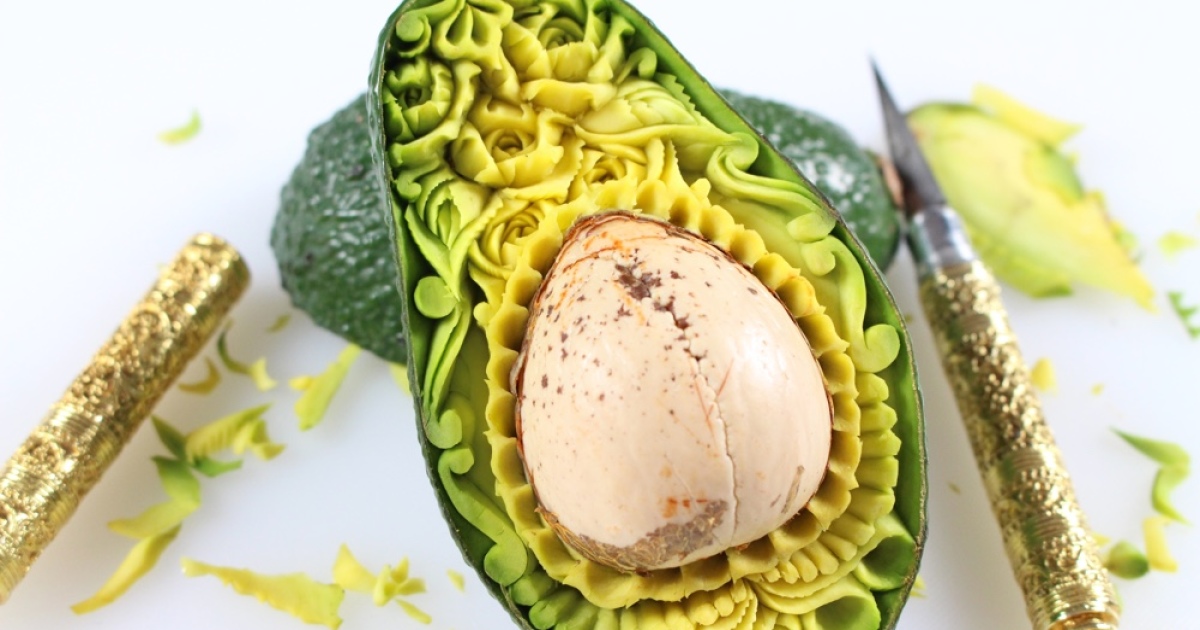
Most avocados have a straightforward career plan: become toast, guacamole, or the slippery green cube that escapes your salad fork. This one had larger ambitions. For about 30 minutes, a ripe avocado became a miniature sculpturean intricate piece of edible art created before oxygen, gravity, and one badly timed sneeze could ruin the performance.
The image behind “This Avocado Took Me 30 Minutes To Hand Carve” was shared by fruit-and-vegetable carving artist Daniele Barresi. His work helped introduce a wider online audience to avocado carving, a form that combines culinary skill, visual design, and a material with the emotional stability of warm butter. The fruit must be soft enough to cut, firm enough to hold detail, and attractive enough to survive a close-up photograph.
That narrow window is what makes hand-carved avocado art so compelling. It is not merely a decorative garnish. It is a race against ripeness, oxidation, and the natural urge to stop carving and eat lunch.
Why an Avocado Makes Such an Unusual Art Material
Soft enough to shape, delicate enough to fail
A properly ripened avocado accepts fine cuts while still supporting shallow relief. An underripe fruit cracks or tears. An overripe one collapses into green paste. The ideal avocado yields slightly to gentle pressure but does not feel hollow, bruised, or loose beneath the skin.
Its natural color also does much of the artistic work. Dark peel surrounds pale yellow-green flesh, while deeper green appears near the outer edge. Different carving depths expose subtle tonal changes, and angled light creates shadows inside grooves. The avocado arrives with its own palette, frame, and lunch break.
A masterpiece with a very short deadline
Once the flesh is exposed to air, enzymatic oxidation gradually turns it brown. Citrus juice can slow the reaction, but too much liquid may soften details or create an unwanted shine. For intricate carving, preparation matters more than rescue. The camera, plate, tools, lighting, and background should be ready before the avocado is opened.
How a 30-Minute Avocado Carving Comes Together
1. Choose the right fruit
Hass avocados are practical because their dark, pebbled skin creates strong contrast around the flesh. Choose one that gives slightly near the top when gently pressed. Avoid squeezing it repeatedly, since enthusiastic testing can bruise the very surface you plan to carve.
Avocados ripen after harvest. A firm fruit can be left at room temperature, while a paper bag with a banana or apple can speed ripening by concentrating ethylene gas. Once the avocado reaches the right softness, refrigeration can slow further ripening until carving time.
2. Clean the fruit, tools, and workspace
Rinse the avocado under running water before cutting. Although the peel is normally discarded, a knife can carry contamination from the skin into the flesh. U.S. food-safety guidance recommends plain water rather than soap or detergent. Wash hands, use clean utensils, and work on a produce cutting board that has not just hosted raw meat.
Place a damp towel beneath the board so it cannot slide. Food art should be dramatic because of the design, not because the cutting board suddenly leaves the scene.
3. Open it safely
Set the avocado on the board and cut lengthwise around the pit, keeping fingers clear of the blade. Twist the halves apart. Avoid holding the fruit in your palm while striking the pit with a large knife. A controlled board-based method or a spoon is safer when the pit must be removed.
The pit can also remain in the composition. It may become the center of a flower, a face, an eye, a moon, or a polished brown focal point surrounded by carved leaves.
4. Establish the large shapes first
Begin with faint guidelines. A symmetrical design needs a central axis; a floral pattern needs its largest petals; a geometric pattern needs even intervals. Starting with tiny details often produces one beautiful corner attached to a confused remainder.
Work from large forms to secondary shapes, then add texture. A small, sharp paring knife or culinary carving tool offers better control than a large chef’s knife. Sharpness matters because a dull blade requires extra pressure and is more likely to slip.
5. Create depth in shallow layers
Relief carving is less about digging and more about removing exactly enough material. Shallow incisions create outlines. Slightly deeper cuts separate petals, scales, or leaves. Narrow wedges create shadows that make neighboring areas appear raised.
Rotate the board rather than twisting the avocado in your hand. Wipe the blade frequently, keep warm fingers away from finished areas, and stop touching any surface that already looks clean. Avocado flesh records every scrape like a very soft witness.
6. Know when to stop
At around 20 minutes, perfectionism becomes the main threat. One additional line may improve the rhythm; 17 additional lines may make the design look as though it lost a fight with a tiny rake. Study the entire composition before adding detail. Balance usually matters more than density.
7. Photograph and serve promptly
Side lighting reveals carved texture better than flat light. Use a neutral plate, slate board, or simple cloth so the design remains the focus. Take an overhead photograph, then try a lower angle to emphasize depth.
If the avocado has been handled safely, serve it soon with toast, eggs, tacos, rice, salad, or crackers. The artwork may disappear, but it does not have to become food waste. The final act can be eating the canvas.
What Makes Avocado Art Look Professional?
Repetition and spacing
Repeated leaves, loops, petals, or scales guide the eye. Consistent spacing makes the pattern intentional, while small variations keep it organic. Five confident cuts usually look better than 30 nervous scratches.
Negative space
Uncarved areas let detailed sections breathe and preserve structural strength. Negative space is not unfinished work; it is the quiet area that lets the fancy area show off.
Controlled depth
Deep cuts attract attention and should define important borders or overlapping forms. Fine shallow lines work better for veins and texture. Combining depths creates the illusion that some elements sit above others.
Adaptation
An avocado is not a manufactured block. Its pit may be off-center, its shape may lean, and a dark spot may appear at the least convenient moment. Skilled carvers adapt. A curve becomes a wave; an uneven edge becomes a leaf; a minor mistake becomes a repeated motif and is immediately promoted to “intentional design choice.”
Avocado Carving and the Larger Tradition of Food Art
Decorative produce carving existed long before social media. The Thai tradition known as kae sa luk developed into a sophisticated art in which fruits and vegetables were transformed into flowers, animals, and elaborate table displays. Many cultures also have traditions involving carved garnishes, molded foods, sugar work, and edible centerpieces.
Modern avocado art belongs to that wider idea: food can satisfy the eye as well as the appetite. What has changed is the audience. A fragile carving that once decorated a table for a few guests can now be photographed and viewed around the world. The sculpture disappears, but its image keeps traveling.
Avocado carving is especially shareable because it transforms a familiar object into something unexpected. Everyone recognizes the fruit. Seeing it covered in botanical relief, geometric patterns, or miniature faces creates an immediate question: “How did someone do that without accidentally making guacamole?”
Common Beginner Mistakes and Easy First Designs
The most common mistake is using fruit that is too ripe. If the flesh sticks heavily to the blade, slumps after each cut, or releases liquid, change the project from sculpture to dip. Other frequent problems include carving while holding the avocado, cutting too deeply too soon, choosing a rectangular design that fights the fruit’s oval shape, and waiting too long to photograph the result.
Beginners can start with a sunburst around the pit, a six-petal flower, one large leaf with shallow veins, a band of triangles and arcs, or a simple face that uses the pit as a nose. These designs teach pressure, spacing, and depth without requiring heroic levels of patience.
Practice on affordable fruit with a good interior but imperfect shape. The goal of the first session is not a museum piece. It is learning how avocado flesh responds before it turns into an expensive green anxiety test.
A 30-Minute Avocado Carving Experience
The first five minutes feel wonderfully controlled. The board is clean, the knife is sharp, and the avocado opens with the flawless pale-green interior normally seen in grocery advertisements. I choose a floral pattern around the pit. It seems reasonable. Then I make the first guideline and discover that the avocado has opinions.
The flesh is softer on one side and firmer on the other. A curve that looked effortless on paper becomes a series of careful cuts. The first petal grows wider than planned, so the second petal must also become wider. This is not a mistake, I decide. It is a design evolution. Artists use this phrase when panic would sound less professional.
By minute ten, the pattern begins to appear. The brown pit forms a warm center, and the shallow grooves catch thin shadows. The familiar fruit starts looking like a carved tile. I stop thinking about breakfast and begin thinking about symmetry, which is how an avocado quietly takes control of a morning.
At minute fifteen, confidence becomes dangerous. The blade travels slightly farther than intended and removes the tip of a petal. For one dramatic second, the project appears ruined. Then I trim the neighboring petals to match. The accident becomes a motif. Consistency, I learn, can disguise a surprising number of disasters.
By minute twenty, the large shapes are stable, so I add leaf veins, narrow channels, and tiny marks with the tool’s point. Each detail creates more contrast, but each one also creates more risk. The surface is warming, my hand is tired, and the avocado feels one enthusiastic breath away from becoming spreadable.
At minute twenty-five, I stop cutting and study the whole piece. One side looks heavier. Removing a slim wedge near the borderand repeating it on the opposite siderestores balance. That small compositional correction accomplishes more than several minutes of decorative fussing. Complexity is not the same as improvement.
The final minutes belong to cleanup and photography. I angle the plate toward a window so side light settles into the grooves. On the phone screen, the relief looks deeper. The peel becomes a dark frame, the center glows, and the pit anchors the design.
Finishing feels strange because there is no permanent object to place on a shelf. The carving will brown, soften, and eventually be eaten. Instead of disappointing me, that feels liberating. Its value lies in the attention required to make itthe quiet half hour when an ordinary avocado becomes the only thing in the room.
I take several photographs and serve the carved half beside toast with lime, salt, and pepper. The first spoonful destroys a petal. The second removes most of the pattern. Within minutes, the sculpture is breakfast. That ending seems right. Food art does not need to last forever to be worth making. Sometimes 30 careful minutes, one strong photograph, and an unusually decorative piece of toast are enough.
Conclusion
“This Avocado Took Me 30 Minutes To Hand Carve” captures the beauty of making detailed art from an ingredient that refuses to wait. Successful avocado carving requires the right ripeness, safe knife handling, visual planning, shallow depth control, and the discipline to stop before enthusiasm turns the surface into green lace.
The finished work may survive only briefly, but that is exactly what makes it memorable. A hand-carved avocado transforms breakfast into sculpture and a common fruit into proof that creativity does not require expensive materials. Sometimes it requires a small knife, a ripe avocado, and acceptance that the masterpiece may eventually be eaten with hot sauce.
Note: This original article is inspired by the documented avocado carving shared by Daniele Barresi and synthesizes established U.S. information about produce safety, avocado ripening, oxidation, nutrition, knife handling, and fruit-carving traditions.