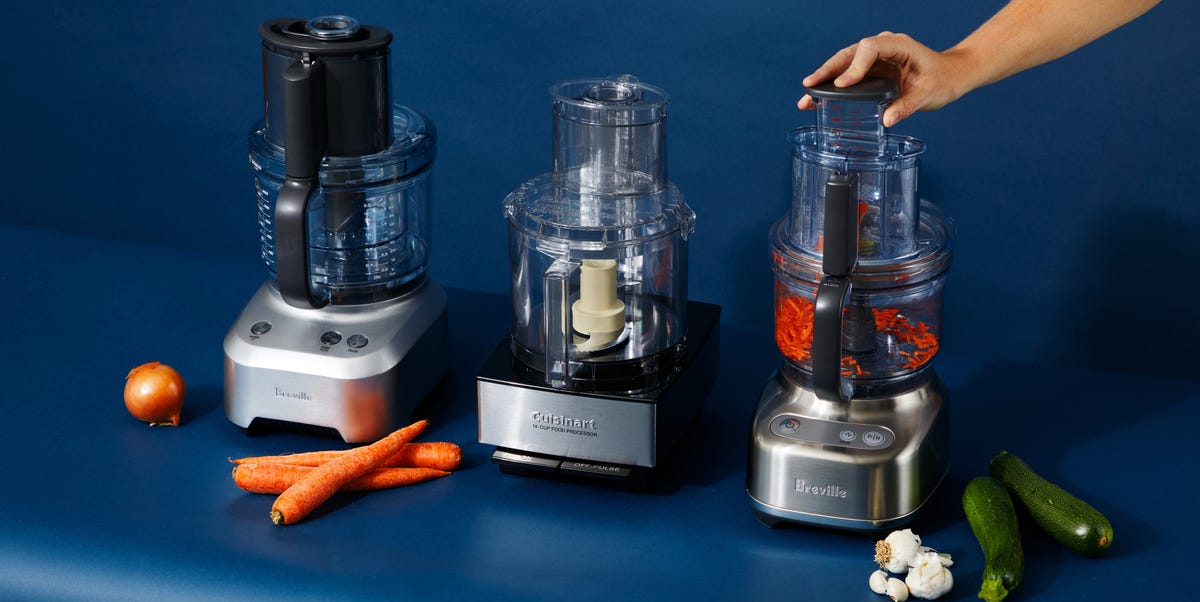
A great food processor is the kitchen helper that quietly turns “I should cook more” into “Look at me, casually making pesto on a Tuesday.” It chops onions without emotional damage, shreds cheese without bicep training, slices potatoes with suspicious efficiency, and makes hummus so smooth your store-bought tub may file a complaint.
But choosing the best food processor right now can feel like trying to pick the right knife from a drawer full of very confident knives. Some models are big enough for batch cooking. Some are compact enough for tiny apartments. Some come with enough attachments to make your junk drawer nervous. The right choice depends on how you cook, how much counter space you have, and whether your dreams involve homemade pizza dough, shredded cabbage, almond butter, or simply not chopping twelve carrots by hand.
This guide breaks down the eight best food processors available now, based on current product testing trends, manufacturer specifications, real-world usability, and practical kitchen needs. Instead of declaring one machine perfect for every human with a countertop, we are matching each processor to the cook who will actually use it.
How We Chose the Best Food Processors
The best food processors were evaluated around the things that matter in a real kitchen: chopping consistency, slicing and shredding performance, bowl capacity, motor strength, ease of assembly, attachment storage, cleaning, durability, and value. A food processor should not require a graduate degree in lid alignment. It should feel powerful, stable, and intuitive, even when your hands are covered in garlic, dough, or optimism.
Large-capacity models are best for families, meal preppers, and anyone who thinks “just a little coleslaw” means feeding eight people. Mid-size processors are better for everyday cooking. Compact models and attachments make sense for smaller kitchens or specialized users. The best food processor is not always the biggest or most expensive one. It is the one that gets used instead of becoming an appliance-shaped monument to good intentions.
The Best 8 Food Processors Right Now
1. Cuisinart Custom 14-Cup Food Processor: Best Overall Classic
The Cuisinart Custom 14-Cup Food Processor remains one of the most trusted full-size machines for home cooks, and for good reason. It has a large 14-cup work bowl, a strong 720-watt motor, simple paddle controls, and a design that has aged gracefully because it focuses on performance rather than gimmicks.
This is the processor to choose if you want one reliable machine for chopping vegetables, shredding cheese, slicing potatoes, making pie dough, blending dips, kneading dough, and tackling weekend meal prep. The wide feed tube helps reduce pre-cutting, which is excellent news for anyone who has ever looked at a mountain of vegetables and briefly considered ordering pizza instead.
Its biggest strength is consistency. The Cuisinart does not try to be a blender, air fryer, Bluetooth speaker, or life coach. It processes food. It does that very well. The controls are simple: on, off, and pulse. That simplicity makes it easy to use, easy to recommend, and less likely to intimidate newer cooks.
Best for: Most home cooks, families, meal prep, dough, shredding cheese, and all-purpose kitchen use.
Watch out for: It is a full-size appliance, so smaller kitchens should measure cabinet and counter space before committing.
2. Breville Sous Chef 16: Best Premium Powerhouse
The Breville Sous Chef 16 is the “I take cooking seriously, but I also enjoy beautifully engineered objects” pick. With a large 16-cup capacity, premium build quality, multiple accessories, and an adjustable slicing disc with many thickness settings, it is designed for cooks who want precision and range.
This model shines when you regularly prepare large batches, entertain often, make dough, slice vegetables for gratins, shred big blocks of cheese, or want a machine that feels closer to professional equipment than a basic appliance. The accessory kit is generous, including slicing, shredding, chopping, dough, and specialty discs depending on the configuration.
The Breville also earns points for thoughtful design. Many food processors can technically do the job but make you wrestle with lids, bowls, and attachments like you are solving a plastic puzzle at 6 p.m. Breville’s parts tend to feel more refined, which matters if you use your processor several times a week.
Best for: Serious home cooks, batch cooking, precision slicing, dough, and premium performance.
Watch out for: It is expensive and comes with accessories that require storage. If you mostly chop half an onion, this may be too much machine.
3. Magimix Compact 5200 XL: Best for Durability
The Magimix Compact 5200 XL is built for cooks who want a long-term kitchen investment. Known for its heavy-duty induction motor, sturdy construction, simple controls, and multi-bowl system, it is one of the most durable food processors on the market.
The three-bowl design is especially useful. You can handle smaller tasks without dirtying the largest bowl, then switch to bigger jobs when needed. That makes the Magimix feel more flexible than many large processors. It is excellent for chopping, slicing, shredding, kneading, emulsifying, and blending thicker mixtures like hummus or nut-based spreads.
The motor is one of its biggest selling points. Instead of chasing flashy settings, Magimix leans into quiet strength and long-term reliability. The result is a machine that feels stable, confident, and slightly European in the best possible waylike it might judge your knife skills but still help you make dinner.
Best for: Durability-focused buyers, frequent cooks, families, and anyone who wants a machine that feels built to last.
Watch out for: It is heavy and premium-priced. The nested bowl system is useful, but it may require a little adjustment for first-time users.
4. KitchenAid 13-Cup Food Processor with Dicing Kit: Best Storage-Friendly Design
The KitchenAid 13-Cup Food Processor is one of the most user-friendly full-size food processors, especially for people who hate hunting for blades in random cabinets. Its all-in-one storage system keeps accessories organized inside the bowl, which is a small miracle for anyone whose kitchen drawer already contains three mystery lids and a whisk from 2009.
The KitchenAid is particularly strong for slicing and dicing tasks. The adjustable slicing feature allows you to change thickness without swapping discs every five minutes, and the dicing kit adds extra versatility for salads, salsas, soups, and meal prep. Its 13-cup bowl is large enough for most family cooking without feeling as massive as some 16-cup models.
This processor is not just about power; it is about convenience. Easy storage, straightforward controls, and practical attachments make it a smart pick for busy cooks who want capability without clutter. It also has a modern look that fits nicely on the counter if you use it often enough to leave it out.
Best for: Organized kitchens, slicing, dicing, family meals, and cooks who want accessories stored neatly.
Watch out for: The dicing kit adds cleaning time. Tiny vegetable cubes are delightful until you meet the grid afterward.
5. Ninja Professional Plus Food Processor BN601: Best High-Power Value
The Ninja Professional Plus BN601 is a strong pick for shoppers who want impressive power without stepping into premium-price territory. With a 9-cup bowl, 1000 peak-watt motor, Auto-iQ preset programs, and attachments for chopping, slicing, pureeing, and dough, it delivers a lot of performance for the money.
This model is ideal for everyday tasks: chopping onions, making salsa, shredding cheese, blending dips, preparing dough, or turning vegetables into weeknight dinner components before your motivation disappears. The preset programs make it approachable for beginners because you do not have to guess how long to run the machine.
The Ninja is not as refined as the Breville or as classic as the Cuisinart, but it is powerful, fast, and practical. It is the food processor equivalent of a reliable pickup truck: not fancy in a tuxedo way, but very ready to haul cabbage.
Best for: Value shoppers, beginners, everyday cooking, powerful chopping, and compact family kitchens.
Watch out for: The 9-cup bowl is versatile, but heavy batch cooks may want more capacity.
6. Hamilton Beach Bowl Scraper 10-Cup Food Processor: Best Budget Pick
The Hamilton Beach Bowl Scraper 10-Cup Food Processor is the budget-friendly model that solves one of the most annoying food processor problems: stopping repeatedly to scrape down the sides. Its built-in scraper lets you keep ingredients moving, which is handy for dips, sauces, chopped vegetables, and mixtures that cling to the bowl like they pay rent there.
With a 10-cup bowl, 450-watt motor, two speeds, pulse control, and basic slicing, shredding, chopping, mixing, and pureeing functions, it is a practical machine for everyday cooking. It is not meant to compete with premium models in build quality or refinement, but it delivers strong value for casual users.
This is a smart choice for people who want a real food processor but do not want to spend several hundred dollars. It handles common jobs well, stores more easily than giant models, and makes meal prep less tedious. For many kitchens, that is exactly enough.
Best for: Budget shoppers, occasional cooks, small families, dips, chopping, and basic shredding.
Watch out for: It can be louder and less refined than premium machines, and it is not the best choice for frequent heavy dough work.
7. Braun FP3020 12-Cup Food Processor: Best Quiet Multi-Function Option
The Braun FP3020 is a strong choice for cooks who want a versatile machine with multiple attachments and quieter operation than many budget competitors. It offers a 12-cup dry ingredient capacity, a 600-watt motor, variable speed control, and a useful set of accessories for chopping, slicing, shredding, kneading, and citrus juicing.
What makes the Braun interesting is its balance. It is not the trendiest food processor, and it will not win a beauty contest judged by stainless-steel minimalists, but it is practical, capable, and flexible. The variable speed control gives users more precision than basic two-button models, which can help with delicate chopping or recipes where texture matters.
This is a good pick for people who want one appliance to handle a variety of prep tasks without jumping to the highest price tier. The citrus juicer attachment is a nice bonus for vinaigrettes, marinades, lemon bars, and anyone who believes fresh citrus improves nearly everything except maybe cereal.
Best for: Multi-function prep, quieter operation, variable speed control, and cooks who want several attachments.
Watch out for: Availability may vary, and the design is more practical than sleek.
8. Vitamix 12-Cup Food Processor Attachment: Best for Vitamix Owners
The Vitamix 12-Cup Food Processor Attachment is not a standalone food processor. That is important. It is designed for compatible Vitamix Ascent and Venturist blender bases. But if you already own one of those machines, this attachment can save counter space and expand your blender into a true food prep station.
The attachment includes a 12-cup work bowl, multi-use blade, slicing and shredding discs, pushers, and a storage case. It can chop, mince, mix, slice, and shred without requiring another motor base. For smaller kitchens, that is a major advantage. You get food processor functionality while using the powerful motor you already own.
It is especially appealing for Vitamix loyalists who do not want a separate full-size machine. It is less compelling for shoppers starting from scratch, because buying the blender base plus the attachment becomes expensive. Still, for the right user, it is a space-smart solution that works well for salads, vegetables, sauces, and weekly prep.
Best for: Existing Vitamix Ascent or Venturist owners, small kitchens, slicing, shredding, and space-saving setups.
Watch out for: It is not compatible with every Vitamix blender and does not include its own motor base.
Quick Comparison: Which Food Processor Should You Buy?
- Best overall: Cuisinart Custom 14-Cup Food Processor
- Best premium model: Breville Sous Chef 16
- Best long-term investment: Magimix Compact 5200 XL
- Best for organized storage: KitchenAid 13-Cup Food Processor with Dicing Kit
- Best high-power value: Ninja Professional Plus BN601
- Best budget pick: Hamilton Beach Bowl Scraper 10-Cup
- Best quiet multi-function option: Braun FP3020
- Best for Vitamix owners: Vitamix 12-Cup Food Processor Attachment
What Size Food Processor Do You Need?
For most households, a 10- to 14-cup food processor is the sweet spot. It is large enough for shredding cheese, slicing vegetables, making dough, and preparing family meals, but not so large that it becomes a storage crisis. If you meal prep regularly or cook for a crowd, a 14- to 16-cup model makes sense. If you mostly make sauces, dips, and small batches, a 9- or 10-cup model may be easier to live with.
Mini choppers are convenient, but they are not true replacements for full-size food processors. They are great for garlic, herbs, nuts, dressings, and small sauces. They are not ideal for slicing, shredding, kneading dough, or tackling a cabbage that has chosen violence.
Food Processor vs. Blender: Do You Need Both?
A blender is best for liquids: smoothies, soups, frozen drinks, silky sauces, and anything that needs a vortex. A food processor is best for dry or semi-dry prep: chopping, slicing, shredding, grating, kneading, and mixing thicker foods. If your goal is a smoothie, choose a blender. If your goal is salsa, coleslaw, shredded cheese, pie crust, or pizza dough, choose a food processor.
There is overlap. Both can make hummus, pesto, and some purees. But a food processor gives you more control over texture. That matters when you want chopped vegetables instead of vegetable soup pretending to be salsa.
Real Kitchen Experience: What Living With a Food Processor Actually Feels Like
The first thing you learn after buying a good food processor is that it changes what feels “worth making.” Homemade coleslaw goes from “not tonight” to “done in four minutes.” A block of cheddar becomes a snowy pile of shredded cheese without the knuckle-related suspense of a box grater. Pie dough becomes less mysterious. Pesto becomes dangerously easy. Suddenly, you are the kind of person who says, “I’ll just make the hummus,” and everyone has to live with your confidence.
In daily use, the biggest difference between a food processor you love and one you avoid is not just motor power. It is setup and cleanup. If the lid is annoying, if the bowl feels flimsy, if the blade storage is chaotic, or if washing the parts feels like cleaning a tiny plastic obstacle course, the machine will slowly migrate to the back of a cabinet. That is where appliances go to become legends.
A good processor earns its space by removing friction. For example, the Cuisinart Custom 14-Cup is easy to understand, so it gets used. The KitchenAid 13-Cup stores its accessories neatly, so you are not rummaging around for the slicing disc while your potatoes oxidize in silent judgment. The Hamilton Beach scraper design sounds simple, but it matters when making dips because stopping the motor every few pulses gets old fast. The Breville and Magimix models feel more substantial, which makes them enjoyable for frequent cooking, especially when processing heavy doughs, nuts, or dense vegetables.
The second lesson is that bigger is not always better. A 16-cup machine is wonderful when you are prepping soup vegetables, shredding pounds of cheese, or making dough for a crowd. But if you cook for one or two people, a smaller 9- or 10-cup processor may be more practical. The best appliance is the one you can pull out without sighing first.
Another real-world tip: dishwasher-safe parts are helpful, but hand-rinsing immediately after use saves future misery. Dough, nut butter, cheese, and herbs all become more stubborn if left to dry. Rinse the blade carefully, wash the lid grooves, and do not pretend future-you enjoys archaeology. Future-you does not.
Food processors also encourage better ingredient habits. You may buy whole vegetables instead of pre-cut bags. You may shred your own cheese because it melts better. You may make dressings, sauces, and spreads with fewer additives. You may even start using the vegetables in your crisper drawer before they become compost with ambition.
The downside is storage. Full-size food processors need room for the base, bowl, lid, discs, blades, and sometimes a separate case. Before buying, decide where everything will live. If your cabinets are already packed tighter than a holiday airport, choose a model with in-bowl storage or a compact footprint.
Overall, living with a food processor is less about fancy cooking and more about removing boring prep work. It makes healthy meals easier, batch cooking faster, and weeknight dinners less dramatic. It will not cook dinner for you, but it will do enough chopping that you may stop glaring at onions like they personally wronged you.
Conclusion
The best food processor right now depends on your cooking style. For most people, the Cuisinart Custom 14-Cup is the safest all-around choice because it is powerful, simple, and proven. The Breville Sous Chef 16 is the premium pick for serious cooks who want precision and accessories. The Magimix Compact 5200 XL is ideal for long-term durability, while the KitchenAid 13-Cup is excellent for organized storage and dicing. Ninja offers strong performance at a friendlier price, Hamilton Beach gives budget shoppers real usefulness, Braun brings quiet versatility, and the Vitamix attachment is perfect for people already in the Vitamix ecosystem.
Choose the machine that fits your habits, not your fantasy cooking personality. If you batch cook, go bigger. If you cook in a small kitchen, prioritize storage. If you make dough or nut butter, prioritize motor strength. If you mostly chop onions and herbs, do not buy a spaceship. The right food processor should make cooking feel easier, faster, and slightly more funwithout turning your kitchen into an appliance showroom.
Note: Product prices, availability, included accessories, and model names can change over time. Always confirm the latest specifications before purchasing.