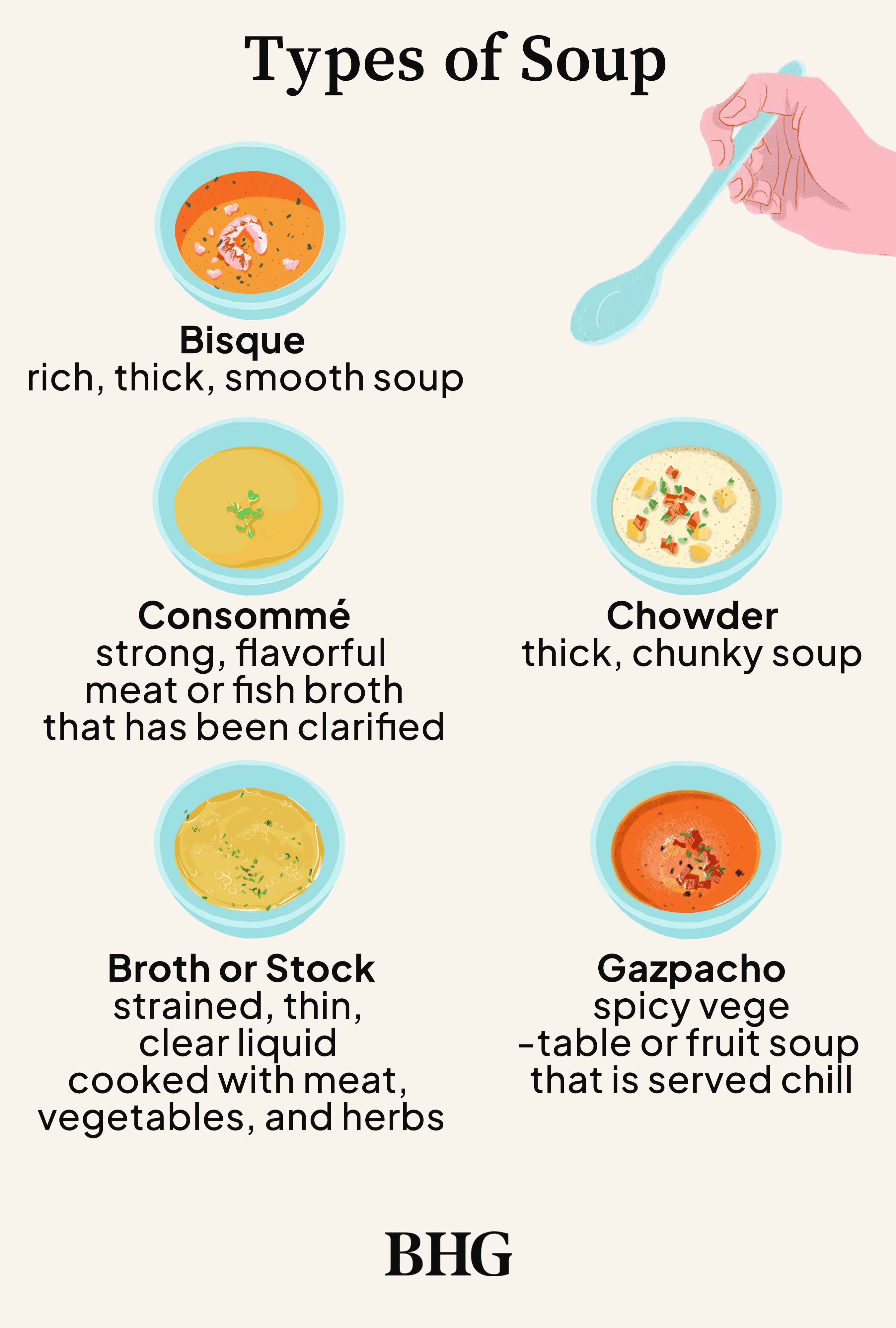
Soup sounds simple until you find yourself standing in a grocery aisle whispering, “Wait, is bone broth just stock in better branding?” Then the confusion deepens: bisque looks fancy, chowder looks hearty, consommé looks like soup that went to finishing school, and bouillon cubes look like tiny salty chaos squares. If you have ever wondered what separates bisque from broth, broth from stock, and soup from its more dramatic cousins, you are in the right bowl.
The good news is that the differences are real, even if everyday cooking and store labels blur them. In classical cooking, these terms point to specific techniques, textures, and uses. In modern home kitchens, they overlap more than culinary school textbooks would like. Still, understanding the basics makes you a smarter cook, a smarter shopper, and far less likely to use a delicate sipping broth when your recipe really needs a gelatin-rich stock with some backbone.
Let’s untangle the soup family tree without making it sound like homework.
A Quick Cheat Sheet for Soup Types
| Type | Main Idea | Texture | Best Use |
|---|---|---|---|
| Broth | Usually made with meat and aromatics | Light and thin | Sipping, light soups, cooking grains |
| Stock | Usually made with bones, scraps, and aromatics | Richer, silkier, often gels when chilled | Soup base, sauces, braises, gravies |
| Bisque | Smooth, rich soup often built around shellfish or vegetables | Creamy and velvety | Elegant first course or rich main |
| Chowder | Hearty thick soup with chunks | Chunky and substantial | Main-course soup |
| Consommé | Clarified, concentrated stock | Clear but deeply flavored | Refined starter |
| Bone broth | Long-simmered, collagen-rich liquid from bones | Full-bodied and often gelatinous | Sipping or enriching recipes |
| Bouillon | Concentrated dehydrated broth or stock substitute | Depends on dilution | Convenience cooking |
| Cream soup | Soup thickened with cream, roux, or purée | Smooth and rich | Comfort food and cold-weather meals |
Broth vs. Stock: The Most Confused Pair in the Pot
If bisque and chowder are cousins with very different personalities, broth and stock are siblings constantly being mistaken for each other at family reunions.
What Is Broth?
Broth is generally the lighter, more finished liquid. It is often made by simmering meat with vegetables and aromatics. Because the goal is flavor rather than collagen extraction, broth tends to be thinner and more ready to drink on its own. Think chicken broth that tastes cozy enough to sip from a mug when you are under a blanket pretending one cold symptom means you now live in a Victorian novel.
Broth is also a great choice when you want a clean, straightforward flavor. It works especially well in chicken noodle soup, rice soup, or dishes where grains, pasta, or beans need to absorb liquid without getting bogged down by too much gelatin.
What Is Stock?
Stock is usually built from bones, connective tissue, and trimmings, plus aromatics like onion, carrot, celery, herbs, and peppercorns. The long simmer pulls collagen from the bones, which turns into gelatin. That gelatin is the big clue. A good stock often jiggles or gels when chilled, which sounds a little weird until you realize that wobbly structure is exactly what gives sauces and soups their lush body.
In other words, stock is less “drink me now” and more “use me to make everything taste better.” It is a building block. That is why many cooks leave it lightly seasoned or unsalted. If you reduce it later in a sauce or braise, you do not want a salt bomb sneaking up on dinner.
Why Store Labels Make This More Confusing
Here is where the grocery store throws a ladle into the gears. In U.S. labeling, stock and broth are often treated interchangeably. So the carton labeled “stock” may behave more like broth, and the one labeled “broth” may not be wildly different. That means the smartest move is not trusting the front label like it is a sacred scroll. Read the ingredients, look for sodium level, and think about your end use.
If you want richness and body, homemade stock usually wins. If you want something light, sippable, and simple, broth is often the better pick.
So Where Does Bone Broth Fit In?
Bone broth is the overachiever of the bunch. In practical cooking terms, it is very close to stock, often simmered longer so it becomes especially rich in gelatin and body. It is commonly sold as something you can sip straight, which makes it feel like a crossover product: part stock, part beverage, part wellness trend, part “I paid seven dollars for hot bones.”
That does not mean bone broth is fake. It just means the name is a little more modern-marketing-friendly than classically precise. In most kitchens, bone broth works anywhere a rich stock would work, especially in soups, braises, ramen-style broths, and sauces.
What Makes a Bisque a Bisque?
Bisque is the silk robe of the soup world. Traditionally, it is a smooth, rich soup associated with shellfish such as lobster, crab, shrimp, or crayfish. The classic method builds flavor from shells and aromatics, then often includes tomato paste, stock, cream, and a final blending or straining step for a refined texture.
That said, modern bisques are more flexible. Tomato bisque and corn bisque are both common examples. So while seafood is traditional, the defining trait today is usually the texture: smooth, creamy, and elegant rather than chunky and rustic.
One detail that surprises people is that a traditional bisque is not always baby-food smooth. Some culinary references describe it as slightly coarse or grainy, though still creamy and luxurious. So if your bisque has deep flavor and a velvety spoon-feel, it is doing its job.
Bisque vs. Chowder: Same Neighborhood, Very Different Houses
People confuse bisque and chowder because both can be rich, creamy, and seafood-based. But the texture tells the story fast.
Bisque
Bisque is usually smooth, blended, and more refined. It leans toward creamy elegance. You could serve it at a dinner party and feel extremely competent.
Chowder
Chowder is thicker, chunkier, and heartier. It usually contains pieces of seafood, meat, potatoes, or vegetables. It is less about finesse and more about satisfaction. New England clam chowder is the classic creamy version, while Manhattan clam chowder swaps in tomatoes and broth for a thinner red base. Both are chowders because they are hearty, chunky, and meal-like.
If bisque is wearing a tailored blazer, chowder showed up in a fisherman sweater and is absolutely winning at life.
Other Soup Types Worth Knowing
Consommé
Consommé is a clarified stock or broth that is prized for being crystal clear and deeply flavored. It is made by clarifying stock with ingredients such as egg whites and meat, which trap impurities so the finished liquid becomes beautifully clear. It looks light, but it is not weak. Consommé is concentrated, refined, and often served as a starter.
Cream Soup
Cream soups are a broad category. They may be thickened with cream, roux, a vegetable purée, or some combination of all three. Cream of mushroom, cream of potato, and cream of broccoli all live here. These soups are usually smooth or semi-smooth, rich, and comforting. They are the edible equivalent of thick socks.
Puréed Soup
A puréed soup gets its body mainly from blended ingredients rather than lots of dairy. Think butternut squash soup, carrot soup, or split pea soup. These soups can be creamy without being “cream soups” in the formal sense. This is where many home cooks get tripped up: smooth does not always mean bisque, and creamy does not always mean cream was involved.
Velouté
In classical French cooking, velouté is technically a mother sauce made from white stock thickened with a blond roux. But in soup language, the word sometimes shows up to describe soups with that same velvety, refined quality. So if you see “chicken velouté,” you are usually looking at a silky soup with a stock-based, roux-thickened structure. Fancy word, practical result: smooth and luscious.
Bouillon
Bouillon is the shortcut artist. Usually sold as cubes, granules, or paste, it is a concentrated, dehydrated form of broth or stock flavoring that dissolves in water. It is handy, affordable, and popular for quick soups, rice, sauces, and stews. It is also often salty, so it should be used with a light hand unless your goal is to recreate seawater with onions.
Stew
Stew is not exactly soup, though the two hang out together a lot. Stew is thicker, chunkier, and typically contains less free liquid than soup. The ingredients are more the main event than the liquid itself. If you need a spoon and a fork and maybe a nap afterward, you are probably in stew territory.
How to Choose the Right One for Cooking
The easiest way to pick the right soup base is to ask one question: what job does the liquid need to do?
- If you want a light, drinkable, clean-tasting liquid, choose broth.
- If you want body, richness, and a better foundation for sauces or hearty soups, choose stock.
- If you want a smooth, rich, restaurant-style seafood or vegetable soup, make a bisque.
- If you want a thick, chunky, meal-in-a-bowl situation, go chowder.
- If you want clarity and elegance, think consommé.
- If you want speed and convenience, bouillon can absolutely save dinner.
None of this means you have to be rigid. Good home cooking is flexible. A rich broth can stand in for stock. A stock can become soup. A vegetable purée can be finished with cream and suddenly feel bisque-adjacent. The goal is not culinary gatekeeping. The goal is knowing what texture and flavor you are likely to get.
Common Mistakes People Make
The first mistake is assuming all carton broths and stocks are dramatically different. Sometimes they are not. The second is calling every smooth soup a bisque. A blended carrot soup is delicious, but it is not automatically a bisque just because it went through a blender. The third is overlooking texture. In soup classification, texture matters almost as much as ingredients.
Another common mistake is underestimating salt in convenience products. Bouillon and many boxed broths can carry a lot of sodium, which matters if you plan to reduce them. Finally, people often think “cream soup” means the dish must be heavy. Not always. A soup can be creamy from potatoes, beans, squash, cauliflower, or blended rice without becoming a dairy avalanche.
Kitchen Experiences That Make the Differences Click
The fastest way to understand these soup types is not by memorizing definitions but by experiencing them side by side. Imagine a Sunday afternoon when you simmer chicken meat with onion, celery, and parsley for a quick broth. A couple hours later, the liquid smells clean and comforting. It tastes good on its own, like something you could sip from a mug while watching rain hit the window. Now imagine making stock the next day with roasted bones, the same vegetables, and a much longer simmer. Chill both pots overnight. The broth stays liquid. The stock turns into savory jelly. Suddenly the lesson becomes very real, very fast, and slightly wobbly.
Then there is the bisque moment. If you have ever made a shrimp or lobster stock from shells, added aromatics and tomato paste, then blended and strained the whole thing with a little cream, you know the feeling. The soup goes from ordinary-looking pot of ingredients to something that tastes far more expensive than your weeknight budget intended. It is the kind of dish that makes people assume you own better cookware than you actually do. Bisque teaches that texture is not a side note. Texture is the plot.
Chowder teaches the opposite lesson. The first time you make a proper chowder, you notice how much of the experience comes from the chunks. Potatoes, corn, clams, bacon, onion, maybe a little thyme, all suspended in a rich base. If you blend it until smooth, it loses the whole point. Chowder is supposed to feel generous and substantial. It should eat like dinner, not just introduce dinner.
Bone broth has its own kitchen personality too. It asks for patience. You let it go low and slow, and somewhere between the long simmer and the next day’s chill, you get that dense, silky body people talk about. Whether you drink it straight or use it in soup, it feels different from a lighter broth. Not better in every situation, just different. That is really the secret behind all these terms. They are not rankings. They are tools.
Home cooks also learn quickly that labels do not always save you. You buy a carton labeled stock expecting deep richness, then pour it out and realize it behaves more like broth. That is when experience starts to matter more than packaging. You learn to look for clues: sodium level, ingredient list, body, and taste. If it feels thin, you treat it like broth. If it has body, you use it where richness matters. The carton can say whatever it wants. Your spoon knows the truth.
And perhaps the most useful experience of all is discovering that soup categories are helpful without being prison bars. A smooth tomato soup can borrow from bisque. A puréed vegetable soup can feel creamy without cream. A hearty bean soup can edge toward stew. Real kitchens are full of overlap, substitutions, shortcuts, and happy accidents. Once you understand what each type is trying to achieve, you stop worrying about labels and start cooking with purpose. That is when soup gets really fun.
Conclusion
The differences between bisque, broth, stock, and other soup types come down to a few big ideas: ingredients, cooking method, texture, and purpose. Broth is lighter and more finished. Stock is richer and built for structure. Bisque is smooth and luxurious. Chowder is chunky and hearty. Consommé is clear and concentrated. Bouillon is convenience in cube form. Bone broth lives close to stock, just with a longer simmer and a bigger wellness reputation.
Once you know those distinctions, soup stops being a foggy category and becomes a useful set of cooking tools. And that means better shopping, better recipes, and fewer moments of staring into a pot asking, “Who are you, really?”