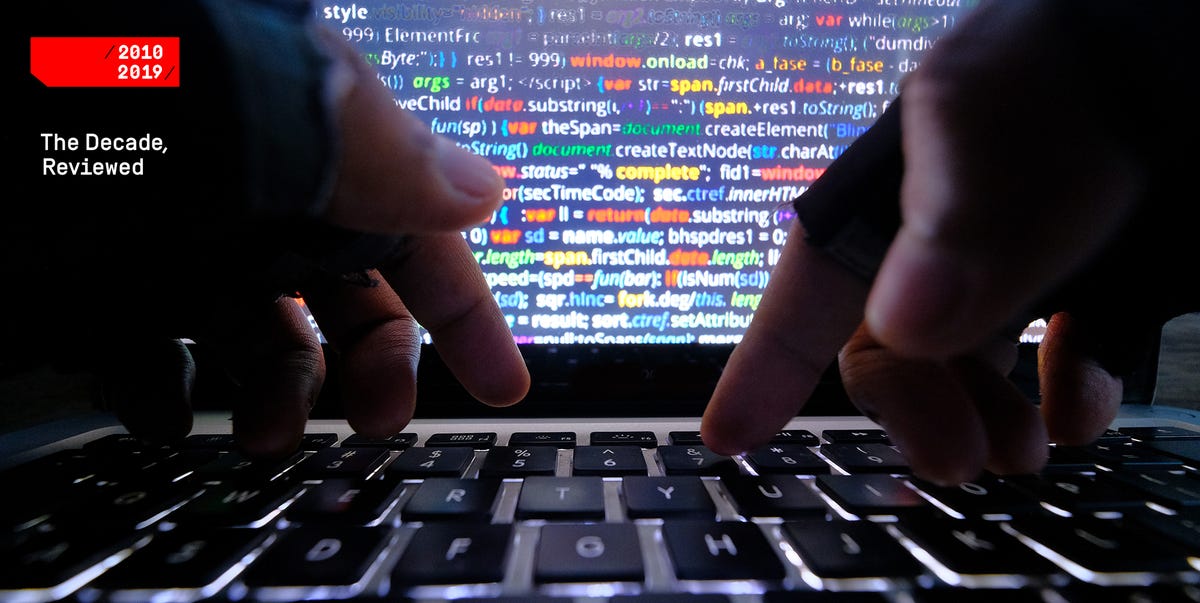
The 2010s were the decade when ooms. It became a real, persistent, and deeply uncomfortable part of global conflict. Governments, militaries, intelligence agencies, corporations, hospitals, utilities, election officials, and regular people all learned the same lesson: a keyboard could now influence events once reserved for spies, soldiers, and diplomats.
Cyber conflict did not replace tanks, aircraft, sanctions, or propaganda. Instead, it joined them. It became the quiet teammate in the corner: hard to see, difficult to attribute, and perfectly capable of making everyone else’s job harder. During the decade, cyber operations evolved from stealing information to disrupting infrastructure, damaging industrial systems, influencing democratic debate, and causing financial losses that spread across borders at internet speed.
Note: In this article, “cyberwar” is used broadly to describe state-linked cyber espionage, sabotage, disruption, influence operations, and attacks that support political or military goals.
2010: Stuxnet Changed the Conversation
The decade began with a warning shot that did not make a sound. Stuxnet, discovered in 2010, was unlike most malware people had seen before. It did not simply steal files, display a ransom note, or turn a computer into a spam machine. It targeted industrial control systems connected to Iran’s nuclear program and demonstrated that malicious code could create physical consequences.
That was the jaw-dropping part. Software had crossed the line from annoying office technology to something that could influence machines in the real world. Industrial control systems run equipment in factories, power plants, water facilities, transportation networks, and other critical infrastructure. Suddenly, the old phrase “the internet is not real life” looked about as reliable as a floppy disk in a rainstorm.
Stuxnet did not create cyberwar from scratch. States had used espionage and digital intrusion for years. But it made the strategic implications impossible to ignore. A cyber weapon could be precise, covert, and potentially destructive. It could slip into a target environment long before anyone realized an attack had begun. It could also create uncertainty, because even after malware was discovered, investigators still had to determine who developed it, how far it had spread, and whether related tools remained hidden.
Cyber Conflict Expanded Beyond Military Secrets
As the decade moved forward, cyber operations became less confined to traditional military targets. Governments and state-linked groups targeted companies, media organizations, government databases, financial institutions, research institutions, and political groups. The invisible battlefield expanded because modern society had expanded. Nearly everything important now depended on digital systems.
The Sony Pictures Attack Showed That Culture Could Become a Target
In 2014, the attack on Sony Pictures Entertainment revealed how cyber conflict could collide with entertainment, politics, intimidation, and public humiliation. Attackers stole data, leaked emails, threatened employees, and disrupted the company’s systems. The event made a powerful point: national-security cyber threats were no longer limited to defense contractors and government agencies.
A movie studio became a geopolitical target. That sounded absurd until it happened. It was a reminder that any organization connected to controversial speech, international disputes, valuable intellectual property, or political pressure could find itself caught in a larger conflict.
The OPM Breach Turned Personal Data Into Strategic Intelligence
In 2015, the breach of the U.S. Office of Personnel Management exposed the scale of cyber espionage against government systems. Sensitive records connected to millions of people were compromised, including background-investigation information. Unlike a stolen credit card, this kind of data does not expire after a bank sends a replacement in a cheerful envelope.
Personnel records, security-clearance forms, fingerprints, financial history, travel details, personal relationships, and employment information can be valuable for years. They can help an intelligence service identify government employees, understand networks of trust, map professional relationships, and potentially target individuals later.
The OPM breach illustrated a crucial truth of the cyberwar decade: not every attack needs to blow something up. Sometimes the most damaging operation is the one that quietly collects information and waits. Espionage may not create dramatic headlines on day one, but it can create strategic advantage for years.
Ukraine Became an Early Laboratory for Cyberwarfare
Ukraine experienced some of the clearest examples of cyber operations being used alongside political pressure and military conflict. Beginning in the middle of the decade, Ukrainian government agencies, media outlets, infrastructure providers, and private companies faced repeated cyber incidents.
The most alarming examples involved the electric grid. In late 2015, a cyberattack caused power outages that affected hundreds of thousands of people in parts of Ukraine. A later attack against the grid in 2016 reinforced the concern that attackers were learning how to manipulate industrial systems rather than merely steal data.
These incidents mattered because they made cyberwar tangible. A phishing email can feel abstract. A darkened neighborhood does not. When people lose electricity, transportation, communications, heat, access to money, or medical services, the distinction between “digital” and “physical” becomes less useful than a weather app during a power outage.
Ukraine also showed that cyber operations often work best as part of a broader campaign. They can create confusion, delay decisions, burden emergency services, weaken trust in institutions, and force leaders to spend time managing crises instead of pursuing their own goals. In that sense, cyberwar was rarely about one magical hack. It was about pressure.
2016: Democracy Entered the Cyber Battlefield
The 2016 U.S. presidential election changed the public understanding of cyber conflict. Cyber operations were no longer discussed only in terms of stolen defense plans or damaged industrial equipment. They were also linked to political campaigns, hacked emails, information leaks, social media manipulation, and attempts to influence public trust.
U.S. authorities later charged Russian intelligence officers in connection with hacking and related efforts aimed at interfering with the election. The episode underscored that democratic systems could be targeted not only by attacking voting machines or voter-registration systems, but also by exploiting the information environment around an election.
That distinction is important. An attacker does not need to alter a vote count to weaken democracy. They can spread false claims, amplify existing divisions, leak stolen information at strategic moments, impersonate trusted voices, or flood social platforms with confusion. The goal may be persuasion, polarization, distrust, or simply exhaustion. A tired public is easier to manipulate.
The 2016 election made “information operations” part of everyday conversation. It also forced governments to treat election infrastructure as critical infrastructure. Voting systems, registration databases, campaign networks, local election offices, media organizations, and public confidence all became part of the same security conversation.
2017: WannaCry and NotPetya Made the Threat Global
If 2016 showed cyber conflict could target democratic institutions, 2017 showed how rapidly digital attacks could spread through the global economy. Two major outbreaks, WannaCry and NotPetya, became symbols of the decade’s new cyber risk.
WannaCry spread rapidly across networks around the world, encrypting files and demanding payment. It disrupted organizations ranging from businesses to health-care providers. The attack highlighted the danger of unpatched systems and showed that a vulnerability in old software could become an international emergency. In cybersecurity, procrastination is often just a vulnerability wearing pajamas.
NotPetya was even more destructive in a different way. It appeared to resemble ransomware, but many victims discovered that recovery was not as simple as paying money and waiting for a digital apology. The malware spread from an initial target environment into companies and organizations worldwide, disrupting shipping, logistics, manufacturing, finance, and other sectors.
The incident demonstrated the interconnected nature of modern business. A company might not be the intended target, yet still suffer enormous losses because it used the same software, vendor, network connection, or supply chain as someone else. In cyberwar, proximity is not always geographic. Sometimes it is a shared update server.
NotPetya also sharpened the policy debate around attribution and response. Governments increasingly named suspected perpetrators, imposed sanctions, issued indictments, coordinated with allies, and publicly described cyber incidents as national-security threats. Attribution remained difficult, but it was no longer treated as impossible.
Why the 2010s Were a Turning Point
The cyberwar decade mattered because it changed the assumptions of governments, companies, and citizens. Before the 2010s, cybersecurity was often treated as an information technology issue: important, technical, and occasionally inconvenient. By the end of the decade, it had become a boardroom issue, a military issue, a diplomatic issue, and a public-safety issue.
Cyber Operations Became Part of State Power
Governments began treating cyberspace as a strategic domain alongside land, sea, air, and space. Military organizations expanded cyber commands, intelligence agencies invested in digital capabilities, and policymakers developed strategies for deterrence, defense, and international cooperation.
This did not mean every cyber incident was an act of war. Far from it. Many attacks were criminal, opportunistic, or financially motivated. But the decade made it clear that states could use cyber capabilities to gather intelligence, apply pressure, undermine rivals, support military objectives, and test the boundaries of international response.
Critical Infrastructure Became a Major Concern
Utilities, transportation systems, hospitals, water systems, pipelines, manufacturing facilities, and communications networks increasingly depended on connected technology. That created enormous efficiency, but it also created a larger attack surface. A system designed for reliability in 1998 was not always designed to survive a hostile internet in 2018.
Organizations began paying more attention to operational technology security, network segmentation, incident response, backups, identity controls, vendor management, and resilience planning. The question shifted from “Can we stop every attacker?” to “Can we keep operating if an attacker gets in?”
Defense Became a Shared Responsibility
The 2010s also encouraged more collaboration between government and private industry. National cybersecurity frameworks, information-sharing programs, public advisories, and sector-specific guidance became more common. The private sector owned much of the infrastructure that governments needed to protect, while governments held intelligence that companies needed to understand threats.
No single organization could defend the entire digital ecosystem. A company might secure its own network beautifully and still be affected by a vulnerable supplier, stolen employee credentials, compromised cloud service, or poisoned software update. Cybersecurity became less like building a castle and more like maintaining a city.
What the Decade Did Not Prove
The 2010s did not prove that cyber weapons would replace conventional military force. Nor did they prove that every major breach was a declaration of war. In many cases, cyber operations were most effective when paired with diplomacy, economic coercion, espionage, propaganda, or military action.
Cyber weapons also have limits. They can be difficult to control, hard to reuse once discovered, and risky when they spread beyond their intended target. Malware does not read mission briefings. It does not salute. It does not understand nuance. It simply follows instructions, sometimes with the enthusiasm of a toddler who has found the permanent markers.
Still, the decade showed that cyber operations could produce real strategic consequences without a single soldier crossing a border. That fact changed how governments think about conflict, how companies think about resilience, and how citizens think about the systems they depend on every day.
Conclusion: The Invisible Battlefield Became Real
The cyberwar decade was not defined by one attack, one country, or one piece of malware. It was defined by a pattern. Stuxnet showed that code could affect machines. Ukraine showed that cyberattacks could disrupt infrastructure. OPM showed that stolen data could become long-term intelligence. Election interference showed that trust itself could be targeted. WannaCry and NotPetya showed that a local vulnerability could become a global crisis.
By the end of the 2010s, the invisible battlefield had come of age. Cybersecurity was no longer merely about protecting computers. It was about protecting institutions, economies, democratic processes, public services, and the ordinary routines that keep modern life moving.
The world entered the decade believing cyber conflict was a future problem. It left the decade realizing the future had already logged in.
Experiences From the Cyberwar Decade: What the 2010s Taught Us
The most valuable experience from the cyberwar decade was not a technical lesson. It was a mindset shift. Organizations learned that cybersecurity could not be treated as a project with a finish line. There was no magical day when the IT team could announce, “Good news, everyone. The internet has been secured.” The threat environment changed too quickly, attackers adapted too easily, and digital systems became too interconnected for that kind of victory lap.
Businesses learned that the first hours of an incident matter enormously. A delayed response can turn a contained intrusion into a company-wide crisis. Teams that had practiced incident response, maintained current backups, mapped critical systems, and knew who was responsible for key decisions usually had a better chance of recovering quickly. Teams that had not prepared often discovered that their emergency plan consisted of several people staring at a conference-room screen and asking whether anyone remembered the password to the backup server.
Government agencies learned that sensitive data is not just an administrative asset. It can become intelligence ammunition. The OPM breach made this painfully clear. Data about employees, contractors, families, finances, travel, health history, and professional relationships can create lasting national-security risks. The experience pushed many organizations to think beyond the obvious question of whether data is valuable today. They began asking whether it could be valuable to an adversary five or ten years from now.
Utilities and infrastructure operators learned that operational technology cannot be treated like an ordinary office network. A compromised spreadsheet is bad. A compromised power-management system, industrial controller, or water-treatment process can be much worse. The Ukraine power-grid incidents emphasized the importance of separating networks, monitoring unusual activity, maintaining manual procedures, and training operators to keep essential services running when digital tools fail.
Election officials and the public learned that cybersecurity is also about trust. Protecting voting equipment matters, but so does protecting the information ecosystem surrounding an election. A false rumor can spread faster than an official correction. A stolen email can dominate news coverage. A fake account can look convincing long enough to cause real damage. The experience of the 2010s showed that democratic resilience requires technical defenses, media literacy, transparent communication, and institutions that earn public confidence before a crisis arrives.
Individuals learned something uncomfortable too: cyber conflict is not always aimed directly at them, yet they can still become collateral damage. A ransomware outbreak can interrupt a hospital visit. A data breach can expose personal information. A supply-chain compromise can affect a product they use every day. A foreign influence campaign can shape the online conversation around an issue they care about.
The final lesson is simple but not easy: resilience matters as much as prevention. The strongest organizations are not those that assume they will never be attacked. They are the ones that understand an attack is possible, prepare for it, recover quickly, communicate clearly, and improve afterward. The 2010s taught the world that the invisible battlefield is not somewhere else. It runs through the networks, institutions, businesses, and communities we rely on every day.