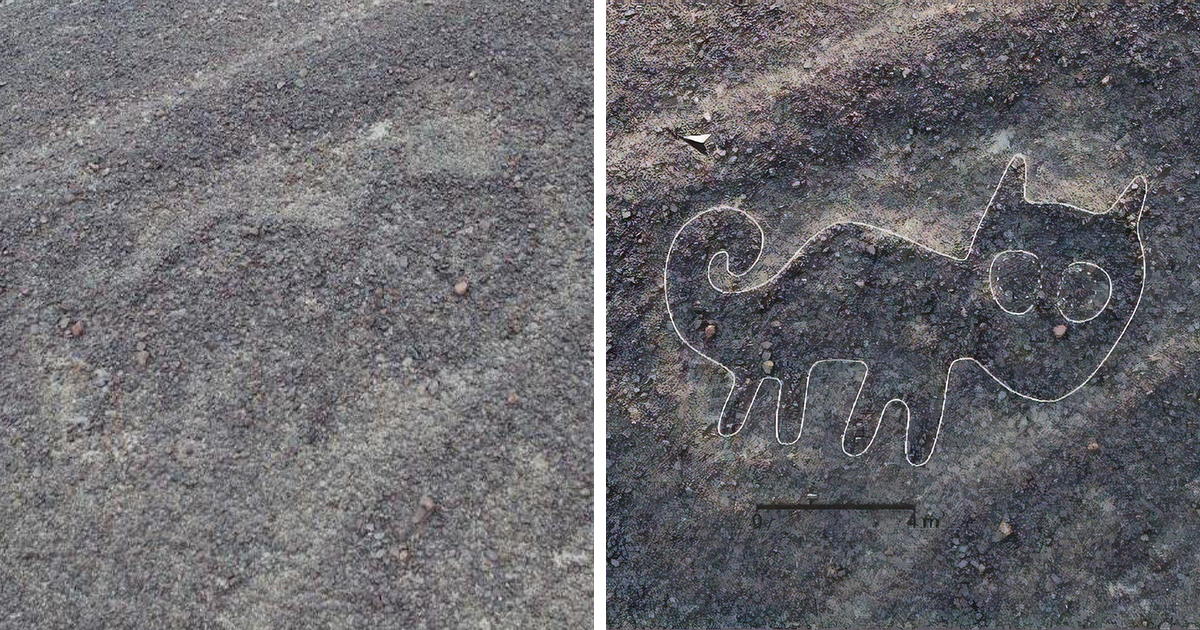
Imagine hiking across a dry Peruvian plateau, looking down at what seems like ordinary desert gravel, and then realizing the ground beneath your shoes is part of a 2,000-year-old drawing. Not a sketchbook doodle. Not a “my toddler found a marker” situation. We are talking about enormous geoglyphs carved into the desert floorfigures of humans, animals, birds, fish, snakes, camelids, and strange beings that seem to stare back at history with excellent dramatic timing.
That is exactly the kind of discovery that made headlines when a team of scientists led by Professor Masato Sakai of Yamagata University announced the identification of more than 140 previously unknown geoglyphs in Peru’s Nazca region. The public shorthand often became “140 huge mysterious drawings,” while the more precise count reported by researchers and media was 142 newly documented geoglyphs, plus an additional figure identified with the help of artificial intelligencebringing many headlines to 143. Either way, the discovery was not a tiny footnote. It was a major update to one of archaeology’s most captivating mysteries: the Nazca Lines.
What Exactly Did Scientists Discover In Peru?
The discovery centered on the Nasca Pampa and surrounding areas in southern Peru, a desert landscape already famous for ancient ground drawings known as geoglyphs. These newly documented figures were not all gigantic in the same way as the most famous Nazca icons, such as the hummingbird, spider, monkey, or condor. Some were smaller and more difficult to spot, while others stretched across impressive distances. Their size range, fading outlines, and remote locations made them easy to miss for centuries.
The newly identified geoglyphs included humanoid figures, birds, fish, snakes, foxes, camelid-like animals, and abstract shapes. Some looked simple and almost cartoonish, which is not an insult. Ancient desert minimalism had a style. A few lines, a body, a head, a tail, and suddenly a forgotten animal is back on the archaeological guest list.
The Yamagata University team had been studying the region for years using field surveys, aerial photography, satellite imagery, high-resolution 3D data, and later artificial intelligence. The discovery showed that the Nazca desert still holds many secrets, even in an age when we can order snacks from a phone and zoom in on half the planet from a laptop.
What Are The Nazca Lines?
The Nazca Lines are a collection of ancient geoglyphs etched into the arid plains of southern Peru, roughly 250 miles south of Lima. They include straight lines, geometric patterns, spirals, trapezoids, and large figurative drawings of plants, animals, and beings. The site is part of the UNESCO-listed Lines and Geoglyphs of Nasca and Palpa, one of the most extraordinary archaeological landscapes in the world.
The drawings were made by removing the dark, iron-rich stones on the desert surface to reveal lighter soil underneath. It sounds simplebasically the world’s most ambitious scratch-art projectbut the results are astonishing. The dry climate, low wind, and stable desert surface helped preserve the lines for centuries. In a wetter place, these drawings might have vanished faster than a plate of fries at a family gathering.
Most scholars associate the lines with the ancient Nazca culture, although some geoglyphs may also relate to earlier Paracas traditions. They are generally dated between about 500 B.C. and A.D. 500, depending on the figure, location, and cultural phase. That means many were created long before drones, airplanes, or anyone saying, “This would look amazing from above.”
Why The Discovery Was So Important
The discovery of more than 140 additional drawings mattered for three major reasons. First, it expanded the known catalog of Nazca geoglyphs. Archaeologists are not just collecting ancient pictures like trading cards; each new figure helps researchers understand where people walked, worshiped, communicated, gathered, and imagined their world.
Second, the newly documented figures suggested that not all Nazca geoglyphs served the same purpose. Some of the famous large line-type geoglyphs may have been connected with rituals, processions, or ceremonial activities that involved broad movement across the landscape. Smaller relief-type figures may have been placed along pathways, perhaps meant to be seen by people walking nearby rather than only from the sky.
Third, the discovery proved that modern technology can dramatically speed up archaeological research. The team used artificial intelligence to help identify one of the figures, a humanoid shape that might have gone unnoticed through traditional survey methods. In later research, AI-assisted surveys helped scholars identify hundreds more geoglyphs in the Nazca region, showing that the 2019 announcement was not the end of the story. It was more like the desert saying, “Nice start. Keep looking.”
How Did Ancient People Make These Huge Drawings?
The technique was surprisingly practical. The desert surface in the Nazca region is covered with dark stones that have been weathered by the environment. When ancient artists removed those stones, they exposed the lighter earth beneath. By arranging long shallow trenches and cleared areas, they created lines and figures that contrasted with the surrounding terrain.
No lasers. No bulldozers. No alien contractors with suspiciously advanced surveying equipment. The method relied on planning, labor, observation, and knowledge of the land. Researchers believe the creators could have used ropes, stakes, grids, and careful walking routes to scale designs across the desert. The real achievement is not that the technique required magic. It is that human communities were organized, skilled, and motivated enough to turn an empty-looking landscape into a sacred visual archive.
The Desert Was Their Canvas
The Nazca Pampa was not a blank wasteland to the people who lived near it. It was a meaningful cultural space. Water was scarce, mountains mattered, animals carried symbolic power, and ceremonial centers such as Cahuachi played important roles in regional life. The desert drawings may have connected communities to rituals involving fertility, water, pilgrimage, ancestors, or cosmology.
That is why calling them “mysterious drawings” is fair, but only up to a point. They are mysterious because we do not have a written instruction manual from the artists. No ancient note says, “Dear future archaeologists, the fox means Tuesday.” But the lines are not random. They reflect a society with patterns, beliefs, technical skill, and a strong sense of place.
What Did The Newly Discovered Drawings Look Like?
The newly identified geoglyphs were varied, and that variety is part of what made the announcement exciting. Some figures depicted animals recognizable from Andean life and symbolism, including birds, camelids, fish, felines, foxes, and snakes. Others showed human-like forms, sometimes with simplified bodies or unusual heads. A few looked almost playful, as if ancient artists had invented a desert version of emoji long before anyone argued about whether the eggplant symbol was appropriate.
Many of the newly documented geoglyphs were smaller than the iconic Nazca figures seen on postcards and in documentaries. That does not make them less valuable. In fact, their smaller scale may help researchers understand how people encountered these images at ground level. A massive bird visible from above tells one kind of story. A compact humanoid figure near a pathway tells another.
The Role Of Artificial Intelligence In The Discovery
One of the most fascinating aspects of the discovery was the use of AI. The Yamagata University team collaborated with IBM researchers to test whether machine learning could help detect faint geoglyphs in high-resolution imagery. The AI system helped identify a previously unknown humanoid figure, demonstrating that algorithms could support archaeological fieldwork.
This does not mean robots are replacing archaeologists. Archaeology is not becoming “Indiana Jones and the Spreadsheet of Doom.” AI can scan huge amounts of visual data, highlight possible patterns, and suggest areas worth checking. Human experts still need to confirm what the system finds, interpret the site, understand cultural context, and avoid mistaking shadows, tire tracks, or geological quirks for ancient art.
The real breakthrough is teamwork. AI is good at searching vast datasets without getting bored. Archaeologists are good at asking meaningful questions, testing evidence, and understanding human behavior. Put them together, and suddenly a desert that seemed well studied starts revealing hidden figures at a faster pace.
Why Were The Nazca Lines Created?
This is the question that keeps the Nazca Lines famous. The honest answer is: scholars are still debating it. Over the years, theories have connected the lines to astronomy, water rituals, pilgrimage routes, religious ceremonies, fertility symbolism, social organization, and sacred landscapes. Some older theories imagined the lines as runways for ancient astronauts, but mainstream archaeology prefers evidence over sci-fi with sand.
One widely discussed interpretation is that many lines and figures had ceremonial or ritual functions. In a dry environment where water was precious, the landscape itself may have been tied to beliefs about mountains, rain, crops, animals, and divine forces. Long straight lines and geometric patterns may have guided movement or processions, while animal and human figures may have carried symbolic meanings.
Recent discoveries also suggest that different types of geoglyphs may have had different uses. Larger line-type figures may have been visible from elevated viewpoints or used in broad ceremonial settings. Smaller relief-type figures may have been located near routes where people could see them while walking. In other words, the Nazca Lines were not one giant desert billboard with a single message. They were more like a complex cultural map with many chapters.
Why Are The Drawings Still Visible After So Long?
The Nazca desert is one of the driest places on Earth, and that dryness helped preserve the geoglyphs. With little rain and limited vegetation, the exposed lighter soil remained visible for centuries. The dark surface stones also developed a natural desert varnish, making the contrast sharper when they were removed.
However, preservation is not guaranteed. Modern threats include vehicle damage, road construction, illegal development, mining pressure, tourism impacts, climate events, and erosion. The Pan-American Highway even cuts near or through parts of the broader Nazca landscape, a reminder that ancient heritage and modern infrastructure do not always enjoy a peaceful lunch together.
That is another reason the discovery of new geoglyphs matters. You cannot protect what you have not documented. Mapping these figures helps researchers, local authorities, and conservation teams understand which areas are most vulnerable.
What This Discovery Tells Us About Ancient Peru
The discovery of more than 140 geoglyphs strengthens the idea that ancient Peru was home to complex societies with sophisticated visual traditions. These communities used the land not simply as territory but as a medium for memory, ritual, identity, and communication.
Modern viewers often focus on the size of the drawings because size is easy to admire. A huge bird in the desert? Impressive. A monkey visible from the air? Delightful. A humanoid figure discovered by AI? Please give archaeology its dramatic soundtrack. But the deeper story is about how people organized knowledge across landscapes. They transformed open ground into meaning.
The Nazca Lines also remind us that ancient technology does not need to look like modern technology to be brilliant. The people who made these drawings understood contrast, scale, orientation, environmental preservation, and symbolic design. Their tools were simple, but their cultural imagination was anything but.
Why People Are Still Obsessed With The Nazca Lines
The Nazca Lines remain popular because they combine everything the human brain loves: mystery, scale, ancient art, strange animals, desert drama, and just enough unanswered questions to keep documentary narrators employed. They are visually simple but conceptually enormous. They invite both scientific study and public wonder.
They also challenge our assumptions. We tend to imagine ancient art on cave walls, pottery, temples, or carved stones. The Nazca Lines say, “Why stop there? Let’s use the entire desert.” That boldness makes them feel modern in a surprising way. Today, land artists create massive works meant to be seen from above. The Nazca people were doing landscape-scale visual culture long before aerial photography existed.
Experiences Related To The Discovery: What It Feels Like To Encounter The Nazca Mystery
For many travelers, researchers, and history lovers, the Nazca Lines are not just something to read about. They are something to experience. The most famous way to see them is from the air, usually in a small plane that circles above the desert. This is thrilling, beautiful, and occasionally a test of one’s relationship with breakfast. The aircraft tilts left, then right, while the pilot points out figures below: hummingbird, spider, monkey, condor, tree, hands. Everyone leans toward the window, cameras appear instantly, and at least one passenger silently negotiates with their stomach.
What makes the experience unforgettable is the sudden shift in scale. From the ground, the desert can look quiet and almost empty. From above, it becomes a page filled with lines, shapes, and ancient decisions. A straight line runs across the plain with impossible confidence. A figure appears from the dust. A curve becomes a wing. A cluster of marks becomes a body. The landscape stops being background and becomes a message.
There is also a more reflective experience for those who visit observation towers or nearby viewpoints. These do not reveal every figure, but they offer something equally valuable: a sense of how fragile the lines are. They are not carved into stone cliffs or protected inside museums. They sit on the desert floor, exposed to time, people, and weather. Standing near them, visitors often realize that preservation is not an abstract academic concern. One careless vehicle track can damage what survived for nearly two millennia.
The discovery of more than 140 new drawings adds another layer to that experience. It suggests that the desert is not finished speaking. Even after decades of study, new figures can appear through better tools, sharper images, and patient fieldwork. That is a humbling thought. The modern world often acts as if everything has already been mapped, tagged, reviewed, and given three stars by someone named Kevin. Nazca proves otherwise. Some wonders remain hidden in plain sight.
For students, the discovery is a powerful example of how science actually works. It is not always a single dramatic “eureka” moment. It is often years of surveying, comparing images, walking difficult terrain, checking possibilities, rejecting false leads, and then finally confirming that a faint shape is real. The AI angle makes the story even more relatable today. Technology did not solve the mystery by itself; it helped humans look more carefully.
For writers, artists, and designers, the Nazca geoglyphs offer a different kind of inspiration. They show that minimal lines can carry maximum impact. Many figures are not detailed in the way a painting is detailed. They are bold, reduced, symbolic, and unforgettable. A few strokes can suggest an animal. A long line can guide the eye across a continent of sand. The design lesson is clear: sometimes simplicity is not basic. Sometimes it is monumental.
For anyone interested in ancient cultures, the discovery encourages respect instead of lazy mystery. It is tempting to treat the Nazca Lines as a puzzle created merely to entertain modern people. But these drawings belonged to real communities with real beliefs, labor systems, environmental challenges, and artistic traditions. The better question is not only “How did they make them?” but “What did this landscape mean to them?” That question opens the door to a richer understanding of ancient Peru.
The best experience connected to the Nazca Lines may be the feeling of curiosity itself. The more researchers discover, the bigger the mystery becomesnot because we know less, but because we understand how much more there is to learn. The 140-plus newly documented drawings are a reminder that history is not a closed book. Sometimes it is a desert floor waiting for the right angle of light.
Conclusion
The team of scientists who discovered more than 140 mysterious drawings in Peru did more than add new images to the Nazca catalog. They reopened a conversation between ancient artists and the modern world. Their work showed that the Nazca desert still contains hidden figures, cultural clues, and unanswered questions. It also proved that archaeology is entering a new era, where fieldwork, aerial imagery, 3D data, and artificial intelligence can work together to uncover what the naked eye might miss.
The Nazca Lines are not just “big drawings in the desert.” They are evidence of imagination, organization, belief, and technical skill. Whether they marked pathways, supported rituals, symbolized animals, honored sacred forces, or connected communities to the landscape, they remain among the most fascinating achievements of ancient Peru. And thanks to new discoveries, the story is still getting longerone faint desert figure at a time.