For most of us, the phrase “top of the food chain” sounds final. It has the confidence of a hotel penthouse, the drama of a movie villain, and the scientific neatness of a school diagram where arrows point upward until they reach a shark. Then the ocean, being the ocean, casually ruins the diagram.
Scientists tracking a large pregnant porbeagle shark in the Northwest Atlantic discovered something astonishing: the shark, roughly seven to eight feet long and already considered a powerful predator, appears to have been eaten by another predator. The clue was not a dramatic underwater video or a tooth left behind like a calling card. It was a satellite tag that suddenly started sending strange depth and temperature data, suggesting it had moved from cold ocean water into the warm stomach of another animal.
The finding has forced marine scientists and shark enthusiasts alike to look again at the food chain. Not because sharks are suddenly less impressive, but because ocean life is far more complicated than “small fish gets eaten by bigger fish, bigger fish becomes boss.” In the deep sea, even the boss may need to check over its shoulder.
The Shark at the Center of the Mystery
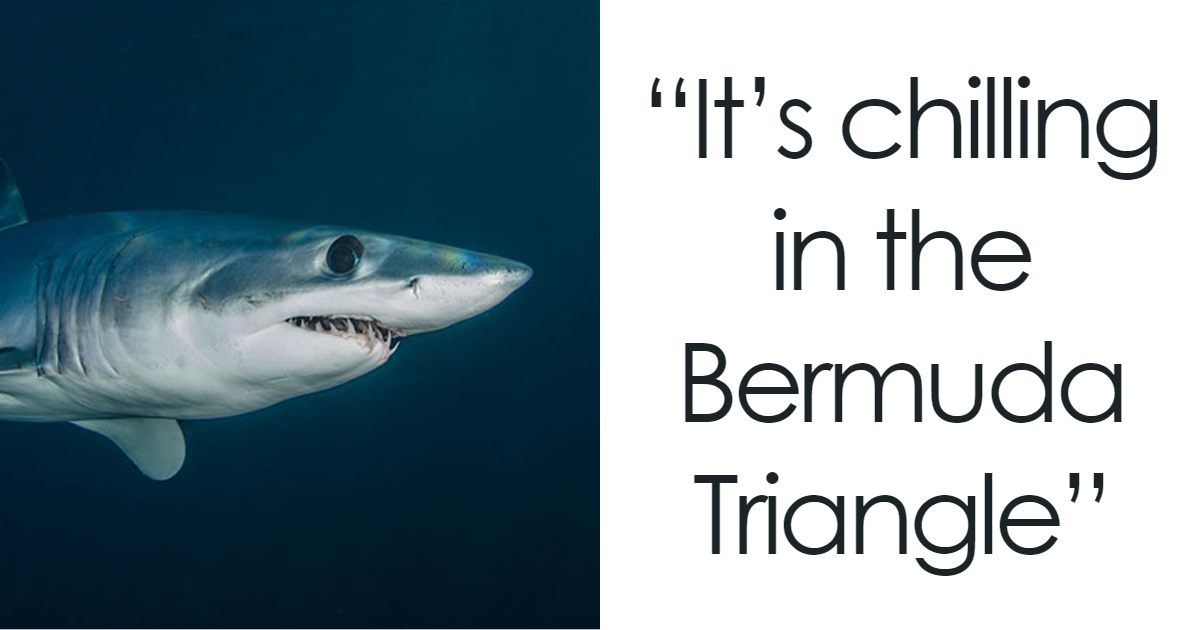
The porbeagle shark is not a household celebrity like the great white, but it deserves a better public relations team. Sleek, muscular, and built for cold-water speed, the porbeagle belongs to the mackerel shark family, the same family that includes white sharks, makos, and salmon sharks. It has a torpedo-shaped body, a pointed snout, a crescent-shaped tail, and the general appearance of an animal that did not skip swim day.
Porbeagles live in cold and temperate waters of the North Atlantic and parts of the Southern Hemisphere. They hunt fish and squid, migrate seasonally, and can regulate parts of their body temperature above surrounding water temperatures. That rare “warm-bodied” ability helps them remain fast and active in colder water, where many other fish would be moving with the enthusiasm of a phone at 1% battery.
The shark in this case was a pregnant female, which makes the event especially important. Mature female porbeagles are valuable to the survival of the species because they reproduce slowly. Losing one adult female is not like losing a single replaceable player in a crowded game. It may also mean losing the pups she was carrying and future generations she might have produced.
How Scientists Knew Something Ate the Shark
Researchers had fitted the porbeagle with a pop-off satellite archival tag, often shortened to PSAT. These tags are tiny ocean detectives. They record data such as depth, temperature, and light levels while attached to an animal. After a programmed period, the tag detaches, floats to the surface, and transmits its stored data to satellites.
In a normal tracking story, the tag would reveal where the shark traveled, how deep it dove, and what temperatures it preferred. In this case, the tag became the star witness in a marine mystery.
About five months after tagging, the data changed in a way researchers did not expect. The tag showed the shark had been moving through deep, cold water, yet the recorded temperature suddenly rose and stayed elevated. That pattern strongly suggested the tag was no longer attached to the outside of a swimming porbeagle. Instead, it appeared to be inside another warm-bodied predator.
This is where the case becomes both fascinating and slightly rude. The predator likely did not eat the tracking tag on purpose. It ate the shark, and the tag came with the meal like an unwanted plastic fork in a takeout bag. The ocean does not issue itemized receipts, but the data gave researchers enough evidence to conclude that the porbeagle had been consumed.
Who Was the Likely Predator?
The leading suspects are two large, fast, warm-bodied sharks: the white shark and the shortfin mako. Both are capable of reaching sizes large enough to attack a porbeagle. Both can maintain internal body temperatures above surrounding water temperatures. Both occur in regions where such an encounter could happen.
Scientists were able to rule out some possibilities based on temperature. Marine mammals, for example, generally have body temperatures that would not match the tag’s readings. The data pointed more strongly toward a regionally endothermic shark, meaning a shark with the ability to keep parts of its body warmer than the surrounding ocean.
A Great White Shark?
The white shark is one of the most famous apex predators on Earth. It can grow much larger than a porbeagle, has a broad diet that includes fish, marine mammals, and other sharks, and is known for long-distance movements across coastal and offshore habitats. If the predator was a white shark, the event would be a stunning example of one powerful shark species preying on another.
A Shortfin Mako?
The shortfin mako is another strong candidate. Known for speed, athleticism, and warm-bodied biology, makos are formidable open-ocean hunters. A large mako could plausibly overpower a porbeagle, especially in deep water where surprise and speed matter. Think of it as the sports car of sharks, except the sports car has teeth and no interest in your insurance premium.
At this stage, scientists cannot say with absolute certainty which species was responsible. The tracking data narrows the list, but it does not provide a photo, a fin print, or a dramatic courtroom confession. Still, the evidence is strong enough to reshape how researchers think about large shark interactions.
Why This Discovery Matters
At first glance, one shark eating another shark may sound like nature doing nature things. The ocean is not exactly known for polite table manners. But the scientific importance lies in what this single event reveals about hidden predator relationships.
Large sharks are often described as apex predators, but “apex” does not always mean invincible. In marine ecosystems, predator roles can overlap. A species may be a top predator in one context and prey in another. Size, location, age, health, pregnancy, season, and chance all matter.
The case also suggests that natural mortality among porbeagles may be more complicated than previously understood. If predation on adult porbeagles happens more often than scientists realized, it could affect population models, conservation planning, and how researchers evaluate threats to the species.
The Food Chain Is More Like a Food Web
School diagrams love straight lines. Plankton gets eaten by small fish. Small fish gets eaten by bigger fish. Bigger fish gets eaten by shark. Shark gets a crown, a theme song, and a spot at the top. Unfortunately for textbook simplicity, real ecosystems behave less like ladders and more like tangled webs.
A food web shows that animals can play multiple roles. Sharks may control prey populations, compete with other predators, scavenge, transport nutrients, and sometimes become food themselves. A large predator may dominate one habitat but become vulnerable when it enters another. A juvenile apex predator may be prey for adults of another species. Even adults can face danger when the right predator, place, and moment align.
This is why the porbeagle case is more than a sensational headline. It reminds scientists that the ocean still hides interactions we rarely see. Humans spend a lot of time near the surface; many predator encounters happen far below, in low light, across huge distances, and without a documentary crew helpfully narrating in a calm British accent.
Porbeagles: Powerful, But Vulnerable
Porbeagles are impressive animals, but they are not built for fast population recovery. Their slow growth, late maturity, and relatively low reproductive rate make them vulnerable to overfishing and bycatch. In other words, they do not bounce back like rabbits. They bounce back more like a committee trying to schedule a meeting across four time zones.
Historically, porbeagle populations in the North Atlantic declined due to fishing pressure. Today, protections and management measures exist in several regions, but the species still faces risks. Commercial fishing, accidental capture, demand for meat and fins, and habitat changes all place pressure on populations.
When a pregnant female dies, the loss is biologically meaningful. It removes an adult from the breeding population and may also remove unborn pups. If rare, such events are part of natural ocean life. If common, they could be another factor scientists need to consider when estimating population recovery.
What Satellite Tags Are Teaching Us
The most exciting part of this story may be the technology behind it. Satellite tags allow scientists to study animals that spend most of their lives out of human sight. They help reveal migration routes, diving behavior, temperature preferences, feeding areas, and unexpected events such as predation.
Without the tag, this porbeagle would likely have vanished from the dataset. Researchers might have assumed the tag failed or detached early. Instead, the depth and temperature record turned a disappearance into a scientific clue. The result is a better understanding of how large predators interact in the open ocean.
This matters because ocean conservation depends on good data. If scientists do not know where sharks travel, where pregnant females spend time, or what threats they face, protecting them becomes guesswork in a blue wilderness. Tags do not answer every question, but they help transform mystery into measurable evidence.
Examples of Predator Surprises in the Ocean
The porbeagle case is not the only reminder that marine food webs can surprise us. Orcas have been observed hunting great white sharks in some regions, sometimes targeting their energy-rich livers. Large sharks may prey on smaller sharks and rays. Even animals often framed as unbeatable can alter their behavior when another predator enters the area.
These interactions matter because top predators influence ecosystems. Sharks can help regulate prey populations, remove weak or sick animals, and shape the behavior of other species. When top predators decline, the effects can ripple through food webs. In some habitats, fewer sharks may allow mid-level predators to increase, which can then affect herbivorous fish, algae growth, seagrass beds, coral reefs, and kelp forests.
That does not mean every shark species has the same role everywhere. Ecosystems are local, seasonal, and messy. But it does mean that the removal, movement, or vulnerability of top predators can have consequences beyond a single dramatic event.
Why the Headline Captured Public Attention
“Eight-foot shark gets eaten” is the kind of phrase that makes people pause mid-scroll. It flips expectations. Sharks are usually the eaters in popular imagination, not the eaten. The story has mystery, science, danger, and an accidental tracking tag plot twist. Basically, it is a true-crime podcast with gills.
But the public fascination also reflects a deeper curiosity: how much do we really know about the ocean? The answer is both “a lot” and “not nearly enough.” Scientists understand many shark behaviors, migration patterns, and ecological roles, yet much of the open ocean remains difficult to observe directly. A single tracking tag can still reveal something never before documented.
That is not a failure of science. It is science working exactly as it should. New evidence appears, old assumptions are tested, and the picture becomes more detailed. The food chain was never wrong as a basic teaching tool. It was just too simple for the strange, layered, toothy reality of the sea.
What This Means for Shark Conservation
The discovery does not mean porbeagles are doomed, nor does it mean white sharks or makos are villains. Predation is natural. A larger predator eating a smaller predator is not evil; it is ecology with better lighting and worse manners.
The conservation concern is context. Porbeagles already face human-caused pressures. If adult predation is more common than previously thought, scientists may need to include it more carefully in population models. Understanding natural mortality helps managers separate what humans can control from what nature has always done.
Human threats remain the most urgent issue for many shark species. Overfishing, bycatch, finning, habitat degradation, and climate-driven changes in ocean conditions can all affect shark populations. Protecting sharks means managing fisheries responsibly, reducing accidental capture, supporting research, and recognizing that healthy oceans need predators at multiple levels.
Experience-Based Reflections: What This Story Teaches Anyone Who Loves the Ocean
Stories like this are powerful because they make the ocean feel alive again. Not as a postcard, not as a blue background for vacation photos, but as a dynamic world full of movement, pressure, hunger, strategy, and surprise. Anyone who has stood near the Atlantic on a windy day knows that the sea has a personality. It looks calm from far away, then knocks your ankles sideways just to remind you who is in charge.
The porbeagle case also changes how we experience shark stories. Many people grow up thinking of sharks as monsters, mostly because movies gave them dramatic music and terrible public relations. But the more you learn about sharks, the more interesting they become. They are not mindless villains. They are animals shaped by millions of years of evolution, adapted to habitats we barely understand, and connected to ecosystems in ways that are still being uncovered.
For writers, educators, and ocean lovers, this case is a perfect example of how science can be both serious and thrilling. The evidence came from data: temperature, depth, timing, and movement. Yet the story reads like a mystery. A pregnant shark vanishes. A tag surfaces too early. The numbers do not match the expected pattern. Researchers follow the clues and discover that the hunter likely became prey. That is not fiction. That is the ocean being extremely dramatic without hiring a screenwriter.
There is also a humbling lesson here. Humans like ranking things. We want the biggest, fastest, strongest, most dangerous animal. We want a champion. But nature does not always operate as a neat championship bracket. A predator can dominate one situation and be vulnerable in another. A food chain can bend, loop, and tangle. The top of the pyramid may have trapdoors.
This matters in everyday environmental thinking. If we oversimplify nature, we make poor decisions about it. If we assume one species is always safe because it is large, we may underestimate threats. If we assume one predator alone controls an ecosystem, we may miss the broader network of relationships. The porbeagle’s fate reminds us that conservation is not just about saving individual animals. It is about understanding relationships: predator and prey, human and habitat, technology and discovery.
The experience of reading this story should leave us with curiosity rather than fear. The ocean is not scarier because a large shark was eaten. It is more fascinating. It tells us that even familiar categories like “apex predator” deserve fresh attention. It also tells us that the next major discovery may already be swimming through the dark with a small electronic tag quietly recording the truth.
And perhaps that is the best takeaway. The sea still has secrets. Some are hidden in deep water, some in migration routes, and some inside the stomach of a predator that accidentally swallowed the evidence. Science, fortunately, is patient enough to follow the clues.
Conclusion
The case of the 8-foot porbeagle shark eaten by another predator is more than a viral “whoa, nature is wild” moment. It is a reminder that marine food webs are complex, flexible, and still full of surprises. The evidence from the shark’s satellite tag suggests that a larger warm-bodied shark, possibly a white shark or shortfin mako, consumed a pregnant porbeagle in the Northwest Atlantic. That single event may help scientists better understand natural mortality, predator interactions, and conservation challenges for vulnerable shark populations.
The food chain is not a simple ladder. It is a shifting web of hunters, competitors, scavengers, and prey. Even large sharks can become part of someone else’s dinner plan. For scientists, that means more questions to study. For readers, it means the ocean remains one of Earth’s greatest mystery novels, and it keeps adding new chapters with teeth.