Editor’s note: This article contains spoilers for the series finale of And Just Like That….
For a show built on cosmopolitans, couture, complicated romances, and the eternal mystery of how Carrie Bradshaw could afford that closet, And Just Like That… ended with something far less glamorous: a loud, messy online argument.
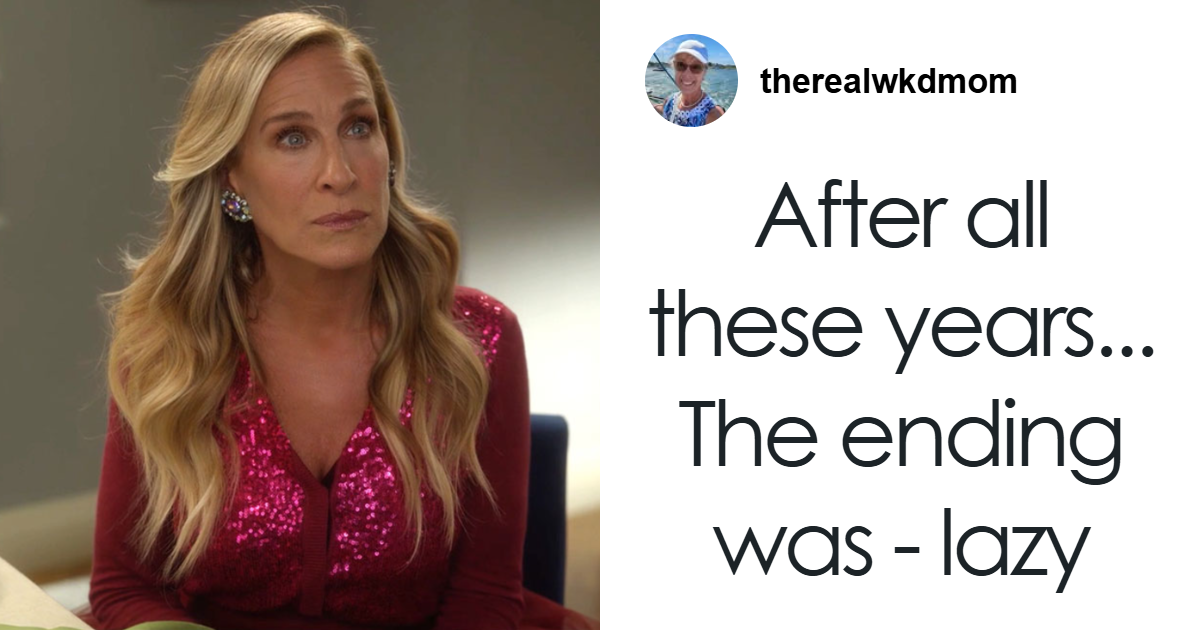
When the Sex and the City sequel series wrapped its third and final season on August 14, 2025, viewers did what viewers do best in the streaming age: they watched, reacted, posted, argued, screenshot, made memes, and asked whether the final episode had been written by a group chat that lost Wi-Fi halfway through Thanksgiving dinner.
Sarah Jessica Parker, who has played Carrie Bradshaw since 1998, was not exactly shaken by the backlash. Asked about people who described the series as a “hate-watch,” Parker made it clear that she had not devoted much of her life to studying the complaint department. Her response was calm, blunt, and very Carrie-adjacent: the cast and creative team worked hard to tell stories they found interesting and real, and the show’s success and meaningful audience connections mattered more to her than online outrage.
In other words, Parker did not throw a designer shoe at the critics. She simply kept walking in heels while the internet debated the toilet.
Why the ‘And Just Like That’ Series Finale Drew So Much Backlash
The And Just Like That series finale was always going to face an impossible assignment. It had to close a story connected to one of television’s most recognizable franchises, honor longtime viewers, serve newer fans, wrap up multiple character arcs, and somehow make peace with decades of romantic history, friendship drama, fashion lore, and the lingering ghost of every “I couldn’t help but wonder” ever spoken.
That is a lot of emotional luggage. Even Carrie’s oversized closet might have struggled to hold it.
The final episode placed Carrie in a new phase of independence after her relationship with Aidan had ended. Rather than giving her a grand romantic reunion, a fresh boyfriend, or a full-circle marriage plot, the show leaned into the idea that Carrie could be fulfilled while single. Her concluding moment centered on her dancing alone in her apartment, paired with the message that she was not alone, but “on her own.”
On paper, that is a meaningful idea. Carrie Bradshaw began as a character who asked big questions about dating, friendship, loneliness, ambition, and self-worth. Ending her story with self-reliance rather than another rescue-by-romance plot had a certain thematic logic.
But television is not judged on paper alone. It is judged in living rooms, on phones, in group chats, and by viewers who have spent years emotionally investing in fictional people who somehow feel more familiar than a cousin who only appears at Christmas.
Many fans felt the finale did not provide the emotional payoff they expected. One major complaint was the lack of a final scene featuring Carrie, Miranda, and Charlotte together. For a franchise built on female friendship, viewers wanted one last unmistakable image of the core trio. They did not necessarily need balloons, a five-minute monologue, or a horse-drawn carriage through Manhattan. They simply wanted the emotional equivalent of friends sharing a final meal and saying, “We’ve been through a lot.”
Instead, the finale divided its attention among several stories and leaned heavily into broad, awkward comedy. The Thanksgiving storyline involving a plumbing disaster became one of the most discussed parts of the episode. For some viewers, the scene was absurd in an amusing way. For others, it felt like the show had mistaken “finale” for “bathroom emergency training video.”
The backlash was not just about one overflowing toilet. It was about tone. Fans who loved the original series often expected emotional sharpness, romantic complication, intimate friendship scenes, and witty observations about modern life. Critics of the revival argued that And Just Like That… sometimes replaced those qualities with scattered storylines, unusual pacing, and moments that felt more bizarre than insightful.
Sarah Jessica Parker’s Response Was More Measured Than a True “Clapback”
Calling Sarah Jessica Parker’s comments a “clapback” is catchy, but it may be slightly dramatic. This was not a celebrity feud involving subtweets, leaked text messages, or an Instagram Story posted at 2:17 a.m. with a suspiciously pointed song lyric.
Parker’s position was more restrained. She acknowledged that she did not spend much time following the hate-watch conversation and explained that the work itself mattered more to her than every loud opinion online. She also emphasized that the series had reached audiences and built connections that were meaningful to the people involved.
That perspective makes sense when you consider the unusual relationship Parker has with Carrie Bradshaw. She did not simply play the character for three seasons of a reboot. She carried Carrie through the original HBO series, two feature films, and the revival era. By the time And Just Like That… ended, Parker had lived with Carrie Bradshaw professionally for roughly 27 years.
That kind of creative relationship is bigger than one episode, one review, or one viral complaint about a toilet.
Parker also gave Carrie a public farewell that reflected affection rather than defensiveness. Her goodbye treated the character as someone who had been loved, criticized, rooted for, judged, celebrated, and sometimes condemned. That is probably the most accurate summary of Carrie Bradshaw possible. Few fictional characters have inspired more affection and more exasperated sighing from the same audience.
One minute, viewers want Carrie to follow her heart. The next minute, they want to confiscate her phone, cancel her brunch plans, and appoint Miranda as her legal guardian.
The Creative Team’s Defense of the Finale
Showrunner Michael Patrick King had already explained that the decision to end And Just Like That… came during the writing of the third season’s final episode. The series was extended into a two-part conclusion, allowing the writers more room to finish the story. King and the team framed the ending as a creative choice rather than a sudden collapse caused by one particular complaint, trend, or review.
King’s interpretation of Carrie’s ending focused on independence. Carrie had already experienced marriage, grief, romance, heartbreak, reunion, disappointment, and enough apartment-related drama to qualify for a New York real estate support group. The finale suggested that her happiness did not have to depend on getting another traditional romantic ending.
That theme has roots in the original Sex and the City series. Carrie’s story was never only about finding a man. It was also about friendship, career, identity, and the strange freedom of figuring out your life while wearing an outfit nobody else on the subway would dare to attempt.
The writers also defended the absence of a final group scene by arguing that the friendship among Carrie, Miranda, and Charlotte remained emotionally present even when the characters were not all in the same room. That idea may be true in real life. Friends can remain deeply connected while living separate lives, juggling work, family, illness, relationships, and the occasional emergency involving an adult child.
Still, fans did not necessarily want realism in that moment. They wanted ceremony. They wanted a final shared glance, a familiar laugh, a dinner table, and perhaps a single moment that said, “This is what the story was always about.”
That disconnect explains much of the finale debate. The creative team saw closure through individual growth. Many viewers wanted closure through collective friendship.
Why “Hate-Watching” Became Part of the Show’s Legacy
The phrase “hate-watch” can sound dismissive, but it describes a real modern entertainment habit. A viewer may complain about a show’s plot, pacing, costumes, dialogue, or questionable medical and plumbing decisions, yet still tune in every week. They may not enjoy every creative choice, but they remain fascinated by the experience.
And Just Like That… became one of those shows because it was impossible to ignore. It carried the legacy of Sex and the City, a series that helped shape conversations around women’s friendships, dating, sexuality, fashion, and city life. The revival could never exist in a vacuum. Every new storyline was compared with old memories, iconic episodes, beloved characters, and the version of the franchise fans had built in their minds over decades.
That nostalgia was both a gift and a trap. Audiences wanted the characters to grow older because real people grow older. But they also wanted the characters to remain recognizable. They wanted Miranda to evolve, but not become unrecognizable. They wanted Carrie to change, but not stop feeling like Carrie. They wanted new voices, but not at the expense of the original dynamic.
That is the reboot paradox: viewers demand change and familiarity at the same time. It is like ordering a new cocktail and then being upset that it does not taste exactly like your favorite old cocktail from 2003.
Parker’s response to the hate-watch conversation recognizes another truth: intense criticism can also be evidence of attachment. People do not write long posts, record podcasts, make reaction videos, or argue over finale symbolism unless they care. Anger is not always the opposite of love. Sometimes it is love wearing sweatpants and typing in all caps.
Did the Finale Actually Betray Carrie Bradshaw?
Whether the finale worked depends on what viewers wanted from Carrie’s final chapter. If they wanted a clean, emotional reunion with Miranda and Charlotte, a glamorous party, a romantic surprise, and a final shot that felt like an HBO prestige postcard, the episode may have disappointed them.
If they wanted Carrie to end as an independent woman who had survived love, loss, and the occasional terrible relationship decision, then the conclusion has a clearer purpose. Carrie was not punished for being alone. She was not framed as unfinished. She was dancing, writing, living in New York, and continuing to own her own story.
That is not a bad ending. It is simply an ending that asked viewers to appreciate a quieter emotional note after years of heightened romance and chaos. The problem is that And Just Like That… was rarely quiet. It was a show of giant hats, impossible apartments, unexpected plot turns, and scenes that regularly made viewers pause the screen and whisper, “Wait, what?”
Ending such a noisy series on a relatively internal message was always going to feel unusual.
What the Finale Debate Says About Fandom, Nostalgia, and Letting Go
The uproar over the And Just Like That series finale says as much about modern fandom as it does about television writing. Fans now experience a show publicly and collectively. They do not just watch an episode; they react in real time, compare opinions, quote scenes, make memes, identify continuity errors, and create unofficial support groups for anyone emotionally harmed by a questionable character decision.
That can be exhausting for creators, but it also proves that television still matters. A finale that receives no response is usually not a cultural event. It is just an episode that quietly arrives, quietly leaves, and quietly disappears into the streaming menu beside twelve documentaries about scams.
Sarah Jessica Parker’s refusal to obsess over the loudest critics is a useful reminder that art cannot be made by committee. A creative team can listen to audiences, but it cannot build every scene around the most viral complaint. At some point, the people making the work have to decide what the story means to them.
Viewers, meanwhile, are allowed to dislike the result. They can wish for a better ending, a different final scene, more closure for certain characters, or fewer jokes involving bodily fluids. They can argue that the revival never captured the emotional rhythm of the original. They can also admit that, despite their frustration, they watched every episode.
That complicated relationship is part of the franchise’s legacy. Sex and the City was never a show people watched passively. It invited judgment. Who should Carrie choose? Was Miranda right? Was Charlotte being unrealistic? Did Samantha say the thing everyone else was thinking? The revival continued that tradition, even when the arguments became louder and the outfits became more structurally ambitious.
Viewer Experiences: Why the Finale Felt So Personal
The most interesting part of the And Just Like That finale backlash is not that people disliked it. Television finales are rarely universal victories. Someone always wants more romance, another person wants fewer speeches, and at least one viewer is convinced the writers personally ignored a 47-page fan theory posted online at midnight.
What made this reaction different was the depth of the relationship viewers had with Carrie Bradshaw and her world. For many fans, Sex and the City was not simply a show they watched. It was a marker of a certain time in life. Some watched it during college, some discovered it after moving to a new city, some bonded over it with roommates, and some returned to it after breakups because fictional women discussing bad decisions over brunch can feel oddly therapeutic.
That history shaped expectations for And Just Like That…. Viewers did not arrive as blank slates. They carried memories of Carrie, Miranda, Charlotte, Samantha, Big, Aidan, the apartment, the friendships, the fashion, the voiceovers, and the magical idea that one lunch with your friends could somehow solve an existential crisis.
When the revival changed the formula, some fans welcomed the attempt to show the characters in later life. Others felt the series had lost the chemistry and emotional clarity that made the original so special. Both reactions came from investment. Nobody spends time debating the moral meaning of a fictional Thanksgiving plumbing disaster unless they have cared about the people at that dinner table for years.
There is also something universal about wanting a beloved story to end well. People want emotional closure because endings help them make sense of the journey. A final scene can become a memory viewers carry for years. Think of the last image in a favorite movie, the final line in a novel, or the closing moments of a television show that made you feel like you were saying goodbye to people you actually knew.
For some viewers, the And Just Like That finale did not deliver that feeling. They wanted the core friends together. They wanted warmth, recognition, and a final reminder that friendship was the franchise’s real love story. Instead, they got a more fragmented farewell that focused on personal independence and absurd comedy.
For others, Carrie dancing alone was enough. It suggested that a woman can be happy without a partner, that life does not become smaller after romantic disappointment, and that solitude is not the same thing as sadness. That interpretation is valuable, especially for audiences tired of stories that treat marriage as the final reward for female characters.
The lesson is not that one group of fans is right and the other is wrong. It is that beloved characters become shared cultural property in people’s minds, even though the writers still own the actual scripts. Fans form personal relationships with stories. They see themselves in the characters, attach memories to certain episodes, and develop strong opinions because the fictional world has become part of their real one.
Sarah Jessica Parker’s response fits that reality. She does not have to agree with every complaint for those complaints to be sincere. And viewers do not have to love the finale simply because the people who made it believed in the ending. The tension between creator intention and audience expectation is not a failure of fandom. It is often proof that the work mattered enough for people to care.
And just like that, Carrie Bradshaw’s latest chapter ended the way much of her life unfolded: with fashion, feelings, a little chaos, a lot of opinions, and absolutely no chance that everyone in the room would agree.