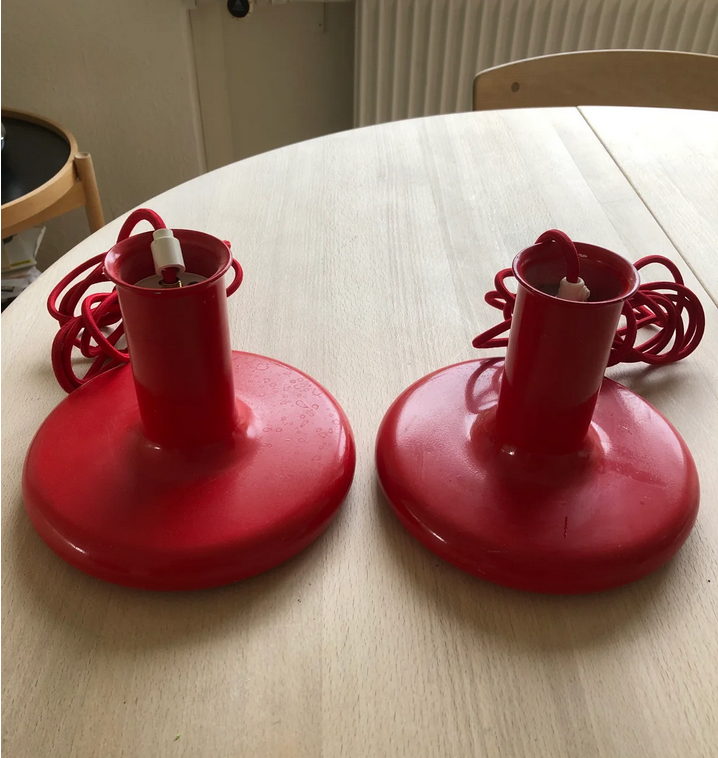
Some lights simply illuminate a room. Red Optima lights stroll in wearing a vintage jacket, wink at your dining table, and make the ceiling look like it has better taste than everyone at the party. These sculptural Danish fixtures, most closely associated with the Optima lighting series designed by Hans Due for Fog & Mørup in the 1970s, have become a favorite among collectors, interior designers, and anyone who believes a pendant lamp should do more than hang there politely.
The phrase “Red Optima lights” usually refers to red-finished Optima pendant lamps, a space-age-meets-Scandinavian design that blends clean geometry, clever light diffusion, and a color bold enough to make beige furniture reconsider its life choices. Whether you are hunting for a vintage original, styling a modern room, or simply trying to understand why these red Danish lights keep showing up in design circles, this guide breaks down the history, design appeal, buying tips, and real-world experience of living with them.
What Are Red Optima Lights?
Red Optima lights are vintage-style pendant lamps from the Optima family, designed by Danish industrial designer Hans Due and produced by Fog & Mørup, one of Denmark’s most respected lighting manufacturers of the mid-20th century. The Optima series is best known for its slim, UFO-like silhouette, metal construction, and layered shade design that directs light downward while keeping glare under control.
Although the Optima line appeared in several colors and sizes, red versions are especially eye-catching because they combine Scandinavian restraint with a playful pop of color. The result is a lamp that feels both serious and fun: disciplined enough for a design museum, cheerful enough for a breakfast nook where cereal is considered dinner.
A Quick History of Fog & Mørup and the Optima Series
Fog & Mørup was founded in Denmark in the early 1900s and grew into a major name in Danish modern lighting. The company became especially influential during the mid-century period, when Scandinavian design was gaining international attention for its practical beauty, honest materials, and human-centered proportions.
Hans Due’s Optima series arrived during the 1970s, a decade that loved futuristic shapes, glossy finishes, and lamps that looked vaguely prepared for lunar travel. The Optima design fits that mood perfectly. Its flattened profile, rounded shade, and disciplined proportions give it a space-age personality without turning the room into a science-fiction movie set. That balance is exactly why collectors still chase these lights today.
Why the Red Finish Matters
Color changes everything in lighting. A white Optima pendant feels crisp and architectural. A brown version leans earthy and vintage. A yellow one gets cheerful fast. But red? Red brings drama, warmth, and just enough rebellion to make a simple room feel designed rather than merely furnished.
Red Optima lights work because the form is so clean. The lamp is not covered in decorative clutter, so the color has room to speak. In a minimalist kitchen, the red shade becomes the visual punctuation mark. In a mid-century living room, it connects beautifully with teak, walnut, leather, and warm-toned textiles. In an eclectic apartment, it can be the one piece that says, “Yes, this place has a plan,” even if the plan started with an online auction at midnight.
Design Features That Make Optima Lights Special
1. The UFO Silhouette
The Optima pendant is often described as space-age because of its low, saucer-like shape. From the side, the lamp appears slim and aerodynamic. From below, the layered construction creates visual depth. It is the kind of fixture that makes people look up, which is useful because ceilings are usually ignored unless something has gone wrong.
2. Soft Downward Illumination
The design typically focuses light downward, making it especially useful over dining tables, kitchen islands, desks, and small seating areas. The shade helps reduce direct glare, which is one reason vintage Danish pendants remain so livable. They are beautiful, yes, but they also understand that nobody wants a light bulb interrogating them during pasta night.
3. Metal Construction
Many Optima lamps were made with painted or lacquered metal components. This gives the lamp durability and a crisp profile. Vintage examples may show small scratches, age marks, or finish variations, but for many buyers, that patina is part of the charm. A tiny nick on a 1970s lamp is not necessarily damage; sometimes it is just the lamp’s way of saying it has better stories than your flat-pack bookshelf.
4. Collectible Danish Design
Because the Optima series is linked to Fog & Mørup and Hans Due, it sits comfortably within the broader world of collectible Scandinavian lighting. Buyers are not just purchasing a red pendant lamp; they are buying into a design tradition known for functional elegance, careful proportions, and long-term usability.
Where Red Optima Lights Work Best
Over a Dining Table
This is the classic placement. A red Optima pendant over a dining table creates an instant focal point. It provides downward light for meals while adding sculptural interest when switched off. Pair it with a wood table, simple chairs, and neutral walls, and suddenly the room looks intentional without trying too hard.
In a Kitchen or Breakfast Nook
Red pendant lighting can energize a kitchen, especially one with white cabinets, natural wood, stainless steel, or matte black accents. A small red Optima-style light over a breakfast table adds warmth and personality without overwhelming the space. It says, “Good morning,” but in a Danish accent.
In a Home Office
A red Optima light can also work above a compact desk or reading corner. Because the design is clean and directional, it can provide useful illumination while doubling as a conversation piece. For creative workspaces, the red finish adds energy without needing motivational posters, which is good because most motivational posters have done enough damage.
In an Entryway
If your entryway feels forgettable, a red Optima pendant can fix that quickly. It gives guests an immediate design moment and sets the tone for the rest of the home. Even a small foyer can benefit from one strong fixture, especially when the surrounding decor is simple.
How to Style Red Optima Lights Without Overdoing It
The trick with red lighting is restraint. A red Optima lamp is already a confident object, so it does not need ten matching red accessories cheering it on from every shelf. Instead, repeat the color gently. A small red book spine, a patterned rug with a subtle warm accent, or a piece of art with a red detail can help the lamp feel connected to the room.
For a mid-century look, pair red Optima lights with walnut furniture, low-profile seating, brass accents, and warm white bulbs. For a modern look, use the lamp against white walls, black hardware, and clean-lined furniture. For a playful eclectic space, mix it with ceramics, vintage posters, colorful glassware, and plants. The lamp can handle personality; it was born in the 1970s, after all.
Buying Vintage Red Optima Lights: What to Check
Authenticity
Look for seller descriptions that clearly identify Hans Due, Fog & Mørup, the Optima model, approximate production period, and any available maker’s labels or catalog references. Not every authentic vintage lamp will have perfect documentation, but vague listings should be approached with caution. “Old red lamp, maybe Danish, probably stylish” is not a provenance certificate.
Condition
Check photos carefully for dents, repainting, rust, missing diffusers, cracked sockets, bent shades, or uneven lacquer. Minor wear is normal for vintage lighting, but structural issues can affect both appearance and safety. Ask for close-up photos of the canopy, cord, socket, underside, and any labels.
Wiring
Vintage lamps may need rewiring before use, especially if they were imported from Europe. In the United States, it is wise to have older lighting inspected by a qualified electrician. A beautiful pendant is wonderful. A beautiful pendant with questionable wiring is just suspense with a cord.
Size and Scale
Optima pendants appeared in different sizes, with some collector listings commonly identifying smaller, medium, and larger versions. Before buying, compare the fixture diameter with your table or room size. A tiny pendant over a large dining table may look lonely; an oversized one in a narrow hallway may feel like a friendly spaceship attempting to land.
Price
Prices vary widely depending on size, color, condition, seller location, and documentation. Small or locally sourced pieces can sometimes be found at more approachable prices, while rare colors, pairs, and well-preserved examples on curated vintage marketplaces often cost several hundred dollars or more. Red examples can be especially desirable because they offer both collectibility and strong decorative impact.
Modern Alternatives to Red Optima Lights
Not everyone wants to hunt vintage listings, negotiate international shipping, or explain to family members why a 1970s lamp is suddenly a household priority. Fortunately, modern red pendant lights inspired by mid-century and Scandinavian design can create a similar effect. Look for metal shades, clean curves, layered forms, warm interior finishes, and good light diffusion.
However, if you want the exact character of an original Optima, a reproduction-style pendant may not fully capture the proportions, finish quality, or collector appeal. Modern alternatives are practical and often easier to install, but vintage originals carry the design story. One is a good-looking lamp. The other is a good-looking lamp with a passport, a past, and probably opinions about teak furniture.
Lighting Quality: What Bulb Should You Use?
For most homes, warm white LED bulbs are the best choice. A color temperature around 2700K creates a cozy glow that suits red lacquer and mid-century interiors. Avoid overly cool bulbs, which can make the red shade feel harsh and the room feel like a dental office with better chairs.
If the fixture supports dimming and your wiring allows it, use a compatible dimmable LED bulb and dimmer switch. This gives the lamp more flexibility. Bright settings work for meals, homework, and kitchen tasks; lower settings create a relaxed evening mood. The best lighting is adjustable because humans are adjustable. At 8 a.m., we need energy. At 9 p.m., we need softness and maybe snacks.
Care and Maintenance
Dust red Optima lights regularly with a soft microfiber cloth. Avoid harsh cleaners, abrasive pads, and aggressive polishing products, especially on vintage lacquer. If the shade needs deeper cleaning, use a lightly damp cloth and dry it immediately. Always turn off power before cleaning around sockets or wiring.
For vintage pieces, preserve original finishes whenever possible. Repainting can make a lamp look fresh, but it may reduce collector value if not done carefully. If restoration is necessary, work with someone experienced in vintage lighting. The goal is to refresh the lamp, not erase its history.
Common Mistakes to Avoid
Hanging It Too High
A pendant that hangs too high can lose its intimacy and design impact. Over dining tables and counters, many designers aim for roughly 30 to 36 inches between the surface and the bottom of the fixture, adjusted for ceiling height and personal comfort.
Using the Wrong Bulb
A bulb that is too bright, too cool, or physically too large can ruin the look. Choose a bulb that fits the shade, stays within wattage recommendations, and produces a warm glow.
Forgetting the Room Around It
Red Optima lights are striking, but they still need visual support. Add a few warm tones nearby through wood, art, textiles, or ceramics. The goal is harmony, not a red lamp standing alone like it accidentally joined the wrong meeting.
Experience: Living With Red Optima Lights
The first thing you notice about red Optima lights is that they change the mood of a room before you even switch them on. In daylight, the red finish acts almost like a piece of wall art suspended from the ceiling. It catches the eye but does not shout, mostly because the shape is so controlled. There is something satisfying about that contrast: a bold color wrapped around a disciplined Danish form.
In a dining area, the experience is especially strong. A red Optima pendant above a wood table creates a warm center of gravity. Meals feel more intentional. Coffee feels slightly more cinematic. Even a Tuesday sandwich can look like it belongs in a design magazine, assuming you move the mail pile out of frame.
At night, the lamp becomes more atmospheric. With a warm LED bulb, the downward glow creates a cozy pool of light while the red shade adds visual warmth overhead. It does not flood the entire room, and that is part of its charm. Red Optima lights are not trying to replace recessed lighting or turn your kitchen into a stadium. They create a zone, a moment, a place where people naturally gather.
One practical lesson is that placement matters more than expected. A red Optima light installed too high can feel decorative but distant. Hung too low, it may interrupt sightlines across a table. The sweet spot depends on the space, but once the height is right, the fixture feels effortless. It frames the table, anchors the room, and makes the surrounding furniture look more deliberate.
Another experience worth mentioning is how easily the lamp adapts to different styles. In a minimalist apartment, it becomes the main accent. In a mid-century room, it feels historically at home. In a colorful, collected interior, it plays nicely with art, books, ceramics, and plants. The red shade is bold, but the silhouette is simple enough to avoid visual chaos.
Maintenance is straightforward, though vintage ownership requires patience. Dust shows on glossy finishes, and older lacquer may have tiny marks that become visible up close. But these imperfections rarely hurt the overall effect. In fact, they often make the lamp feel authentic rather than showroom-perfect. A vintage red Optima light does not need to look brand new. It needs to look loved, cared for, and safely wired.
The only real danger is that one red Optima light may lead to another. Collectors understand this slippery slope. First, you buy one pendant for the dining nook. Then you notice a pair of smaller ones. Then a wall version appears online. Suddenly, your search history looks like you are personally trying to reassemble a Danish lighting showroom from 1973. There are worse hobbies, but few with such stylish ceilings.
Conclusion
Red Optima lights are more than attractive vintage pendants. They are compact lessons in Danish design: functional, sculptural, playful, and surprisingly versatile. Designed with clean geometry and space-age confidence, they bring warmth and personality to dining rooms, kitchens, offices, and entryways without feeling gimmicky.
For collectors, the appeal lies in the connection to Hans Due, Fog & Mørup, and the golden era of Scandinavian lighting. For decorators, the appeal is simpler: red Optima lights make rooms look better. They add color without clutter, history without heaviness, and charm without trying to become the loudest object in the house. If your room needs one unforgettable detail, this little red Danish saucer may be ready for landing.
Note: This article is written from a synthesis of real vintage lighting references, design marketplace descriptions, collector notes, and interior styling guidance related to Fog & Mørup Optima lamps and mid-century Danish pendant lighting.