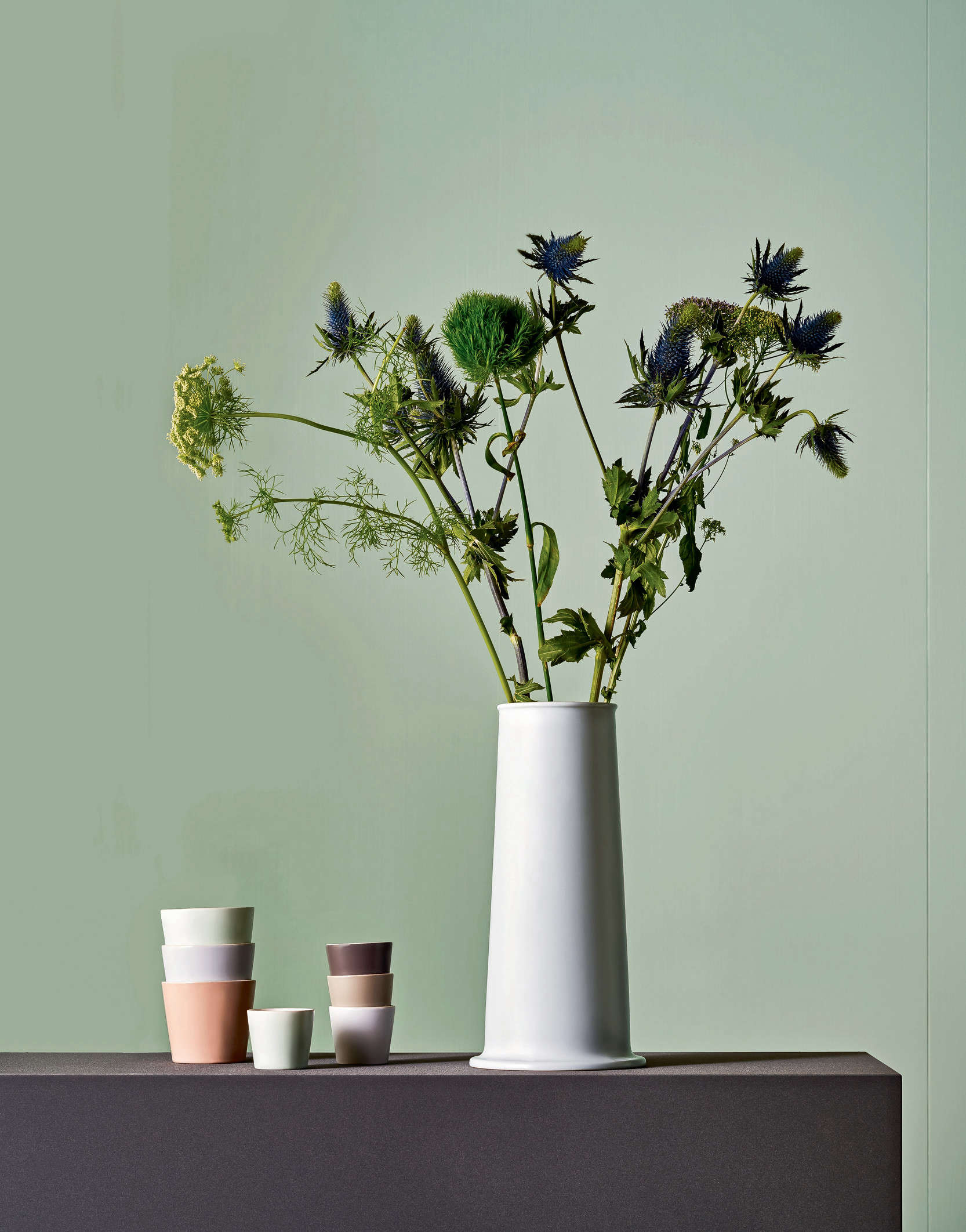
Some tableware walks into the room wearing sequins. David Chipperfield’s Tonale for Alessi does the opposite. It enters quietly, sets down a pale gray plate, pours water from a crystalline carafe, and somehow makes the whole table feel calmer, smarter, and better dressed. That is the charm of Tonale: it is refined without being fussy, artistic without yelling “look at me,” and practical enough to survive real meals, not just photoshoots involving one fig and a linen napkin.
Originally introduced in 2009 and later expanded with new colors and pieces, the Tonale collection remains one of Alessi’s most quietly confident tableware families. Designed by British architect Sir David Chipperfield, the line brings together stoneware bowls, plates, cups, carafes, pitchers, serving pieces, and related table accessories in a palette inspired by the tonal still-life paintings of Italian artist Giorgio Morandi. The result is a modern tableware collection that feels architectural, painterly, and deeply usable.
This product update looks at what makes Tonale special, why the collection still matters, how it fits into Alessi’s design legacy, and how homeowners, decorators, collectors, and everyday dinner-makers can use it without needing a museum label next to the soup bowl.
What Is Tonale by David Chipperfield for Alessi?
Tonale is a tableware and kitchenware collection designed by David Chipperfield for Alessi, the Italian design house known for turning ordinary domestic objects into collectible design icons. The collection includes dinner plates, side plates, small plates, soup bowls, tall bowls, cups, small cups, beakers, pitchers, carafes, milk jugs, serving plates, and related accessories. Depending on the piece, materials include stoneware, crystalline glass, timber, enameled steel, and silicone.
The collection’s name refers to tonality: the subtle relationship between colors rather than a single dramatic shade. Instead of relying on bright decoration or loud patterns, Tonale uses quiet color shifts, matte surfaces, and simple geometric forms. Imagine a well-composed still life that also happens to be dishwasher friendly. That is not a bad personality trait for dinnerware.
Chipperfield conceived Tonale as an exercise in refining functional household objects. That phrase may sound modest, but it is the key to the collection. Tonale is not trying to reinvent the plate as a philosophical event. It is trying to make the plate, cup, bowl, and carafe feel precise, dignified, and useful. The design treats the everyday table as something worthy of attention.
The Product Update: New Colors, New Shapes, Same Quiet Confidence
Tonale has evolved since its 2009 debut. Later updates extended the color palette and introduced selected new pieces, including pastel tones and deeper black options. A notable product update brought pale blue and mint green into the family, along with new shapes such as a stoneware tray and flower vase. These additions strengthened the original idea behind the collection: a table that can be composed like a Morandi painting, with objects and shades arranged in a way that feels personal rather than overly coordinated.
That update matters because Tonale’s strength is not only in individual pieces. It is in the way the pieces converse with one another. A light gray dinner plate, a soft green bowl, a pale blue vase, and a clear glass carafe do not match in the old-fashioned “everything came in one box” sense. They harmonize. The difference is small, but on a table it is enormous.
In modern interiors, where kitchens often open into dining and living spaces, tableware has become part of the visual atmosphere of the home. Tonale fits that shift beautifully. It looks good stacked on open shelving, arranged for a dinner party, or used for a Tuesday lunch that was supposed to be glamorous but somehow became leftovers. No judgment; Tonale is far too elegant to gossip.
Design Inspiration: Giorgio Morandi Meets Everyday Dining
Giorgio Morandi was famous for still-life paintings of bottles, bowls, vases, and domestic objects rendered in muted, carefully balanced tones. His work made ordinary forms feel contemplative. Tonale borrows from that spirit, translating painterly restraint into tableware.
This does not mean Tonale is decorative in the usual sense. There are no floral borders, gold rims, or dramatic graphic motifs. Instead, the decoration is embedded in proportion, color, texture, and silhouette. A bowl may look simple at first glance, but the color, curvature, and matte finish create a visual softness that rewards slow looking. It is tableware for people who appreciate detail but do not want their dinner plates to behave like theater kids.
Chipperfield also drew from vernacular ceramics from Korea, Japan, and China. That influence appears in the calm forms, natural tones, and sense of everyday ritual. The pieces feel rooted in use. They suggest tea, rice, broth, bread, fruit, water, and simple shared meals. Tonale is modern, but it avoids the coldness that sometimes haunts minimal design. It has warmth because it respects the hand, the table, and the meal.
Materials and Craft: Why Tonale Feels Different
Tonale’s material mix gives the collection its quiet richness. Stoneware provides weight and durability. Crystalline glass adds clarity and lightness. Timber brings warmth. Enameled steel introduces a more utilitarian note. Silicone appears in functional details such as carafe stoppers. Together, these materials prevent the collection from feeling flat or overly uniform.
The matte glaze is especially important. Glossy dinnerware can be beautiful, but matte surfaces absorb light in a gentler way. On Tonale pieces, the finish makes the colors feel softer and more architectural. The plates and bowls do not shine at you; they hold space. That quality is part of why Tonale photographs well, but it also explains why it feels relaxed in daily use.
Several pieces are designed for practical modern life. Selected stoneware pieces are suitable for common kitchen uses such as dishwasher cleaning, and some items are listed with oven or microwave compatibility depending on the specific product. The glass carafe with silicone stopper is dishwasher friendly and designed as a functional object, not a fragile sculpture that requires whispering while washing it.
Alessi’s Design Legacy: Why Tonale Belongs
Alessi was founded in 1921 and began as a workshop producing objects for the home with a strong emphasis on metalworking, craftsmanship, and finish. Over the decades, the company became internationally known for collaborating with architects and designers to create household objects with personality, wit, and cultural depth.
Tonale fits into that legacy, but it does so in a quieter register than some of Alessi’s more playful icons. Where other Alessi products may charm with humor or sculptural surprise, Tonale charms through restraint. It proves that the company’s “dream factory” reputation is not limited to whimsical kettles and expressive corkscrews. Sometimes the dream is a perfectly muted bowl that makes lentil soup look like it went to art school.
The collection also received the Compasso d’Oro in 2011, one of the most respected design awards in Italy. The recognition praised Tonale’s harmonious elegance and painterly references. That award matters because it confirms what many design lovers already sense: Tonale is not simply attractive tableware. It is a considered design system with cultural intelligence behind it.
David Chipperfield’s Architectural Touch
David Chipperfield is best known as an architect, and that background is visible throughout Tonale. His buildings often emphasize clarity, proportion, context, and restraint. The same values show up here, scaled down from museums and civic buildings to plates and cups.
Architect-designed tableware can sometimes feel overly conceptual, as if the object would rather be discussed than used. Tonale avoids that trap. Chipperfield’s architectural thinking appears in the disciplined forms, but the collection remains hospitable. You can serve pasta in it. You can drink coffee from it. You can stack it in a cabinet without needing a structural engineer.
That balance is the point. Tonale translates architectural restraint into domestic ease. The collection does not ask the user to admire it from a distance. It asks to be held, filled, washed, stacked, and used again.
Key Pieces in the Tonale Collection
Plates and Bowls
The dinner plates, side plates, small plates, soup bowls, and tall bowls form the backbone of the collection. Their shapes are simple, but the proportions feel carefully resolved. The bowls have enough depth for soups, grains, fruit, or composed dishes, while the plates provide a calm visual field for food.
Cups, Small Cups, and Beakers
Tonale’s cups and beakers are among its most distinctive pieces because they blur the line between cup, glass, and small vessel. Some are made in stoneware rather than transparent glass, which gives them a universal quality. They can hold coffee, tea, water, wine, snacks, or the pens you keep on the kitchen counter and pretend are organized.
Carafes and Pitchers
The crystalline glass carafes bring transparency into the collection. The carafe with stopper, featuring a silicone closure, is practical for water, iced tea, or juice. Its restrained shape works well with the stoneware pieces because it adds visual lightness without disrupting the tonal palette.
Serving Pieces and Accessories
Serving plates, trays, milk jugs, and vases expand Tonale beyond basic place settings. These pieces are useful for entertaining, but they also support the collection’s still-life quality. A vase, a pitcher, and a stack of bowls can become a quiet tabletop composition even before the food arrives.
How to Style Tonale at Home
Tonale works best when you resist the urge to make everything perfectly identical. The collection was built for tonal variation, so mixing colors is part of the design language. Light gray can serve as the anchor, while pale green, soft blue, black, earth tones, and other available shades add depth.
For a casual breakfast table, pair small cups with side plates and a glass carafe. Add linen napkins, a wooden board, and fresh fruit. For dinner, layer dinner plates with soup bowls in nearby shades rather than exact matches. The goal is harmony, not military discipline. Your plates are not reporting for inspection.
Tonale also pairs well with natural materials: oak tables, stone counters, linen textiles, brushed stainless steel, matte black flatware, and simple glassware. It can soften a very modern kitchen or bring structure to a rustic dining room. Because the palette is restrained, it adapts easily to seasonal food and decor. Tomatoes look bright on it. Bread looks wholesome. Even takeout looks like it has made better life choices.
Who Should Buy Tonale?
Tonale is ideal for design-conscious homeowners who want tableware with depth but not drama. It suits people who appreciate architecture, quiet luxury, natural colors, and objects that age gracefully. It is also a strong choice for collectors of Alessi products, especially those interested in the brand’s more restrained collaborations.
It may not be the best fit for someone who wants highly decorative china, bright patterns, or ultra-lightweight dinnerware. Tonale has a grounded feel. Its stoneware pieces are meant to have presence. That presence is part of the pleasure, but it may not appeal to everyone.
For small spaces, start with a few versatile pieces: a set of bowls, small plates, and a carafe. For larger households, build around dinner plates and soup bowls, then add cups, serving pieces, and a pitcher over time. Tonale does not need to be purchased all at once. In fact, the collection’s tonal logic makes gradual collecting feel natural.
Practical Buying Tips
Before buying Tonale, think about how you actually eat. If you cook soups, grains, salads, and pasta often, bowls may be more useful than formal dinner plates. If you entertain, the carafe, serving plate, and pitcher will earn their keep. If you want everyday elegance, small cups and side plates are easy entry points.
Check product specifications carefully because dimensions, capacities, materials, and care instructions vary by item. Some pieces are stoneware, while others are glass or include silicone details. Also review color availability, as certain shades and shapes may change over time or appear seasonally.
For a cohesive table, choose one anchor color and two supporting tones. Light gray is the safest foundation. Add pale green or blue for softness, black for contrast, or earth tones for warmth. The beauty of Tonale is that the colors do not compete. They behave like guests who understand the assignment.
Why Tonale Still Feels Current
In a market full of trend-driven home goods, Tonale feels current because it was never chasing a trend in the first place. Its muted colors, functional shapes, and cross-cultural ceramic references align with contemporary tastes, but they are not trapped by them. The collection looks modern because it is balanced, not because it is trying to be fashionable.
That is also why Tonale works across many interiors. It can sit comfortably in a minimalist apartment, a warm modern farmhouse kitchen, a Scandinavian-inspired dining room, or a collector’s cabinet filled with design classics. Its personality is present but not pushy.
Good product design often becomes more valuable with time because it continues to solve a real problem gracefully. Tonale solves the problem of how to make daily dining feel considered without becoming precious. That is a small miracle, especially in homes where the dining table also handles laptops, homework, grocery bags, and the occasional emotional support pastry.
Experience Notes: Living With Tonale on the Table
The best way to understand Tonale is not to stare at a product photo. It is to use it through the rhythm of a day. In the morning, a small cup feels steady in the hand, with enough visual weight to make coffee feel intentional rather than automatic. A pale plate under toast or fruit creates a quiet contrast that makes breakfast look composed even when the toaster has other plans.
At lunch, the bowls become the stars. Tonale’s tall bowls are particularly useful for meals that do not fit neatly into old categories: rice bowls, noodles, roasted vegetables, soup, salad, leftovers with ambition. The curved form frames food nicely, and the muted glaze lets color stand out. Greens look greener, tomatoes look brighter, and even beige foods get a little dignity. That is no small service to oatmeal.
For dinner, Tonale changes the mood of the table without demanding a formal setup. A mix of dinner plates, side plates, and soup bowls in related tones gives the table depth. The collection is especially good for gatherings where the food is shared: bread on a serving plate, water in the glass carafe, olives in a small bowl, a pitcher nearby for wine or iced tea. Nothing feels overly staged, yet everything feels chosen.
The carafe with stopper is one of the easiest pieces to use daily. It works for chilled water in the refrigerator, for serving drinks at dinner, or for keeping infused water on a desk during the workday. The stopper makes it practical, while the clear glass keeps it visually light. Paired with stoneware beakers or cups, it creates the collection’s signature balance between transparency and earthiness.
Tonale is also surprisingly flexible with food styles. It looks at home with Italian pasta, Japanese rice dishes, Korean banchan, California salads, rustic bread, cheese boards, and simple desserts. That versatility comes from the absence of decorative noise. The pieces do not announce a theme, so the meal can provide the character.
In open kitchens, Tonale has another advantage: it looks good when not in use. A stack of plates on a shelf reads as part of the room, not clutter. A vase or pitcher left on the table feels like a small still life. This is where the Morandi influence becomes more than a design reference. The objects make ordinary domestic scenes look a little more thoughtful.
There are practical realities, of course. Matte stoneware should be treated with reasonable care, especially if you want to preserve the finish over years of use. It is everyday tableware, not indestructible camping gear. Still, Tonale’s value lies in that middle ground: durable enough for real life, beautiful enough to make real life feel better.
For anyone building a tableware collection slowly, Tonale rewards patience. Start with pieces you will touch every day, then add serving pieces or accent colors as your habits become clearer. Over time, the collection can grow into a personal palette. That is the nicest thing about Tonale: it does not force a finished look. It lets the table evolve.
Conclusion: A Product Update Worth Paying Attention To
David Chipperfield’s Tonale for Alessi is a reminder that great design does not always need a grand entrance. Sometimes it arrives as a quiet gray plate, a pale green bowl, a glass carafe, or a vase that makes the table feel like a painting in progress.
The collection combines architectural restraint, painterly color, practical materials, and Alessi’s long tradition of design-led household objects. Its updates in color and form have only made the original concept stronger. Tonale remains elegant, versatile, and deeply livableexactly the kind of tableware that can turn daily meals into small rituals without requiring anyone to use the phrase “tablescape” at dinner.
For design lovers, Tonale is collectible. For home cooks, it is useful. For people who simply want their table to look better with less effort, it is a very persuasive argument in stoneware and glass.
Editor’s note: This article is based on publicly available product, designer, museum, retail, and design-publication information about David Chipperfield’s Tonale collection for Alessi. Product availability, prices, colors, and care specifications may vary by retailer and date, so buyers should confirm details before purchasing.