The Poul M. Volther J46 Chair is proof that a dining chair does not need dramatic curves, rare materials, or a name that sounds like a luxury yacht to become a design icon. Sometimes it simply needs to be comfortable, practical, attractive, and stubbornly useful for several generations.
Designed in 1956 for FDB Møbler, the J46 transformed the familiar wooden kitchen chair into something lighter and more modern. Its broad seat, tapered legs, and distinctive V-shaped spindle back created an approachable silhouette that looked refined without becoming precious. More than 800,000 examples are estimated to have found their way into Danish homes, making it one of the most commercially successful chairs in Denmark’s furniture history.
Today, the J46 Chair remains relevant because it solves the same problems it addressed in the 1950s. It fits around ordinary tables, works in small rooms, offers dependable support, and introduces personality without demanding that every other object in the room salute it.
The History Behind the Poul M. Volther J46 Chair
Poul M. Volther was born in 1923 and trained as a cabinetmaker before establishing himself as one of the important figures in Danish modern furniture. His practical education helped shape a design philosophy based on materials, construction, comfort, and everyday usefulness rather than decoration for decoration’s sake.
In 1950, Volther succeeded Børge Mogensen as head of the FDB Møbler design studio. The organization wanted to create well-made furniture suitable for mass production and ordinary domestic life. Volther proved especially capable of translating traditional woodworking principles into efficient, repeatable designs that retained a sense of craftsmanship.
The J46 arrived in 1956, shortly after Volther’s period as design director. At the time, many dining chairs still looked visually heavy, with thick backs, substantial frames, and a formal presence. The J46 went in the opposite direction. Its narrow spindles and open back reduced visual weight, while its generously shaped seat kept it from feeling fragile or severe.
This balance reflected the broader development of Scandinavian modernism. Designers were softening the harder geometry associated with early European modernism by using warm wood, organic profiles, and forms shaped around the human body. The result was furniture that remained rational but felt considerably more welcoming.
What Makes the J46 Chair So Recognizable?
The V-Shaped Spindle Back
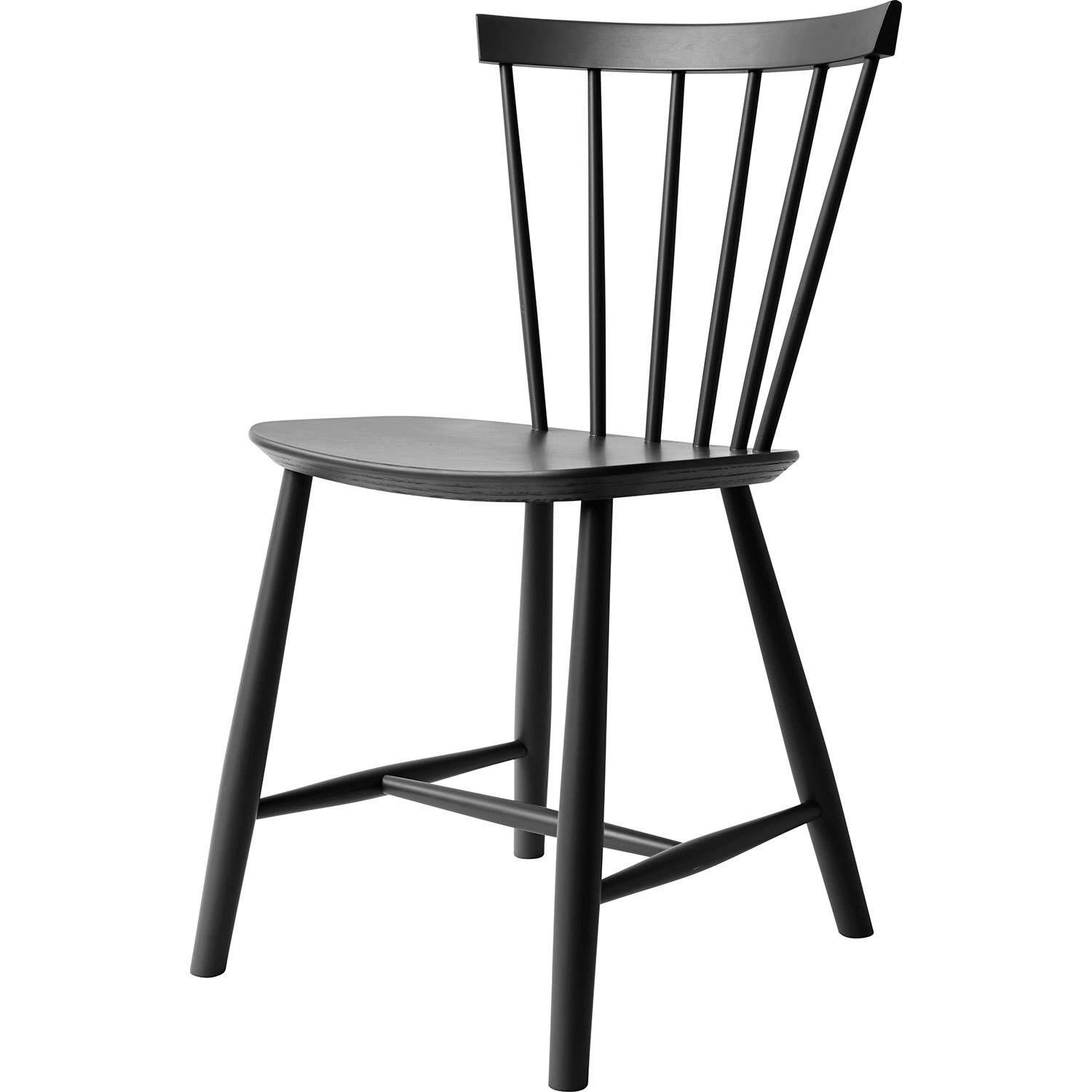
The defining feature of the Poul M. Volther J46 Chair is its spindle backrest. Instead of arranging the wooden rods in a perfectly vertical row, Volther spread them into a subtle fan or V formation. This gives the back a sense of movement and creates a wider area of support near the shoulders.
The design borrows some of the friendly familiarity of a traditional Windsor chair, but the proportions are cleaner and less rustic. The spindles appear light, almost graphic, especially when the chair is viewed against a contrasting wall. They also allow light to pass through, which helps several J46 chairs feel less crowded around a table.
A Broad, Gently Shaped Seat
The seat is wider than the narrow frame might suggest. Its shallow contour helps position the body while avoiding the deep, restrictive scoop found on some sculptural dining chairs. You can sit upright for dinner, shift sideways during a long conversation, or lean forward over a laptop without feeling as though the chair is negotiating the terms of your posture.
Current versions have been adjusted for contemporary body proportions and can be paired with optional leather or textile seat cushions. This makes the chair more accommodating while preserving its original visual character.
Rounded Legs and Honest Construction
The legs are rounded and gently tapered, giving the chair a stable stance without making it look bulky. Their shape visually echoes the back spindles, so the chair reads as a coherent object rather than a collection of unrelated wooden parts.
There is no decorative carving to distract from the construction. The appeal comes from proportion, repetition, smooth transitions, and the contrast between the broad seat and slender back. It is the furniture equivalent of someone who wears a plain white shirt exceptionally well.
Materials, Finishes, and Colors
The J46 Chair is commonly produced in solid beech or oak. Beech is particularly suitable for painted versions because it has a relatively even texture and takes color well. Oak versions emphasize grain and natural warmth, giving the design a slightly more substantial and traditional appearance.
Natural oak or beech works beautifully in quiet Scandinavian interiors, but color has also become an important part of the J46’s personality. Depending on the market and production collection, buyers may encounter black, white, yellow, deep blue, bottle green, dusty green, red, gray, violet, and other muted or saturated finishes.
This variety changes the chair’s mood without changing its fundamental design. A black J46 looks crisp and architectural. Bottle green feels calm and traditional. Red introduces a playful café atmosphere, while pale colors can make a breakfast nook feel softer and more informal.
Wood is a natural material, so grain, tone, and minor dimensional details can vary between pieces and production batches. Changes in humidity, temperature, and prolonged sunlight may also affect wooden furniture over time. These variations are generally part of the material’s character rather than evidence that your chair has begun developing opinions.
J46 Chair Dimensions and Practical Fit
Although individual listings may show minor rounding differences, current J46 models are approximately 17.7 inches wide, 18.9 inches deep, and 31.5 inches high. The seat is roughly 17.7 inches high and about 15 inches deep. Oak and painted beech versions are commonly listed at approximately 9.3 pounds.
| Specification | Approximate Measurement |
|---|---|
| Overall width | 17.7 inches |
| Overall depth | 18.9 inches |
| Overall height | 31.3–31.5 inches |
| Seat height | 17.6–17.7 inches |
| Seat depth | Approximately 15 inches |
| Approximate weight | 9.3 pounds |
| Common materials | Beech or oak |
These proportions make the J46 especially useful in apartments and compact dining rooms. Its open back occupies less visual space than an upholstered chair, and its moderate width allows multiple chairs to sit around a table without turning every meal into a furniture traffic jam.
The chair is also light enough to move easily. That matters more than it sounds. Dining chairs are frequently pulled toward desks, carried into living rooms, relocated for parties, or borrowed as temporary bedside tables by people who insist they will put them back later.
Why the J46 Became a Danish Design Classic
It Made Good Design Feel Normal
The J46 was not conceived as a rare gallery object. It was intended for kitchens and dining rooms where furniture would be used daily. That practical ambition helped make the chair culturally significant. Its success demonstrated that mass production and careful design did not have to be enemies.
Volther focused on producing high-quality furniture efficiently, supporting FDB Møbler’s broader mission of furnishing modern postwar homes. The J46’s enormous sales figures suggest that households responded to this combination of accessibility, comfort, and visual clarity.
It Balances Tradition and Modernism
The spindle-back construction feels familiar, but the spacing, angles, and simplified frame make it modern. This allows the chair to work with old and new furniture. It can sit beside a farmhouse table without looking overly sleek or accompany a minimalist table without seeming nostalgic.
It Has Personality Without Visual Noise
Some iconic chairs behave like celebrities. They enter a room, dominate the conversation, and expect special lighting. The J46 is more sociable. Its silhouette is memorable, yet it allows tables, artwork, rugs, and architecture to remain part of the composition.
That visual flexibility explains why J46 chairs continue to appear in renovated apartments, contemporary kitchens, dining rooms, and editorial interiors decades after their introduction.
How to Style a Poul M. Volther J46 Chair
Create a Classic Scandinavian Dining Area
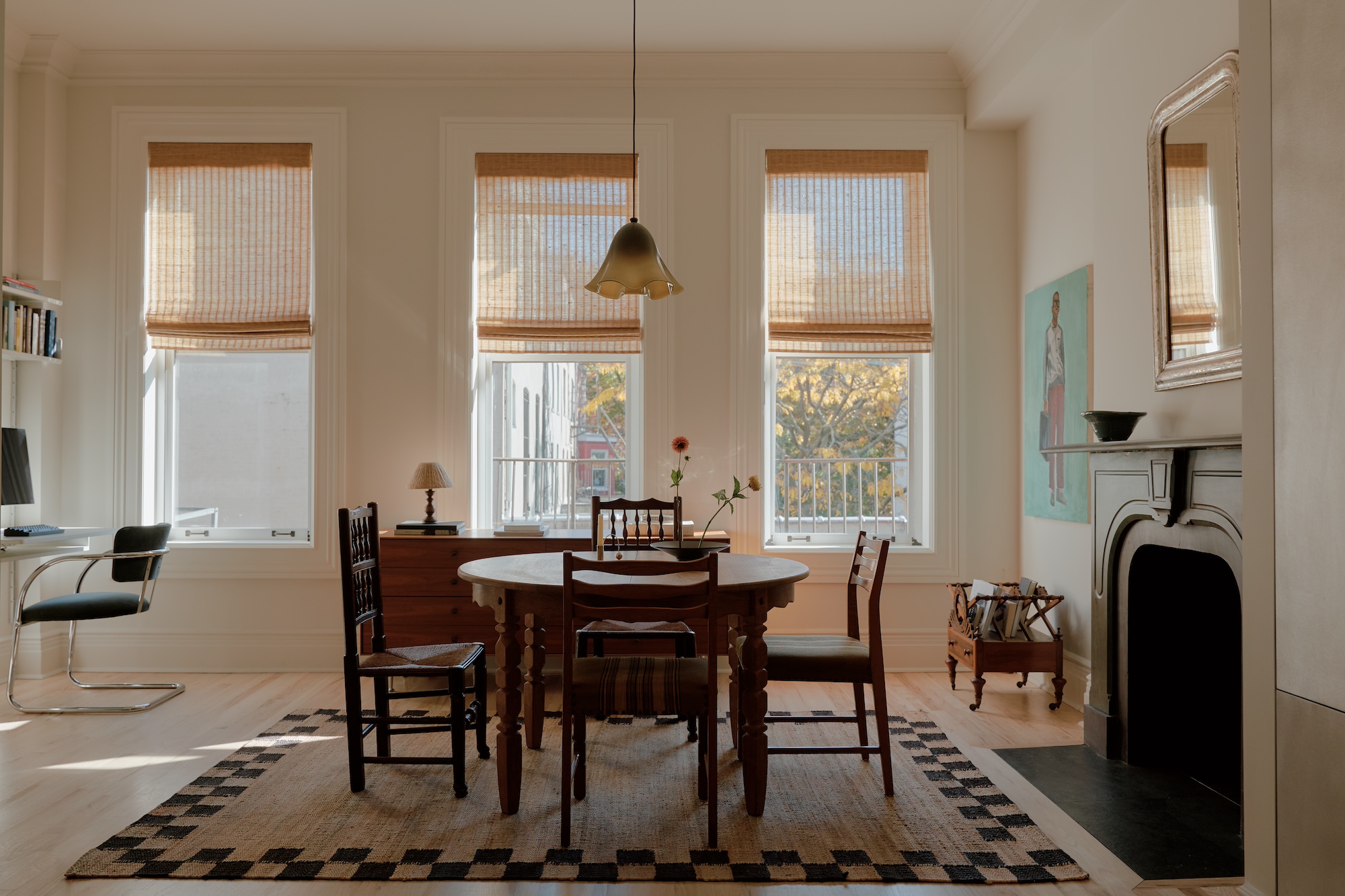
Pair natural oak J46 chairs with a pale wood table, soft white walls, and a simple pendant light. Add linen curtains, handmade ceramics, and one or two darker accents to keep the room from looking like it has been filtered through a bowl of oatmeal.
Scandinavian interiors typically emphasize functionality, clean lines, natural materials, light colors, and thoughtful craftsmanship. The J46 fits naturally into that environment because it supplies warmth without adding unnecessary mass.
Use Color as an Architectural Accent
A group of painted J46 chairs can function almost like a line of color around the table. Dark green chairs work well with cream walls and brass lighting. Red chairs can energize a neutral kitchen, while black versions create contrast against oak cabinetry or pale flooring.
You do not necessarily need matching chairs. A single contrasting J46 at the head of a table can provide enough character, or several related colors can create an informal, collected look. The consistent silhouette keeps the arrangement orderly even when the finishes differ.
Combine the Chair With Vintage Furniture
The J46 is an effective bridge between eras. Place it beside a vintage pedestal table, an antique pine table, or a contemporary slab-style design. Its recognizable wooden construction creates continuity, while its open back prevents the room from becoming visually heavy.
Turn One Chair Into a Flexible Accent Piece
A single J46 can work beside a bedroom desk, in an entryway, next to a bookcase, or in a guest room. Because it is relatively light and compact, it can move between jobs as needed. It is not an upholstered lounge chair, but it is considerably more useful when someone unexpectedly needs another seat at dinner.
Comfort: Is the J46 Chair Suitable for Everyday Dining?
The J46 is designed as a kitchen and dining chair rather than a deeply cushioned lounge seat. Its comfort comes from proportion, the shaped wooden seat, and the spread of the back spindles. For everyday meals, homework sessions, and morning coffee, it offers supportive and uncomplicated seating.
During longer dinners, some users may prefer an optional cushion, especially if they are accustomed to upholstered seating. A thin cushion can add softness without hiding the chair’s profile. Thick cushions should be chosen carefully because they raise the sitting position and may interfere with the relationship between the seat and backrest.
As with any dining chair, comfort depends partly on body proportions and personal preferences. Anyone buying a full set should compare the seat height with the dining table and test the back support when possible. Beautiful furniture is more enjoyable when your knees are not conducting a private argument with the tabletop.
Buying a New or Vintage J46 Chair
New J46 chairs are produced by FDB Møbler in a broad selection of painted and natural finishes. Measurements, available colors, inventory, warranties, shipping costs, and prices can differ among U.S. retailers, so buyers should review the exact product page rather than relying on an old screenshot or social media post.
When considering a new chair, confirm the material, finish, seat height, return policy, and whether the item is stocked or made to order. Digital color swatches can look different from real lacquer, particularly on screens with aggressive brightness settings. Requesting a physical sample is sensible when coordinating several chairs with cabinetry or wall paint.
Vintage examples may show scratches, worn paint, repaired joints, or softened edges. Cosmetic wear can be charming, but movement at the legs or back joints deserves closer attention. Ask for photographs of the underside, manufacturer markings, joints, seat edges, and any repaired areas.
A refinished vintage chair may still be an excellent functional purchase, although collectors often value documented original finishes. For ordinary household use, structural stability should take priority over romantic stories involving Danish apartments, mysterious estates, and one careful owner who apparently never sat down.
How to Care for the J46 Chair
For routine cleaning, the manufacturer and retailers generally recommend wiping the chair with a well-wrung damp cloth. Avoid allowing water to collect around joints or remain on the surface. Protect the wood from direct heat, excess moisture, and prolonged intense sunlight.
Clean spills promptly, particularly on painted finishes. Do not attack a small mark with an abrasive sponge unless your goal is to create a much larger and more emotionally complicated mark.
Natural oiled wood may eventually need maintenance appropriate to its original finish. Painted and lacquered versions require different treatment, so follow the care instructions for the specific model. Check joints periodically, and contact a qualified furniture repair professional if the chair develops movement or unusual sounds.
Living With the Poul M. Volther J46 Chair: An Experiential Guide
The appeal of the J46 becomes clearest when imagining it not in a perfectly styled photograph but in an ordinary home. Around a breakfast table, the open spindle back allows sunlight and wall color to remain visible. The chairs define the dining area without enclosing it, which can make a small kitchen feel less crowded.
The first practical advantage is movement. At approximately 9.3 pounds, the chair is easy for most adults to pull out, reposition, or carry to another room. A heavier upholstered chair may feel luxurious once you are seated, but moving six of them to clean the floor can become an unexpected strength-training program. The J46 is more cooperative.
During a quick breakfast, the broad wooden seat feels straightforward and stable. There are no arms to restrict movement, making it easy to turn toward the counter, reach for a bag, or stand up without performing a complicated sideways exit. The spindle back provides contact across a useful area while leaving room for air circulation.
For a longer dinner, the experience depends on individual expectations. Someone who prefers firm seating may remain comfortable for hours. A person accustomed to thick upholstery may begin thinking fondly about cushions after dessert. Fortunately, the simple seat shape accepts a slim pad without making the chair look as though it has been dressed for winter.
The chair’s modest width is especially noticeable when several people gather around a table. More substantial dining chairs can consume valuable elbow room, while the J46 keeps the arrangement visually and physically efficient. Guests can shift their chairs without repeatedly colliding with neighboring frames.
Color also changes the experience. A natural oak J46 tends to recede gently into a room, revealing grain and contributing warmth. Black emphasizes the geometry of the spindles and legs. Dusty green or deep blue can make the chair feel more individual while remaining easy to coordinate. Bright red or yellow turns a set into a deliberate focal point.
The J46 is equally effective as a temporary work chair for moderate periods. Its upright posture suits writing, reading, or laptop tasks better than a soft lounge chair that quietly encourages a nap. However, it is not an adjustable ergonomic office chair. Anyone working for an entire day should use appropriate task seating rather than expecting a 1956 dining chair to manage monitor height, lumbar adjustment, and modern video meetings.
In a household with children, the painted wood surface is generally less intimidating than delicate upholstery. Crumbs are easy to spot, and ordinary messes can often be handled with a damp cloth. Painted finishes can still chip or scratch, but those marks may eventually become part of the chair’s domestic history rather than a reason to place the dining room behind velvet ropes.
There are limitations. A wooden seat will never provide the plush sensation of a fully upholstered chair. The open back may not appeal to someone who wants continuous lumbar contact, and natural finishes require reasonable protection from moisture and harsh sunlight. Vintage examples may also need joint repairs before entering active service.
Yet the overall experience is one of flexibility. The J46 does not force a room into a strict period style. It can sit in a minimalist kitchen on Monday, move beside a desk on Tuesday, and provide extra party seating on Saturday. Its proportions are friendly, its visual identity is clear, and its construction is understandable at a glance.
That may be the most important part of living with the Poul M. Volther J46 Chair. It does not ask its owner to behave like a collector. It asks to be pulled toward the table, used, moved, cleaned, and used again. Many furniture designs look timeless because they resemble the past. The J46 feels timeless because its original purpose still makes sense.
Conclusion: A Chair Designed for Real Life
The Poul M. Volther J46 Chair has endured because it combines recognizable character with practical restraint. Its fanned spindle back, wide shaped seat, light frame, and versatile finishes give it enough personality to anchor a room without making surrounding furniture irrelevant.
It also represents an important Danish modern ideal: thoughtful design should improve ordinary routines. The J46 was created for kitchens and dining rooms, not merely exhibitions, and its continuing production confirms that usefulness can be a powerful form of beauty.
For buyers seeking a compact Danish dining chair, a colorful Scandinavian accent, or a wooden chair with genuine design history, the J46 remains a persuasive choice. It is elegant without being formal, familiar without being dull, and iconic without needing to announce the fact every five minutes.