There was a time when the phrase man cave sounded like a warning label. You heard it and pictured dark walls, a giant TV, a lonely recliner, and a strict “no touching Dad’s stuff” policy. But in our house, Part 2 of my husband’s man cave story took a much happier turn. The room still has all the personality he loves, but now it feels like an inviting entertainment space where friends, family, kids, neighbors, and even the snack-stealing relative who never leaves on time can settle in and feel at home.
This version is not about turning a cozy retreat into a bland showroom. It is about making a game room, media room, and lounge area work harder and feel warmer. Think better lighting, smarter storage, softer sound, flexible seating, and enough personality to make the room memorable without making guests feel like they need a permission slip to sit down.
If you are planning your own welcoming man cave, basement hangout, or bonus-room retreat, this guide walks through the ideas that actually make the room work in real life. Not “real life” in the glossy-magazine sense, either. I mean actual real life: movie nights, football Sundays, board-game marathons, birthday cake crumbs, and somebody asking where the extra blankets are.
Why This Man Cave Feels Different in Part 2
The first version of the room was fun, but it was more of a private clubhouse. Part 2 is where the space grew up a little. It still has the big-screen energy, sports memorabilia, and just enough masculine style to make my husband grin like he won free wings for life. But now the room is designed around one key idea: if people are invited in, the room should actually feel welcoming.
That sounds obvious, but it changes everything. A welcoming man cave is not only about decor. It is about how people move through the room, where they put their drinks, whether they can hear each other talk, and if there is enough seating so no one gets stuck on a folding chair in the corner like they lost a very boring game show.
Instead of building the room around one person’s favorite screen, we built it around shared experiences. That meant creating zones for watching, snacking, talking, and playing. It also meant choosing finishes and furniture that could survive normal human behavior, which is a polite way of saying spills, shoes, pets, and enthusiastic nacho handling.
The Secret Ingredient: A Layout That Invites People to Stay
1. The room works because it has zones
One of the smartest upgrades in this second chapter was giving the room clear purpose without making it feel chopped up. The TV and lounge chairs anchor one side, the game table has its own breathing room, and the snack-and-drink area sits close enough to be useful but not so close that someone has to dodge a pool cue to grab sparkling water.
This layout matters because entertaining spaces succeed when people can do different things at the same time. Some guests want to watch the game. Others want to talk. Someone always wants to hover near the snacks as if they were hired for security. A multifunctional man cave handles all of that without turning into chaos.
2. Comfortable seating beats “cool” seating every time
Stylish furniture is great. Stylish furniture that does not punish your spine is even better. We traded a couple of stiff, look-but-don’t-lounge chairs for a deeper sofa, two club chairs, and an ottoman that can act as a footrest, extra seat, or unofficial snack island. Suddenly the room stopped looking staged and started feeling lived in.
The best part is that different seating options make the room more inclusive. Grandparents, teenagers, tall friends, short friends, and the one guest who always sits sideways like they are posing for a catalog all have a place to land.
3. Traffic flow matters more than people think
A good entertainment room should let people move around without bumping knees, side-eyeing furniture, or interrupting the view every 12 seconds. We left easy walkways between the main seating area, game setup, and bar nook. It seems like a small thing until the room fills up. Then it becomes the difference between “What a great space” and “Why am I carrying salsa through an obstacle course?”
Lighting: The Upgrade That Changed Everything
If Part 1 of the man cave was moody, Part 2 is moody with a plan. The room no longer relies on one heroic overhead fixture trying its best. Now it uses layered lighting, which sounds fancy but really means this: every activity gets the kind of light it needs.
We added dimmable overhead lighting for movie nights, table lamps for softer conversation corners, and accent lighting around the TV wall and shelving so the room feels warm instead of cave-like in the literal sense. That small shift made the space feel bigger, calmer, and much more polished.
Lighting also changed the room’s mood during gatherings. Bright enough for card games? Yes. Soft enough for a late-night conversation when everybody suddenly becomes a philosopher after dessert? Also yes. A well-lit room simply feels safer, easier to use, and more comfortable for guests of all ages.
Storage: Because “Relaxed” Still Needs a Place to Hide the Clutter
Let me say something bold: hidden storage is one of the sexiest things in a room makeover. Not in a dramatic-movie way. In a deeply satisfying way. The kind that makes you smile because the coasters, remotes, blankets, game controllers, cards, charging cords, and random batteries all have a home.
In Part 2, we added a storage bench, closed cabinets below the media console, and baskets for the things people need but do not want to stare at. We also gave the games their own zone instead of storing them in six mysterious places around the house. Revolutionary, honestly.
A welcoming man cave should feel effortless, but effortlessness almost always comes from good organization. When guests know where to find a throw blanket, an extra pillow, or a deck of cards, the room becomes easier to use without constant host intervention. That is the sweet spot.
The Bar and Snack Setup That Makes Hosting Easier
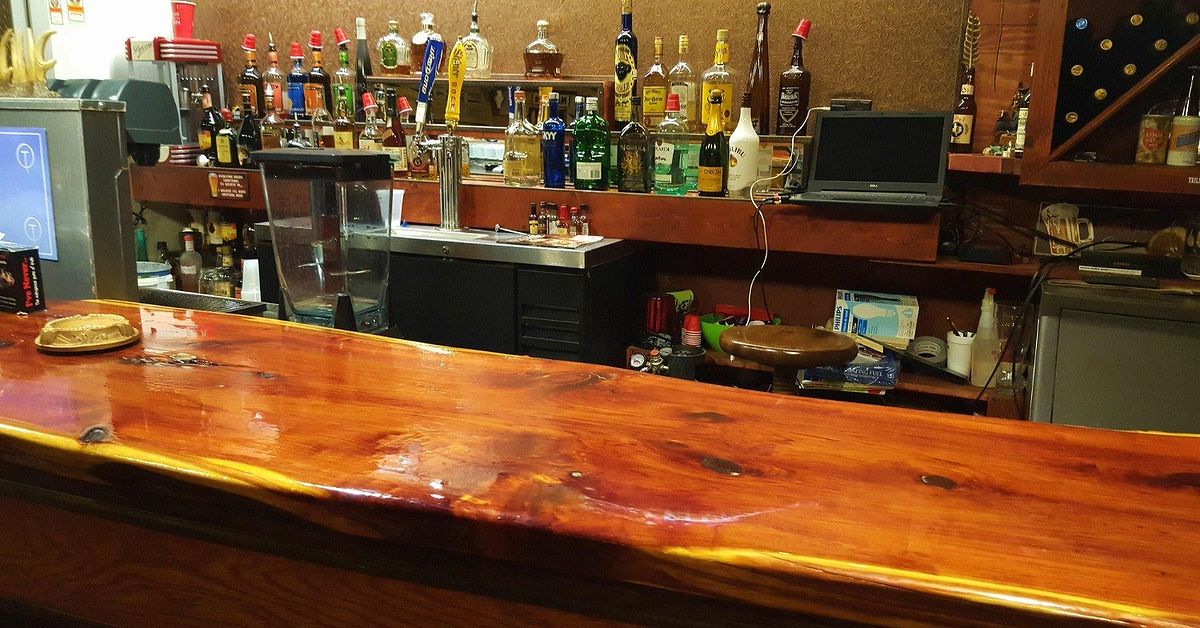
You do not need a giant custom wet bar to create a great entertaining space. In our room, the winning formula was simple: a compact drink station, glassware that is easy to reach, a small under-counter fridge, and a serving surface big enough for drinks, popcorn, and a highly competitive bowl of trail mix.
The point was not to make the room feel exclusive or overly adult. It was to make it functional. During game night, the setup holds soda, mocktails, water, and easy appetizers. During movie night, it becomes popcorn headquarters. During casual visits, it quietly says, “Please help yourself,” which may be the most relaxing phrase in home design.
We also learned that the bar area works best when it looks like part of the room rather than a random afterthought. Matching finishes, warm lighting, and open shelving with a few display pieces help it feel integrated instead of looking like a mini convenience store wandered into the basement.
Decor With Personality, Not Ego
My husband still wanted the room to feel like his space, and that mattered. The trick was choosing decor that showed personality without making guests feel like they had stepped into a museum of one person’s opinions. Sports pieces stayed, but they were grouped more intentionally. We added framed vintage signs, a few family photos, art with humor, and shelves that mix collectibles with books and personal mementos.
This made the room feel layered instead of themed within an inch of its life. There is a difference between a room that says “this is what we love” and a room that screams “do not move, breathe, or question the neon beer sign.” We aimed for the first one.
Texture helped too. Upholstered seating, a large area rug, wood tones, and a few matte finishes gave the room warmth and helped soften sound. That means the room not only looks better, it also functions better when several conversations are happening at once.
Why Everyone Is Welcome Here
It is designed for different ages
Part 2 works because the room is not built for one type of guest. There is easy seating for older family members, enough floor space for kids to play, good lighting for anyone who does not enjoy squinting at cards, and surfaces at the right height for snacks and drinks. A room can be stylish and still be practical. In fact, that is usually what makes it stylish for longer than six minutes.
It avoids the “members only” vibe
The room says welcome because the layout is open, the mood is warm, and the decor tells a shared story. There is no invisible velvet rope. No seat that looks too precious to use. No sense that guests are borrowing someone else’s fortress. It feels like a home lounge, not a shrine.
It is comfortable enough for real conversation
Not every gathering revolves around a game or screen. Sometimes people come over and just want to talk, laugh, and stay longer than expected. The layered lighting, soft materials, and flexible seating make that easy. It is one of the biggest reasons this room gets used more now than it ever did before.
Practical Design Choices We Would Absolutely Repeat
- Dimmable lighting: essential for switching from game night to movie mode without blinding everyone.
- Durable fabrics and finishes: because inviting people over should not feel like launching a preservation project.
- A large rug: it anchors the seating area, softens noise, and makes the room feel finished.
- Closed storage: the fastest route to a room that feels calm instead of cluttered.
- Flexible furniture: ottomans, movable side tables, and multipurpose benches earn their keep.
- Easy-access snacks and drinks: fewer trips upstairs, happier guests, better hosting.
- Inclusive details: clear pathways, good lighting at entry points, and seating with different heights and depths.
How to Create This Same Feeling in Your Own Man Cave
If you want your bonus room, basement lounge, or game room to feel like this, start with one simple question: would a guest know how to use this room comfortably within 30 seconds of walking in? If the answer is no, adjust the room until it is obvious where to sit, where to set a drink, where to find a blanket, and how to join the fun.
Then focus on the elements that deliver the biggest return: layered lighting, generous seating, useful storage, and a layout that gives different activities a place to happen. After that, bring in the personality. Add the sports art, the old records, the funny sign, the framed ticket stubs, the shelves of favorite games. That is the point where the room becomes not just functional, but memorable.
And do not forget that the best man cave ideas are the ones that reflect the people who actually use the room. A welcoming entertainment room does not have to follow one formula. It just has to feel easy, warm, and personal.
500 More Words of Real-Life Experience From Our Welcoming Man Cave
The funniest part of this whole transformation is that my husband originally thought “everyone is welcome” was just a cute phrase. He imagined a few visitors admiring the room, complimenting the TV, and then respectfully leaving him alone to watch sports in peace. Reality had other plans. Once the room felt more open and comfortable, people started using it exactly the way we hoped they would: casually, constantly, and with zero hesitation.
Our first real test came during a family get-together. Normally, everybody spreads out across the house like a small traveling circus. One person is in the kitchen, two are at the dining table, someone disappears outside with a drink, and somehow a child ends up under a blanket in the hallway. But this time, the room pulled people in. The older adults took the club chairs because they were easy to get in and out of. The teenagers grabbed the sofa and immediately started arguing over music choices like it was an Olympic event. The kids claimed the ottoman and used it as a table, stage, and launching pad for approximately ten minutes. It was chaos, yes, but the good kind.
What surprised me most was how much the room changed the way people interacted. Because the seating faces inward as well as toward the screen, conversation happens naturally. People can watch a game and still talk without craning their necks like confused owls. During movie nights, the softer lights make the room cozy, but nobody feels trapped in darkness. During parties, the snack station keeps traffic moving so the kitchen no longer becomes the unofficial headquarters for every gathering.
We also learned that guests notice comfort faster than they notice decor. Yes, people compliment the wall art and the shelving. Yes, someone always asks where we found the rug. But what they really talk about is how the room feels. They notice there is a side table near every seat. They notice the throw blankets. They notice that they can set down a drink without balancing it on one knee like a survival challenge contestant. Hospitality lives in those details.
There have been smaller moments too, and those may be my favorite. A friend came over for what was supposed to be a 20-minute visit and stayed for two hours because the room felt calm and easy. My husband and I had one of our best late-night conversations in there after cleaning up from a gathering, with just the lamp on and the room finally quiet. On a rainy afternoon, the room became a reading spot, a nap zone, and a place to escape the noise upstairs. Apparently a man cave can have emotional range. Who knew?
And that is probably the biggest lesson from Part 2 of my husband’s man cave: the best rooms are not the ones that look the most impressive in a photo. They are the ones that make people want to stay. They make hosting simpler, relaxing easier, and everyday life a little more fun. Our room still has his personality written all over it, but now it has ours too. It holds laughter, movie marathons, snack crumbs, family stories, and the kind of ordinary moments that end up mattering most.
So yes, it is still his man cave. But now it is also our gathering place, our game room, our casual party spot, our weekend retreat, and the room where everyone seems to end up. That is a much better sequel than another lonely recliner and a louder speaker system. Although, to be fair, my husband would probably still accept the louder speaker system.
Conclusion
Part 2 of my husband’s man cave is better because it stopped trying to be a private hideout and started becoming an inclusive hangout. The room still has style, personality, and plenty of entertainment value, but now it also has warmth, comfort, and flexibility. That is what makes a welcoming man cave work in real life. It does not shut people out. It gives them a reason to come in, relax, and stay awhile.