The Parentesi Suspension is one of those rare lighting designs that makes people stop mid-sentence and say, “Wait, is that a lamp or a very stylish science experiment?” In the best possible way, it is both. Designed by Achille Castiglioni and Pio Manzù for Flos, the Parentesi lamp has been admired for more than five decades because it does something deceptively simple: it turns a floor-to-ceiling cable into a flexible, movable, architectural light source.
Unlike a traditional pendant lamp that hangs obediently from one spot, the Parentesi Suspension behaves like it has a little more personality. It slides. It pivots. It throws direct light where you need it. It looks minimal, but it is not boring. It is practical, but it has enough design charisma to make a plain corner feel like it just got accepted into architecture school.
For anyone interested in modern lighting, Italian design, Flos lamps, or iconic suspension lighting, Parentesi is more than a product. It is a lesson in how good design can be clever, useful, and visually unforgettable without screaming for attention.
What Is the Parentesi Suspension?
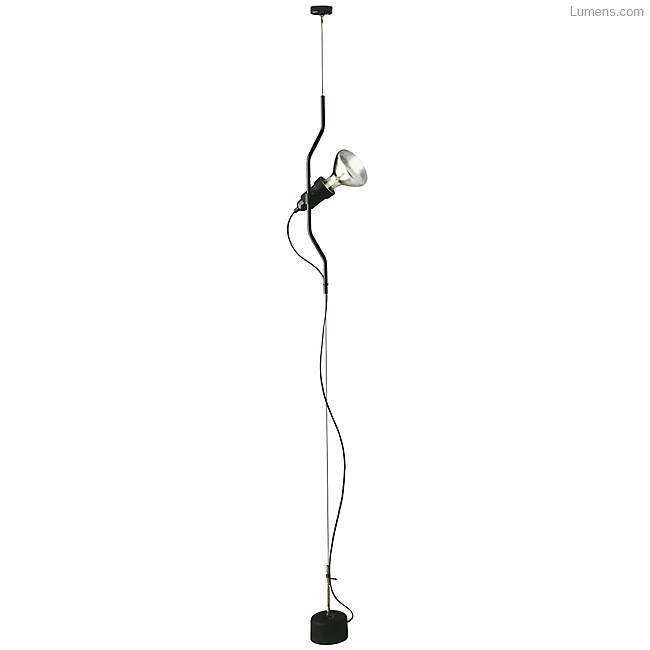
The Parentesi Suspension is a floor-to-ceiling suspension lamp produced by Flos. Its core structure is brilliantly straightforward: a steel cable stretches vertically between the ceiling and the floor, while a shaped tube holds the lamp head and allows it to move up and down the cable. The lamp provides direct lighting, meaning it is ideal for focused illumination rather than soft, all-around glow.
The name “Parentesi” comes from the Italian word for “parenthesis.” That is not just poetic branding. The curved metal tube that grips the cable resembles the shape of a parenthesis mark. In other words, this lamp is named after punctuation. Somewhere, an English teacher is quietly thrilled.
The design is available in finishes such as black, white, nickel, and red, depending on the version and market. The lamp head is compact, industrial, and intentionally simple. Its real visual drama comes from the vertical line of the cable and the way the light seems to hover along it.
The Designers Behind the Lamp
Achille Castiglioni: The Master of Useful Mischief
Achille Castiglioni was one of the most influential Italian industrial designers of the 20th century. His work often combined humor, mechanical intelligence, and everyday practicality. Castiglioni had a talent for taking humble objects or basic structural ideas and turning them into design icons. His best-known lighting designs, including the Arco, Toio, Snoopy, and Parentesi lamps, remain relevant because they solve real problems while looking effortlessly interesting.
Castiglioni’s approach was never about adding decoration just because there was empty space. Instead, he liked visible logic. If a lamp needed a counterweight, he let the counterweight become part of the character. If a cable was necessary, he turned the cable into the main design feature. This is exactly why Parentesi still feels fresh: it does not hide how it works.
Pio Manzù: The Original Spark
Pio Manzù was an Italian designer with a strong connection to automotive design. He is often associated with the Fiat 127, and his thinking brought an engineer’s clarity to product design. The original idea for Parentesi came from Manzù, but he died in 1969 before the lamp reached production. Castiglioni later developed the concept and gave credit to Manzù, turning the project into a thoughtful collaboration across time.
That backstory gives the Parentesi Suspension a special emotional weight. It is not only a smart lamp; it is also a tribute to an unfinished idea carried forward with respect. Design history does not always come with a plot twist, but this one does.
Why the Parentesi Suspension Became a Design Icon
Many lamps are attractive. Fewer lamps are memorable. Even fewer make it into museum collections and stay in production for generations. The Parentesi Suspension has achieved that rare status because it combines several qualities that designers, architects, and homeowners all appreciate.
It Solves a Real Lighting Problem
Traditional pendant lights are fixed. Floor lamps take up floor space. Wall lamps need wall installation. The Parentesi Suspension borrows a little from all three categories and creates something more flexible. It functions like a pendant, behaves partly like a floor lamp, and offers the adjustability of a task light.
Need light beside a reading chair? Slide the lamp head lower. Want to highlight artwork? Aim the beam sideways. Need a dramatic vertical accent in a minimalist room? Let the cable do its quiet architectural magic.
It Uses Friction as a Feature
The clever part of the Parentesi lamp is not hidden in electronics or complicated machinery. It is mechanical. The shaped tube grips the tensioned steel cable through friction, allowing the light to stay in position without a bulky adjustment system. This is the sort of design solution that sounds simple only after someone brilliant has already figured it out.
The result is a lamp that feels almost effortless. You can move the light vertically along the cable, then direct it toward the area you want to illuminate. There is no visual clutter, no heavy armature, and no overcomplicated hardware trying to look important.
It Looks Minimal Without Feeling Cold
Minimalist lighting sometimes has the personality of a blank spreadsheet. The Parentesi Suspension avoids that fate. Its form is spare, but it has warmth because it looks active. The cable creates tension. The lamp head looks ready to move. The parenthesis-shaped support adds a tiny visual joke for people who enjoy design details.
It is industrial, but not harsh. Elegant, but not precious. Clever, but not smug. That balance is difficult to achieve, which is why people are still talking about it more than 50 years after its debut.
Key Features of the Flos Parentesi Suspension
Adjustable Height
The lamp head can move vertically along a floor-to-ceiling cable. This makes it highly adaptable for different room layouts, ceiling heights, and lighting needs. In practical terms, it means you are not trapped by one fixed lighting position forever. Your lamp can change its mind, which is more than we can say for some furniture.
Direct Lighting
Parentesi is designed for direct light. It works especially well when you want to illuminate a reading zone, a desk, a side table, a small dining corner, or a sculptural object. It is not meant to replace every light in the room, but it can become the most interesting one.
Compact Footprint
Because the design relies on a vertical cable rather than a large base or broad shade, it takes up very little visual space. This makes it useful in apartments, narrow rooms, studios, and modern interiors where every square foot is already negotiating for survival.
Iconic Material Mix
The classic Parentesi design uses materials such as steel cable, elastomer, and metal components. Museum records identify the lamp with materials including rubber, stainless steel, and cast iron. The combination gives the lamp an industrial honesty that still feels refined.
Multiple Finishes
Depending on the version, Parentesi may be available in finishes such as black, nickel, white, and red. Black and nickel feel timeless and architectural. White can disappear beautifully into pale interiors. Red adds a playful accent for anyone who believes a room should include at least one object with a pulse.
Where the Parentesi Suspension Works Best
Living Rooms
In a living room, the Parentesi Suspension can act as a reading light beside a lounge chair or sofa. Its slim vertical presence makes it especially effective in corners that need function but cannot handle a bulky floor lamp. It also looks fantastic near low-slung modern furniture, where its vertical line creates contrast.
Home Offices
For a home office, Parentesi offers focused light without occupying desk space. Aim it toward a work surface, bookshelf, or drafting table, and it becomes a practical lighting tool with museum-level style. That is a nice upgrade from the usual desk lamp that looks like it was emotionally assembled in a supply closet.
Bedrooms
In a bedroom, the lamp can work beside a bed as a dramatic alternative to a nightstand lamp. It is particularly useful when you want lighting that can move between reading height and ambient accent. However, because it provides direct light, bulb choice and beam angle matter. Nobody wants to feel interrogated by their bedside lamp.
Studios and Creative Spaces
Artists, architects, designers, and collectors often appreciate Parentesi because it looks like a working object rather than a decorative prop. It belongs naturally in studios, creative offices, and gallery-like interiors. It can highlight materials, models, artwork, or simply a beautiful chair that wants its close-up.
Small Apartments
Small spaces benefit from furniture and lighting that do more than one job. The Parentesi Suspension is ideal for compact homes because it uses vertical space efficiently. It gives you adjustable light without the sprawl of a large floor lamp or the permanence of a fixed pendant over a single table.
How to Style the Parentesi Suspension
Let It Breathe
The Parentesi lamp looks best when it has enough visual space around it. Since the cable is part of the design, avoid crowding it with tall shelves, busy curtains, or a wall full of competing objects. Let the lamp draw a clean line from ceiling to floor.
Pair It With Low Furniture
Low modern sofas, lounge chairs, side tables, and platform beds work well with Parentesi because they emphasize its verticality. The contrast between a slim upright cable and grounded furniture creates a balanced composition.
Use It as an Accent, Not the Whole Lighting Plan
Parentesi is excellent, but it is not a one-lamp army. A good room usually layers lighting: ambient light for overall brightness, task light for specific activities, and accent light for mood. Parentesi performs beautifully as task or accent lighting, especially when paired with softer background illumination.
Choose the Finish Based on Mood
Black is graphic and architectural. Nickel feels polished and slightly more technical. White is quiet and gallery-like. Red is bold, cheerful, and impossible to ignore. Choosing the finish is less about right or wrong and more about whether you want the lamp to whisper, speak, or walk into the room wearing sunglasses.
Installation Considerations
Because the Parentesi Suspension depends on a floor-to-ceiling cable system, installation should be taken seriously. The ceiling attachment and floor contact point are essential to the lamp’s stability and performance. This is not the kind of fixture you want to install with wishful thinking and a “that seems fine” attitude.
Renters should check lease rules before installing anything that requires ceiling hardware. Homeowners should consider ceiling type, placement, nearby outlets, and traffic flow. The cable should sit where it will not be bumped constantly, especially in tight rooms or active family spaces.
Bulb selection also matters. Since the lamp provides direct light, the bulb affects brightness, beam spread, warmth, and glare. A dimmable option can be useful if the lamp will serve multiple purposes, from focused reading to evening ambiance.
Why Designers Still Love Parentesi
The Parentesi Suspension continues to attract designers because it demonstrates a powerful idea: a lighting fixture does not need a complicated form to be innovative. Instead, it needs a smart relationship between structure, movement, and use.
It also fits many interior styles. In a minimalist apartment, it feels perfectly at home. In a mid-century modern room, it brings authentic design heritage. In an industrial loft, it looks natural beside concrete, steel, and brick. In a more eclectic home, it can act as the disciplined line that keeps the visual party from getting too chaotic.
Another reason for its longevity is that it feels both technical and human. You can understand it by looking at it. The cable, bracket, and light source all have visible roles. There is no mystery box. No fake ornament. No decorative nonsense pretending to be necessary. It is honest, and honesty ages well.
Parentesi Suspension vs. Traditional Pendant Lights
A traditional pendant light usually hangs from one fixed ceiling point and illuminates a defined area below. That works beautifully over dining tables, kitchen islands, and entryways. But once installed, the light is largely committed to that location. Move the furniture, and the pendant may suddenly look like it missed the meeting.
The Parentesi Suspension offers more flexibility. Its vertical adjustment allows the user to change the height of the lamp head, while its directional nature helps aim light with greater precision. It does not replace every pendant, but it solves a different problem: how to bring adjustable direct light into a room without relying on a heavy floor lamp or permanent wall fixture.
Is the Parentesi Suspension Worth It?
For someone who simply needs cheap light, Parentesi may not be the answer. There are many basic lamps that will illuminate a room for less. But for someone who values design history, mechanical elegance, and long-term visual relevance, the Parentesi Suspension offers more than illumination. It offers a piece of modern design culture.
Its value comes from the combination of function, heritage, and originality. It was designed by major figures in Italian design, produced by Flos, recognized by design institutions, and awarded the Compasso d’Oro ADI in 1979. More importantly, it still works beautifully in contemporary interiors. That is the real test of an icon: not whether it was famous once, but whether it still earns its place today.
Common Mistakes to Avoid
Placing It in a Busy Corner
The lamp’s clean vertical line needs room. If placed behind clutter, it loses its sculptural presence. Give it a clear zone so the cable and lamp head can be appreciated.
Using the Wrong Bulb
A bulb that is too harsh can create glare. A bulb that is too weak can make the lamp feel underwhelming. Choose a bulb that suits the room’s purpose, and consider warmth and dimming capability.
Treating It Like General Room Lighting
Parentesi is best as direct, adjustable lighting. If you expect it to flood a large room evenly, you may be disappointed. Use it as part of a layered lighting plan.
Ignoring Installation Details
The lamp depends on proper tension and secure placement. Installation is part of the design, not an afterthought. A poorly installed Parentesi is like a tailored suit worn with flip-flops: technically possible, emotionally troubling.
Real-Life Experience With the Parentesi Suspension
Living with the Parentesi Suspension is different from living with a typical lamp. The first thing people usually notice is not just the light, but the line. The steel cable creates a visual axis in the room, almost like a drawn mark in space. It can make a blank corner feel intentional, as if the room suddenly hired a very calm art director.
One of the best experiences with Parentesi is using it beside a reading chair. Instead of dragging a floor lamp closer or adjusting a stiff arm, you can position the lamp head along the cable and direct the beam exactly where you want it. In the evening, this creates a focused pool of light that feels cozy without making the entire room bright. It is excellent for reading, sketching, browsing design books, or pretending to read design books while actually scrolling through your phone.
Another practical advantage is how little space it takes. In compact apartments, every object has to justify its footprint. A large floor lamp may look beautiful in photos but become annoying when it blocks a pathway or crowds a side table. Parentesi avoids that problem because its structure is vertical and slim. It gives the room a strong design moment without physically taking over the floor.
The adjustable height also changes how the lamp feels throughout the day. During work hours, the light can be aimed toward a desk or table. Later, it can be lowered near a chair for reading. When guests come over, it can become an accent light highlighting a corner, artwork, plant, or textured wall. This flexibility makes it feel less like a static object and more like part of the room’s daily rhythm.
That said, Parentesi is not completely effortless. Placement matters. If the cable is installed where people often walk, it can feel awkward. If the lamp is too close to a busy wall, its shape may get visually lost. And if the bulb is too bright or too cool, the direct beam can feel a bit severe. The best setup usually involves warm light, thoughtful positioning, and enough negative space around the lamp.
In real homes, the Parentesi Suspension works especially well for people who appreciate objects with visible logic. It is not a fluffy decorative lamp. It is a small mechanical performance: tension, friction, cable, beam. Every part has a job. That is why it remains satisfying over time. You do not get bored of it quickly because it is not relying on trendiness. It is relying on an idea.
The lamp also tends to become a conversation piece. Guests may ask how it works, why it is called Parentesi, or whether it is supposed to look like that. The correct answer, of course, is yesit is absolutely supposed to look like that, and yes, it has been cooler than most lamps since 1971.
Conclusion
The Parentesi Suspension is a rare lighting design that manages to be practical, sculptural, historical, and playful all at once. Designed by Achille Castiglioni and Pio Manzù for Flos, it turns a simple floor-to-ceiling cable into a flexible lighting system that still feels modern decades after its creation.
Its genius lies in restraint. There is no unnecessary decoration, no heavy structure, and no forced drama. Instead, the lamp uses tension, friction, movement, and direct light to create something elegant and useful. For modern homes, creative studios, small apartments, and design-conscious interiors, Parentesi remains one of the most intelligent suspension lamps ever produced.
If you want lighting that merely turns on, many lamps can do that. If you want lighting that tells a story, solves a problem, and quietly makes your room look smarter, the Parentesi Suspension deserves serious attention.