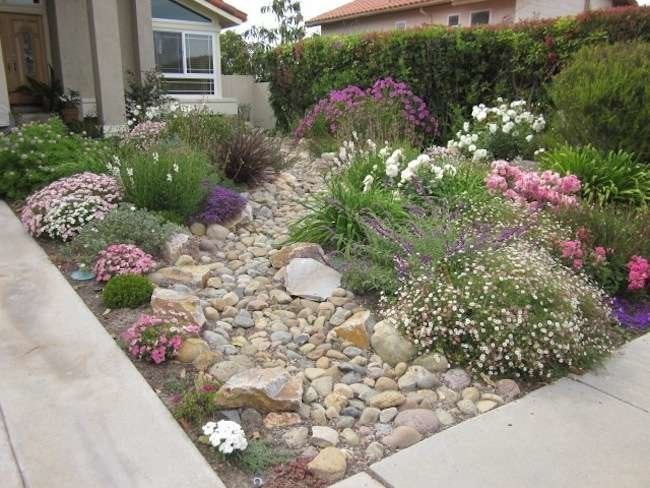
A flawless green lawn can look wonderful, but it behaves like a high-maintenance houseguest: It is always thirsty, regularly hungry, and somehow needs your attention every weekend. If mowing, fertilizing, edging, aerating, and negotiating with crabgrass no longer sound like recreation, it may be time to redesign the yard.
Grass-free landscaping can conserve water, reduce routine maintenance, support wildlife, and give outdoor space more personality. The best lawn alternative, however, depends on climate, sunlight, drainage, foot traffic, and how the yard is actually used. A moss carpet will not enjoy a sunbaked Arizona driveway, just as a succulent garden may respond to a soggy Ohio winter by quietly becoming compost.
The following ten traditional lawn alternatives range from living ground covers to patios, edible gardens, and low-water landscapes. Some eliminate mowing completely, while others reduce it to an occasional chore instead of a recurring weekend appointment.
Before Replacing Your Lawn, Read the Yard
Begin with a simple site assessment. Track how many hours of direct sunlight each area receives, observe where water collects after rain, and note the sections used by children, pets, or frequent walkers. Test the soil when possible, especially before assuming that moss means the ground is too acidic. Moss often appears because shade, moisture, or compacted soil has already made turfgrass unhappy.
Check local invasive-plant lists, municipal landscaping rules, and homeowners association requirements before buying plants. A ground cover praised in one region may escape into natural areas in another. Locally native species are often safer choices because they are adapted to regional conditions and provide useful food or habitat for native wildlife.
You also do not have to evict every blade of grass overnight. Converting one border, slope, or awkward mowing strip at a time lowers costs and lets you discover what thrives before tackling the entire property.
10 No-Mow and Grass-Free Lawn Alternatives
1. Create a Sculptural Succulent Garden
In arid and Mediterranean-style climates, succulents can transform a thirsty lawn into a colorful, architectural landscape. Agaves, aloes, sedums, hens-and-chicks, and other water-storing plants provide shapes and colors that ordinary turf could only dream about after eating a particularly creative fertilizer.
Succulents generally need excellent drainage and enough space for mature growth. Combine them with gravel mulch, boulders, and stepping stones rather than planting one uninterrupted mass. Cold tolerance varies dramatically, so choose species suited to the local USDA hardiness zone. Hardy sedums and sempervivums can survive cold winters, while tender aloes may need frost-free conditions.
Best for: Sunny, dry sites with low foot traffic.
Main trade-off: Poor drainage and severe cold can damage many varieties.
2. Replace Turf With Creeping Perennials
Low-growing perennials form a living carpet without requiring weekly mowing. Depending on the region and site, suitable choices may include native violets, wild strawberry, moss phlox, green-and-gold, pussytoes, wild ginger, or low sedges. A mixture of species usually offers better resilience, longer seasonal interest, and greater wildlife value than a single-plant monoculture.
Match each plant to the conditions already present. Sun-loving phlox will not become more cooperative because it received an inspirational speech in deep shade. Use shade-adapted plants beneath trees, moisture-tolerant species near downspouts, and drought-tolerant ground covers along hot sidewalks.
Remove existing sod and perennial weeds before planting. Until the new plants fill in, mulch exposed soil lightly and weed regularly. Avoid potentially invasive ground covers such as periwinkle, creeping Jenny, English ivy, or bugleweed where local authorities identify them as ecological threats.
Best for: Slopes, borders, shaded areas, and narrow spaces that are difficult to mow.
Main trade-off: Establishment requires weeding, spacing, and patience.
3. Build a Useful Hardscape
A small lawn that is rarely used may be more valuable as a patio, courtyard, dining area, or fire-pit zone. Pavers, brick, flagstone, and decomposed granite can create functional outdoor rooms while eliminating irrigation and mowing.
Hardscape should not mean sealing the property beneath a concrete pancake. Permeable pavers, gravel joints, planting pockets, and properly graded surfaces allow more rainfall to soak into the ground. Add shade trees, container plants, or planted borders to soften hard edges and keep the space comfortable during summer.
Plan drainage before installation, not after the first storm sends water toward the basement. Professional installation may be worthwhile when grading, retaining walls, or large paved areas are involved.
Best for: Urban yards, entertaining areas, and heavily traveled spaces.
Main trade-off: Higher installation costs and potential heat buildup.
4. Grow an Edible Forest Garden
An edible forest garden replaces decorative turf with layers of useful plants. A typical design might include fruit or nut trees above berry-producing shrubs, perennial vegetables and herbs below, and strawberries or other ground covers at soil level. Vines can occupy fences or trellises, turning overlooked vertical space into productive real estate.
The “forest” part describes the layered structure, not a promise that a mature oak and an orchard will fit beside every townhouse. Small yards can use dwarf fruit trees, currants, blueberries, culinary herbs, and compact raised beds.
Edible landscaping is not maintenance-free. Plants may require pruning, harvesting, pest monitoring, compost, and supplemental water during establishment. The difference is that the work can produce herbs, fruit, vegetables, and a legitimate excuse to eat raspberries while supposedly gardening.
Best for: Homeowners who want beauty and food from the same space.
Main trade-off: Seasonal care and thoughtful plant selection are still necessary.
5. Consider Artificial Turf Carefully
Artificial turf provides a consistently green surface without mowing, fertilizing, or routine irrigation. It can be practical in small play areas, dog runs, rooftop spaces, or sites where living plants cannot withstand intense use.
It is not a completely maintenance-free or universally sustainable solution. Synthetic grass must be cleaned, brushed, and occasionally repaired. It can become considerably hotter than living vegetation in direct sun, offers little habitat value, and will eventually require replacement. Drainage quality, material composition, warranty terms, odor control for pet areas, and end-of-life disposal should all be evaluated before installation.
Use it selectively rather than carpeting an entire property. Surrounding artificial turf with shade trees and living planting beds can reduce its visual and ecological drawbacks.
Best for: Compact, high-use areas where plants repeatedly fail.
Main trade-off: Heat, upfront cost, limited ecological value, and eventual disposal.
6. Plant a Creeping Thyme Lawn
Creeping thyme forms a short, fragrant mat covered with small flowers during its blooming season. It prefers full sun, lean soil, and excellent drainage, making it an attractive option for hot sites where conventional turf struggles.
Established thyme tolerates occasional foot traffic, but it is not the right surface for daily soccer practice or a dog that treats the yard like a racetrack. Install stepping stones through frequently traveled routes. Space plants according to their mature spread and keep weeds under control while the carpet closes.
Thyme lawns are often described as instant low-maintenance magic, but establishment can take several growing seasons. Irrigation is needed while roots develop, even though mature plants are relatively drought tolerant. The eventual reward is a low carpet that smells much better underfoot than anything stored in the lawn-mower shed.
Best for: Sunny courtyards, paths, and lightly used front yards.
Main trade-off: Slow establishment and limited tolerance for heavy traffic.
7. Design a Water-Wise Rock Garden
A rock garden uses stone, gravel, drought-adapted plants, and deliberate changes in height to create visual interest without a continuous lawn. It can resemble an alpine garden, a desert landscape, or a dry streambed bordered by native perennials.
The strongest designs use rocks as structure rather than dumping gravel across the yard and declaring victory. Group several large stones so they appear connected, repeat a limited palette of plants, and leave room for mature growth. Where possible, choose permeable materials and locally appropriate plants.
Rock mulch can become hot in full sun and may collect windblown soil over time, creating little seedbeds for weeds. Landscape fabric is not a permanent cure; organic debris eventually accumulates above it. Occasional hand-weeding remains part of the bargain.
Best for: Dry slopes, sunny front yards, and water-wise landscapes.
Main trade-off: Poorly planned stone can increase heat or look stark.
8. Use a Low-Mow Ecolawn Mix
This option is not technically grass-free, but it deserves a place for homeowners who want the soft, walkable character of a lawn with fewer inputs. Ecolawn blends may combine fine or hard fescues with clover, yarrow, self-heal, and other compatible low-growing plants.
Compared with conventional turf, a well-matched ecolawn can need less irrigation, little fertilizer, and less frequent mowing after establishment. Oregon State University Extension notes that ecolawns still require regular water during germination and theirination and their first season. Feeding and watering them like conventional turf can also trigger vigorous growthand bring the mower roaring back into your life.
Select a regional mix rather than assuming one national blend works everywhere. Some components can spread beyond their intended borders, and flowering plants may attract bees, which is wonderful for pollination but worth considering beside barefoot play areas.
Best for: Families wanting a softer, usable surface with reduced maintenance.
Main trade-off: Occasional mowing and seasonal care remain necessary.
9. Establish a Native Wildflower Meadow
A meadow can replace a large, little-used lawn with native flowers, grasses, and sedges that support pollinators, birds, and other wildlife. Deep-rooted native plants can also improve soil structure, hold soil, and help slow stormwater runoff.
Choose seeds or plugs based on region, moisture, soil, and sunlightnot on a package labeled simply “wildflower mix.” Generic blends may contain short-lived annuals or species poorly suited to the local ecosystem. A regional extension service or native plant society can help identify appropriate combinations.
Meadows are low-maintenance after establishment, not no-maintenance from day one. Existing vegetation must be removed, invasive weeds controlled, and young plants protected while they develop. Many meadows also benefit from an annual mowing or cutting at the proper season. Add a mowed edge or clear path to signal intentional design; otherwise, the neighbors may mistake your habitat project for a lawn mower that has gone missing.
Best for: Large sunny properties and wildlife-friendly landscapes.
Main trade-off: The first two or three seasons demand attentive weed management.
10. Let Moss Become the Lawn
If moss already thrives beneath shade trees, it may be revealing the correct ground cover for that location. Moss creates a velvety, evergreen-looking surface without mowing or fertilizer and can grow where turf thins because of shade, moisture, low fertility, or competition from tree roots.
Moss is best suited to low-traffic areas. It does not tolerate repeated scuffing, digging pets, or a daily parade of wheelbarrows. Paths and stepping stones can protect it while making the space easier to navigate.
Not every moss requires identical conditions, so observe what is growing naturally before changing soil chemistry or irrigation. Avoid collecting moss from parks or wild land. Purchase nursery-propagated material or encourage existing patches by removing leaves gently, reducing foot traffic, and keeping competing weeds under control.
Best for: Shady, relatively moist, low-use areas.
Main trade-off: Poor tolerance for heavy traffic and hot, dry exposure.
How to Convert a Lawn Without Creating a Mud Festival
- Choose one manageable zone. Start with a 4-by-4-foot bed, a side yard, or a difficult slope before converting the entire property.
- Remove turf thoroughly. Options include hand digging, a sod cutter, or sheet mulching with overlapping cardboard and organic mulch. Select a method appropriate to the season, site, and future planting.
- Control perennial weeds first. Removing bindweed, bermudagrass, or other persistent plants becomes harder after ground covers are installed.
- Protect exposed soil. Use mulch or biodegradable erosion-control material until plants establish, especially on slopes.
- Create clear paths and edges. Defined boundaries improve access and make naturalistic landscaping look intentional.
- Expect establishment maintenance. Nearly every living lawn alternative needs watering and weeding at first. “Low maintenance” is the destination, not the starting line.
Conclusion: Build a Yard Around Real Life
The best grass-free lawn alternative is not necessarily the option with the lowest theoretical maintenance. It is the one that fits the property’s climate, conditions, traffic, budget, and purpose. A sunny slope may become a thyme or rock garden, deep shade may welcome moss and native sedges, and an unused back lawn may provide far more value as a meadow or edible garden.
Start small, choose regionally appropriate plants, and allow the landscape time to mature. The mower may not disappear immediately, but it can gradually become a rarely seen garage relicright beside that exercise equipment everyone definitely plans to use again.
Practical Experiences and Lessons From Grass-Free Yard Conversions
One of the most common experiences during a lawn conversion is discovering that the yard is not one uniform environment. A front lawn that appears flat and ordinary may contain a sunny, fast-draining strip near the sidewalk, compacted soil beside the driveway, and a damp pocket beneath a downspout. Treating all three areas alike usually produces three different varieties of disappointment.
A more successful approach is to make a simple site map. Mark sun exposure, wet areas, common walking routes, and views from important windows. This exercise often reveals that the lawn was fighting the property rather than working with it. Moss beneath a mature tree, for example, is not necessarily an enemy invasion. It may be evidence that shade and root competition make conventional grass an expensive guest in the wrong room.
Another recurring lesson is that lawn removal changes the type of work instead of eliminating work immediately. During the first season, new beds need watering and weed control. Ground-cover plugs leave open soil between them, and weed seeds view that open soil as an engraved invitation. Mulch helps, but regular inspections are still necessary. Ten minutes of pulling young weeds every week is far easier than spending a Saturday wrestling mature plants with roots that appear to reach the Earth’s mantle.
Homeowners also tend to underestimate foot traffic. A beautiful thyme carpet may perform well until children, delivery workers, and a ninety-pound dog all choose the same diagonal shortcut. Installing stepping stones at the beginning protects plants and makes the design feel deliberate. The same principle applies to meadows: A defined path and neatly maintained edge communicate that the planting is intentional, not abandoned.
Cost can be managed by converting the yard in phases. Start with one island bed, then expand it as perennials mature and can be divided. Small plugs are often less expensive than large nursery plants and are easier to install around existing tree roots. Patience becomes part of the budget. Buying enough full-size plants for instant coverage is faster, but it can make a modest yard renovation resemble a luxury-car payment.
Mixed landscapes generally prove more practical than a single replacement spread from fence to fence. A patio can handle chairs and gatherings, native shrubs can create privacy, ground covers can stabilize slopes, and a small low-mow area can remain available for play. Each material or plant community performs the job it handles best.
Finally, successful conversions tend to follow observation rather than fashion. Creeping thyme photographs beautifully, but it is not ideal for every climate. Artificial turf solves wear problems, yet may become uncomfortably hot. Wildflower meadows support wildlife, but require disciplined establishment. Moss is wonderfully quiet and mower-proof, but dislikes heavy traffic. The practical victory is not copying a picture exactly. It is creating a yard that uses less water and routine labor while becoming more useful, resilient, and interesting every season.
Research Basis and Further Reading
- Bob Vila: No More Mowing
- University of Maryland Extension: Lawn Alternatives
- University of Maryland Extension: Groundcovers
- University of Maryland Extension: Moss in the Landscape
- Oregon State University Extension: Ecolawn
- University of Minnesota Extension: Bee Lawns
- University of Minnesota Extension: Prairie Gardens
- Penn State Extension: Meadows and Prairies
- USDA Forest Service: Native Gardening
- USDA NRCS: Healthy Soils at Home
- National Wildlife Federation: Reducing Your Lawn
- Denver Water: Xeriscape Plans
- University of Georgia Extension: Edible Landscapes