A pollinator garden does not need to be a sprawling meadow, a botanical masterpiece, or a backyard that looks as if Mother Nature hired a landscape architect. New research suggests something much more encouraging: what you plant inside the garden can matter more than what surrounds it.
A peer-reviewed University of Tennessee study published in PLOS ONE on September 4, 2024 examined how local flowers, garden composition, and surrounding land use influenced bees visiting experimental flower gardens in eastern Tennessee. Its central message is refreshingly practical. Gardens with larger floral displays and greater variation in the plants blooming at the same time were especially valuable to bee communities, while the surrounding landscape generally played a smaller role.
For homeowners, apartment gardeners, schools, community gardens, and anyone staring suspiciously at a patch of lawn wondering whether it could do something more useful, that is excellent news. You can make meaningful pollinator habitat on a surprisingly modest footprint.
What the Pollinator Garden Study Actually Tested
The researchers established experimental gardens at five University of Tennessee properties representing very different surroundings: an urban garden, forage grassland, mixed agricultural land, forest, and an organic farm.
At every location, scientists installed four garden plots measuring about 3 meters by 2 meters. The plots contained native Tennessee perennial wildflowers drawn from three major plant families: Asteraceae, Fabaceae, and Lamiaceae. Three garden types represented one family each, while another mixed species from all three families.
Altogether, 18 native perennial species were included. Researchers monitored flowers and visiting insects during the main summer bloom period and also surveyed flowering resources and insects within approximately 50 meters of each garden. Broader land use was analyzed within a 2-kilometer radius.
The study therefore asked an unusually useful backyard question: Does a flower garden succeed because the neighborhood is already pollinator-friendly, or can the plants inside the garden overcome less-than-perfect surroundings?
The Biggest Factor: Put More Flowers on the Menu
The strongest practical lesson was simple: floral resources inside the garden matter enormously.
The researchers found a positive relationship between floral display and bee activity. In plain English, when more flowers were available, more bees tended to show up. This sounds obvious until you consider how many supposedly pollinator-friendly landscapes contain six interesting plants surrounded by 1,500 square feet of decorative mulch.
Pollinators need food, not landscaping optimism.
A large floral display makes a garden easier to discover and gives visiting insects more nectar and pollen for the energy they spend finding it. USDA and university extension recommendations similarly encourage planting flowers in noticeable groups instead of scattering single specimens around a yard.
Think in Clumps, Not Confetti
Rather than planting one coneflower here, one bee balm there, and one lonely aster hiding behind the air conditioner, create clusters of several plants of the same species.
A grouping offers many blossoms in one feeding area. It can reduce the amount of time a bee spends traveling between flowers and makes the garden more visually obvious.
For a small garden, three to five plants of several carefully selected species can be more useful than dozens of unrelated individual plants scattered across the property.
Floral Diversity Matters Almost as Much as Floral Quantity
The Tennessee study also found that the number of plant species blooming inside the experimental gardens was strongly connected with bee abundance and species richness.
That is important because “pollinator” is not a single job description. The United States supports thousands of native bee species, along with butterflies, moths, flies, beetles, hummingbirds, and other flower visitors. They do not all shop at the same floral grocery store.
Different species have different body sizes, tongue lengths, feeding behaviors, activity periods, and flower preferences. A bumblebee capable of working a deep tubular blossom encounters a very different dining experience from a tiny sweat bee looking for an exposed source of pollen.
A diverse pollinator garden therefore combines flower forms such as:
- Flat, daisy-like flowers
- Dense clusters of tiny flowers
- Tubular blossoms
- Open, bowl-shaped flowers
- Flowering shrubs and small trees
- Low-growing ground-layer flowers
Diversity is not garden clutter. Properly planned, it is an ecological buffet.
Surrounding Land Use Was Less Important Than Expected
Perhaps the study’s most encouraging result involved the surrounding landscape.
Researchers expected flower availability near the plots and broader land-use patterns to strongly shape the bees visiting experimental gardens. Instead, floral diversity in the immediate surrounding area did not significantly predict bee abundance in the research gardens.
Developed land within the larger landscape showed some association with bee abundance, but the researchers emphasized that local floral resources within the gardens were stronger practical predictors overall. Garden bee species richness was closely associated with what was blooming inside the plots themselves.
This does not mean habitat loss or urban development is irrelevant. Landscape change can affect pollinators, nesting opportunities, movement, and long-term population health. Rather, the finding suggests that an individual garden can still become a useful resource even when the surrounding neighborhood is dominated by lawns, roads, farms, or buildings.
Your neighbor’s lawn does not need to become a prairie before you are allowed to plant one.
Small Pollinator Gardens Can Still Matter
The implications extend beyond suburban backyards. Research and conservation organizations increasingly recognize small habitat patches as worthwhile components of larger pollinator networks.
A side yard, school entrance, apartment courtyard, mailbox garden, patio container collection, or narrow strip beside a driveway can all contribute flowers. More recent urban research has also challenged the assumption that large properties are automatically better for pollinator gardening. Small urban lots can contain surprisingly rich flower gardens when people intentionally use the available space.
The lesson is to focus less on total property size and more on how efficiently the space provides food and habitat.
Continuous Bloom Is the Secret Ingredient
A garden that explodes with flowers for two weeks and then becomes an attractive collection of green leaves is not a complete pollinator garden.
USDA agencies, extension programs, the Xerces Society, and Pollinator Partnership consistently recommend supplying nectar and pollen across the growing season. Pollinators emerge, reproduce, migrate, and forage at different times.
Build a Three-Season Flower Calendar
A strong planting plan includes early-, middle-, and late-season bloomers.
Early spring flowers can be especially valuable when overwintered queens and early-emerging native bees begin searching for food. Summer brings peak activity for many species. Late-season flowers such as asters and goldenrods help sustain insects preparing for winter or migration.
One useful planning method is to make three columns labeled spring, summer, and fall. Aim for several flowering species in every column. In warmer regions, extend the calendar according to local conditions.
NRCS pollinator habitat recommendations commonly emphasize multiple species flowering during early, mid, and late portions of the season. That redundancy also protects the garden from weather problems. If one plant has a terrible year, another can keep the cafeteria open.
Native Plants Deserve a Major Role
The Tennessee experimental gardens used native perennial wildflowers, and native plants remain central to most U.S. pollinator conservation recommendations.
Native plants and local insects have long ecological relationships. Some native bees are pollen specialists, meaning they depend heavily on particular plant groups. Butterfly caterpillars can be even more demanding: monarch larvae, for example, require milkweed as their host plant.
That does not mean every useful flower must carry a botanical passport proving it was born locally. Some non-invasive ornamental plants can provide abundant nectar or pollen. However, making regionally appropriate native plants the backbone of the garden supports both generalist pollinators and specialized species.
Useful choices vary dramatically by region, so gardeners should consult local extension offices, native plant societies, Pollinator Partnership ecoregional guides, Xerces plant lists, or National Park Service regional planting resources before buying plants.
Do Not Forget Nesting Habitat
Flowers solve only the restaurant portion of the pollinator housing crisis.
Many native bees are solitary rather than hive-forming. A large proportion nest underground, while others use hollow stems, dead wood, cavities, or similar natural structures.
A perfectly mulched landscape can unintentionally remove many of those opportunities. Consider leaving small patches of bare, well-drained soil where appropriate. Retain some hollow or pithy plant stems through winter. A small pile of branches or logs in a quiet area can also add habitat.
Fall garden cleanup does not need to resemble a crime-scene sanitation operation. Leaving selected stems, seed heads, leaves, and natural material until spring can provide shelter for insects while also feeding birds.
Pesticides Can Undo Good Planting Decisions
You can install dozens of excellent pollinator plants and still undermine the habitat by applying insecticides carelessly.
EPA and university extension guidance stresses minimizing pollinator exposure to pesticides, especially when plants are flowering and bees are actively foraging. Integrated pest management is the better starting point: identify the pest, determine whether intervention is actually needed, use nonchemical controls where practical, and apply targeted treatments only when necessary.
If pesticide use cannot be avoided, follow the product label exactly. Avoid spraying flowers in bloom when the label prohibits it, minimize drift, and consider timing applications when pollinator activity is lower if the specific product instructions permit that approach.
Also remember that insects are supposed to exist in a pollinator garden. If seeing a leaf with a bite missing causes emotional distress, wildlife gardening may provide some useful character development.
Match Flower Structure to Different Pollinators
Flower color matters, but structure is just as important.
Bees frequently visit blue, purple, white, and yellow flowers. Butterflies often use broad flower surfaces where they can land while feeding. Hummingbirds are especially suited to tubular flowers from which their long bills can reach nectar.
Hoverflies and small native bees may favor easily accessible flowers with exposed nectar or pollen.
This is another reason a mixed planting outperforms a garden designed around a single fashionable flower. A visually varied garden can serve pollinators with radically different feeding equipment.
Choose Accessible Flowers Instead of Decorative Dead Ends
Highly modified double flowers may look spectacular to people while functioning poorly for insects because extra petals can obstruct access to pollen and nectar. Some heavily bred cultivars may also produce reduced floral resources.
Single or relatively open flower forms usually make feeding easier.
This does not require abandoning ornamental gardening. Instead, evaluate plants from two perspectives: Does it look good from the patio, and can an insect actually use it?
The ideal pollinator garden does both.
A Practical Pollinator Garden Formula
Bringing the research and conservation recommendations together produces a straightforward design strategy:
- Plant abundantly. Create a substantial floral display rather than relying on isolated flowers.
- Increase plant diversity. Include multiple flowering species and flower shapes.
- Prioritize native plants. Choose species adapted to your region and its native pollinators.
- Plant in clusters. Make flowers easier for pollinators to discover and forage efficiently.
- Schedule continuous bloom. Provide flowers from early spring through fall whenever your climate permits.
- Add host plants. Support reproduction as well as adult nectar feeding.
- Provide nesting habitat. Leave some bare soil, stems, woody material, and natural shelter.
- Reduce pesticide use. Use integrated pest management and protect blooming plants.
- Start with the space you have. A small habitat patch is better than waiting for the imaginary day when you acquire five acres.
What Another U.S. Wildflower Study Adds
Research in the southeastern United States also demonstrates that individual flower species can differ substantially in the number and variety of bees they attract.
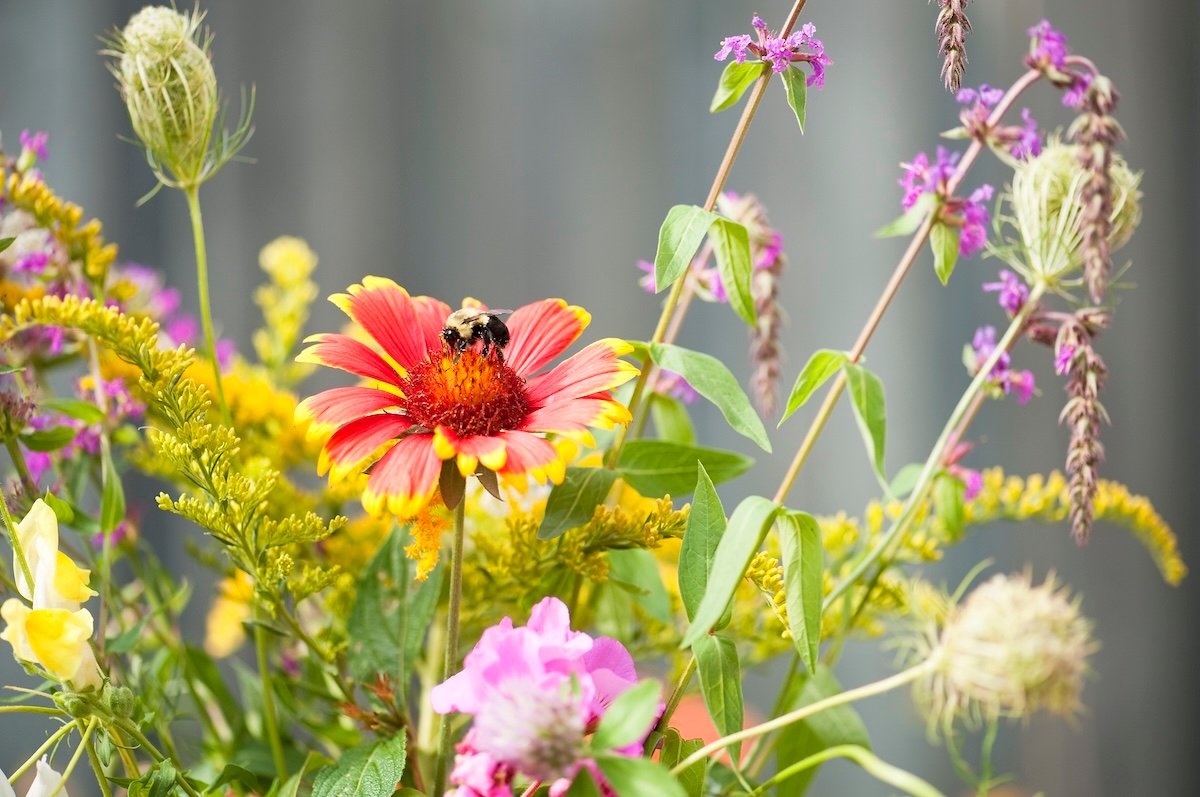
In one study evaluating 18 native wildflower species, butterfly milkweed (Asclepias tuberosa), blanketflower (Gaillardia pulchella), and blue vervain (Verbena hastata) together attracted a very large share of the bee taxa documented by researchers.
Yet plants attracting fewer total bees still had conservation value because they could serve uncommon or specialized species. That illustrates an important principle: the plant with the busiest flowers is not automatically the only plant worth growing.
Pollinator conservation is about building a functioning community, not winning a bee attendance contest.
Experience-Based Lessons From Building a Pollinator Garden
The first season of a new pollinator garden often teaches gardeners that nature does not read landscape plans.
A typical project may begin with a tidy diagram showing carefully spaced perennials and perfectly timed bloom periods. Then spring arrives. One plant grows like it has discovered espresso, another sulks behind a rock, rabbits develop expensive tastes, and three plants supposedly described as “compact” begin planning territorial expansion.
This is normal.
The most useful practical experience is to treat the first year as observation rather than final installation. Watch which plants establish quickly, which receive the most insect traffic, and where flowers disappear from the seasonal calendar.
Lesson One: More Blooms Create Noticeable Activity
One of the clearest patterns in a functioning pollinator bed is how quickly insect activity changes when a major group of flowers opens. A single bloom may receive occasional visitors. When dozens or hundreds of blossoms open together, the bed can suddenly seem to acquire its own airport traffic-control system.
This reinforces the research finding that floral display matters. Gardeners can respond by dividing successful perennials, planting repeated groups, and removing unnecessary gaps between useful flowering plants.
Lesson Two: Bloom Gaps Are Easier to See Than Predict
A planting chart may promise continuous color, yet real gardens frequently develop a two- or three-week period when surprisingly little is flowering. Weather, plant maturity, shade, and local climate can shift bloom times.
Keeping a simple monthly record is extremely useful. Take one photo from the same location every week. By the end of the season, the periods with inadequate flowers become obvious.
The next year’s shopping list should target those gaps rather than whatever plant looks irresistible near the nursery checkout counter.
Lesson Three: Let Some Imperfection Survive
Gardeners accustomed to immaculate ornamental beds often need time to become comfortable with pollinator habitat. Caterpillar-damaged leaves are evidence that a host plant is doing its job. Hollow stems may contain developing bees. Seed heads feed birds. Leaf litter shelters insects.
A successful wildlife garden can still look intentional. Keep paths clear, define bed edges, group plants attractively, and place habitat features thoughtfully. The goal is not neglect; it is selective maintenance.
Lesson Four: Observe Before Treating Insects
A diverse garden attracts predators along with plant-eating insects. Lady beetles, lacewings, predatory wasps, spiders, and other beneficial species can provide free pest control.
Immediately spraying every unfamiliar insect can destroy the ecological relationships the garden was created to encourage. First identify the visitor. Sometimes the mysterious “pest” is a pollinator, predator, or caterpillar you deliberately planted habitat to support.
Lesson Five: Start Small and Expand What Works
Beginning with a manageable bed has one enormous advantage: it allows experimentation without turning the entire yard into an expensive botanical research project.
Try several native species. Observe sunlight, drainage, bloom periods, insect activity, and maintenance requirements. After one or two seasons, repeat the plants that perform well and introduce new species where resources are missing.
A ten-foot garden that thrives is more valuable than a giant project abandoned halfway through because weeding 3,000 square feet suddenly became less romantic than it looked on social media.
Conclusion: The Best Pollinator Garden Starts Where You Are
The University of Tennessee research offers a hopeful conclusion for anyone interested in pollinator gardening: you have meaningful control over the ecological value of the space immediately around you.
The neighborhood does not need to be perfect. The property does not need to be enormous. What matters most is creating concentrated, diverse floral resources and keeping useful plants blooming for as much of the growing season as possible.
Combine those flowers with native host plants, nesting habitat, reduced pesticide exposure, and slightly less aggressive cleanup, and a conventional landscape can become a genuine refuge for bees and other pollinators.
Perhaps the best part is that improving pollinator habitat does not require choosing between ecological usefulness and a beautiful garden. A well-designed pollinator garden can be colorful, structured, fragrant, seasonally interesting, and spectacularly alive.
Plant more flowers. Plant different flowers. Keep something blooming. Give insects somewhere to live. Then pull up a chair and watch your formerly ordinary patch of yard develop rush-hour traffic.
Note: This article synthesizes peer-reviewed research and pollinator-gardening guidance from reputable U.S. scientific, government, university extension, and conservation organizations. Practical experience sections describe common garden observations and evidence-based lessons rather than claiming personal field experience.