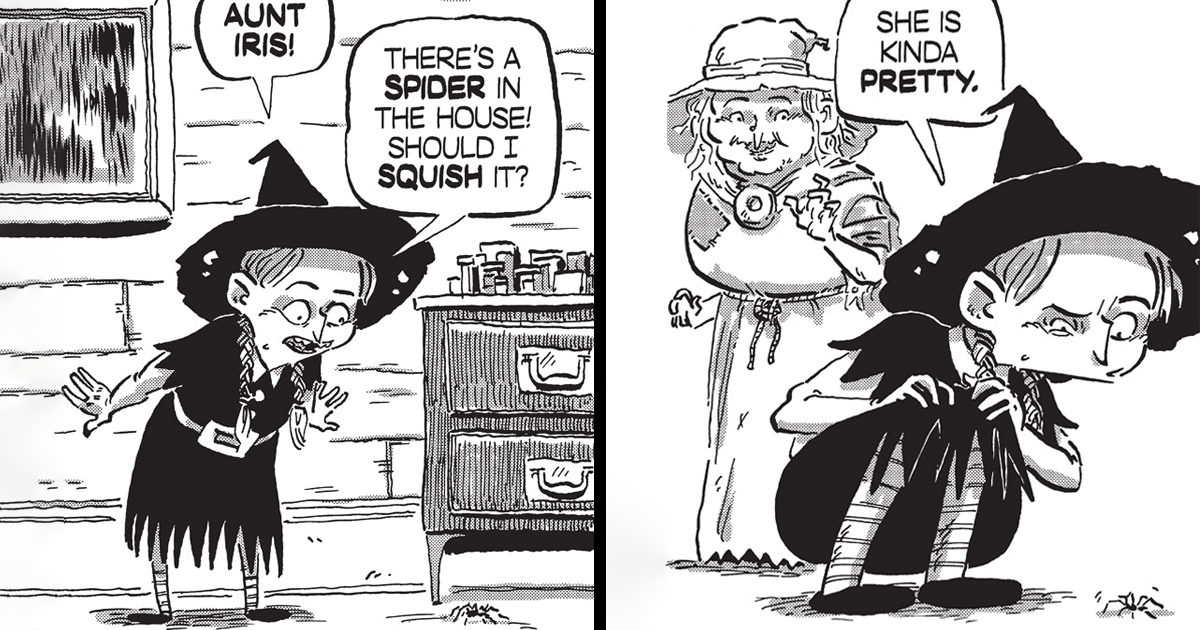
Some comics try to explain the mysteries of the universe. Mine prefer to ask the important questions: What if a wizard had terrible customer service? What if a dragon got stage fright? What if a tiny mushroom with a hat knew your browser history? Welcome to my collection of 30 comics with silly humor and magical twists, where the punchlines arrive wearing capes, holding snacks, and occasionally turning someone into a frog for emotional reasons.
This series was built for readers who enjoy funny comics that don’t take themselves too seriously. The jokes are light, the fantasy is playful, and the twists are the kind that make you pause for half a second before saying, “Well, obviously the haunted broom needed therapy.” Instead of grand battles between good and evil, these short comics focus on awkward witches, confused monsters, enchanted objects, and everyday problems made delightfully ridiculous by magic.
In a crowded world of webcomics, visual gags, fantasy comics, and relatable slice-of-life cartoons, silly humor still has a special kind of power. It gives readers a small break from reality without asking them to pack a suitcase. Add a magical twist, and suddenly a normal grocery run can become a quest, a bad haircut can become a prophecy, and a cat can become a landlord. Honestly, that last one barely counts as fantasy.
Why Silly Humor Works So Well In Comics
Comics are perfect for silliness because they let a joke happen in a tiny, controlled universe. A character can walk into a panel with complete confidence, misunderstand everything, and be emotionally destroyed by a talking cupcake three panels later. The format gives artists a playful rhythm: setup, escalation, pause, surprise. When done well, the reader’s brain fills in the space between panels, making the punchline feel quick, clever, and oddly satisfying.
Silly humor also works because it lowers the pressure. Not every comic has to make a grand statement about civilization, loneliness, or the price of oat milk. Sometimes a comic can simply show a skeleton trying to return a sweater because it “doesn’t fit his body type.” That kind of joke is charming because it is absurd, visual, and instantly understandable.
The magic is not the whole joke
In this collection, magic is rarely treated as the impressive part. The spell is only the doorway. The joke comes from what happens afterward. A wizard may cast a perfect transformation spell, but the real comedy begins when the transformed prince refuses to stop being a raccoon because he finally understands the appeal of trash. A witch may summon a demon, but the twist is that the demon only wants to discuss his screenplay.
This approach keeps the comics grounded. Readers may not have experience with cursed castles, but they understand bad timing, social awkwardness, overconfidence, lazy shortcuts, and the horror of realizing you sent a message to the wrong person. The magical twist simply turns those familiar feelings into something brighter and weirder.
What You’ll Find In These 30 Magical Humor Comics
The 30 comics in this series mix fantasy comedy, absurd situations, and gentle surprise endings. Each one is designed to be short enough to enjoy quickly, but strange enough to linger in your brain like a wizard who overstayed brunch. The goal is not to build a massive fantasy universe with seventeen royal bloodlines and a map requiring a magnifying glass. The goal is to create tiny bursts of comic chaos.
1. Witches with very normal problems
Several comics feature witches who are less “ancient keeper of forbidden power” and more “person who forgot why they walked into the potion room.” They burn toast with fire magic, misread spell labels, and accidentally turn motivational quotes into legally binding curses. Their magic is powerful, but their planning skills are suspiciously human.
2. Monsters who are surprisingly relatable
The monsters in these comics are not always scary. A vampire worries about bad lighting. A werewolf hates shedding season. A ghost feels ignored because everyone keeps blaming creaky floorboards. Giving monsters ordinary insecurities makes the magical world feel funny and familiar.
3. Enchanted objects with attitude
A talking sword should sound heroic, but mine might complain about being stored next to garden tools. A crystal ball may reveal the future, then immediately judge your lunch. These enchanted objects create comedy because they are supposed to be mysterious and wise, yet they behave like opinionated roommates.
4. Fantasy quests that go nowhere useful
Traditional fantasy loves epic quests. My comics enjoy sending characters on tiny, pointless adventures. Someone may cross a dangerous forest to find the Ancient Oracle, only to discover the Oracle gives excellent restaurant recommendations and no life advice. A knight may rescue a princess who was not trapped at all, just enjoying some peace and quiet away from castle meetings.
The Joy Of A Good Magical Twist
A magical twist works best when it feels both surprising and strangely logical. The reader should not see it coming, but once it arrives, it should feel like the comic universe has always been that ridiculous. If a frog starts giving tax advice, the joke lands better when the previous panels quietly suggest the frog has been holding a briefcase the whole time.
Many of these comics use that kind of delayed reveal. The first panels show an ordinary fantasy setup: a spell, a prophecy, a haunted object, a mysterious creature. The final panel flips the expectation. The monster is afraid of the child. The spell technically works but solves the wrong problem. The ancient curse turns out to be a subscription service. Magic gives the joke permission to jump sideways.
The punchline should feel like a trapdoor
My favorite comic twist is the kind that opens beneath the reader’s feet. You think the scene is going one way, then the last panel drops you gently into a pile of nonsense. Not painful nonsense. Cozy nonsense. The kind with marshmallows.
For example, imagine a wizard dramatically telling an apprentice, “Every spell has a cost.” The apprentice looks terrified. In the last panel, the wizard points to a card reader and says, “Tap or insert.” The joke works because it takes a fantasy phrase and smashes it into modern inconvenience. Suddenly ancient magic has transaction fees, and that feels both silly and emotionally accurate.
Why Short Comics Are So Shareable
Short comics are easy to read, save, and send to a friend with the sacred caption: “this is you.” A four-panel structure is especially effective because it gives just enough room for a setup and a twist without overstaying its welcome. Readers can enjoy the whole joke in a few seconds, which is ideal for webcomic fans scrolling through social media, blogs, or comic platforms during a coffee break.
But short does not mean simple-minded. A small comic still needs timing, expression, clear staging, and a punchline that lands cleanly. If the reader has to work too hard to understand what happened, the joke loses speed. If the punchline is too obvious, it becomes flat. The sweet spot is clarity with a little surprise hiding behind it.
Expressions do half the storytelling
In silly humor comics, facial expressions are basically a second script. A blank stare, a tiny frown, or one raised eyebrow can turn a normal line into a joke. A dragon saying “I am fine” is mildly funny. A dragon saying “I am fine” while sitting in a kiddie pool, wearing floaties, and surrounded by smoke alarms is much better. Visual details add extra layers without making the dialogue heavy.
Common Themes In My 30 Comics
Although each comic is a small standalone joke, the collection has a few recurring themes. The biggest one is that magic does not fix personality. If someone is impatient, dramatic, forgetful, vain, or deeply committed to snacks, giving them a wand will only make the situation louder.
Magic makes small problems bigger
One comic may begin with a character trying to clean the house using a spell. Simple idea. Very responsible. Unfortunately, the broom becomes self-aware, unionizes the dust, and declares the kitchen an independent kingdom. The joke is not just “magic went wrong.” It is that a tiny domestic shortcut turned into a bureaucratic nightmare with a crown.
Creatures have feelings too
Another theme is emotional absurdity. The goblin is not stealing treasure because he is evil; he just wants compliments. The haunted mirror is tired of being asked, “Who is the fairest?” and would prefer questions about its hobbies. The giant spider is only trying to start a crochet business, which frankly shows brand consistency.
Fantasy characters understand modern stress
These comics also blend magical settings with modern frustrations. Prophecies get delayed. Potions need warning labels. Dragons struggle with online reviews. A necromancer accidentally joins a productivity seminar and becomes unstoppable in the worst way. Mixing fantasy with everyday life creates humor because it makes impossible characters deal with painfully familiar nonsense.
Why Readers Enjoy Magical Comedy
Magical comedy gives readers two pleasures at once: escape and recognition. The escape comes from castles, spells, monsters, curses, and glittering portals. The recognition comes from the fact that everyone, even a wizard, can have a bad Monday. The best fantasy humor does not float away from reality completely. It keeps one foot in the real world and one foot in a suspicious glowing puddle.
That balance makes silly fantasy comics feel welcoming. You do not need to memorize lore or understand complicated backstories. You can simply enjoy a joke about a knight who spends three panels preparing to fight a terrifying beast, only to realize the beast is his own anxiety wearing horns. Funny? Hopefully. Too real? Also yes.
How I Approach Writing These Comics
When I write a comic, I usually start with a very normal frustration: being late, feeling awkward, misunderstanding instructions, overthinking, trying to look cool, or pretending to know what is happening in a conversation. Then I ask, “What would make this worse if magic existed?” That question is dangerously useful.
If a character is nervous about public speaking, maybe they cast a confidence spell and accidentally become so confident they challenge the moon to a debate. If someone wants to avoid chores, maybe they summon a helper spirit who immediately starts assigning chores more efficiently. If a witch wants a peaceful pet, maybe she adopts a tiny dragon that behaves exactly like a cat, except the hairballs are fireballs.
The best jokes come from consequences
A magical twist is funniest when it creates consequences. Randomness can be amusing, but consequences make the joke feel built instead of tossed into a blender. A spell should do something specific. A character should react in a believable way. The final panel should feel like the bill arriving for the bad decision made in panel one.
This is why many of the comics follow a simple comic engine: a character wants something, uses magic to get it, and discovers that magic is technically helpful but emotionally unqualified. That structure creates room for surprise without making the joke confusing.
Examples Of Silly Magical Comic Ideas
Here are a few examples of the kind of humor that fits this collection. A wizard invents invisibility, then immediately feels offended when nobody compliments his outfit. A fairy grants three wishes but keeps interpreting them with the energy of a bored customer service bot. A cursed prince begs to become human again, while his frog friends insist he has finally achieved work-life balance.
Another comic might show a skeleton joining a gym, only to be told he has “excellent structure but no core.” A witch opens a potion shop where every bottle works perfectly but comes with dramatic side effects like temporary jazz hands. A dragon tries meditation and accidentally discovers inner peas instead of inner peace. The peas are enchanted. They are rude.
The point is not to make fantasy look foolish. The point is to make fantasy feel playful. Magic is more fun when it can trip over its own robe.
The Art Style Behind The Humor
For silly comics, the art does not need to be hyper-detailed. In fact, too much detail can sometimes slow down the joke. Clean shapes, readable expressions, and strong silhouettes help the reader understand the scene quickly. A good comic panel should guide the eye without making the reader feel like they are solving a furniture assembly manual.
Color can also support the magical mood. Soft purples, glowing greens, warm oranges, and deep blues can suggest spells, caves, moonlight, or cozy witch kitchens. But the real magic is clarity. If the reader instantly knows who is speaking, what changed, and why the final panel is absurd, the comic has done its job.
Details are little bonus jokes
Background details are a fun place to hide extra humor. A shelf in a wizard’s room might include books titled “Advanced Wand Safety,” “So You Accidentally Made A Portal,” and “Tax Tips For Immortals.” These tiny jokes reward readers who look twice, which can make a short comic feel richer without crowding the main punchline.
My Experience Creating Silly Comics With Magical Twists
Creating this kind of comic has taught me that silliness is not as easy as it looks. A joke may seem effortless when it appears in a finished panel, but behind it are many small choices: where the character stands, how long the pause lasts, which word appears last in the speech bubble, and whether the final expression should be shock, boredom, pride, or the face of someone who has just realized the spell book was upside down.
One of the biggest lessons is that a magical twist should be simple enough to understand immediately. Early on, it is tempting to make every idea huge. Maybe the witch summons a time portal, meets three versions of herself, argues with a dragon accountant, and discovers the moon is an egg. That might be funny in a longer story, but in a short comic, too many ideas fight for attention. The cleaner version is often better: the witch opens a time portal to fix one mistake and returns with a second mistake wearing sunglasses.
I have also learned to respect the quiet panel. A silent pause before a punchline can do more than a paragraph of dialogue. If a character says something dramatic, then the next panel simply shows another character staring at them with the emotional weight of a disappointed toaster, the reader gets time to anticipate the joke. That tiny pause creates rhythm. Without rhythm, even a good punchline can wobble like a goblin on roller skates.
Another experience that shaped these comics is the joy of making magical characters deeply ordinary. I like imagining what powerful beings complain about when they are off-duty. Does a dragon get annoyed when people assume it likes spicy food? Does a fairy hate glitter because it gets everywhere? Does a wizard pretend to understand new technology, then cast a spell called “restart router” with great ceremony? These small human details make fantasy comedy warmer and easier to connect with.
Reader reactions also influence the process. People often enjoy jokes where the monster is not the villain, just the most awkward person in the room. They like witches who mess up, ghosts who feel underappreciated, and enchanted objects that behave badly. That response reminds me that funny comics do not need to be mean to be sharp. A silly twist can be clever without punching down. It can surprise readers while still leaving them in a good mood.
The hardest part is knowing when a comic is finished. Because the format is short, every extra line matters. Sometimes the best edit is deleting the clever sentence I was weirdly proud of because it slowed the joke. Other times the drawing needs one more prop, one more eyebrow, or one suspicious frog in the corner. Making comics is a balance between restraint and chaos. Too much restraint, and the joke feels dry. Too much chaos, and the reader needs a map, a lantern, and possibly legal representation.
In the end, creating these 30 comics has been a reminder that humor is a kind of little spell. You set up an expectation, distract the reader with something shiny, then reveal that the real joke was hiding behind the cauldron the whole time. When it works, the result is small but wonderful: a quick laugh, a shared screenshot, or a reader thinking, “I did not expect to relate to a stressed-out wizard today, but here we are.”
Conclusion: A Little Magic, A Lot Of Nonsense
My 30 comics with silly humor and magical twists are made for readers who enjoy playful fantasy, quick punchlines, and characters who treat impossible situations like mildly inconvenient errands. They are not epic legends carved into stone. They are tiny comic spells designed to make your day a little stranger and, hopefully, a little funnier.
Whether the joke involves a nervous dragon, a sarcastic crystal ball, a witch with questionable labeling habits, or a skeleton facing gym culture, the heart of the series is simple: magic is funniest when it behaves almost like real life, only with more glowing smoke and fewer reasonable explanations. If you enjoy funny webcomics, fantasy humor, unexpected twists, and absurd little stories, these comics might be exactly the kind of nonsense your day ordered.
Note: This article is written as original, publish-ready web content based on real storytelling principles, webcomic humor conventions, and common visual comedy techniques. No source-code explanations or unnecessary reference markers are included.