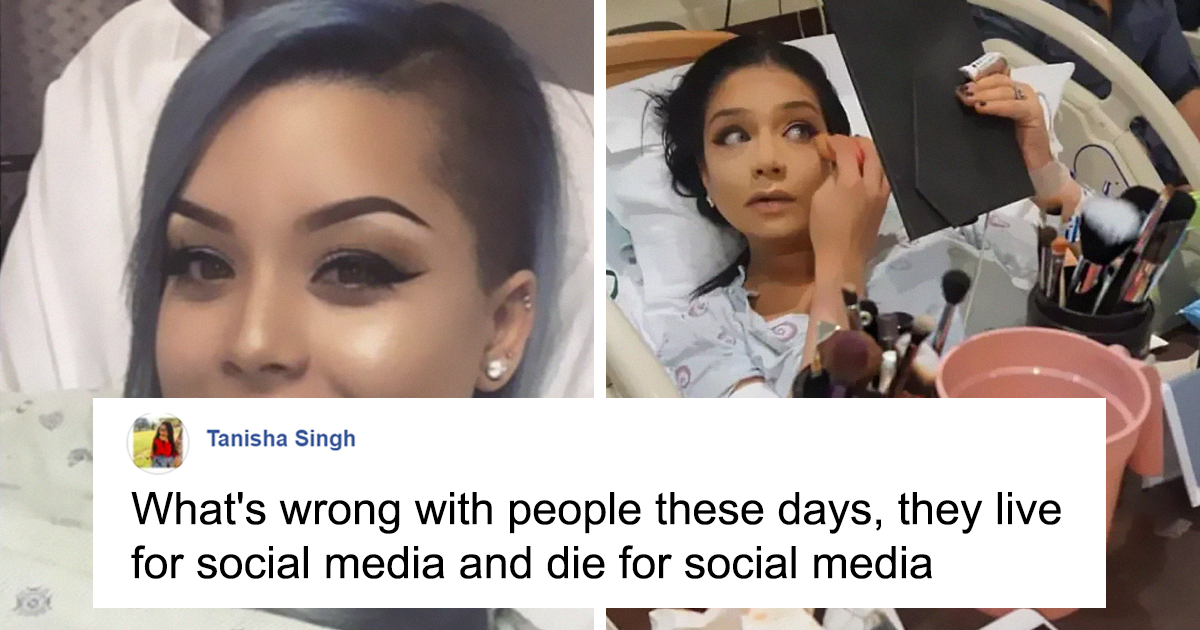
Labor has traditionally involved contractions, breathing exercises, supportive partners, and at least one hospital bag containing far too many tiny socks. Now, for some expectant mothers, the preparations also include waterproof mascara, long-wear foundation, and a contour brush.
The practice is commonly called birthing makeup: applying makeup shortly before entering the hospital, during early labor, before a planned cesarean delivery, or even between contractions. Videos showing mothers completing full beauty routines in maternity wards have attracted millions of views, enthusiastic compliments, and a small army of strangers asking, “But why?”
Supporters describe makeup before giving birth as comforting, creative, confidence-boosting, or simply something enjoyable to do while waiting. Critics see a troubling extension of beauty pressure into one of the most physically demanding moments of a person’s life.
Both reactions reveal something larger than a debate about lipstick. The controversy touches on autonomy, social media, hospital safety, motherhood, appearance standards, and the strange public expectation that women should look effortless after completing an activity that is, medically speaking, the opposite of effortless.
What Is the Birthing Makeup Trend?
Birthing makeup can mean anything from applying lip balm and brow gel before leaving home to creating a full camera-ready look in a hospital bed. Planned inductions and scheduled C-sections make the routine easier to organize because the mother usually knows when she will arrive at the hospital. Spontaneous labor is less cooperative. Contractions rarely pause to admire a symmetrical eyeliner wing.
The idea itself is not entirely new. Mothers have prepared their hair and makeup for post-birth photographs for generations. What has changed is the visibility of the ritual. TikTok, Instagram, birth announcements, professional newborn photography, and “get ready with me” videos have transformed a private grooming choice into public content.
Several women have gone viral after filming themselves applying foundation, blush, lashes, or setting powder during labor. Beauty professional Alaha Majid attracted widespread attention after photographs showed her working on her makeup during a lengthy labor. More recently, creators such as Harmony and Kylen Suttner generated millions of views with labor-room beauty routines. Their posts produced predictable internet diplomacy: half the comments cheered, while the other half behaved as though mascara had personally insulted obstetrics.
Why Some Mothers Apply Makeup Before Giving Birth
It Offers a Familiar Sense of Control
Childbirth includes many uncertainties. Labor may start early or late. A preferred birth plan may change. An induction can take longer than expected, and a vaginal delivery may become a C-section. Even the most carefully packed hospital bag cannot guarantee how the day will unfold.
A familiar beauty routine can offer one small, manageable task. A mother may not control the timing of every contraction, but she can choose her lipstick. That decision may seem minor from the outside, yet rituals often help people feel grounded during stressful situations.
Doing makeup requires concentration and a sequence of predictable steps. Moisturizer comes before foundation. Concealer goes where it is needed. Brows are brushed upward unless they have chosen rebellion. For someone who regularly enjoys cosmetics, the routine can create a brief pocket of normalcy in an unfamiliar medical environment.
Makeup Can Be a Distraction During Early Labor
Early labor may last for hours, particularly during an induction. Contractions can still allow periods of conversation and activity before becoming stronger and closer together. Some patients walk, listen to music, watch television, use a birth ball, play games, or reorganize the hospital tray as if nesting has entered its corporate phase.
For beauty enthusiasts, applying makeup can serve the same purpose. It occupies the hands and redirects attention. That does not make cosmetics a medical pain treatment, and no one should delay calling a nurse because the blending is unfinished. Still, harmless familiar activities can help some people pass time and manage anxiety.
They Want to Feel Like Themselves
Pregnancy can dramatically change a person’s body, skin, energy, clothing, sleep, and sense of identity. In the final weeks, even putting on shoes may resemble an advanced flexibility test. A small grooming routine can reconnect someone with the version of herself that existed before every conversation involved due dates.
For mothers who regularly wear makeup, arriving bare-faced may feel less authentic than wearing it. The key point is not that makeup makes a person presentable. It is that personal routines can help people feel recognizable to themselves.
Birth Photos Last a Lifetime
Birth and newborn photographs are often treasured for decades. They may be printed, framed, shared with relatives, or posted online within hours. Some mothers know they will be photographed and want to look polished in those images.
A 2019 survey of British mothers reported that many respondents applied makeup on the day they gave birth, commonly because they wanted to look better in photos or feel presentable for visitors. The survey was commercial and should not be treated as a definitive measurement of all mothers, especially in the United States. However, it highlighted a recognizable motivation: cameras now arrive in the delivery room almost as reliably as charging cables.
Why Critics Are Uncomfortable With the Trend
It Can Turn a Choice Into Another Expectation
There is nothing inherently wrong with wearing makeup during labor. The concern begins when an optional activity quietly becomes a standard that other mothers feel expected to meet.
Highly polished birth announcements can make childbirth appear strangely tidy. The carefully selected image may not show the sweat, swelling, IV lines, exhaustion, blood, tears, nausea, or hours of pushing that came before it. Viewers understand that social media is edited, but repeated exposure can still influence what feels normal.
A mother who does not want makeup should never feel that she has failed to prepare for photographs. She has already prepared a human being for entry into the world. Her productivity record is secure.
The Trend May Reinforce Postpartum Beauty Pressure
Women frequently encounter messages suggesting that they should look attractive throughout pregnancy and “bounce back” immediately afterward. Birthing makeup can become part of that larger pressure when the underlying message shifts from “This made me happy” to “A new mother should look polished.”
Research has linked appearance-focused social media use with postpartum body dissatisfaction and increased comparison. A glamorous delivery-room video may be harmless entertainment for one viewer but a discouraging standard for another, particularly during a period already associated with hormonal changes, sleep deprivation, physical recovery, and emotional vulnerability.
The healthiest version of the trend celebrates personal choice. The least healthy version treats exhaustion as a cosmetic problem and recovery as a content deadline.
Online Content Rarely Shows the Full Medical Picture
A short video might show someone applying blush between contractions without showing the prenatal discussions, nursing checks, fetal monitoring, pain-management decisions, or complications that shaped the experience.
Labor progresses differently for every patient. The first stage is usually the longest and can include early and active phases. As contractions intensify, talking, walking, and carefully holding an eyeliner pencil may become considerably more difficult. A routine that works during a calm scheduled induction might be unrealistic during rapid spontaneous labor.
Viewers should therefore treat these videos as individual stories, not delivery-room tutorials.
Is It Safe to Wear Makeup During Labor?
For most people, ordinary cosmetic use is not automatically prohibited during labor. However, pregnancy, hospital procedures, skin sensitivity, allergies, and individual medical circumstances matter. Patients should follow instructions from their obstetric team and the hospital where they plan to deliver.
Review Ingredients During Pregnancy
The U.S. Food and Drug Administration recommends discussing cosmetic concerns with a healthcare professional during pregnancy. The American Academy of Dermatology advises avoiding certain skincare ingredients, including retinoids and hydroquinone, unless a qualified clinician gives different guidance.
Not every product sold as “natural,” “clean,” or “pregnancy-friendly” has automatically been proven safer. Marketing language is not a prenatal consultation wearing attractive packaging. Check ingredient labels and ask an OB-GYN or dermatologist about products used regularly.
Choose Clean, Familiar Products
Labor is not the ideal occasion to experiment with an aggressive chemical peel, a mysterious imported lash adhesive, or a foundation last opened during college orientation.
Use products that have not caused irritation before. Wash hands, clean brushes and sponges, avoid sharing eye cosmetics, and discard products that smell unusual or appear contaminated. Hospital air, sweat, frequent touching, and hormonal skin changes can make irritation more noticeable.
Keep Medical Access the Priority
Cosmetics should never interfere with monitoring, examinations, surgery, anesthesia, oxygen equipment, or urgent treatment. Some hospitals may request the removal of certain products, false eyelashes, contact lenses, jewelry, or artificial nails before a procedure. Policies vary, and emergency circumstances can change the plan quickly.
Makeup should also remain away from incision areas and any skin being prepared for medical equipment. When a nurse or anesthesiologist asks for something to be removed, the correct response is not, “But this setting spray promised 24-hour wear.”
Consider Comfort Over Durability
Heavy foundation, dramatic lashes, thick lip products, and strongly fragranced sprays may become uncomfortable during a long labor. A lightweight routine may be more practical:
- Gentle moisturizer suitable for pregnancy-sensitive skin
- Tinted moisturizer or light concealer
- Water-resistant mascara previously tested for irritation
- Brow gel or pencil
- Cream blush
- Fragrance-free lip balm
None of these items is necessary. The ideal birthing makeup routine may also be one step long: apply absolutely nothing and focus on snacks, breathing, and getting through the next contraction.
The Difference Between Empowerment and Pressure
The same action can feel empowering to one person and oppressive to another. A makeup artist who finds creative work calming may experience a labor-room beauty routine as self-expression. Someone who feels terrified of being photographed without foundation may be responding to external pressure rather than genuine enjoyment.
A useful question is: Would I still want to do this if no photos were taken and nobody online knew?
A “yes” may suggest that the routine is personally meaningful. A “no” does not automatically make the decision wrong, but it may reveal how strongly public expectations are influencing the moment.
Partners and relatives can help by avoiding appearance-based demands. Do not tell someone in labor that she needs concealer for the family photo. Also do not mock her if applying concealer makes her happy. Support is more attractive than either judgment, and it requires no blending sponge.
How Expectant Mothers Can Make a Pressure-Free Choice
Anyone considering makeup before giving birth can keep the decision flexible:
- Ask the hospital whether any cosmetic, nail, contact-lens, or photography restrictions apply.
- Discuss questionable skincare ingredients with an OB-GYN or dermatologist.
- Pack a small makeup pouch rather than assuming a complete routine will happen.
- Choose familiar, clean, low-fragrance products.
- Stop immediately if the routine becomes uncomfortable or medical care requires attention.
- Tell family members not to post photographs without permission.
- Remember that changing your mind is allowed at every stage.
A birth plan is a set of preferences, not a binding contract with the universe. The same applies to mascara.
Experiences Related to Applying Makeup Before Giving Birth
The following are composite experiences based on commonly reported motivations and concerns. They illustrate different perspectives without presenting invented individuals as documented cases.
The Scheduled Induction: “It Gave Me Something Normal to Do”
One mother arrived for an evening induction knowing that the process could take many hours. After changing into a hospital gown and completing the initial checks, she found herself waiting. Her partner watched television while she unpacked a small cosmetics bag.
She applied moisturizer, light foundation, brow gel, and mascara. The routine was not intended to impress visitors. In fact, she had already told relatives to stay home until invited. She simply wanted an activity that felt familiar.
As contractions intensified, she abandoned the makeup bag without ceremony. By delivery, much of the foundation had disappeared and the mascara had survived only in the broadest legal sense. Still, she remembered the routine fondly because it made the quiet beginning of the induction feel less clinical.
The Fast Labor: “The Makeup Never Left the Bag”
Another expectant mother carefully packed concealer, blush, powder, and lipstick three weeks before her due date. She imagined applying a simple look during early labor and taking calm photographs afterward.
Instead, labor moved quickly. By the time she reached the hospital, contractions demanded her full attention. The cosmetics remained untouched beside two unused outfits and a novel she had optimistically expected to read.
After delivery, she saw the first photographs: flushed skin, damp hair, no makeup, and an expression of complete disbelief as she held her baby. Initially, she worried that she looked exhausted. Months later, those became her favorite images because they captured exactly what the moment felt like.
Her experience did not turn her against birthing makeup. It simply taught her that preferences can disappear when labor takes over, and that an unplanned photograph can hold more emotional value than a polished one.
The Beauty Professional: “Makeup Was My Version of Meditation”
A mother who worked with cosmetics viewed makeup as a creative practice rather than an obligation. During a long early labor, she blended eye shadow and paused whenever a contraction arrived. The process required enough attention to distract her without preventing communication with the medical team.
Online viewers later interpreted the routine in opposite ways. Some called it inspiring, while others assumed she was insecure. She found the second reaction frustrating because it reduced a familiar artistic ritual to vanity.
For her, applying makeup was similar to another patient knitting, listening to a favorite playlist, or completing a puzzle. The result mattered less than the process. Once active labor began, the brushes went away and the healthcare team became the only priority.
The Mother Who Felt Pressured: “I Wish I Had Put the Camera Down”
Not every experience is positive. One mother prepared a full face before a scheduled C-section because she expected photographs to be shared with a large online audience. She worried about looking pale, swollen, or tired and spent the morning checking her appearance instead of resting.
The makeup itself caused no problem, but the pressure behind it did. After surgery, she felt anxious whenever someone raised a phone. She asked relatives not to post images, yet still spent time choosing a photograph while recovering and learning to feed her newborn.
Looking back, she did not regret wearing makeup. She regretted believing that the birth announcement had to appear immediately and that strangers deserved access to the moment. Her lesson was not “never wear makeup.” It was “decide who the preparation is for.”
The No-Makeup Mother: “Comfort Was My Beauty Routine”
Another mother knew from the beginning that cosmetics would annoy her during labor. She packed lip balm, a soft headband, facial wipes, and moisturizer. That was the entire beauty department.
She felt no hostility toward mothers who preferred full glam, but she disliked comments suggesting that makeup would make her photographs more flattering. Her goal was to remain comfortable and present, not to meet anyone else’s visual expectations.
After delivery, she limited visitors, kept the first photographs private, and waited several days before announcing the birth. That decision gave her space to recover without evaluating her face through the imagined opinions of an audience.
Conclusion: The Delivery Room Does Not Need a Dress Code
Applying makeup before giving birth is neither a feminist victory nor a collapse of civilization. It is a personal grooming choice whose meaning depends on motivation, circumstances, and medical needs.
For some mothers, birthing makeup provides confidence, creative expression, distraction, or a reassuring sense of normalcy. For others, it represents one more appearance standard imposed at an exhausting and vulnerable time. Both responses deserve consideration.
The best approach is uncomplicated: prioritize safety, follow the healthcare team’s instructions, use pregnancy-appropriate products, and protect personal boundaries around photography. Wear the waterproof mascara, skip it completely, or pack it and forget it exists. None of these decisions determines whether someone is prepared, strong, or worthy of being photographed.
A mother does not owe the delivery room glamour. She also does not owe the internet an explanation for enjoying it.