Blended families can be loving, resilient, and wonderfully chaotic. They can also become fragile when one parent repeatedly dismisses behavior that affects everyone else in the home. Love may be unconditional, but access to another person’s wallet, bedroom, or Nintendo Switch should probably come with a few conditions.
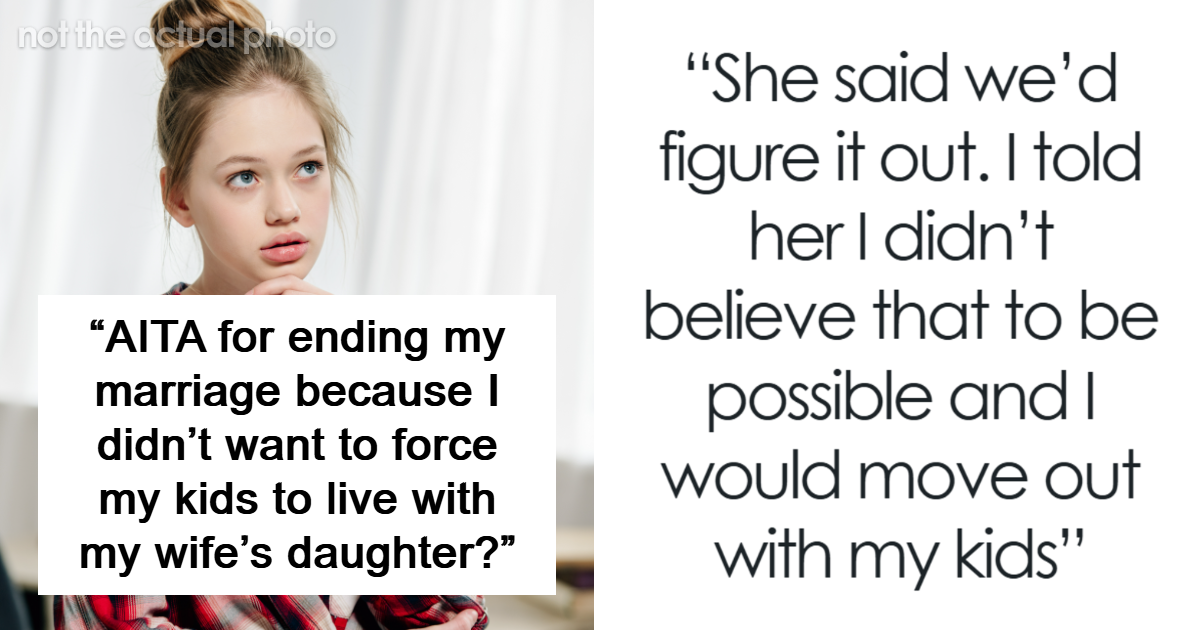
That uncomfortable distinction sits at the center of an anonymous family story shared online. A father said his teenage stepdaughter had been accused of stealing for years. When she asked to move into his home permanently, her mother immediately agreedeven though the other children reportedly feared losing more of their belongings. The husband decided that protecting his biological children had to come first, so he moved out and filed for divorce.
Although the account presents only one person’s perspective, it raises serious questions about parental denial, stepfamily boundaries, accountability, and what happens when spouses cannot agree on how to keep every child in their household safe.
A Blended Family With Five Children
The couple, both in their 30s, had five children between them. The husband was raising two teenagers whose mother had died. His wife had an older daughter with a former boyfriend and two younger children with her late husband. The couple had been together for approximately six years and married for four.
At first, the arrangement may have looked like a second chance for two families that had already experienced substantial loss. However, combining households does not automatically combine loyalties, parenting styles, or definitions of acceptable behavior. A blended family is less like mixing a smoothie and more like assembling furniture without the instructions: enthusiasm helps, but someone will eventually ask why three screws are left over.
According to the husband, concerns about his wife’s oldest daughter emerged after the marriage. Relatives suspected that she had taken things from them, while money occasionally disappeared from the couple’s home. There was no proof in those early incidents, but the teenager reportedly arrived at her father’s house with purchases that seemed inconsistent with her usual spending habits.
The allegations eventually became more specific. During visits, the girl allegedly waited until shortly before leaving to take small items that might not be noticed immediately. The most consequential incident involved components from the husband’s son’s Nintendo Switch. The missing pieces reportedly matched parts that were broken on the stepdaughter’s own console.
The Request That Changed Everything
The teenager had primarily been living with her biological father in another state. When she asked to move into her mother and stepfather’s home permanently, her mother reportedly said yes immediately.
Her husband objected. He believed the established pattern of stealing would continue and did not want his children living in a house where they felt obligated to hide their money and possessions. His wife argued that they could address the behavior once her daughter moved in. Other relatives were skeptical because suspicions had allegedly followed the girl since childhood.
The mother asked her husband to consult his children, but he said they already knew the answer. His son did not even want further contact after the gaming-console incident. When the father announced that he would move out with his children, his wife accused him of abandoning the family and argued that he had a duty to help all five children.
He ultimately left, filed for divorce, and offered to maintain a relationship with the two younger stepchildren if their mother permitted it. Most tellingly, he said his own children appeared relieved after the move. They preferred a smaller home where they could relax over a larger family home where their belongings did not feel secure.
This Divorce Was Not Really About a Nintendo Switch
It is easy to reduce the conflict to one stolen object, but the console was merely the item that made a larger pattern impossible to ignore. The central dispute concerned trust, safety, and whether both adults were willing to recognize the same problem.
Repeated Theft Changes the Emotional Climate
When possessions repeatedly disappear, family members do more than lose objects. They begin checking drawers, questioning one another, hiding valuables, and replaying every interaction like amateur detectives in a low-budget crime series. Home stops feeling private.
Stealing or damaging a sibling’s belongings may also become a form of intimidation. Even when there is no physical threat, the targeted child learns that personal boundaries can be violated without meaningful protection from the adults.
That is why simply replacing stolen property is not enough. Reimbursement repairs the financial loss, but it does not automatically rebuild trust. If the underlying behavior continues, replacement can even become an accidental subsidy: one person takes the item, Mom buys another, and everyone repeats the episode next month.
A Troubled Teen Is Not Automatically a “Bad Kid”
The phrase “true colors” makes an eye-catching headline, but behavior should not be confused with permanent character. Adolescents may steal for different reasons, including peer pressure, anger, jealousy, impulsivity, a desire for attention, or a belief that another sibling receives more affection or material support. Persistent theft can also accompany broader emotional or behavioral difficulties.
Kleptomania is one possible explanation for recurrent stealing, but it is relatively uncommon and should never be casually diagnosed from an internet story. Unlike calculated theft for personal gain, kleptomania involves recurring urges to take items that may not be needed. Only a qualified mental health professional can evaluate whether a psychiatric condition, family stress, trauma, substance use, or another issue is involved.
Understanding the reason does not require pretending the behavior is harmless. Compassion and accountability belong on the same team. A teenager may deserve help while the other children simultaneously deserve locked doors, returned property, clear rules, and protection.
Parental Denial Can Become a Family-Wide Problem
The mother’s instinct to welcome her daughter is understandable. Parents generally should not treat a struggling child as disposable, particularly when that child is still a minor. Her daughter needed a safe home and responsible adults willing to investigate what was happening.
However, supporting a child is different from denying evidence or volunteering other children to absorb the consequences. The husband’s account suggests that his wife focused on restoring the family arrangement without presenting a concrete plan for addressing the theft.
“We will figure it out” can be reassuring when the problem is a broken dishwasher. It is less persuasive when money and personal property have allegedly disappeared for years.
A meaningful plan would have answered practical questions:
- Would the teenager receive a comprehensive mental health evaluation?
- What household rules and consequences would apply?
- How would stolen or damaged property be restored?
- How would the parents protect the other children’s rooms and valuables?
- What would happen after another incident?
- Would both biological parents participate in treatment and supervision?
Without those answers, moving the teenager into the home would have required the other children to accept all the immediate risk while the adults searched for a solution later.
Why the Husband Chose His Children
The father believed that his children depended primarily on him because their mother had died. He feared that forcing them to live with someone they did not trust would damage his relationship with them and teach them that preserving his marriage mattered more than their security.
Their relief after leaving strongly suggests that the problem had affected them more deeply than the adults may have realized. Children do not always deliver dramatic speeches about household stress. Sometimes they become quieter, spend less time at home, lock everything they own, or express enormous relief when the environment changes.
His decision still carried painful consequences. The younger stepchildren had already lost their biological father, and the divorce threatened another important parental relationship. Their grief should not be brushed aside simply because the husband had legitimate concerns.
Yet remaining married would not necessarily have protected those children. A household filled with resentment, suspicion, and competing loyalties can be damaging even when everyone shares an address. Two adults under one roof do not automatically create stability if they cannot cooperate on basic family safety.
Could the Marriage Have Been Saved?
Possiblybut not through guilt, vague promises, or pretending the other children would eventually adjust. Repair would have required both spouses to agree that repeated stealing was serious and that every child’s welfare mattered.
Start With a Professional Evaluation
Persistent theft in an older child or teenager warrants more than a lecture. A pediatrician, child psychologist, or child and adolescent psychiatrist can assess emotional health, impulsivity, trauma, substance use, family conflict, and other possible contributors.
An evaluation is not about attaching a frightening label to a teenager. It is about replacing guesswork with information. The goal should be to understand the behavior, reduce harm, and give the young person a realistic chance to change before adult consequences become far more serious.
Create Specific Boundaries Before Cohabitation
If reunification were being considered, the couple could have developed a written safety plan with a family therapist. Measures might include supervised visits, locked storage for valuables, restitution, privacy rules, consistent consequences, and gradual increases in access based on demonstrated behavior.
These safeguards should not be used to humiliate the teenager. They should be explained calmly as temporary responses to broken trust. Trust is not a light switch that one parent can flip back on for the whole household. It is rebuilt through repeated, observable choices.
Let the Biological Parent Lead Discipline
Stepfamily experts often recommend that the biological parent take the lead on major discipline while the stepparent initially plays a supportive role. That arrangement can reduce power struggles and prevent the stepparent from becoming the household villain before a secure relationship has formed.
In this case, the mother needed to acknowledge the problem and enforce boundaries. If she minimized every incident, her husband had little authority to create lasting change. Family therapy cannot succeed when one adult arrives ready to work and the other arrives ready to explain why no work is necessary.
Lessons for Other Blended Families
The most important lesson is not that parents should automatically choose their biological children over stepchildren. It is that spouses must never demand loyalty by asking children to tolerate preventable harm.
Before combining households, couples should discuss discipline, privacy, money, sibling conflict, contact with former partners, and what circumstances would require professional help. These conversations are not unromantic. Nothing says commitment quite like agreeing on what happens if someone raids a sibling’s piggy bank.
Parents should also avoid framing every conflict as “my children versus your children.” The better question is: “What standard protects all the children?” Rules against stealing, threats, violence, and repeated invasions of privacy should apply regardless of biology.
Finally, parents must distinguish equality from fairness. Children do not always need identical responses; they need responses appropriate to their circumstances. A teenager struggling with serious behavior may require additional treatment and supervision. The other children may require additional protection. Providing both is not favoritismit is responsible parenting.
Related Experiences: What Similar Family Conflicts Feel Like
Families facing repeated dishonesty often describe a surprisingly similar progression. The first incident is treated as a misunderstanding. The second produces a tense conversation. By the fifth, everyone has developed a personal inventory system worthy of a warehouse manager.
The Child Who Stops Reporting Missing Things
Imagine a 14-year-old whose headphones, allowance money, and favorite sweatshirt repeatedly disappear. Each time he complains, a parent says he must have misplaced them. Eventually, he stops reporting losses because speaking up only leads to an argument.
From the outside, his silence may look like improvement. In reality, he has learned that the adults will not protect him. He begins keeping his backpack beside his bed and avoids inviting friends over. When offered the chance to live elsewhere, he accepts immediatelynot because he hates his family, but because constant vigilance is exhausting.
This resembles the emotional signal in the husband’s story: his children reportedly felt relieved after moving. Relief can be important evidence. It tells adults that a child may have been carrying stress quietly for a long time.
The Parent Who Confuses Defense With Love
Another familiar experience involves a parent who interprets every criticism of a child as a personal attack. When a teacher, relative, or stepparent raises a concern, the parent immediately produces an excuse. The missing cash becomes a misunderstanding; the lie becomes teenage moodiness; the damaged property becomes sibling drama.
This defense may grow from guilt, especially after divorce, bereavement, or a custody dispute. A parent who fears losing a child emotionally may avoid consequences in an attempt to preserve closeness. Unfortunately, protecting a young person from all accountability does not protect that person from adulthood.
A better response sounds like this: “I love you, I believe you can do better, and I will help youbut this behavior must stop.” That message combines belonging with responsibility. It is firmer than denial and kinder than labeling the child hopeless.
The Stepparent With Responsibility but No Authority
Stepfamilies often struggle when a stepparent is expected to provide money, transportation, supervision, and emotional support but is excluded from decisions about household behavior. That person becomes responsible for the consequences without having meaningful authority to prevent them.
Over time, resentment grows. The biological parent may feel the stepparent is rejecting the child, while the stepparent feels the biological parent is demanding unlimited tolerance. Both adults start defending positions instead of solving the problem.
Clear roles established early can prevent this pattern. Couples should decide who sets rules, who enforces consequences, how disagreements will be handled privately, and which behaviors are nonnegotiable. A family meeting should not resemble a courtroom, but neither should it resemble a talent show where the loudest person wins.
The Smaller Home That Feels Safer
Separation can bring financial strain, grief, and disrupted routines. It should never be romanticized as an easy solution. Still, some children report feeling calmer in a modest home after leaving a high-conflict household.
They may miss stepsiblings, pets, bedrooms, or traditions while also appreciating that they no longer have to anticipate the next accusation or disappearance. Mixed feelings are normal. A child can grieve a family’s breakup and simultaneously recognize that the previous arrangement was not working.
Adults navigating such a transition can help by avoiding blame-filled explanations. Younger children do not need a detailed prosecution of their sibling or parent. They need reassurance that the separation is not their fault, that they are still loved, and that the adults will create dependable routines wherever possible.
These experiences show why family conflict cannot be measured only by whether everyone remains under one roof. A successful family is not merely intact on paper. It is a place where concerns can be voiced, boundaries have meaning, struggling children receive help, and no child is required to sacrifice personal safety to maintain an adult relationship.
Conclusion
The husband did not describe divorcing his wife because her daughter was imperfect. He described leaving because repeated theft had damaged trust and because his wife could not offer a credible plan to protect the other children while helping her daughter.
The mother was right that her oldest child needed support. The husband was also right that his children should not be forced into an unsafe arrangement. The marriage failed where those responsibilities should have met: honest acknowledgment, professional intervention, enforceable boundaries, and teamwork.
Parental love should make adults brave enough to see a child clearlynot blind enough to ignore behavior that is hurting the entire family.
Note: This article analyzes an anonymous online account alongside established guidance on adolescent behavior and blended-family relationships. The allegations cannot be independently verified, and the discussion is educational rather than medical, psychological, or legal advice.