Political anxiety is what happens when the headlines move out of your phone and start paying rent in your nervous system. One minute you are checking the news “just for a second,” and the next minute your shoulders are up near your ears, your jaw is doing CrossFit, and you are mentally preparing for seven possible futures before breakfast.
For many Americans, political stress is no longer a seasonal inconvenience that shows up only during election years. It can appear during Supreme Court decisions, international conflicts, local policy debates, social media arguments, family gatherings, breaking-news alerts, and the mysterious moment when someone says, “I don’t want to get political, but…” Spoiler: they absolutely want to get political.
The good news is that managing political anxiety does not mean ignoring the world, becoming uninformed, or pretending everything is fine while sipping tea in a room full of metaphorical smoke. It means learning how to stay engaged without letting politics hijack your sleep, relationships, focus, and sense of hope.
This guide explores what political anxiety is, why it feels so intense, and how to build a healthier relationship with news, civic engagement, difficult conversations, and your own nervous system.
What Is Political Anxiety?
Political anxiety is ongoing worry, stress, fear, or emotional exhaustion related to politics, public events, government decisions, elections, social conflict, or the future of the country. It may show up as racing thoughts, irritability, doomscrolling, trouble sleeping, muscle tension, anger, helplessness, sadness, or a constant urge to check updates.
Unlike ordinary stress about a work deadline or a dentist appointment, political anxiety often feels bigger than one person’s control. That is part of what makes it so draining. You may care deeply about an issue, but you cannot single-handedly fix every law, election result, global crisis, or comment section that appears to have been assembled by raccoons with Wi-Fi.
Political anxiety is not a formal mental health diagnosis by itself. However, it can contribute to anxiety symptoms, stress overload, relationship tension, and burnout. For people who already live with anxiety, depression, trauma, discrimination, financial pressure, or health concerns, political uncertainty can feel especially personal and intense.
Why Politics Can Feel So Emotionally Overwhelming
Politics affects real life. It shapes healthcare access, education, taxes, safety, civil rights, jobs, climate policy, reproductive care, immigration, housing, and the social climate people live in every day. So when someone says, “Just don’t worry about politics,” that advice may sound about as helpful as “just don’t notice the tornado.”
Political anxiety becomes stronger when three forces collide: uncertainty, high stakes, and low personal control. Your brain is built to scan for danger. When the news cycle serves up threat after threat, your nervous system may respond as if every alert is an emergency that requires immediate action. Unfortunately, refreshing a live blog 47 times rarely creates inner peace.
The 24-Hour News Cycle Keeps the Body on Alert
News can be valuable. It helps people understand events, vote responsibly, advocate for change, and respond to crises. But constant exposure can turn information into emotional overload. Breaking-news banners, push notifications, cable debates, podcasts, short videos, and viral posts can create the feeling that everything is urgent all the time.
The body does not always distinguish between direct danger and repeated exposure to distressing information. If your brain receives a steady stream of alarming images, conflict, outrage, and uncertainty, it may keep releasing stress signals. Over time, that can lead to fatigue, poor concentration, sleep disruption, headaches, stomach issues, irritability, and emotional numbness.
Social Media Adds Fuel to the Fire
Social media can be useful for organizing, learning, and finding community. It can also be a conveyor belt of outrage, misinformation, performative arguments, and strangers typing like they have been personally wronged by punctuation. Political anxiety often grows when people consume too much unfiltered content without enough time to process, verify, or recover.
Algorithms tend to reward strong emotion. Posts that spark anger, fear, or shock often travel faster than calm, nuanced explanations. This can make the world appear more hostile and hopeless than it actually is. When every swipe offers a new reason to panic, the healthiest move may be to step away before your nervous system files a formal complaint.
Common Signs of Political Anxiety
Political anxiety can look different from person to person. Some people become restless and hyper-informed. Others shut down and avoid everything. Some argue more. Some go quiet. Some say they are “fine,” while their sleep schedule quietly falls into a ravine.
Emotional Signs
You may feel dread, anger, sadness, guilt, hopelessness, fear, grief, or a sense of being emotionally flooded. You might feel unusually reactive to comments from friends, relatives, coworkers, or public figures. Even small political mentions can feel like someone pulled a fire alarm inside your chest.
Physical Signs
Stress often speaks through the body. Political anxiety may cause tight shoulders, headaches, stomach discomfort, rapid heartbeat, shallow breathing, clenched teeth, fatigue, or trouble falling asleep. If these symptoms become severe, persistent, or frightening, it is wise to speak with a healthcare professional.
Behavioral Signs
You may doomscroll, check polls repeatedly, argue online, avoid loved ones, overconsume political content, procrastinate, withdraw from civic life, or feel unable to enjoy normal activities. You might also find yourself rehearsing imaginary arguments in the shower. The shampoo bottle did not ask for this, but here we are.
How to Manage Political Anxiety Without Tuning Out Completely
The goal is not to become indifferent. Caring is not the problem. The problem is caring in a way that burns through your mental fuel faster than you can refill it. Healthy political engagement requires boundaries, perspective, recovery, and action that matches your actual capacity.
1. Set a News Schedule Instead of Grazing All Day
One of the most effective ways to reduce political anxiety is to stop letting news interrupt every corner of your life. Choose one or two specific times each day to check reliable sources. For example, you might read the news for 20 minutes in the morning and 20 minutes in the early evening. Outside those windows, turn off nonessential alerts.
This does not make you uninformed. It makes you intentional. There is a difference between staying updated and letting your phone shout “democracy!” at you during lunch, dinner, and the one peaceful moment you were trying to have with a sandwich.
2. Choose Reliable Sources and Avoid Outrage Loops
Not all political content is created equal. Some reporting explains events clearly. Some commentary helps people understand different viewpoints. Some content exists mainly to keep you angry enough to continue clicking. Learn to recognize the difference.
Use reputable news outlets, official public information sources, and expert analysis. Be cautious with posts that use extreme language, lack context, or demand an immediate emotional reaction. Before sharing political content, pause and ask: Is this verified? Is it current? Is it useful? Or am I about to become a tiny unpaid intern for the outrage economy?
3. Focus on What You Can Control
Anxiety grows when the mind circles problems without a path for action. Political issues are often huge, but your role does not have to be huge to matter. Focus on concrete actions within reach: voting, learning about local candidates, contacting representatives, volunteering, donating responsibly, attending community meetings, helping neighbors, or supporting organizations aligned with your values.
Small actions can restore agency. You may not control national headlines, but you can control whether you are registered to vote, how you treat people in your community, which causes receive your time, and whether you spend your evening arguing with a stranger named “PatriotEagle498.” Choose wisely.
4. Use the “Circle of Control” Exercise
Draw three circles on paper. In the center, write what you can control: your vote, your media habits, your tone, your rest, your conversations, your local involvement. In the next circle, write what you can influence: family discussions, community awareness, donations, volunteer work. In the outer circle, write what you cannot directly control: election outcomes, court decisions, global events, other people’s opinions.
When anxiety spikes, return your attention to the center circle. This practice does not erase concern. It helps your brain stop trying to personally manage the entire planet before bedtime.
5. Protect Sleep Like It Is a Civic Duty
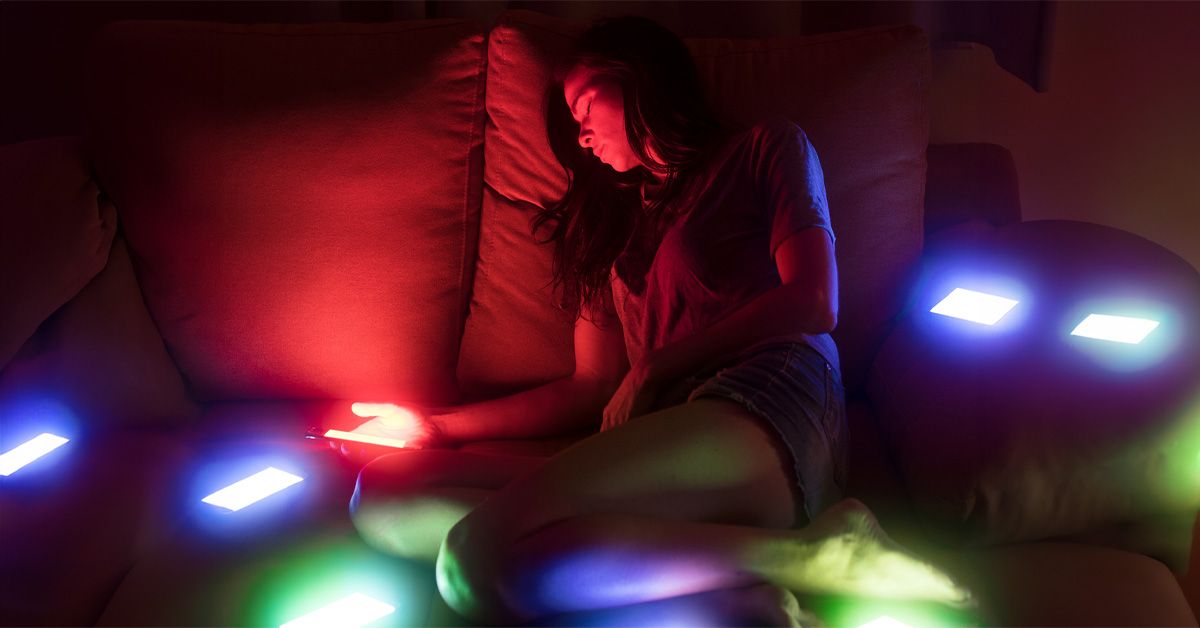
Sleep is not laziness. It is emotional infrastructure. Poor sleep can make anxiety stronger, reduce patience, impair focus, and make political disagreements feel even more explosive. Try to create a buffer between news consumption and bedtime. Avoid checking political updates in bed, especially if one headline tends to become “just one more article,” which becomes “why is it 1:43 a.m.?”
Build a wind-down routine that signals safety to the body: dim lights, stretch, read fiction, take a warm shower, practice slow breathing, or write tomorrow’s worries on paper so they are not running a marathon in your head.
6. Move Your Body to Discharge Stress
Political anxiety often creates physical tension. Movement helps complete the stress response. You do not need a heroic fitness plan. A brisk walk, gentle yoga, dancing in the kitchen, cycling, swimming, lifting weights, or stretching can help regulate mood and reduce stress hormones.
If you feel frozen or overwhelmed, start small. Walk around the block. Do ten squats. Shake out your arms. Put on one song and move until it ends. Your body is not asking for a campaign speech. It is asking for circulation.
7. Practice Grounding When Anxiety Peaks
Grounding techniques bring your attention back to the present moment. Try the 5-4-3-2-1 method: name five things you can see, four things you can feel, three things you can hear, two things you can smell, and one thing you can taste. This helps remind the brain that you are here, now, in your actual environmentnot trapped inside a worst-case scenario slideshow.
Another simple tool is slow breathing. Inhale for four counts, exhale for six counts, and repeat for a few minutes. Longer exhales can signal the body to shift away from fight-or-flight mode.
8. Create Boundaries Around Political Conversations
Political conversations can be meaningful. They can also become emotional demolition derbies. Before entering a discussion, ask yourself: Is this person open to dialogue? Am I calm enough to participate? Is this the right time and place? What outcome am I hoping for?
Use clear, respectful boundaries. You might say, “I care about this topic, but I’m not available for a heated debate tonight,” or “I’m happy to talk if we can both stay respectful.” If a conversation becomes insulting, circular, or harmful, you are allowed to leave. Exiting a bad debate is not weakness. It is emotional budgeting.
9. Stay Connected to People, Not Just Issues
Political anxiety can make people feel isolated, especially when they believe everyone around them is either too alarmed, not alarmed enough, or alarmed in the opposite direction. Supportive relationships help buffer stress. Spend time with people who can listen without turning every conversation into a televised panel discussion.
Connection does not always require discussing politics. Cook together. Walk together. Watch a movie. Help someone move. Join a book club, faith community, neighborhood group, hobby class, or volunteer effort. Human connection reminds the nervous system that the world is bigger than conflict.
10. Make Room for Joy Without Guilt
When serious events are happening, joy can feel irresponsible. But constant distress does not help anyone. Rest, laughter, beauty, and pleasure are not betrayals of your values. They are part of staying strong enough to live by them.
Read a novel. Garden. Bake something dramatic. Watch a comedy. Pet a dog. Listen to music. Spend time outside. Enjoying life does not mean you are ignoring suffering. It means you are refusing to let anxiety consume every available inch of your humanity.
How to Handle Election Anxiety
Election seasons can intensify political anxiety because they combine uncertainty, identity, high stakes, media saturation, and social pressure. Polls change. Predictions conflict. Campaign ads multiply like emotionally manipulative mushrooms. Everyone seems to have an opinion, and many are eager to deliver it at full volume.
Make an Election Plan
Check your voter registration, know your polling place or mail-in ballot rules, review sample ballots, and decide when you will vote. A practical plan can reduce last-minute stress. If you want to do more, choose one realistic civic action, such as volunteering for a local organization, helping someone register, or learning about down-ballot races.
Plan for Results Night
Election results may take time. Decide in advance how much coverage you will watch, who you will be with, and when you will stop checking updates. Prepare calming activities for the evening. Eat a real meal. Drink water. Keep your phone charger nearby, but do not let it become a leash.
Remember That Civic Life Continues After Election Day
One election matters, but democracy is not a one-night event. Local organizing, community care, public meetings, mutual aid, advocacy, education, and relationship-building continue long after the graphics department puts away the red-and-blue map. Thinking beyond election day can reduce the all-or-nothing pressure that fuels anxiety.
When Political Anxiety Becomes Too Much
Political anxiety deserves attention when it disrupts daily life. Consider reaching out to a mental health professional if you cannot sleep, struggle to work, feel constantly panicked, withdraw from people, rely heavily on alcohol or substances, experience persistent hopelessness, or feel unable to function.
Therapy can help you process fear, set boundaries, challenge catastrophic thinking, regulate your nervous system, and reconnect with meaningful action. If you ever feel at risk of harming yourself or someone else, seek immediate help through emergency services or a crisis support line in your area.
Healthy Political Engagement: Caring Without Burning Out
The healthiest approach to politics is neither obsession nor avoidance. Obsession can damage mental health. Avoidance can increase helplessness. A balanced approach allows you to stay informed, act according to your values, and still have a life that includes rest, relationships, purpose, and possibly snacks that are not eaten while rage-reading.
Try thinking of political engagement as a long-distance hike rather than a sprint through a burning obstacle course. You need pacing, water, companions, maps, breaks, and the humility to admit that nobody can carry every backpack at once.
Build a Personal Political Wellness Plan
A political wellness plan is a simple set of rules that protects your attention and energy. It might include checking news only twice a day, avoiding political content one hour before bed, muting inflammatory accounts, volunteering once a month, having one trusted person to process concerns with, and scheduling nonpolitical joy every week.
Write the plan down. Anxiety is persuasive in the moment. A written plan gives your calmer self a vote when your stressed self wants to move into the comment section with a sleeping bag.
Real-Life Experiences: What Managing Political Anxiety Can Look Like
Consider the experience of a working parent who starts every morning by checking political updates before getting out of bed. At first, it feels responsible. They want to know what happened overnight. But within weeks, the habit begins shaping the entire day. Breakfast feels tense. The commute becomes a mental debate stage. By the time work begins, their brain has already consumed three crises, two opinion pieces, and one comment thread that should have been sealed in a digital museum of bad choices.
When this person sets a boundaryno news until after breakfastthe change feels surprisingly difficult. The hand still reaches for the phone. The mind whispers, “What if something happened?” But after a few days, mornings become less frantic. They still read the news, but not before saying good morning to their family, drinking coffee, and remembering that they are a human being before they are a headline-processing machine.
Another common experience involves family gatherings. Someone arrives determined to keep things peaceful. Then a relative drops a political comment between the salad and the mashed potatoes, and suddenly everyone’s blood pressure is campaigning for office. The old pattern is to argue until the room feels radioactive. A healthier approach is to prepare a boundary in advance: “I love you, but I’m not discussing politics during dinner.” If the conversation continues, the person changes seats, helps in the kitchen, or takes a short walk. The goal is not to win the table. The goal is to leave with dignity, digestion, and at least one relationship still intact.
Some people experience political anxiety as helplessness. They care about issues deeply but feel too overwhelmed to act. In that case, the turning point may be choosing one small, concrete action. A person who feels distressed about local housing policy might attend one city council meeting. Someone worried about school issues might read the actual agenda instead of relying only on social media summaries. A voter anxious about national politics might volunteer for a nonpartisan voter-registration drive. These actions do not fix everything, but they transform anxiety into motion.
There is also the experience of social media burnout. A person logs on to relax and leaves feeling furious, frightened, and somehow personally responsible for correcting every inaccurate post on the internet. Eventually, they try a digital reset: unfollowing accounts that thrive on panic, muting certain words, removing apps from the home screen, and replacing late-night scrolling with reading or music. The first night feels boring. The third night feels calmer. By the second week, they realize that peace was not hiding in a better thread. It was waiting outside the app.
Managing political anxiety is rarely a one-time fix. It is a practice. Some days you will handle the news with perspective. Other days, one headline will knock the emotional cereal bowl right out of your hands. That does not mean you failed. It means you are human. The work is to notice, reset, and return to habits that protect both your conscience and your health.
Conclusion
Political anxiety is understandable in a world where news moves quickly, public debates feel personal, and uncertainty can seem endless. But you do not have to choose between caring deeply and feeling constantly overwhelmed. By setting media boundaries, focusing on what you can control, protecting sleep, moving your body, practicing grounding, building supportive relationships, and choosing meaningful civic action, you can stay engaged without sacrificing your well-being.
The healthiest citizens are not the ones who never feel anxious. They are the ones who learn how to care wisely, rest deliberately, and keep showing up without letting the noise swallow their entire life. Politics matters. So does your nervous system. Please do not make it run for office without a campaign manager.